What Hong Kong Manufacturers Must Establish Before Choosing Equipment
Hong Kong manufacturers should treat high-COD effluent as a site-specific treatment and compliance problem, not as a COD number that identifies one machine. A defensible design starts with representative wastewater characterization, then connects source control, pretreatment, biological or advanced treatment, sludge handling and discharge verification. Hong Kong Drainage Services Department guidance requires COD reassessment sampling and analysis by a HOKLAS-accredited laboratory under the prescribed technical memorandum. Equipment selection should follow the waste profile: remove floatables and suspended solids first, use biological treatment for compatible biodegradable load, and reserve oxidation for residual or non-biodegradable COD. The approved revised trade effluent surcharge rate can remain effective for three years only while declared treatment practices continue and records remain available for inspection, according to the DSD’s Guidelines on Application for Reassessment of COD.
Trade effluent is wastewater generated by commercial or industrial activity. Chemical oxygen demand, or COD, is an oxygen-equivalent measure of oxidizable contamination; it does not identify whether that load consists of oils, soluble biodegradable organics, suspended material, colour or compounds that inhibit biology.
An average laboratory result is therefore insufficient. The characterization dataset should represent production cycles, dilution effects, cleaning operations and batch discharges. Before sizing equalization or biological loading, obtain:
| Input | Engineering question | Information needed before selection |
|---|---|---|
| Flow and discharge pattern | What flow must the train handle continuously and during peak discharge? | Water-meter records, production schedule, discharge points, discharge factor and peak-batch details |
| COD and suspended solids | Which fraction is soluble, particulate or settleable? | Representative samples tied to production and operating periods |
| Oil, grease and floatables | Will they overload screens, pumps or biological treatment? | Oil and grease results and observations at drain outlets |
| pH, temperature and salinity | Will the waste upset coagulation or biological activity? | Range as well as average, including cleaning and batch-dump conditions |
| Nutrients and industrial contaminants | Is biological treatment viable, and are priority pollutants relevant? | Nutrient balance and contaminant information specific to the process |
| Water and sewer conditions | What must the treated flow ultimately meet? | Applicable sewer conditions, trade-effluent controls and discharge permit |
The supplied research does not establish a universal Hong Kong COD discharge limit. The applicable requirements must be requested for the specific discharge point rather than inferred from generic values. DSD’s guidance establishes the reassessment procedure, not a blanket discharge standard.
Use a HOKLAS-accredited laboratory and the prescribed sampling and analysis memorandum as the benchmark for the COD dataset. Also identify variable production, cleaning cycles and batch dumps before fixing equipment capacity. If screening is required, a GX rotary mechanical bar screen can address fibrous and solid debris; chemical adjustment, coagulation or flocculation can then be evaluated through a controlled automatic dosing system against the actual waste chemistry.
Build a Treatment Train Around the Waste Profile
The treatment train should follow a staged process: control the source, equalize flow, remove large debris, separate floatables and solids, reduce biodegradable COD, polish the effluent and manage the resulting sludge. One technology may combine several functions, but the design basis must still identify where solids are removed, where COD is reduced and where sludge is concentrated.
- Source control and equalization: prevent uncontrolled dumps from entering the treatment system and buffer production variation.
- Screening: remove rags, plastics and fibrous debris before they reach pumps or biological stages.
- Floatables and solids separation: recover oil, grease and particulate material that could inhibit downstream treatment.
- Primary COD reduction: use biological or physicochemical treatment according to biodegradability and contaminant tolerance.
- Polishing: apply filtration, membrane or oxidation only where the required final quality justifies the operating burden.
- Sludge management: dewater, contain and document the residual waste stream.
The GX rotary mechanical bar screen has a defensible position before downstream equipment when rags, plastics, fibrous debris or suspended solids could obstruct transfer pumps or impair biological treatment. It is pretreatment, not a COD-reduction stage.
For wastewater containing suspended solids, FOG, oil, grease or colloidal matter, an industrial DAF pretreatment system is the more relevant solids-removal stage before biological treatment or advanced oxidation. The DAF catalogue specifies 13 models spanning 4–300 m³/h; that range is a selection envelope, not a guarantee that any model suits a given waste.
An integrated MBR wastewater treatment system becomes relevant where the process needs compact biological treatment, membrane solids separation and reuse-oriented polishing. The MBR catalogue specifies capacities from 10–2,000 m³/day and filtration below 1 μm. These are catalogue specifications, not site-specific performance guarantees. MBR selection still depends on biodegradability, membrane feed quality, operating availability and the required reuse standard.
| Train stage | Primary purpose | Design check |
|---|---|---|
| Equalization | Buffer hydraulic and concentration variation | Peak flow, batch dumps, mixing and residence time |
| Mechanical screening | Remove fibrous and bulky solids | Screen opening, extracted-debris handling and pump protection |
| DAF or equivalent separation | Recover floatables and remove suspended material | Oil, grease, solids loading, recycle performance and sludge yield |
| Biological or physicochemical COD reduction | Remove the biodegradable or chemically treatable COD fraction | Waste compatibility, loading, pH, temperature, salinity and residual COD |
| MBR, filtration or polishing | Improve solids separation or final quality | Effluent objective, membrane cleaning and reuse criteria |
| Sludge dewatering | Reduce sludge volume before disposal | Sludge characteristics, operating hours and cake-handling method |
Chemical dosing is a controlled support for pH adjustment, coagulation or flocculation, not a substitute for hydraulic and waste-profile design. Record expected reagent demand, residual chemical, operator exposure and sludge production.
Include sludge dewatering in the train. The Plate and Frame Filter Press catalogue offers filtration areas from 1–500 m², so the buyer should match area, cycle time and cake handling to expected sludge volume rather than select by maximum area alone. Further selection context is available in the filter press selection for industrial sludge guide.
Choose Biological, Electrocoagulation or Oxidation Treatment
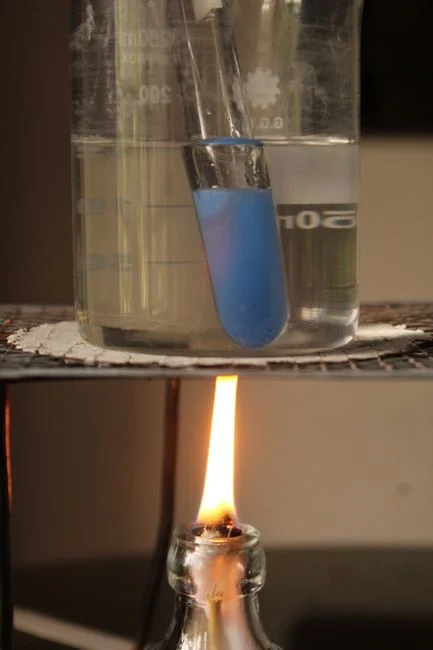
Biological treatment, electrocoagulation and advanced oxidation solve different COD problems. Biological treatment is appropriate for compatible biodegradable organics; electrocoagulation may be justified for a chemically specific waste; oxidation is generally a polishing or residual-COD option and should be verified against the actual wastewater.
| Option | Suitable profile | Principal benefit | Residual-waste or operating issue | Evidence required before commitment |
|---|---|---|---|---|
| Biological treatment | Biodegradable organics with acceptable salinity, pH and temperature | Substantial biological COD removal without oxidant dosing | Biomass acclimation, clogging, sludge and sensitivity to industrial changes | Site-specific loading and acclimation trial with the actual waste |
| Electrocoagulation | A waste for which precipitation, coagulation and separation have been demonstrated | Combined contaminant removal and solids separation | Electrical demand, electrode consumption and metal-bearing sludge | Bench or pilot testing using representative wastewater |
| Advanced oxidation | Resistant organics, high colour or a non-biodegradable fraction requiring polishing | Oxidation of pollutants that resist conventional biological treatment | Oxidant demand, energy use and transformation by-products | Waste-specific COD and by-product verification |
For biological treatment, the 2017 OhioLink ETD Center study Treating High Salt Content Wastewater with Sand Bioreactors reported organic-matter removal above 90% from week 4 through week 49 in tested turkey-processing wastewater. Steady-state ammonia removal exceeded 99%. These results belong to that laboratory case, not to Hong Kong factory effluent generally.
The same study also exposes the operational limitations. Startup acclimation for ammonia removal increased with salt content and ranged from four to seven weeks. Clogging occurred at every tested salt level and was managed through resting and intermittent loading. A Hong Kong design must therefore test the actual salt matrix and include solids-removal and biofilm-maintenance provisions rather than transferring the reported removal percentages directly.
For electrocoagulation, the MDPI study Electrocoagulation: A Promising Method to Treat and Reuse Mineral Processing Wastewater with High COD examined wastewater from a Pb/Zn sulfide flotation plant with an initial COD of 424.29 mg/L. It is evidence for that mineral-processing case, not a universal performance guarantee. The actual anodes, current density, initial pH, additives and residual solids must be tested with the factory’s wastewater. The electrocoagulation system design parameters guide provides a technical starting point, not a substitute for that evidence.
The Chinese patent record Treatment method of high-chroma chemical waste water identifies ozone–biological combinations for dyeing wastewater and advanced methods for high-COD, high-colour wastewater. These disclosures indicate possible process combinations; they do not establish performance for another factory’s waste. Oxidation should be selected after the biodegradable fraction has been treated and residual contaminants have been characterised. The ozone oxidation engineering guide can support preliminary system definition, but the high-COD trade waste treatment strategies discussion should not substitute for waste-specific verification.
Turn Treatment Performance into a Defensible Hong Kong COD File
DSD may normally inspect the premises within ten working days after receiving the required information to confirm the sampling arrangement, although the DSD notes that this period may vary with the number of applications received. Site readiness is therefore part of the compliance evidence, not an administrative afterthought.
Before sampling, DSD expects functional water meters, unblocked drainage outlets, suitable sampling equipment, leakage-free water systems, normal hydro-vents, wastewater treatment facilities operating without overflow or blockage, and equipment and machinery operating normally. The applicant must declare the dates and frequency of central grease-trap cleaning and pollution controls such as solid traps. These operating conditions must continue throughout sampling.
The HOKLAS laboratory must arrange sampling with competent samplers under the agreed arrangement, split the collected sample and submit one split to DSD for checking. After testing, it submits a formal test report. DSD may also collect additional samples to verify representativeness. A supplier’s run sheet therefore does not replace the laboratory file; it supports the operational consistency that the sampling must demonstrate.
Maintain records showing:
- wastewater treatment operation and relevant operating logs;
- the declared treatment practices and pollution controls;
- central grease-trap cleaning dates and frequency;
- chemical dosing and biological-treatment evidence;
- equipment operating status and corrective actions; and
- changes to manufacturing, business operation or sewage-treatment practices.
An approved revised TES rate takes effect for three years. During that period, the applicant must maintain the declared wastewater treatment, operation practices and measures. DSD may take grab samples to verify effluent strength against the approved COD values. Material changes must be reported because DSD may determine that the revised rate is no longer applicable. If the approved COD is lower than the generic value, DSD advises submitting a re-application at least one month before expiry if continuity is required, according to the DSD guidance.
Specify, Test and Procure Without Performance Gaps
A wastewater supplier should be selected against a site-specific design basis and acceptance evidence, not against equipment capacity alone. The commercial brief should state the final effluent objectives, the applicable Hong Kong discharge conditions, the COD reassessment evidence required, and the operating package that must remain in place for the approved rate period.
| Procurement item | Information to request from bidders | Acceptance focus |
|---|---|---|
| Guaranteed flow basis | Average and peak influent flow, discharge factor and duty cycle | Capacity is demonstrated for the stated production pattern |
| Design basis | Influent and outlet limits, waste profile and required final quality | No critical contaminant or operating range is omitted |
| Equipment scope | Materials of construction, automation, instrumentation, utilities and excluded work | Scope and responsibilities are explicit |
| Residuals | Expected sludge yield, chemical consumption and disposal route | Residual handling is included in the project cost and risk assessment |
| Performance test | Protocol, sampling point, duration, analytical method and acceptance criteria | Test uses representative wastewater and the agreed outlet objective |
| Change response | Procedure for changed chemistry, production rate, upset, restart and maintenance | Operator can identify and execute the defined response |
| Commissioning and support | Prerequisites, training, spares, response time and local service arrangements | Support commitments become contractual terms |
Require site-specific pilot or bench evidence before extrapolating results from the sand-bioreactor, electrocoagulation or patent examples. For pretreatment selection, ask bidders to compare solids and floatables removal under the actual waste conditions; the DAF versus clarifier comparison provides useful questions for that evaluation.
Do not accept a generic removal percentage. Define the test waste, sampling frequency, analytical method, operating condition and pass criterion. Include upset, restart and maintenance scenarios, operator training, spare-parts availability and local service support in the contract. No response time or lead time should be assumed; bidders must state and justify it.
For biological systems, confirm salinity, pH and temperature limits, equalization requirements, biomass acclimation provisions and solids-removal arrangements. For MBR, require membrane-cleaning, fouling-control and replacement assumptions. For oxidation or electrocoagulation, require oxidant or electrode consumption, reaction controls and residual-waste analysis. Commercial acceptance should be tied to the final treatment objective and the evidence package needed for Hong Kong COD reassessment.
Frequently Asked Questions
How much should a manufacturer budget for high-COD trade wastewater treatment?
No defensible price can be given without site flow and waste-characterization data. Request a budget broken into equipment, civil work, pretreatment, biological or advanced treatment, sludge handling, instrumentation, utilities, commissioning and compliance testing. Then ask each bidder which items are excluded and which performance risks affect price. The same DAF or MBR package will not carry comparable cost when waste chemistry, sludge output or civil work differs.
Should a Hong Kong factory choose DAF, MBR or electrocoagulation?
Choose DAF when floatables, oil, grease and suspended solids must be removed before the main COD-reduction stage. Choose MBR when compact biological treatment, membrane solids separation and reuse-oriented polishing are required. Consider electrocoagulation only when site-specific testing demonstrates a suitable chemical and COD-removal response. As with equipment selection, the lamella clarifier product page and RO and UF membrane options can be treated as technical options, not default selections.
What evidence is needed for a COD reassessment application?
Use a HOKLAS-accredited laboratory to conduct sampling and testing under DSD’s prescribed technical memorandum. Before sampling, agree the sampling plan, production and operating conditions, pretreatment status, drainage arrangements and pollution controls. Keep the laboratory report and supporting site records because DSD may request them during or after the application.
How long is a revised Hong Kong TES rate valid?
An approved revised TES rate is effective for three years. Continuation depends on maintaining the declared treatment and operating practices and keeping the relevant records on site for inspection. Report material changes in manufacturing or wastewater treatment promptly because they may affect whether the revised rate remains applicable.
What can cause a treatment system to fail after installation?
Changes in waste composition, hydraulic loading, salinity, pH or temperature can unsettle biological and advanced-treatment processes. Failure of upstream screening, solids separation, chemical dosing or sludge handling can also shift the final effluent quality. Establish routine monitoring, clear operating limits, an upset-response procedure and sufficient corrective capacity before commissioning.