Choose the Correct Filter-Press Duty
A filter press separates suspended solids from liquid; it does not remove dissolved metals, replace upstream clarification, or establish discharge compliance by itself. The correct duty must be identified before requesting filtration area: floated gold concentrate, tailings concentrate, whole tailings slurry, or a combined flow. Metchem describes gold concentrate as a slurry that is skimmed, pumped to a holding tank, and then transferred to a filter press for final dewatering before smelter shipment. The same source describes tailings concentrate being dewatered so water could be reused and recovered solids returned underground.
| Material route | Typical feed and preparation | Filter-press outputs | Decision-critical objective |
|---|---|---|---|
| Gold concentrate | Floated concentrate slurry collected in a holding tank | Concentrate cake for bulk bags, shipment, and smelter treatment | Produce the concentrate moisture and handling condition required by the receiving route |
| Tailings concentrate | Tailings slurry or selected tailings stream prepared for filtration | Tailings cake and filtrate | Recover process water and create a solids stream suited to underground return or another approved route |
| Whole tailings slurry | Finely ground rock and process water after concentrate recovery | Dewatered tailings and filtrate | Meet throughput, cake-moisture, storage, and water-reuse requirements |
Metchem’s two installations illustrate why one generic mining-slurry specification is inadequate: it used a 1200MM press for gold concentrate and a 1500MM press for tailings concentrate (Metchem, Turning Water into Gold). These are application precedents, not universal equipment dimensions. Buyers should review filter press selection for mineral-processing wastewater and then define the applicable plate and frame filter press for gold mining solids against actual site data.
Map the Gold-Mining Water and Solids Circuit
Tailings are water mixed with finely ground rock remaining after mineral concentrate is removed, while gold-bearing concentrate follows the flotation and concentrate-handling route described by Metchem in Turning Water into Gold. The filter press therefore sits at the end of a defined solids stream; it does not receive an undifferentiated “mine wastewater” stream unless that is explicitly the design basis.
- Collect and equalize the feed. Use slurry storage to stabilize feed rate and composition where required.
- Prepare the slurry. Apply conditioning or upstream clarification where the process route requires it.
- Pump and close the press. Feed the chambers and apply the filtration cycle.
- Form the cake. Retain solids on the cloth while liquid passes into the filtrate system.
- Wash where required. Washing can remove residual processing chemicals or dissolved metals from the cake.
- Discharge and clean. Remove cake, inspect or wash the cloth, and prepare for the next cycle.
- Route the outputs. Return recovered liquid to the approved process destination and transfer cake to its specified handling route.
Washing is not a substitute for site-specific testing or permit review. Metchem’s gold-concentrate installation produced cake placed in bulk bags and shipped to a smelter. Its separate tailings-press installation reused dewatered tailings water in the gold-separation process, while recovered non-ore-bearing rock was used to fill old mine shafts. Roxia also describes recovered process water returning directly to processing circuits (Understanding the role of filter presses in gold mining operations). If clarification or solids removal is needed upstream, evaluate a DAF system for mining wastewater pretreatment rather than attributing dissolved-metal removal to the filter press.
Size the Filter Press from Site Data
Nominal filtration area cannot establish capacity without the feed rate, solids properties, duty schedule, and cake target. The sizing basis should begin with measured peak and average slurry flow, operating hours, daily production, solids percentage, particle-size distribution, and settled-solids properties. These values determine the mass of solids entering each cycle and the filtration work required.
| Required input | Why it affects selection | Information to request from the site |
|---|---|---|
| Feed and production | Sets average and peak duty | Peak and average slurry rates, operating hours, and daily concentrate or tailings production |
| Slurry solids | Determines retained solids and filtrate volume per cycle | Solids percentage, particle-size distribution, and settled-solids properties |
| Material chemistry | Governs conditioning, compatibility, and filter-cloth selection | pH, reagents, abrasiveness, temperature, corrosion risk, and ore chemistry |
| Performance targets | Defines the required separation result | Cake moisture, washing objective, filtrate quality, reuse destination, and cake-disposal method |
| Site integration | Determines utility and installation design | Power, footprint, structural support, foundation, overhead access, pumps, and controls |
The verified HydropureWater catalog lists plate and frame filter presses from 1 m² to 500 m² of filtration area, with manual, hydraulic, and fully automatic PLC-controlled operation (HydropureWater, verified product catalog). Roxia reports typical filter-press cycles of 30–90 minutes depending on material characteristics and desired cake moisture in Understanding the role of filter presses in gold mining operations. That range is an operating reference, not a sizing guarantee or a substitute for site testing.
A bidder should be required to state its design feed rate, operating schedule, cycle basis, expected cake moisture, filtrate-quality basis, utilities, foundation requirements, and maintenance assumptions. When evaluating filter press energy and operating-cost considerations, compare those guarantees against the submitted site data rather than plate dimensions alone.
Select Filter Cloth, Plates, and Automation
Filter-cloth selection must be supported by representative slurry or site data because particle size, retention, cake release, chemical compatibility, abrasion, cleaning performance, and expected service life all affect filtration. A cloth that performs well with a simple laboratory suspension may not retain, release, or resist the particles and reagents in a gold-recovery circuit.
The BRIN study compared cotton and drill cloth using simulated activated sludge containing CaCO₃ at 1–4% w/w. Cotton cloth produced the better result in that study, reaching 56.00% reported solids-removal efficiency at 4% w/w CaCO₃ (National Research and Innovation Agency, Studi Proses Dewatering Di Unit Pengolahan Air Limbah menggunakan Plate-Frame Filter Press). This is evidence that media selection affects separation, but it is not a performance guarantee for gold tailings: the feed was simulated activated sludge, not mine slurry.
| Configuration | Operational characteristic | Buyer assessment |
|---|---|---|
| Manual | Requires greater operator involvement in plate handling and cake removal | Evaluate labor availability, cycle consistency, and access to a large plate stack |
| Hydraulic | Uses hydraulic plate closure while retaining more manual process steps | Confirm closure method, controls, maintenance access, and operator training |
| Fully automatic PLC-controlled | Supports programmed cycle control and automated functions | Assess automatic discharge, cloth washing, control integration, spares, and technical support |
Automatic cake discharge, cloth washing, and cycle control can reduce intervention and improve consistency, but added complexity requires maintenance access, spare-parts support, and trained operators. Roxia notes that plate materials, filter cloth, and sealing systems must withstand specific ore chemistry and processing reagents. Plate materials, seals, and cloth should therefore be matched to the actual circuit rather than selected from a standard material list.
Operate the Press for Reliable Water Recovery
Reliable water recovery depends on delivering a consistent feed to the chambers, not merely installing a press with adequate nominal area. Feed preparation and pumping should remain within the agreed design basis. Operators should record cycle time, cake moisture, filtrate flow, operating pressure, and filtrate quality because Roxia identifies these measurements as central to filtration optimization in Understanding the role of filter presses in gold mining operations.
Use routine filter-cloth inspection and scheduled servicing to identify blinding, uneven fill, or mechanical wear before the press becomes unavailable. A filter press operates with pressurized chambers and moving plates, so maintenance planning should include safe isolation, access, inspection, and operator training.
Metchem’s installation shows how automation can address two distinct labor problems. Automatic pump control supported even filling, while pendant-controlled plate shifters allowed one operator to open and clean the large presses (Metchem, Turning Water into Gold). Those functions should be evaluated against the mine’s staffing model, not treated as automatic proof of performance.
Keep the recovered-water destination explicit. In Metchem’s tailings application, dewatered tailings water was reused in the gold-separation process. Roxia reports that filter presses typically recover 85–95% of process water from tailings slurry, with recovered water returning to processing circuits, but a project must verify that result against its own feed and operating conditions. Review filter press selection for mineral-processing wastewater as part of defining the water balance and return locations.
Diagnose Common Dewatering Problems
A visible filter-press symptom should be diagnosed against feed, operating, and mechanical evidence before equipment is replaced. Roxia states that cycle duration depends on material characteristics and desired moisture, so a short cycle or wet cake may reflect a changed design basis rather than inadequate filtration area.
| Symptom | Checks before changing equipment | Evidence to log |
|---|---|---|
| Short cycle or excessive cake moisture | Compare feed solids, conditioning, feed rate, target moisture, and cycle settings with the design basis | Feed rate, solids percentage, cycle time, pressure, and cake moisture |
| Uneven filling or poor chamber distribution | Inspect pump control, feed consistency, plate alignment, and sealing; Metchem selected automatic pump control to support even filling | Feed pressure by chamber where available, pump output, fill pattern, and plate condition |
| Declining separation performance | Inspect cloth condition, blinding, media selection, and exposure to ore chemistry or reagents | Filtrate flow, filtrate quality, cake moisture, pressure, and cloth-inspection findings |
| Difficult cake discharge | Evaluate cake release, cloth condition, plate opening, and the selected discharge method | Discharge time, cake-release observations, cloth condition, and equipment alarms |
| Poor filtrate quality or inconsistent recovery | Separate sampling and analysis from mechanical symptoms; investigate feed chemistry, cloth, cake cracking, channeling, and process changes | Time-stamped filtrate samples, feed analysis, pressure trend, and process-stream changes |
Metchem’s automatic pump-control decision provides a useful precedent for uneven filling, while filter-cloth condition remains a separate maintenance issue. For additional equipment-specific checks, compare filter press applications for coal mining wastewater and the operating controls in the filter press energy and operating-cost considerations.
Do not make a capacity claim from one observation. Record cycle time, feed rate, operating pressure, cake moisture, and filtrate quality over representative operation, then compare the data with the guaranteed or proposed design basis.
Prepare a Supplier Comparison and Procurement Checklist
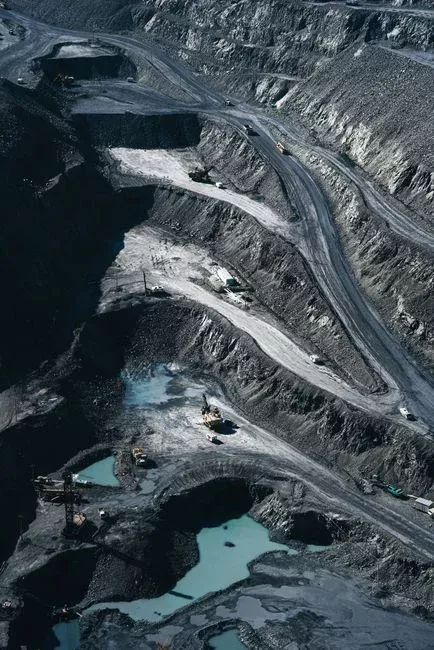
A comparable proposal must describe the complete duty rather than quote plate dimensions and nominal filtration area alone. Metchem’s 1200MM gold-concentrate press and 1500MM tailings-concentrate press are precedent examples, but each bidder must scale and specify its own solution from the submitted site data.
| Procurement item | Minimum information required | Why it affects the decision |
|---|---|---|
| Mechanical configuration | Filtration area, plate size, chamber count, feed method, operating controls, cake-discharge method, and cloth-washing provision | Defines whether the equipment matches the actual separation duty |
| Performance basis | Design feed rate, operating schedule, cycle basis, expected cake moisture, and filtrate-quality basis | Creates measurable comparison criteria |
| Utilities and installation | Footprint, power, structural support, foundation design, overhead clearance, and material-handling interfaces | Excludes costs and delays hidden outside the equipment price |
| Lifecycle inputs | Filter cloth, seals, pumps, controls, maintenance, spare parts, training, and plate or frame refurbishment | Supports total-cost comparison without relying on unsupported unit prices |
| Operating support | Performance guarantees, maintenance assumptions, spare-parts policy, and technical support | Connects procurement to availability after commissioning |
Compare bids through the mine’s water and tailings plan. Include the destination of recovered water, cake-handling method, smelter logistics for concentrate, underground return or disposal assumptions for tailings, and the storage consequence of leaving solids wet. There is no defensible universal price without the slurry rate, solids properties, feed analysis, duty schedule, cake targets, utilities, and automation level.
Use the plate and frame filter press for gold mining solids reference to identify the requested configuration, but make the final comparison around verified site inputs, stated guarantees, installation interfaces, and lifecycle support.
Frequently Asked Questions
How much does a filter press for gold mining wastewater cost?
No defensible universal price can be given without the slurry rate, solids properties, feed analysis, duty schedule, cake-moisture and filtrate targets, site utilities, and automation level. Request itemized pricing for the press, cloth, seals, pumps, controls, installation inputs, maintenance, spares, training, and refurbishment so bidders quote comparable scopes.
Can one filter press handle both gold concentrate and tailings?
Only if the combined duty has been evaluated as a defined process. Metchem used separate presses for floated gold concentrate and tailings concentrate, with different cake and water destinations. The buyer must identify each stream’s flow, solids properties, chemistry, target moisture, washing requirement, and downstream route before combining them.
What site data is needed to size a filter press?
Provide peak and average feed rates, operating hours, daily production, solids percentage, particle-size distribution, settled-solids properties, pH, reagents, abrasiveness, temperature, cake targets, filtrate requirements, and utility constraints. Nominal filter area alone does not establish capacity because the feed rate, solids loading, cycle basis, and required cake moisture determine actual duty.
Does filter-press dewatering make gold-process discharge compliant?
No. A filter press performs physical solid-liquid separation; it does not remove dissolved metals or authorize a discharge. Filtrate and wash-water quality must be demonstrated through project-specific sampling and analysis, and the proposed reuse or discharge route must be checked against applicable permits and regulatory requirements.