Why Filter Press Energy Efficiency Matters in 2026
Industrial electricity costs rose 18% year-over-year in 2025 (IEA, 2025), pushing filter press optimization to the top of the OPEX-reduction list for plant managers. Filter presses account for 30–40% of total energy consumption in sludge dewatering plants (EPA, 2024), trailing only aeration systems on the energy ledger. A 500 m³/day municipal plant in Germany documented a €42,000/year energy-cost reduction by switching from chamber to membrane presses (Jingjin, 2025-09), illustrating that press selection directly drives OPEX.
Energy efficiency also intersects with regulatory compliance. The EU Industrial Emissions Directive 2010/75/EU requires mandatory energy audits for facilities exceeding 500 kW of thermal input, and similar U.S. state-level programs (e.g., California Title 24) are tightening. For engineers weighing a retrofit or new build, the combination of rising tariffs, audit requirements, and demonstrable savings makes filter press energy efficiency a quantifiable KPI rather than a sustainability slogan. Plants that benchmark kWh per ton of suspended solids (kWh/ton SS) and track it monthly consistently outperform peers on both cost and compliance audits.
Energy Consumption Drivers in Filter Press Systems
Hydraulic systems consume 40–50% of total filter press energy, and pressure losses from worn seals or misaligned plates can increase that draw by 8–12% (Hawe Hydraulik, 2025). Feed pumps represent another 30–40% of energy use; retrofitting with variable-frequency drives (VFDs) cuts pump consumption by 8–12% versus fixed-speed units (Jingjin, 2025-09). Automation systems—plate shifters, cloth washers, and auto-lubricators—reduce manual cycle-time variance and lower total energy use by 12–18% (Jingjin, 2025-09).
Filter cloth condition is a frequently overlooked driver. Clogged or blinded cloths increase filtrate resistance, extending cycle times by 25–35% and raising pump energy use by 18–22% (Jingjin, 2025-09). Sludge type further shapes the energy profile: municipal biosolids typically arrive at 2–5% total suspended solids (TSS), while mining and chemical sludges feed at 10–20% TSS, requiring higher feed pressures and longer dewatering cycles. Plants processing plate and frame filter press configurations should baseline each subsystem independently before assuming a hardware change is the answer.
| Energy Driver | Share of Total Use | Primary Loss Mechanism | Mitigation |
|---|---|---|---|
| Hydraulic system | 40–50% | Worn seals, plate misalignment | Seal replacement, alignment check every 500 cycles |
| Feed pump | 30–40% | Oversized fixed-speed units | VFD retrofit, 8–12% reduction |
| Automation | 10–15% | Manual cycle variability | Plate shifters, cloth washers; 12–18% reduction |
| Cloth condition | 5–10% (indirect) | Blinding, scaling | High-pressure wash, 18–22% pump-energy recovery |
| Auxiliaries (conveyors, dosing) | 5–10% | Inefficient drives | Direct-drive or servo upgrades |
Membrane vs. Chamber Filter Presses: Energy Efficiency Compared
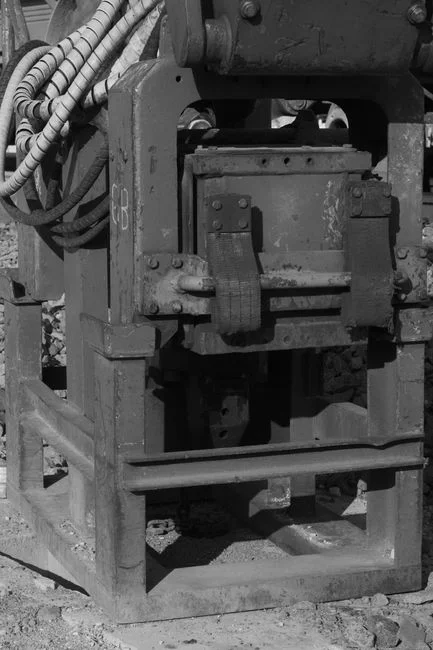
Membrane filter presses use elastomeric membrane plates inflated with air or water (typically 15–30 bar squeeze pressure) to compress the cake after the fill cycle, achieving <65% moisture in 2–3 hours versus 4–6 hours for recessed-chamber presses. That cycle-time advantage translates to 15–25% energy savings on industrial sludges (Jingjin, 2025-09). Chamber presses carry lower CAPEX—$120–$180/m² versus $200–$300/m² for membrane—but their higher cake moisture (typically 30–40% solids for municipal sludge, versus 35–45% for industrial sludge in membrane units) extends downstream hauling or drying costs (Degrémont®, 2025).
Cycle time benchmarks diverge sharply by application. Municipal biosolids at 2–5% TSS dewater in 3–4 hours with a chamber press and 1.5–2.5 hours with a membrane press. Industrial sludge at 10–20% TSS needs 5–6 hours (chamber) versus 2–3 hours (membrane) to reach the same dryness target. Specific energy consumption on a dry-solids basis reflects this: municipal operation draws 28–32 kWh/ton SS (chamber) and 24–28 kWh/ton SS (membrane); industrial operation draws 35–40 kWh/ton SS (chamber) and 28–34 kWh/ton SS (membrane) (Degrémont®, 2025). For high-tonnage industrial plants, the membrane delta alone can justify the CAPEX premium within 2–3 operating years when paired with operating cost benchmarks for industrial wastewater treatment.
| Parameter | Chamber Press | Membrane Press |
|---|---|---|
| CAPEX ($/m² filter area) | $120–$180 | $200–$300 |
| Cycle time, municipal (2–5% TSS) | 3–4 h | 1.5–2.5 h |
| Cycle time, industrial (10–20% TSS) | 5–6 h | 2–3 h |
| Cake solids, municipal | 30–40% | 35–40% |
| Cake solids, industrial | 30–35% | 35–45% |
| Energy, municipal | 28–32 kWh/ton SS | 24–28 kWh/ton SS |
| Energy, industrial | 35–40 kWh/ton SS | 28–34 kWh/ton SS |
| Best-fit application | Low-solids, CAPEX-constrained | High-solids, OPEX-driven |
Engineering Parameters That Impact Energy Efficiency
Feed pump sizing is the most adjustable lever. Optimal feed pressure sits at 3–5 bar for low-solids municipal sludge and 5–7 bar for industrial sludge; oversized pumps waste 10–15% of their input as heat and throttling losses (Hawe Hydraulik, 2025). Specific flux rates of 1–2 m³/h per m² of filter area are typical for municipal biosolids, dropping to 0.5–1.0 m³/h per m² for mining tailings. Hydraulic pressure for plate closure should hold at 150–200 bar; leaks or misalignment in the closure circuit increase energy use by 8–12% (Jingjin, 2025-09).
Cake moisture targets govern cycle time and downstream energy. Industrial sludge at <65% moisture (membrane press) cuts thermal drying loads by 20–30% versus a chamber cake at 70–75% moisture. Automation thresholds also matter: plate shifters eliminate 15–20% of manual downtime, and cloth-wash routines triggered by differential pressure (ΔP > 0.8 bar across the cloth) prevent blinding that would otherwise extend cycles. Engineers should calculate specific energy using (Pump power × cycle time) / (sludge volume × solids concentration) to express performance in kWh/ton SS and compare against the benchmarks above. For plants targeting further savings, pairing the press with automated chemical dosing systems for sludge conditioning reduces polymer overuse—another hidden energy cost in the dewatering train.
Step-by-Step Filter Press Selection Framework for Energy Efficiency
Step 1 — Characterize the sludge. Measure TSS, particle size distribution (PSD), and chemical oxygen demand (COD). Municipal biosolids at 2–5% TSS differ fundamentally from mining thickener underflow at 10–20% TSS or chemical plant sludge with high organic content. Step 2 — Set the cake solids target. Landfill disposal generally requires 30–40% solids; incineration needs 40–45% to sustain autogenous combustion. Step 3 — Match press type to scenario using the energy table above. For mixed flows, consider a hybrid line with membrane units reserved for the highest-solids streams. Step 4 — Evaluate automation. If labor costs exceed $25/hour or downtime tolerance is below 2 hours per shift, plate shifters and cloth washers pay back inside 18 months (Jingjin, 2025-09).
Step 5 — Calculate ROI. Use the formula: ROI (years) = CAPEX difference / annual energy savings. Example: membrane press CAPEX = $250,000, chamber press CAPEX = $180,000, CAPEX delta = $70,000, annual energy savings = $35,000, ROI = 2.0 years. Add OPEX savings from reduced polymer ($3,000–$8,000/year) and labor ($12,000–$20,000/year) for a more conservative payback estimate. For plants already operating chamber presses, retrofitting membrane plates onto existing frames can deliver 60–70% of the energy savings at 40–50% of the full-press CAPEX. Integrating remote monitoring systems for sludge dewatering into the selection scope adds a further 3–5% energy reduction by enabling predictive maintenance on cloths and hydraulics.
| Scenario | Recommended Press | CAPEX ($/m²) | Energy (kWh/ton SS) | Typical ROI |
|---|---|---|---|---|
| Municipal, landfill disposal | Chamber | $120–$180 | 28–32 | Baseline |
| Municipal, incineration | Membrane | $200–$300 | 24–28 | 2.5–3 years |
| Industrial (10–20% TSS), drying | Membrane | $200–$300 | 28–34 | 2.0–2.5 years |
| Industrial, chemical/high-organic | Membrane + dosing | $220–$320 | 26–30 | 1.8–2.3 years |
| Retrofit (existing chamber frame) | Membrane plate swap | $80–$140 (delta) | 26–30 | 1.5–2.0 years |
Frequently Asked Questions
What is the energy consumption of a filter press per ton of dry solids? Recessed-chamber presses draw 25–35 kWh/ton SS and membrane presses 20–30 kWh/ton SS, with municipal biosolids at the low end and high-solids industrial sludge at the high end (Degrémont®, 2025).
How much energy can automation save in a filter press system? Automated plate shifters and cloth washers reduce total energy use by 12–18% by eliminating manual downtime and preventing cloth blinding that extends cycle times (Jingjin, 2025-09).
What is the optimal cake moisture content for energy efficiency? Target <65% moisture for industrial sludge on a membrane press, and 30–40% solids for municipal sludge on a chamber press. Every 5% reduction in cake moisture shortens press time by roughly 10–15% and lowers specific energy by 8–12%.
How does sludge type affect filter press energy consumption? Municipal sludge at 2–5% TSS draws 28–32 kWh/ton SS (chamber) or 24–28 kWh/ton SS (membrane); industrial sludge at 10–20% TSS draws 35–40 kWh/ton SS (chamber) or 28–34 kWh/ton SS (membrane) (Degrémont®, 2025).
What is the ROI of upgrading from a chamber to a membrane filter press? Payback typically lands between 2 and 3 years for industrial sludges, based on 15–25% energy savings and $30,000–$50,000 annual OPEX reduction (Jingjin, 2025-09). For high-energy-tariff regions, payback can compress below 18 months.