What wastewater treatment does a filter press provide?
A filter press provides pressure filtration: it separates suspended solids from liquid by pumping conditioned slurry into chambers, retaining solids on filter cloth, and forming a filter cake. For electronics assembly wastewater, suitability depends on identifying the filterable solids fraction, controlling contaminants that could foul the cloth, and confirming that the resulting filtrate has an approved downstream destination. It does not remove dissolved contaminants merely because liquid passes through the cloth.
Place the press after source control, stream segregation, equalization, and any required chemical conditioning or precipitation. Electronics facilities should investigate PCB-derived particles, suspended manufacturing solids, process rinse residues, and metals-bearing sludge as separate characterization categories. The decision to use a plate and frame filter press for electronics wastewater dewatering should follow characterization of these materials rather than a general claim about contaminant removal.
M.W. Watermark identifies filter plates, filter cloths, a steel frame, hydraulics, and manifolds as core press components. Filter plates form the filtration chambers; the cloth retains solids and lets liquid filtrate pass; the hydraulic system opens and closes the plate stack; and manifolds route process fluids. The retained solids leave as filter cake, while filtrate proceeds to the next approved treatment step. Whether that filtrate can be reused or discharged must be established from site-specific analysis and applicable authorization, not from the presence of a filter press alone.
How filter-press treatment works for electronics assembly wastewater
Filter-press operation is a sequence that should be mapped into the RFQ as feed, filtration, wash, discharge, and utility functions. Advanced Chemical Systems explains that solids collect on the cloth and build into a filter cake as additional wastewater is pumped through the chamber. M.W. Watermark further describes solids distributing through each chamber and compacting against the cloth as pressure builds.
- Prepare the slurry: Equalize the selected process streams, remove incompatible material where practical, and condition the solids so they form a coherent cake rather than blinding the cloth or dispersing through the filtrate.
- Fill the chambers: The feed pump introduces slurry and distributes it across the plate stack.
- Filter under pressure: Liquid passes through the cloth into the plate passages and filtrate manifold. Solids remain on the cloth-facing surfaces and develop into cake.
- Wash if specified: A wash stage can clean retained solids, but its need, water demand, and effect on cake release must be demonstrated for the actual wastewater.
- Depressurize and discharge: The press opens, and the cake is dropped or otherwise removed for handling.
- Route filtrate: Filtrate is monitored and sent to the next approved process step.
The feed, filtrate, and cake-discharge functions should not be combined in the RFQ as one generic piping requirement. Automatic plate shifting can reduce manual handling and support unattended operation, but the operating schedule and labor burden remain application-specific. An automatic chemical dosing for wastewater conditioning should be evaluated alongside the feed pump because conditioning and filtration are one process, not separate purchasing decisions.
| RFQ process function | Required definition | Supplier evidence requested |
|---|---|---|
| Slurry preparation | Included streams, batch or continuous duty, conditioning chemicals, equalization basis | Dosing concept, mixing method, controls, chemical-use assumptions |
| Feed | Design flow, batch volume, solids loading, pump duty | Pump capacity and curve, valve arrangement, pressure instrumentation |
| Filtration | Pressure sequence, cycle duration, wash requirement | Proposed pressure, cycle logic, performance basis |
| Cake discharge | Required cake form, drop behavior, handling method | Discharge mechanism, cake shield or tray, sample results |
| Filtrate routing | Destination, monitoring points, return or diversion logic | Manifold arrangement, instruments, diversion controls |
Characterize the wastewater before selecting the press
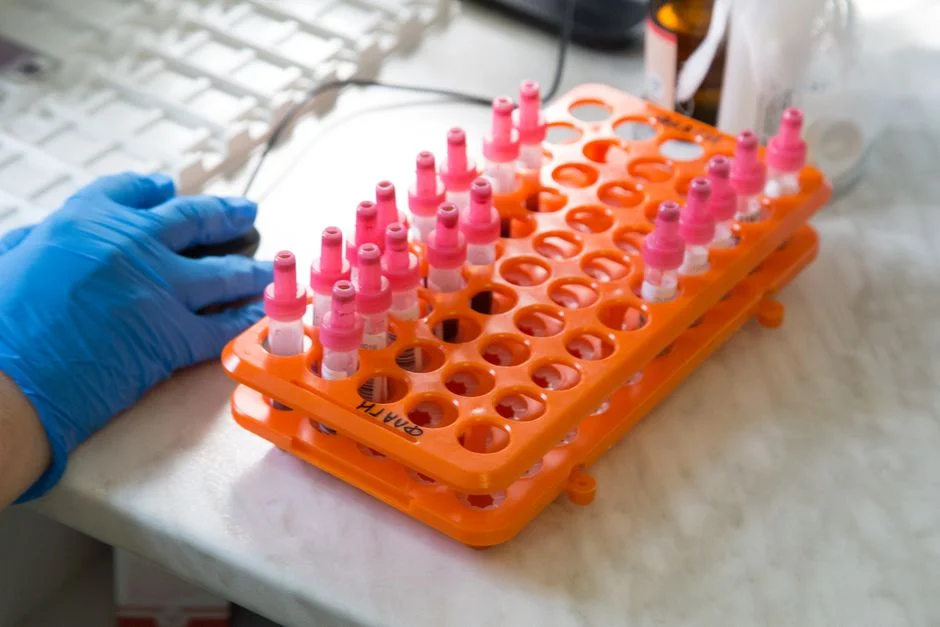
A preliminary press selection requires representative wastewater data, including flow rate, suspended solids, particle-size distribution, solids content, pH, temperature, and the process streams included in each batch. For electronics manufacturing wastewater, also evaluate conductivity, metals, oils, surfactants, solder-related constituents, and cleaning chemistry where relevant. The supplied research provides no discharge limits for these constituents, so the RFQ should request the site’s applicable criteria instead of assuming generic removal performance.
Sampling must reflect production peaks, shutdowns, first flushes, and batch dumps rather than only an averaged daily composite. These periods can change the solids loading, chemical demand, particle distribution, and batch behavior that determine filtration performance. Separate sampling may be needed for PCB-derived particles, suspended manufacturing solids, rinse-water concentrates, and metals-bearing sludge before deciding whether they should be combined for conditioning.
Define the required outcomes separately: filtration-area basis, target filtrate quality, cake dryness, cake-drop requirement, maximum cycle time, available operating hours, and permitted filtrate destination. Then request the supplier to show how its proposed design meets each outcome. Supplier and filter-cloth options can be reviewed through filter media and treatment-parts selection for the specified wastewater, but compatibility must be confirmed rather than inferred from the product description.
Chemical conditioning may improve aggregation, filtration, or cake release, but it also introduces chemical demand, pH control, residual chemistry, and sludge-handling consequences. The BRIN study provides a useful warning about scope: it tested simulated activated sludge represented by CaCO₃ at 1–4% w/w, not a complete electronics assembly wastewater stream. It cannot establish the required area, cloth, or cycle time for PCB particles, metals-bearing sludge, or mixed process batches.
| Information to request | Why it affects selection | Minimum representation |
|---|---|---|
| Flow and duty pattern | Determines feed-pump and cycle requirements | Design flow, batch volume, operating hours, peak and dump conditions |
| Solids loading | Links solids delivered to filter area and cake volume | Suspended solids, solids content, sampling method |
| Particle characteristics | Influences cloth selection, blinding risk, and conditioning | Particle-size distribution and representative sample locations |
| Chemical matrix | Controls cloth compatibility and conditioning demand | pH, temperature, metals, oils, surfactants, solder-related constituents, cleaning chemistry |
| Performance targets | Provides a basis for sizing and acceptance testing | Filtrate quality, cake dryness, cake drop, maximum cycle time, filtrate destination |
Choose the plate, frame, cloth, and operating configuration
Chamber count, plate size, plate design, filtration area, operating pressure, cloth selection, and cycle objectives are interdependent. Selecting one independently can produce a press that is oversized in one duty and unable to meet cycle-time or cake-release requirements in another. The supplier should show the design basis connecting the wastewater characterization to chamber volume, filtration area, feed rate, pressure, and cycle sequence.
HydropureWater’s verified product catalog lists filtration areas from 1–500 m², with manual, hydraulic, and fully automatic PLC-controlled operation. These are available configuration boundaries, not a site-specific recommendation. The appropriate area requires the design flow or batch volume, solids loading, duty pattern, feed-routing method, and required cycle time. See the plate and frame filter press for electronics wastewater dewatering for the stated product range.
Relevant options include automatic plate shifting, cloth washing, drip trays, cake shields, and safety light curtains, as identified by M.W. Watermark. Manual systems require more operator involvement; automatic systems add plate-shifting mechanisms, controls, and maintenance points. Neither labor demand nor automation should be judged independently of the operating schedule and cake-handling method.
Cloth selection directly affects filtration performance, cake dryness, cycle time, and cloth life. In the BRIN study, cotton cloth performed better than drill cloth for the tested CaCO₃ simulation, and cotton achieved 56.00% CaCO₃ removal efficiency at 4% w/w. That comparison is useful as a test result, not as a universal cloth recommendation. The appropriate cloth for electronics wastewater must be confirmed with representative slurry because oils, surfactants, metals, pH, particle distribution, and operating chemistry may behave differently.
| Configuration field | Buyer decision | Evidence needed from supplier |
|---|---|---|
| Press type and filtration area | Match batch or continuous duty and solids loading | Area calculation and stated feed basis |
| Plate size and chamber count | Set cake volume and cycle geometry | Chamber volume, plate dimensions, operating sequence |
| Plate material | Address chemical compatibility and cleaning | Material specification and compatibility rationale |
| Filter cloth | Balance retention, filtration, cake release, and life | Material, weave, proposed test conditions, replacement availability |
| Operating pressure | Match equipment and cloth limits to the duty | Permitted range, control method, and process rationale |
| Automation and accessories | Match staffing, hours, washing, and cake handling | Control narrative, utility demand, safety devices, maintenance scope |
Use evidence without overstating removal performance
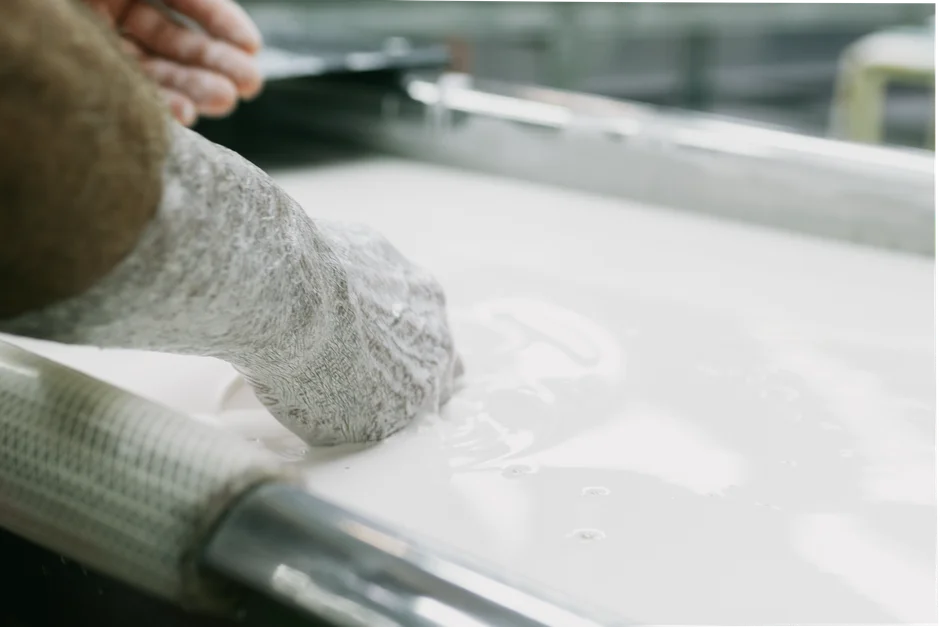
The available BRIN study supports a narrow comparison of cloth performance in a CaCO₃-based simulation; it does not establish guaranteed performance for electronics assembly wastewater. Procurement should distinguish measured results from general filtration principles and require application-specific validation before accepting guarantees for cake dryness, cycle time, or filtrate quality.
M.W. Watermark states that correctly matched filter presses can handle high solids loading and produce high-clarity filtrate suitable for reuse or discharge. Those are qualitative equipment capabilities, not site-specific contaminant-removal guarantees. A representative-slurry trial can establish how the proposed cloth, conditioning regime, pressure sequence, and cycle time perform together.
| Source | Test stream | Concentration range | Cloth comparison | Reported result | Application limitation |
|---|---|---|---|---|---|
| National Research and Innovation Agency, BRIN study | Activated sludge simulated with CaCO₃ | 1–4% w/w | Cotton versus drill cloth | Cotton cloth produced 56.00% CaCO₃ removal efficiency at 4% w/w | Not PCB particles, metals, COD, or complete electronics assembly wastewater; not a universal cloth or removal guarantee |
| M.W. Watermark | General industrial filtration description | Not applicable | Not a comparative test | Correctly matched presses described as capable of high-solids handling and high-clarity filtrate | Qualitative source; site performance requires representative testing |
The appropriate acceptance evidence is therefore a defined test using site wastewater: chemical doses, feed basis, cloth, pressure sequence, cycle time, filtrate observations, and cake condition should be recorded. Any commercial guarantee should state the tested feed and operating conditions rather than rely on generic claims about filter presses.
Build a filter-press RFQ that suppliers can compare
A comparable RFQ starts with one defined design flow or batch volume, representative wastewater characteristics, target cake dryness, cycle-time limit, filtrate specification, cake-handling method, and available operating hours. Ambiguous phrases such as “handle electronics wastewater” do not provide enough information for an engineering comparison or a defensible price.
Require each supplier to state the filtration-area basis, plate size, chamber count, feed-pump duty, operating-pressure range, cloth specification, control method, utility demand, and included accessories. Also ask how the system handles peak flows, short-duration high-strength batches, variability in conditioning, wash water, and cake discharge. These questions expose whether the proposed configuration was designed for the actual duty pattern.
Request commissioning criteria, operator-training scope, maintenance intervals, spare-part availability, warranty terms, and the evidence supporting every performance commitment. The supplier should identify which guarantees can be demonstrated during commissioning and which require a site trial. For instrumentation and operating controls, include a review of monitoring parameters in electronics-related wastewater treatment only where the stated URL is available; the approved link for this article is the monitoring guide.
The supplied sources contain no reliable universal price for this equipment. A quotation should therefore be compared on a like-for-like scope covering filtration area, automation, plate and cloth materials, feed pump, controls, accessories, installation, commissioning, training, and service. Any cost comparison should separate capital scope from consumables, chemicals, maintenance, and downstream cake disposal.
| RFQ schedule | Information required | Acceptance check |
|---|---|---|
| Design basis | Flow or batch volume, solids loading, stream composition, duty pattern | Supplier calculation matches the stated wastewater |
| Equipment | Area, plates, chambers, cloth, pump, controls, accessories | Configuration is stated completely and consistently |
| Performance | Filtrate specification, cake dryness, cycle time, cake drop | Commitment identifies test conditions and acceptance method |
| Execution | Installation, commissioning, training, maintenance, spares, warranty | Responsibilities and deliverables are assigned |
| Commercial | Itemized price, exclusions, utility demand, consumables, service | Quotes use the same equipment and service scope |
Compare filter presses with alternative dewatering options
No dewatering option should be selected from a generic technology description alone. The relevant comparison is whether the method matches the solids fraction, required cake form, operating pattern, available labor, automation, and downstream handling. TPO Magazine describes filter presses as high-pressure separation equipment used across manufacturing, wastewater, metal finishing, mining, and other industrial processes.
A filter press produces a recognizable retained cake and supports batch pressure filtration. That can be advantageous when a plant needs collectible solids for disposal or controlled handling. A decanter centrifuge warrants evaluation when continuous solids concentration is central; however, it introduces a different feed, bowl, solids-discharge, and control arrangement. A belt filter press uses moving belts rather than fixed chambers, so its cloth handling, washing, and alignment requirements differ.
Dissolved air flotation is primarily a pretreatment option for suspended solids, FOG, oil and grease, and colloidal matter. It can prepare a stream for downstream filtration but is not a direct substitute for a dewatering press. If DAF is being considered upstream, its capacity must be based on the electronics manufacturing wastewater characteristics rather than assumed from average flow.
The ASCE paper titled Belt Filter Press Dewatering of Wastewater Sludge confirms that belt presses are an established sludge-dewatering research topic. Its available excerpt does not provide comparative performance data, so it should not be used to claim superior throughput, cake dryness, or cost.
| Option | Primary separation form | Where it merits evaluation | Key selection question |
|---|---|---|---|
| Filter press | Retained filter cake and filtrate | Batch or scheduled solids dewatering where a discrete cake is useful | Can representative slurry meet the required filtrate, cake, and cycle outcomes? |
| Belt filter press | Continuous solids discharge through belt filtration | Sludge-dewatering applications | What site trial demonstrates performance for the actual solids? |
| Decanter centrifuge | Concentrated solids discharge | Continuous solids concentration | Does continuous operation justify the added mechanical and control scope? |
| DAF | Floatable or suspended solids separated from liquid | Upstream removal of suspended solids, FOG, oil and grease, or colloidal material | Is the objective pretreatment, and does the feed characterization support DAF sizing? |
Commission, operate, and maintain the filter press
Commissioning should verify the complete process rather than only the press. Check feed conditioning, pump capacity, valve sequencing, pressure limits, filtrate routing, cake discharge, emergency stops, utilities, and operator training. Confirm that feed and filtrate manifolds are identified correctly and that diversion or return connections match the intended treatment route.
During filling, distribute slurry evenly across the chambers and observe cake development rather than relying only on elapsed time. M.W. Watermark explains that solids distribute through the chambers and compact against the cloth as pressure builds. Uneven distribution can therefore produce inconsistent cake formation and complicate discharge.
Record feed flow, operating pressure, cycle duration, filtrate observations, cake condition, and cloth condition for each representative batch. These records become the basis for adjusting conditioning and identifying whether performance is stable, chemistry-dependent, or affected by changing batch characteristics.
If filtrate quality deteriorates or cake release becomes difficult, check incorrect conditioning, poor feed distribution, cloth damage or blinding, and operation outside the supplier’s pressure and cycle envelope. Do not compensate for an unsuitable feed or cloth by increasing pressure without checking equipment limits. The available filter media and treatment-parts selection for the specified wastewater should support controlled replacement rather than an unverified change in process conditions.
Set inspection and replacement intervals from observed cloth life, chemistry, solids loading, and cycle practice. Cloth-washing options may help maintain performance when the selected process and wastewater make them appropriate, but wash-water demand and wash effectiveness need validation. Keep maintenance records with the batch data so future sizing adjustments reflect actual performance rather than assumptions.
Frequently Asked Questions
What size filter press is suitable for electronics assembly wastewater?
HydropureWater’s verified range extends from 1–500 m² of filtration area, but that range does not identify the correct size for a site. A supplier needs the design flow or batch volume, solids loading, batch or continuous duty, available operating hours, representative wastewater analysis, target cake dryness, and maximum cycle time. Require the supplier to show the filtration-area calculation and operating sequence rather than accepting a model number without its design basis.
How much does a filter press for electronics assembly wastewater cost?
The supplied research provides no reliable universal price, so a defensible budget requires a site-specific quotation. Compare like-for-like scope for filtration area, automation, plate and cloth materials, feed pump, controls, accessories, installation, commissioning, training, service, and warranty. Also request estimates for consumables, chemicals, energy, maintenance, and cake disposal where the supplier can support them; those operating costs should not be hidden inside an equipment-price comparison.
How should a buyer select a filter-press supplier and confirm delivery?
Select against a defined design package: wastewater characterization, duty pattern, performance targets, proposed area and chamber configuration, cloth specification, control philosophy, utilities, commissioning tests, training, maintenance, spares, and warranty. To confirm delivery and lead time, require a proposed schedule with manufacturing, drawing approval, factory testing, shipment, installation, and commissioning dependencies identified. A supplier that cannot connect its configuration and delivery plan to the stated wastewater inputs is not yet presenting a comparable offer.
Does filter-press performance guarantee environmental compliance?
No. Filter-press performance evidence concerns filtration, cake formation, and filtrate under defined test conditions; it is not a discharge authorization. M.W. Watermark’s qualitative statements about high-clarity filtrate do not replace site-specific validation, and the BRIN result of 56.00% CaCO₃ removal at 4% w/w applies only to its CaCO₃ simulation. Require representative-slurry testing and then route the filtrate to the next approved treatment step based on the site’s applicable discharge or reuse requirements. Review any reuse or discharge claims with monitoring parameters in electronics-related wastewater treatment through the linked engineering guide.