Identify the Limits That Apply to a Niles Sewer Discharge
A mill that sends wastewater to a municipal sewer is an indirect discharger, so its enforceable treatment requirements are defined by the industrial-user pretreatment permit, the receiving POTW’s local limits, and applicable state or local rules—not by a single national mill limit. EPA explains that 40 CFR Part 430 effluent guidelines apply to direct dischargers through NPDES permits and to indirect dischargers through pretreatment permits or other control mechanisms (EPA, Pulp, Paper and Paperboard Effluent Guidelines). For a mill near Niles, the first engineering task is therefore document control: identify the applicable subcategory, obtain the permit chain, and map every applicable requirement to a sampling point and operating control.
EPA identifies 40 CFR Part 403.5(c) as the provision requiring POTWs to develop local limits that address the POTW, its sludge, and receiving waters. Those limits are site-specific and may be numeric or narrative, and POTWs impose them at the industrial user’s end-of-pipe connection to the collection system (EPA, Pretreatment Standards and Requirements—Local Limits). The industrial pretreatment limit compliance workflow provides a useful cross-industry framework, but the governing mill-specific documents must come from the receiving POTW and the applicable permitting authority.
| Compliance layer | What it establishes | Document to obtain and verify |
|---|---|---|
| Mill subcategory | Process and product category used to determine the applicable federal framework and regulated pollutants. | EPA’s 40 CFR Part 430 subcategory analysis, cross-checked against actual pulping, bleaching, recycling, and papermaking operations. |
| Federal pulp-and-paper category | Effluent-guideline provisions incorporated into permits or other control mechanisms; regulated pollutants vary by subcategory. | Current 40 CFR Part 430 text and EPA’s applicable subcategory guidance. |
| POTW local limit | Site-specific numeric or narrative conditions protecting the POTW, its sludge, and receiving waters. | Current local-limits ordinance or adopted limits from the receiving POTW, including effective dates. |
| Industrial-user permit | Authorized pollutants, discharge limitations, monitoring, reporting, recordkeeping, sampling, and compliance conditions for the mill. | The mill’s current industrial-user pretreatment permit and all approved modifications. |
| State or local condition | Additional or more stringent requirements that may apply independently of the POTW permit. | State agency requirements, sewer-use ordinances, discharge approvals, and any applicable state certification. |
| Monitoring record | The evidence used to demonstrate compliance at the required location and frequency. | Permit appendices, sampling plan, laboratory methods, calibration records, chain-of-custody forms, and historical monitoring results. |
No supplied source establishes a Niles-specific mill, POTW, limit set, or production flow. Do not substitute another plant’s permit or a commercial summary for the receiving POTW’s adopted limits and the mill’s current permit.
Map the Mill Process to the Wastewater Profile
Pulp and paper wastewater must be characterized by process because regulated pollutants and treatment needs change with the mill’s subcategory and product mix. EPA’s Part 430 framework distinguishes operations including bleached kraft, unbleached kraft, sulfite, semi-chemical, groundwood, chemi-mechanical, deink, purchased-pulp, tissue, filter, nonwoven, and paperboard mills (EPA, Pulp, Paper and Paperboard Effluent Guidelines). A kraft bleaching line, a groundwood operation, a deinking line, and a nonintegrated purchased-pulp mill therefore cannot be assigned one generic pretreatment design.
Start with a process inventory that identifies fiber furnish, bleaching method, chemical recovery, recycling operations, coating or converting steps, and whether streams are segregated or combined. Ask for flow and wastewater data covering pH, TSS, settleable solids, BOD5, COD, oil and grease where applicable, AOX where relevant, color, and any pollutant designated by the POTW. AOX monitoring is particularly relevant where bleaching operations exist, but the sampling point and analytical requirement must follow the mill’s permit and applicable category rather than be assumed.
HellaWater’s commercial pulp-and-paper summary reports approximately 54 cubic meters of water used per metric ton of product (HellaWater, Water Treatment Standards and Requirements for Pulp and Paper Mills). Treat that figure only as an industry screening reference; it is not a Niles plant flow, production forecast, or pollutant-loading design basis.
| Mill source or stream | Wastewater characteristics to investigate | Unit operations to evaluate |
|---|---|---|
| Pulping and fiber preparation | Suspended fibers, settleable solids, bark and grit, variable flow, and batch releases. | Source control, grit removal, GX rotary bar screen for fiber removal, equalization, and solids capture. |
| Bleaching and chemical recovery | pH, oxidizable material including AOX where applicable, color, and process variability. | pH control, equalization, and pollutant-specific chemical dosing; biological treatment where soluble organics require it. |
| Groundwood or mechanical pulping | Fibers, colloids, suspended solids, and organic load. | Screening, clarification or DAF, and biological treatment if required by measured load. |
| Deinking and recycled-fiber operations | Fiber, suspended solids, color, and residual chemicals; segregation from mill streams must be assessed. | Screening, equalization, DAF or clarification, and pH control. |
| Papermaking and coating | Suspended solids, fillers, coating residuals, and potential pH excursions. | Equalization, solids removal, filtration where required, and final pH adjustment. |
| Treatment residuals | Captured fibers, chemical sludge, DAF float, and waste biological solids. | Thickening, plate-and-frame filter press for sludge dewatering, and an approved disposal route. |
The linked high-COD treatment explanation can help frame organics-removal decisions, but it does not replace mill-specific sampling, segregation analysis, or permit review.
Build a Pretreatment Train Around the Actual Permit
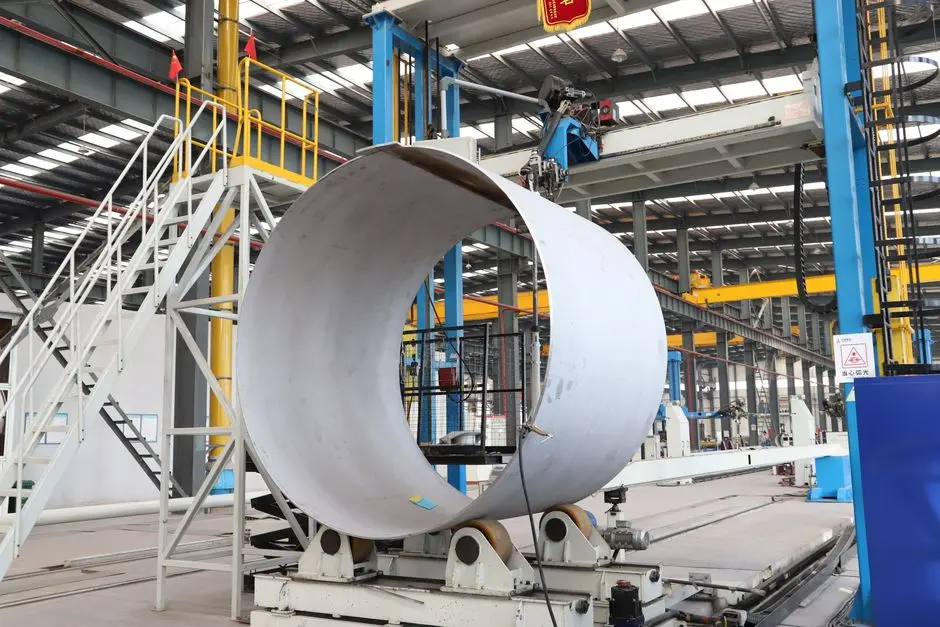
A defensible treatment train follows the source of each pollutant and leaves no unaccounted recycle or bypass stream. The normal sequence is source control and segregation, mechanical fiber screening, flow and load equalization, solids or floatables removal, pH adjustment, biological treatment where soluble organics require it, and residual-sludge management. The actual sequence should be shortened or expanded only after characterization confirms that each function is needed.
HellaWater identifies primary mechanical treatment, activated sludge, and aerated lagoons as common mill approaches and notes that bleached kraft pulp and paper wastewater may require additional steps (HellaWater, Water Treatment Standards and Requirements for Pulp and Paper Mills). Those observations support evaluation rather than automatic selection. A industrial DAF system for pulp-and-paper pretreatment is a candidate where wastewater contains fibers, colloids, suspended solids, oil and grease, or recoverable floatables. The cited HydropureWater DAF range is 4–300 m³/h across 13 standard models, but that supplier catalog range cannot establish adequate capacity for an uncharacterized mill.
Mechanical screening protects downstream units from rags, plastics, and fibrous debris. The GX rotary bar screen is specified for suspended solids, rags, plastics, and fibrous debris, so it should be evaluated where those materials enter the selected wastewater stream. Chemical dosing remains an adjustable support for pH, coagulation, flocculation, and identified pollutant control; it cannot substitute for source control, hydraulic design, or a verified mass balance.
| Process stage | Primary function | Design evidence required |
|---|---|---|
| Source control and segregation | Prevents incompatible or high-strength streams from destabilizing treatment. | Stream inventory, batch-dump procedures, segregation limits, recycle and bypass map. |
| Fiber screening | Removes fibrous and oversized solids that could obstruct equipment. | Solid character, screen aperture basis, extracted-solids handling, and duty cycle. |
| Equalization | Moderates hydraulic and pollutant variation. | Flow and load records, diurnal and batch profiles, and required control volume. |
| DAF or clarification | Removes suspended solids, colloids, fibers, and recoverable floatables where applicable. | Measured solids, flotation or settling tests, recovered-solids rate, and chemical demand. |
| pH adjustment | Maintains the required discharge condition and protects downstream biology. | Permit condition, raw-water variability, control range, and chemical consumption. |
| Biological treatment | Removes soluble biodegradable organics where required. | BOD5 and COD characterization, treatability, process selection, and permit discharge objectives. |
| Filtration or polishing | Provides final solids control where the permit or POTW requires it. | Target turbidity or solids basis, filtration method, backwash or waste handling. |
| Sludge dewatering and disposal | Separates captured solids into an approved management route. | Sludge yield, solids characteristics, dewatering test, destination, and residual records. |
Include the residual-solids route in the compliance design. A 2021 University of KwaZulu-Natal study investigated conversion of pulp and paper mill sludge to PHAs using Bacillus thuringiensis (Singh, 2021). That work is a sludge-valorization proof of concept; it does not establish a treatment train, discharge solution, or approved disposal route for a Niles mill.
The process-flow record should show mill sources feeding screening, equalization, treatment, final sampling, and the POTW connection, with recycle and bypass streams returning to the appropriate process or isolation tank. The automatic chemical dosing system can be evaluated for controlled reagent addition, but dosing capacity must follow measured demand rather than catalog assumptions.
Size Equipment from Measured Loads, Not Generic Water Use
Equipment sizing must begin with the mill’s measured flow, pollutant loads, and operating variability. Obtain at least 30 days of wastewater flow and pollutant-load records where available; where that record is unavailable, require a monitored characterization study before final sizing. The design basis must distinguish average flow from production peaks, diurnal variation, batch dumps, and off-spec events.
The 4–300 m³/h HydropureWater DAF range is a supplier specification, not proof that a particular mill’s average and peak flows fit a standard model. Likewise, HellaWater’s approximately 54 cubic meters of water per metric ton of product is an industry use figure, not a site hydraulic or pollutant-loading input (HellaWater, Water Treatment Standards and Requirements for Pulp and Paper Mills).
Use subcategory figures only as sourced benchmarks. For groundwood chemi-mechanical mills, HellaWater reports BPT limits of 0.15 kg/kkg daily for BOD5 and 0.55 kg/kkg daily for TSS; these values must not be applied to every pulp and paper facility (HellaWater, Water Treatment Standards and Requirements for Pulp and Paper Mills).
| Sizing input | Information the engineering team must obtain | Equipment decision affected |
|---|---|---|
| Hydraulic duty | Average flow, peak flow, diurnal and batch profile, minimum flow, and required equalization. | Screening, equalization, DAF, clarification, biological reactor, and piping. |
| Pollutant mass load | Concentrations and flow-weighted loads for each permit and local-limit parameter. | DAF, biological treatment, filtration, chemical dosage, and residual handling. |
| Solids capture | TSS, settleable solids, fiber character, recovered-float or sludge yield, and solids moisture. | Screen selection, solids separation, sludge thickening, and dewatering. |
| Chemical demand | Jar-test results, coagulant or polymer range, pH reagent demand, and waste impacts. | Dosing equipment, storage, mixing, and operating controls. |
| Process performance | Removal basis, detention time, hydraulic loading, allowable variation, and startup method. | Equipment dimensions, auxiliary systems, controls, and redundancy. |
| Compliance and acceptance | POTW acceptance of proposed characteristics, permit conditions, and treatment margin for production changes and batch dumps. | Final train, polishing needs, bypass restrictions, and contingency capacity. |
Confirm that the receiving POTW accepts the proposed discharge characteristics before ordering. Controls should provide enough margin for normal variability, but margin must be demonstrated through load data rather than introduced as an assumed percentage.
Prove Compliance with Sampling, Monitoring, and Response Rules

Compliance begins at the designated end-of-pipe sampling point, not at an upstream treatment-unit outlet. Build a permit-compliance matrix that identifies every applicable parameter, numeric limit or narrative requirement, sampling point, frequency, analytical method, responsible role, record location, and corrective-action trigger. That matrix should reconcile the industrial-user permit, POTW local limits, prohibited-discharge standards, and state or local conditions.
HellaWater reports a pH range of 5.0–9.0 at all times for specified bleached kraft facilities producing market pulp, paperboard, coarse paper, and tissue paper (HellaWater, Water Treatment Standards and Requirements for Pulp and Paper Mills). That statement has a defined subcategory and source; it is not a Niles limit and must not be transferred automatically to another mill.
The same commercial source identifies monitoring requirements under 40 CFR Part 430.02 for AOX, TCDD, TCDF, chloroform, and 12 chlorinated phenolic compounds in Subparts B and E (HellaWater, Water Treatment Standards and Requirements for Pulp and Paper Mills). Applicability, frequency, method, and reporting must be checked against the mill’s category and permit rather than inferred from the presence of bleaching alone.
| Compliance control | Required operating record | Response when performance is uncertain |
|---|---|---|
| End-of-pipe sampling | Sample location, time, flow condition, parameter result, method, analyst, chain of custody, and laboratory report. | Validate sampling technique and immediately investigate any result inconsistent with treatment performance. |
| Calibration and quality assurance | Instrument calibration, blanks, duplicates, split samples, and corrective actions for failed quality checks. | Qualify the affected data, document the issue, and follow the permit’s reporting rules. |
| Continuous process indicators | Flow, pH, and other approved control measurements with alarm setpoints tied to operating limits. | Adjust treatment, isolate the source, or divert to an approved holding route. |
| Production coordination | Batch-release records, mill operating conditions, chemical uses, and treatment status at release time. | Stop, hold, or reroute the batch until the treatment train can maintain compliance. |
| Noncompliance response | Escalation contacts, notification decision, corrective-action record, and return-to-service authorization. | Follow the permit’s reporting sequence and preserve contemporaneous evidence. |
| Local-limit review | Annual review and periodic reevaluation records, including changed mill operations or pollutant loads. | Revisit characterization, treatment capacity, and permit conditions with the POTW. |
EPA’s pretreatment guidance framework covers collecting and analyzing data, selecting pollutants of concern, calculating allowable loadings, implementing local limits, and conducting annual reviews and periodic reevaluation (EPA, Pretreatment Standards and Requirements—Local Limits). Use the DCS architecture for wastewater monitoring and compliance to organize controls, alarms, data review, and records, while following the industrial discharge-limit compliance approach for permit-to-field verification. Internal treatment performance and end-of-pipe legal compliance are separate checks; monitor both, even where only the latter establishes the reported sewer-discharge result.
Choose Treatment Equipment Without Misreading Compliance
Supplier selection should begin with the confirmed permit and measured process loads, not with equipment claims. Ask each supplier to map its proposed unit to the applicable pollutants, mass loads, flow range, operating variability, residual stream, and end-of-pipe objective. A treatment unit cannot transfer regulatory responsibility from the mill to the vendor.
Require a project-specific performance basis. The supplier should state which pollutants the equipment removes, the removal mechanism, design duty, expected chemical consumption, sludge yield, operating controls, maintenance requirements, and conditions that invalidate the guarantee. Keep process-performance guarantees, equipment warranties, and regulatory compliance responsibilities in separate contractual sections.
| Equipment choice | Primary function | Questions to resolve before selection |
|---|---|---|
| Fiber screening | Removes rags, plastics, and fibrous solids before they obstruct downstream equipment. | What solids are present, what aperture basis is justified, where screenings go, and how fouling is controlled? |
| DAF | Removes suitable suspended solids, colloids, fibers, and recoverable floatables. | Does the wastewater support flotation, what solids recovery is expected, what chemicals are needed, and how is float handled? |
| Clarification | Removes settleable solids through gravity separation. | Have settleability and solids characteristics been measured, and is the resulting sludge stream manageable? |
| Biological treatment | Removes soluble biodegradable organics. | What treatability evidence exists, how is process stability controlled, and what final polishing is required? |
| Filtration | Provides final solids separation where required. | What discharge basis justifies polishing, what waste stream results, and how will plugging or scaling be handled? |
| Sludge dewatering | Reduces residual-sludge water content for approved management. | What sludge yield and moisture are expected, what equipment test data are available, and what is the permitted destination? |
EPA’s pretreatment guidance calls for collecting and analyzing data, calculating allowable loadings, identifying pollutants of concern, and finalizing local-limit-based design only after those steps are completed (EPA, Pretreatment Standards and Requirements—Local Limits). The DAF evaluation framework can help structure technical questions, but refinery experience does not substitute for pulp-and-paper characterization. Before purchase, request startup or pilot evidence relevant to the mill, available footprint, utility requirements, controls integration, maintenance support, and documentation the mill can use during permit review.
Frequently Asked Questions
What pretreatment limits apply to a pulp and paper mill near Niles?
The enforceable limits are those in the mill’s industrial-user pretreatment permit, the receiving POTW’s adopted local limits, and applicable state or local requirements. The mill’s applicable 40 CFR Part 430 subcategory must also be identified, but the supplied research does not establish a Niles-specific mill, POTW, or limit set. Obtain the current permit and POTW local limits before designing to any numeric discharge condition.
How much should a pulp and paper pretreatment system cost?
There is no supported capital-cost or operating-cost figure in the supplied research, so a defensible quotation cannot be stated without site data. Request a cost breakdown tied to measured average and peak flow, pollutant mass loads, treatment objectives, recovered-solids handling, chemical demand, utility requirements, footprint, controls, and residual-disposal route. Also require separate estimates for equipment, installation, commissioning, consumables, maintenance, and analytical support.
How should a buyer evaluate treatment-equipment suppliers against the mill’s permit?
Require each supplier to identify the confirmed parameters and loads its equipment will address, define its performance basis, and separate process guarantees, equipment warranties, and regulatory responsibility. Ask for relevant startup or pilot data, chemical consumption, residual yield, controls integration, maintenance requirements, and permit-documentation support. Reject any proposal based on generic water use or a supplier catalog range without a site design basis.
Does the 5.0–9.0 pH range apply to every pulp and paper mill near Niles?
No. HellaWater identifies 5.0–9.0 at all times for specified bleached kraft facilities producing market pulp, paperboard, coarse paper, and tissue paper (HellaWater, Water Treatment Standards and Requirements for Pulp and Paper Mills). The mill’s own permit and POTW limits determine its applicable pH condition. Confirm the sampling point, frequency, instrumentation, and corrective-action procedure in the approved permit.
Should AOX monitoring be included for every mill?
No. AOX is relevant where the mill’s category and permit require it, particularly for bleaching-related operations. HellaWater identifies AOX, TCDD, TCDF, chloroform, and 12 chlorinated phenolic compounds for Subparts B and E under 40 CFR Part 430.02 (HellaWater, Water Treatment Standards and Requirements for Pulp and Paper Mills). Determine applicability from the confirmed subcategory, permit, local limits, and analytical plan rather than adding monitoring without a defined compliance or process-control purpose.