What treatment route do Marseille manufacturers use for high-COD trade waste?
Marseille manufacturers generally treat high-COD trade waste through a staged route: characterize and equalize the effluent, remove oil, FOG and suspended solids by DAF or coagulation, reduce soluble biodegradable COD biologically, and add membrane or advanced polishing only where the permit or reuse target requires it. The regional high-COD trade-waste treatment guide identifies these as complementary, not interchangeable, treatment steps. The decision must follow the site’s Autorisation de Déversement, measured wastewater characteristics and treatment trials.
COD alone does not establish the appropriate process. It indicates organic loading, but FOG, TSS, pH, temperature, toxicity, nutrients and specific compounds determine whether pretreatment will work and whether the biological stage can be loaded safely. Equalization also matters where production, cleaning and batch discharges vary.
The supplied evidence covers municipal sewer discharge, coastal sensitivity and industrial pretreatment; it does not create a universal Marseille limit. The receiving route must therefore be confirmed before process selection. A defensible sequence is:
- Characterize the waste and equalize flow and load.
- Remove recoverable oil, FOG and solids.
- Reduce soluble biodegradable COD with a biological process.
- Add membranes, activated carbon or AOP only against identified effluent requirements.
- Confirm the design through the permit and a site-specific performance test.
The 2026 HydropureWater Marseille guide treats DAF, coagulation, biological treatment, MBR, AOP and activated carbon as parts of this route. Their inclusion in one train is not automatic: each stage must answer a defined contaminant-removal objective.
Characterize the wastewater before selecting equipment
A high-COD label cannot support biological loading, tank volume or chemical dosing without a sampling programme that captures the actual discharge envelope.
Sample normal production, batch dumps, clean-in-place events, variable-pH streams and diluted discharges. Record the maximum daily discharge rather than relying on one composite sample. The 2026 HydropureWater Marseille guide gives several influent examples: COD 500–5,000 mg/L with TSS 100–1,000 mg/L; COD 1,000–8,000 mg/L with TSS 500–3,000 mg/L and FOG 100–2,000 mg/L; and COD 1,000–10,000 mg/L with TSS 500–5,000 mg/L. These are contextual examples, not assumed design values for a Marseille plant.
Request COD, BOD, TSS, FOG, oil and grease, pH, temperature, conductivity and nutrient results, plus sector-specific pollutants. Test toxicity or biological inhibition where industrial chemicals may be present. Suppliers should also receive average and peak flow, operating schedule, required pretreatment retention, equalization volume and the intended sewer, coastal or reuse route.
| Design input | Why the buyer needs it | Question for the bidder |
|---|---|---|
| COD and BOD | Defines organic loading, but must be paired with biodegradability and flow data. | Which sampling period and load basis did you use? |
| TSS, FOG and oil and grease | Determines solids capture, pretreatment demand and sludge production. | Which removal mechanism addresses each fraction? |
| pH and temperature | Controls chemical conditioning and biological activity. | How are seasonal and batch conditions covered? |
| Toxicity and nutrients | Tests whether biomass can acclimatize and whether nutrient balance is needed. | Will inhibition or nutrient adjustment be verified? |
| Flow and operating schedule | Establishes equalization, peak-treatment and residence-time requirements. | What design flow and equalization volume are assumed? |
An MBBR, activated-sludge or MBR supplier still needs load, temperature and pH information. COD alone cannot establish biological loading, HRT or tank volume. Before an automatic chemical dosing system is specified, confirm the measured flow signal, chemical inventory, duty sequence and control philosophy against the characterization results.
Protect the biological stage with DAF and chemical pretreatment
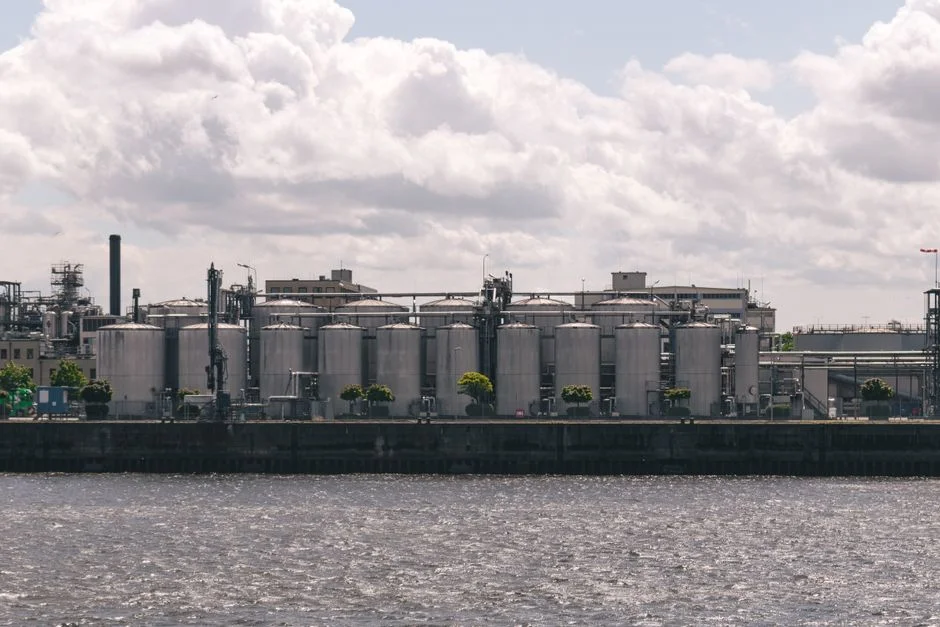
DAF is a solids- and FOG-removal pretreatment step, not a substitute for biological treatment of soluble biodegradable COD.
Its primary roles are capturing oil, grease, suspended solids and some colloidal material before those fractions reach the biological stage or foul downstream equipment. The HydropureWater product catalog states that its industrial DAF pretreatment system covers 4–300 m³/h and uses micro-bubble flotation with automatic skimming.
Where DAF precedes biological treatment, the 2026 HydropureWater Marseille guide gives one example configuration with DAF surface loading of 0.5–1.5 m/min, activated-sludge HRT of 12–24 hours and MLSS of 3,000–5,000 mg/L. These values belong to that example route; they do not establish the correct loading for another waste stream.
Coagulants, flocculants and pH-adjustment chemicals should be selected through jar or pilot testing. A defensible chemical selection requires measured pollutant loading, alkalinity, target pH and the specified effluent limits. Without those inputs, a quoted dose would be an assumption rather than an engineering value.
DAF performance must also be judged on what it captures. Oil, FOG and precipitated solids concentrate into a residual sludge whose volume and characteristics affect downstream dewatering and disposal. The 2026 guide identifies a plate-frame filter press as one available solids-handling approach; bidders should define the residual destination and required dewatering performance rather than treating sludge handling as an ancillary item.
Use DAF where suspended solids, oil or FOG threaten biological treatment or downstream equipment. Use coagulation where testing demonstrates a need for additional solids capture or pH control. If soluble biodegradable COD remains the dominant objective after these checks, proceed to biological treatment.
Select biological treatment for soluble COD reduction
Activated sludge is the established biological baseline, but a new high-COD trade-waste application requires loading, settling and shock-load checks before its reactor volume is fixed.
The strongest supplied MBBR evidence comes from the Juniper Publishers study “Application of Lab-Scale MBBR to Treat Industrial Wastewater using K3 Carriers.” It examined COD of 1,000–3,500 mg/L at HRT values of 3, 5, 8 and 12 hours. At an 8-hour HRT, COD removal exceeded 80%; at 12 hours, removal was approximately 86%, only about three percentage points higher. The researchers selected 8 hours as optimum because of that limited improvement relative to the longer residence time.
Temperature remains a sizing variable. The same study reported COD removal increasing from approximately 70% to approximately 90% between 20 and 25°C, with a sharp change in biological activity over that interval. Winter capacity and batch-discharge recovery therefore need confirmation rather than reliance on a warm-season result.
MBR adds membrane solids separation to activated sludge. The 2026 HydropureWater Marseille guide gives one high-strength configuration with MBR flux of 15–25 LMH, biological HRT of 24–48 hours and SRT of 20–40 days. The integrated MBR wastewater treatment system in the catalog combines activated sludge with submerged PVDF membrane filtration, produces effluent below 1 μm and is offered from 10–2,000 m³/day. These figures describe supplier configurations; they are not guaranteed performance for an untreated Marseille trade waste.
| Biological option | Primary role | Evidence available | Still to verify |
|---|---|---|---|
| Activated sludge | Biological reduction of soluble biodegradable COD and sludge separation by settling. | The 2026 Marseille guide gives an example HRT of 12–24 hours and MLSS of 3,000–5,000 mg/L in a DAF-based route. | Organic loading, sludge settleability, temperature and shock response. |
| MBBR | Attached-growth biological reduction of soluble COD. | The Juniper Publishers study tested COD 1,000–3,500 mg/L and selected an 8-hour HRT with removal above 80%. | Effluent biodegradability, carrier fill ratio, temperature and scaling tendency. |
| MBR | Biological COD reduction plus membrane solids separation. | The 2026 Marseille guide states 15–25 LMH flux, 24–48 hours biological HRT and 20–40 days SRT for one route. | Membrane fouling, cleaning demand, final pollutant targets and replacement assumptions. |
For a detailed comparison, see the MBR versus activated sludge comparison. Treat every cited removal percentage as research or configuration evidence, not a project guarantee. Pilot testing should confirm loading, temperature response, sludge separation and recovery from batch shocks.
Use electrocoagulation or advanced polishing only where the waste demands it
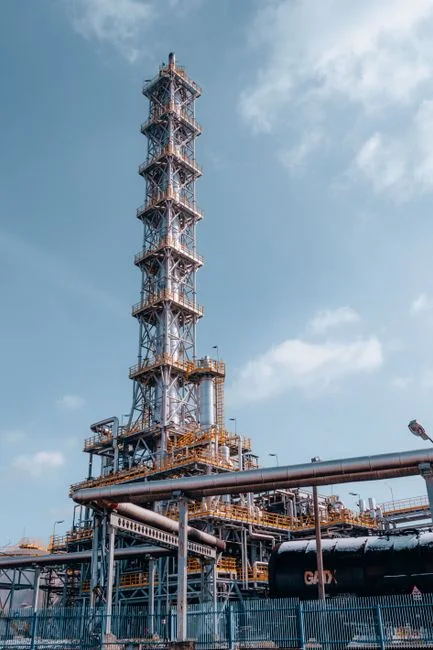
Electrocoagulation is a contaminant-specific option, not a default substitute for biological COD reduction.
The MDPI study “Electrocoagulation: A Promising Method to Treat and Reuse Mineral Processing Wastewater with High COD” applied EC to mineral-processing wastewater with an initial COD of 424.29 mg/L. It evaluated anode material, current density, initial pH and additives. This establishes a method for that wastewater, not universal performance for Marseille trade waste or a basis for sizing an EC unit without site testing.
Activated carbon and AOP should answer more specific objectives. Activated carbon is suited to adsorbable residual compounds; AOP is suited to oxidizable contaminants that cannot be removed adequately by biological treatment alone. Neither should be added merely because the influent COD is high.
The 2026 HydropureWater Marseille guide gives scenario-specific examples: a UV dose of 400–800 mJ/cm² in one AOP configuration and MBR flux of 15–25 LMH in another process route. Neither value is a universal specification for Marseille industrial discharge.
The process objectives must remain separate. Membranes separate solids and control the outlet quality; activated carbon targets adsorbable compounds; AOP destroys oxidizable contaminants but requires review of energy demand, reagent use and byproducts. EC requires comparable review of electrode consumption, sludge generation, electrical demand and operating control.
Before selecting electrocoagulation, AOP or carbon, identify the specific constituent or effluent quality that biological treatment cannot meet. Use bench or pilot testing to establish whether the targeted process performs as expected and whether residuals require further treatment. The electrocoagulation case for electronics assembly wastewater provides a useful application reference, but it does not replace site-specific verification.
Confirm Marseille permits, discharge route and operating costs
The site’s current Autorisation de Déversement is the procurement gate for discharge compliance in Marseille.
The 2026 HydropureWater Marseille guide identifies the Autorisation de Déversement issued by Métropole Aix-Marseille-Provence as the primary discharge document. It cites EU Urban Waste Water Directive 91/271/EEC and the Arrêté du 2 février 1998 as references, while also warning engineers to verify current local rules and the facility’s own authorization. Permit conditions should therefore control the design rather than generic web guidance.
The guide’s numerical effluent examples must remain attached to their stated route. For the Géolide example, it gives COD below 125 mg/L and TSS below 35 mg/L. For its coastal-discharge example, it gives COD below 100 mg/L and TSS below 20 mg/L. These are route-specific examples, not universal Marseille limits.
Operating cost is not a single pump-energy estimate. Aeration is identified as a major OPEX driver in the Marseille configurations, while the Water journal study evaluated 23 machine-learning models to predict WWTP energy consumption from actual Melbourne plant data. The engineering implication is to measure and disclose energy assumptions, not to infer a Marseille tariff or saving from the model study.
The Marseille guide states that ADEME grants may cover 30–50% of eligible CapEx for wastewater upgrades. Treat that as conditional eligibility, not an assured reduction in the quoted price.
| Bid item | Information required from each bidder |
|---|---|
| Design basis | Confirmed flow and load, equalization assumptions, wastewater data and applicable permit limits. |
| Performance | Guarantees tied to defined influent and effluent conditions, with a site acceptance-test method. |
| Operating resources | Energy, chemicals, cleaning reagents, media or membrane replacement and expected service intervals. |
| Residuals | Sludge yield, characteristics, dewatering assumptions and disposal route. |
| Commercial exclusions | Separate quoted scope from permit fees, civil work, connections, taxes, sludge disposal and future replacement allowances. |
Use the 2026 MBR maintenance cost guide to structure questions about membrane cleaning, replacement and maintenance. The supplier should disclose each cost assumption; the buyer should not convert an equipment price into an operating-cost estimate without site data.
Build a defensible equipment-selection checklist
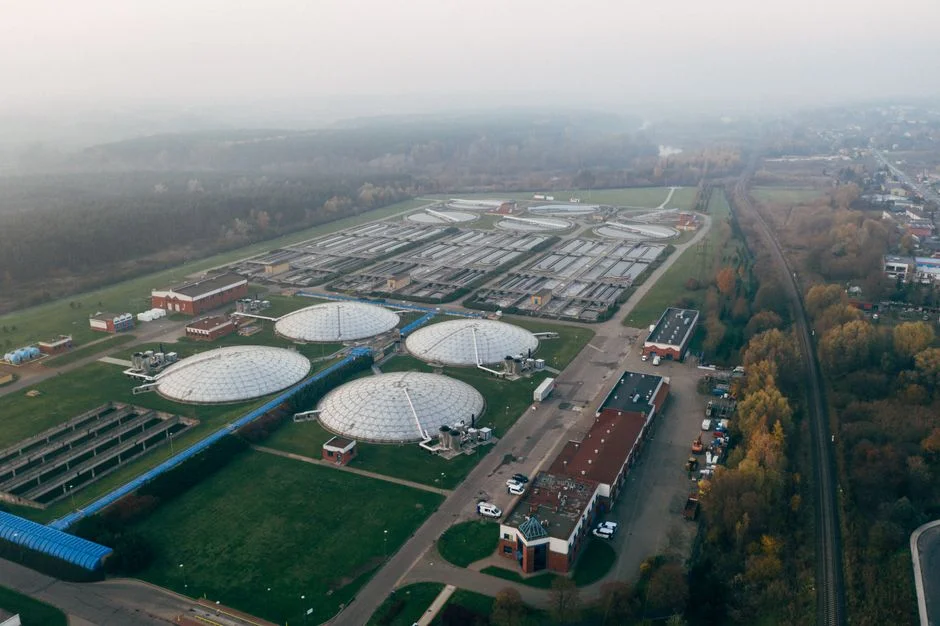
A defensible bid identifies confirmed design data separately from assumptions and tests each unit against a defined removal objective.
- Establish the basis: require the design flow and load, equalization assumptions, wastewater-characterization data, pilot results and current permit limits.
- Close the mass balance: require COD, TSS and FOG accounting through pretreatment, biological treatment and polishing, including generated sludge.
- Match each process: state what DAF, activated sludge, MBBR, MBR, carbon or AOP removes and what residual leaves the unit.
- Compare operation: assess footprint, utilities, automation, maintenance access, replacement inventory and chemical handling on a common basis.
- Test guarantees: define influent and effluent conditions rather than accepting an unqualified COD-removal percentage.
- Plan residuals: identify sludge destination, expected characteristics, dewatering needs and disposal responsibilities.
Mechanical pretreatment should also be included where the waste characterization identifies screening or gross-solid risks. The rotary mechanical bar screen illustrates the type of catalog equipment that can be evaluated as a defined upstream duty rather than added as an unsupported line item.
After stabilization, conduct a site acceptance test covering flow, COD, TSS, FOG where relevant, pH, energy use and sludge handling. Record whether each result meets the stated guarantee under the agreed influent envelope. This closes the gap between a selected equipment train and an operating, compliant process.
Frequently Asked Questions
What process is best for high-COD industrial trade wastewater in Marseille?
The best route depends on wastewater composition, flow variation, permit destination and reuse target—not COD alone. A typical sequence combines equalization, DAF or coagulation for oil, FOG and solids, biological treatment for soluble biodegradable COD, and membrane or advanced polishing only where the permit or reuse specification requires it. Confirm the route through representative sampling and pilot testing.
How should a buyer screen DAF against MBBR, activated sludge or MBR?
Screen DAF when the primary problem is suspended solids, FOG or oil that could overload or interfere with biological treatment. Screen MBBR or activated sludge when soluble biodegradable COD is the dominant biological objective. Consider MBR when membrane solids separation is required by the effluent specification, while accounting for fouling, cleaning and replacement. These are different removal objectives, not interchangeable capacity claims.
What should suppliers provide so treatment proposals can be compared?
Require the sizing assumptions, test data, influent and effluent envelopes, performance guarantees, utility consumption, chemical use, maintenance intervals and residual-disposal assumptions from every bidder. For biological equipment, include loading, temperature and sludge-settling checks. For MBR, include membrane cleaning and replacement assumptions. This permits technical and commercial comparison against the same design basis.
How should cost, permits and supplier selection be assessed before ordering equipment?
Ask each supplier for a priced scope that separates equipment, civil work, installation, chemicals, energy, membrane or media replacement, sludge disposal, commissioning and permit-related exclusions. Do not assume the cited Marseille ADEME grant of 30–50% of eligible CapEx will be awarded. Final selection should follow site-specific wastewater characterization, reference data and review of the current Autorisation de Déversement; compliance risk must be resolved before commercial acceptance.