
Start with the receiving body and water-reuse commitment
Wastewater at a Samsung SDI battery plant in Mexico should be segregated into four streams, treated according to its chemistry, and assigned a permit-compliant destination before final equipment selection. Recover NMP solvent condensate before biological treatment; remove oils and suspended solids from paint-shop wastewater; and control nickel, cobalt, lithium, nitrogen, and phosphorus in electrode-rinse and sanitary flows through an MBR-based train. The final route may be municipal sewer, registered treated-wastewater reuse, or zero liquid discharge, subject to the receiving body, CONAGUA requirements, CEA-Nuevo León conditions, and the plant’s environmental commitments.
The receiving body is the first irreversible decision because NOM-001-SEMARNAT-2021 differentiates discharge requirements among rivers, reservoirs, coastal receivers, and municipal sewers. The same effluent can therefore have different compliance implications depending on where it goes. The project team should identify the utility or basin authority, obtain written acceptance criteria, and confirm the permitted reuse end-use before issuing an ETP basis-of-design or final bid package.
S3 states that a plant reusing treated wastewater must register the reuse stream’s volume, quality, and end-use with CONAGUA before making a treated-wastewater-only commitment operational. If the site is in the Santiago or Santa Catarina watershed, early confirmation from CEA-Nuevo León is also required because S3 reports that additional basin limits and drought-related constraints may apply. That observation is site-specific; it should be verified rather than treated as a universal prohibition on sewer discharge.
| Final route | Primary decision | Approval evidence needed |
|---|---|---|
| Municipal sewer | Utility acceptance and compliance with NOM-002-SEMARNAT-1996, where applicable | Written discharge criteria, sewer permit requirements, and confirmation of industrial-waste acceptance |
| On-site reuse with industrial RO | Defined reuse end-use and registered quality and volume | CONAGUA reuse registration, applicable Título de Concesión, end-user quality specification, and concentrate route |
| Zero liquid discharge | No viable sewer or reuse route, including residual management | Approved destination for evaporator concentrate and crystallization residues |
For additional site-specific context, the framework for data-center cooling blowdown treatment in Nuevo León illustrates why the receiver and reuse decision should precede detailed equipment selection.
Map the four wastewater streams before sizing equipment
The four-stream segregation model prevents chemistry that can inhibit biological treatment from being mixed with streams that can be handled more conventionally. Each source must be surveyed independently for flow, contamination, destination, and responsible operations team before the plant’s average daily flow is converted into an equipment size.
| Stream | Characteristics identified in S3 | Required treatment boundary |
|---|---|---|
| NMP solvent condensate | High-BOD material that is poorly biodegradable | Vacuum distillation or evaporative recovery upstream of biology |
| Electrode-making rinse and DI water | Fluorinated LiPF₆ residues and trace Ni, Co, and Li | Dedicated collection, metal-capable biological treatment, and final polishing where required |
| Paint-shop and general-assembly wash water | Variable oils and grease, fillers, surfactants, overspray, and suspended solids | DAF or lamella clarification before biological treatment |
| Sanitary sewage | Shift-change hydraulic peaks | Equalization sized from the peak, followed by the selected sanitary treatment route |
Stream 1 must not enter an MBR without dedicated NMP recovery. S3 states that a spike of poorly biodegradable NMP can kill MBR biomass, so vacuum distillation or evaporative recovery is a process safeguard rather than an optional resource-efficiency feature.
Stream 2 requires separate collection because fluorinated LiPF₆ residues and trace nickel, cobalt, and lithium connect directly to the applicable discharge or reuse specification. Stream 3 is the primary pretreatment driver: variable oil and grease, fillers, surfactants, overspray, and suspended solids make a DAF system for paint-shop wastewater or lamella clarification the logical stage before biology.
Sanitary equalization should be based on S3’s stated shift-change peak factor of 1.5–2.0 times average flow, not the daily average alone. The broader screening estimate in S3 is 5,000–9,000 m³/day of process flow plus 1,000–2,000 m³/day of sanitary flow for a 27 GWh/yr-class plant. These are preliminary engineering benchmarks, not guaranteed design flows, and require verification against the actual production plan, worker population, recycling rate, and measured sampling program.
Build a treatment train that protects biological performance
The headworks must remove physical debris before the wastewater reaches pumps or fine screening. S3 specifies a rotary mechanical bar screen with a 3–6 mm aperture for rags, foil trims, packaging film, and overspray media. The [rotary mechanical bar screen](https://example.com) is an equipment reference only; its hydraulic capacity and aperture still need to be selected against measured peak flow.
After screening, DAF is the preferred pretreatment for oil-rich, variable paint-shop flow, while a lamella clarifier can be considered where footprint is constrained and suspended solids dominate. S3 gives DAF hydraulic retention time of 20–40 minutes and surface loading of 10–25 m³/m²·h; both must be checked against measured oil, grease, solids, and flow characteristics rather than accepted without verification. NMP recovery remains a separate upstream branch and must not be represented by the DAF package.
The biological stage should be an integrated MBR with submerged 0.1 μm PVDF flat-sheet membranes, a denitrification and nitrification split, and S3’s proposed MLSS range of 8,000–12,000 mg/L. The [integrated MBR wastewater treatment system](/product/2-mbr-integrated-wastewater-treatment.html) addresses the biological core, but supplier guarantees should be tied to measured Ni, Co, Li, nitrogen, phosphorus, COD, BOD₅, and flow conditions.
| Stage | Design basis in S3 | Buyer verification |
|---|---|---|
| Headworks | Rotary mechanical bar screen; 3–6 mm aperture | Debris composition, peak flow, screen capacity, and extraction method |
| DAF or lamella | DAF HRT 20–40 minutes; surface loading 10–25 m³/m²·h | Oil, grease, surfactants, solids, settling tests, and footprint |
| MBR | 0.1 μm submerged PVDF; MLSS 8,000–12,000 mg/L; denitrification/nitrification split | Metal loading, biodegradability, nitrogen balance, membrane flux, and cleaning |
| Solids handling | Homogenization and plate-and-frame dewatering; proposed dry-cake target at least 22% DS | Sludge mass balance, polymer demand, press capacity, and disposal acceptance |
Nickel, cobalt, and lithium determine the need for metal-capable biological treatment and any final polishing. Total nitrogen drives the denitrification and nitrification split, while total phosphorus may require chemical precipitation. Where DAF is used, chemical dosing must be coordinated with phosphorus removal rather than added only for floatability.
DAF float and waste activated sludge should be homogenized before dewatering. S3 proposes plate-and-frame dry cake of at least 22% dry solids as a design target requiring verification. The supplier should define feed condition, polymer consumption, press-cycle performance, filtrate quality, cake handling, and the final disposal route; the [plate-and-frame filter press](/product/9-plate-frame-filter-press.html) is relevant, but no generic press capacity can be assigned from the research alone.
Choose the final discharge, reuse, or ZLD route
The final route should be selected by regulatory pathway, receiving-body criteria, residual management, and process fit—not by treating municipal sewer discharge, RO reuse, and zero liquid discharge as interchangeable equipment packages. Sewer discharge offers the hydraulically simpler route, but it depends on utility acceptance and may conflict with a site’s treated-water commitment. Reuse requires a registered, quality-controlled destination and a managed RO concentrate. ZLD avoids a conventional liquid discharge but requires a complete solids and concentrate-management solution.
| Decision factor | Municipal sewer | RO reuse | ZLD |
|---|---|---|---|
| Regulatory pathway | NOM-002-SEMARNAT-1996 applies where sewer discharge is used, alongside the applicable NOM-001 route | CONAGUA reuse registration and applicable water concession or authorization | Authorization for the selected final residual destinations |
| Final destination | Public sewer and downstream treatment | Defined industrial or sanitary reuse end-use | Concentrate and crystallization residues |
| Main equipment | Pre-treatment plus disinfection or polishing as required | MBR-quality feed treatment, RO, and concentrate management | Evaporation and crystallization with associated solids handling |
| Residual management | Sludge to the sewer route; industrial-waste acceptance must be confirmed | RO concentrate must have a permitted destination | Concentrate and salts require an approved disposal pathway |
| Key uncertainty | Utility acceptance and local policy | End-use quality, recovery, and concentrate disposal | Residual disposal and performance without supplied energy or cost data |
For municipal sewer, S3 identifies fecal-coliform and interfering-substance requirements under NOM-002-SEMARNAT-1996 and describes UV polishing at a dose of at least 40 mJ/cm² as an option. The project must obtain confirmation that the receiving utility accepts the industrial waste before treating this route as available.
For industrial reuse, S3 gives an RO recovery range of 60–75%. Cooling-tower make-up and toilet flushing are candidate end-uses, not approved uses; process-quality requirements, scaling, corrosion, public-health controls, and the CONAGUA registration must confirm each destination. A [reverse-osmosis system](/product/6-reverse-osmosis-ro-water-purification.html) should be selected only after the end-use specification and concentrate route are fixed.
Full zero liquid discharge is the fallback when discharge and reuse conditions cannot be met. The supplied research provides no ZLD energy or cost estimate, so procurement should request evaporation duty, concentrate chemistry, salt-generation rate, utility availability, and residual-disposal pricing from bidders. S3’s Santa Catarina and Santiago observation indicates political and water-stress pressure favoring reuse or ZLD in that context, but it does not establish a universal sewer prohibition.
Build the Mexican compliance and commissioning sequence
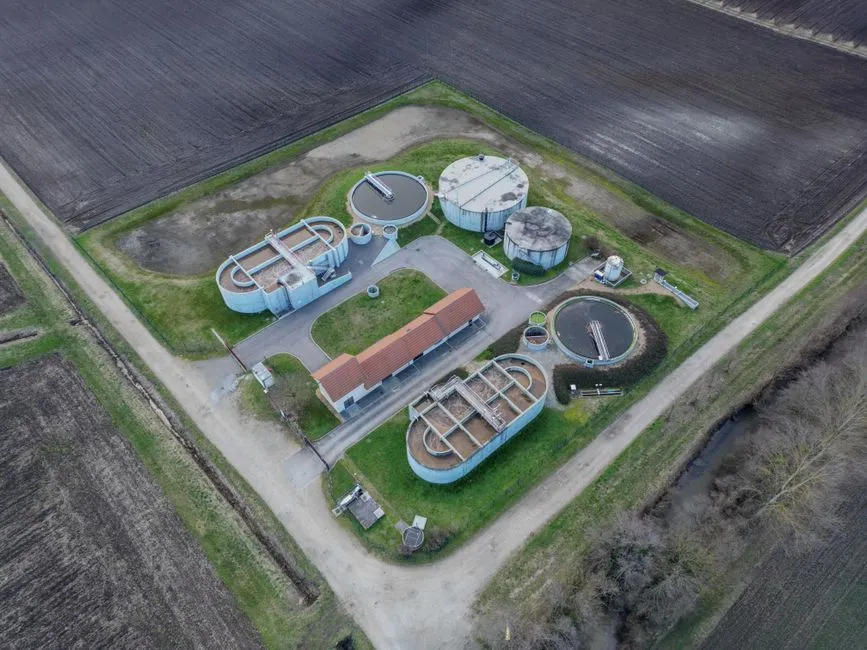
Compliance work and equipment procurement should proceed in a controlled sequence. S3 recommends locking the receiving body and reuse end-use first, quantifying all four streams and sanitary peaks, specifying the MBR, engaging CEA-Nuevo León before the Manifestación de Impacto Ambiental, and deciding between RO reuse and ZLD where the basin is water-stressed.
| Stage | Engineering or permit action | Release criterion |
|---|---|---|
| 1. Destination lock | Identify the receiving body, reuse end-use, and residual destination | Written authority and utility confirmation |
| 2. Source characterization | Measure flow, chemistry, shift peaks, NMP, LiPF₆ residues, Ni, Co, Li, oils, nutrients, and solids | Validated mass balance and design flow |
| 3. Regulatory consultation | Engage CEA-Nuevo León and determine LGEEPA, NOM, CONAGUA, and aquatic-resource requirements | Agreed permit basis and applicable limits |
| 4. Equipment specification | Issue performance-based ETP, MBR, pretreatment, reuse or ZLD, and solids-handling packages | Guarantees tied to measured influent and final-use criteria |
| 5. Commissioning | Install, test controls, train operators, perform performance testing, and establish monitoring | Acceptance demonstrated before routine waste receipt |
The federal and state instruments must be reviewed in context: NOM-001-SEMARNAT-2021, NOM-002-SEMARNAT-1996 where sewer discharge applies, LGEEPA, the CONAGUA Título de Concesión and reuse registration, and applicable CEA or federal aquatic-resource review. Meeting a NOM-001 concentration limit does not itself establish authorization to discharge or reuse.
An influent sampling and mass-balance program should run in parallel with permit work. It must replace the preliminary S3 flow estimates with measured flows and contaminant loads before final sizing. Commissioning plans should also define bypasses, online flow and quality monitoring, sampling points, operator training, performance tests, and contingency responses for an NMP upset or excess electrolyte-derived load. The [DAF sizing for a Mexican automotive plant](/blog/15060-what-daf-capacity-does-volkswagen-s-mexico-ev-plant-need-2026.html) provides a useful comparison, while the [2026 wastewater treatment plant cost breakdown in Jalisco, Mexico](/blog/2272-wastewater-treatment-plant-cost-in-jalisco-mexico-2025-engineering-breakdown-with-local-data-compliance-roi-calculator.html) should be treated as regional cost context rather than a quotation.
Equipment selection should reflect Samsung SDI’s stated environmental themes: reducing water consumption, increasing reuse, managing water quality, minimizing effluent-generating chemical use, and operating high-standard effluent treatment facilities, as described by S2 and S4. These commitments are relevant design inputs, but measured site data and permits remain the controlling basis.
Frequently Asked Questions
Can a Samsung SDI site use municipal sewer, RO reuse, or ZLD?
All three routes can be evaluated, but none is a default outcome. Municipal sewer requires utility acceptance and applicable NOM-002 compliance; RO reuse requires CONAGUA registration, a defined quality specification, and a concentrate route; ZLD requires a complete residual-disposal solution. The receiving body, reuse end-use, water quality, and local approval determine the feasible route.
What should a buyer request when comparing treatment equipment?
Ask bidders to guarantee performance against measured wastewater characteristics and the selected final-use specification. Request membrane and material data, controls integration, operating assumptions, maintenance intervals, commissioning support, and wastewater-specific references. A generic battery-plant flow diagram is not a sufficient basis for comparing an MBR, DAF, RO, or ZLD package; the MBR versus conventional wastewater treatment alternatives should be read as a framework rather than a substitute for site testing.
Are the preliminary flow estimates suitable for equipment sizing?
No. S3’s 5,000–9,000 m³/day process flow and 1,000–2,000 m³/day sanitary flow are screening values for a 27 GWh/yr-class plant. Buyers should request measured production flows, stream-by-stream sampling results, shift-change peak data, recycle rates, and a validated water balance before sizing equalization, biological, RO, evaporation, or solids-handling equipment.
Does meeting NOM-001 limits establish a right to discharge or reuse?
No. NOM-001 establishes receiving-body-dependent limits, but discharge may also require LGEEPA authorization, a Licencia de Funcionamiento, CONAGUA instruments, state approval, and utility acceptance. Reuse additionally requires registration of the reuse stream’s volume, quality, and end-use before the treated-wastewater-only commitment is operational. A buyer should request a site-specific permit matrix showing each obligation, authority, holder, and prerequisite before accepting an equipment schedule.