What Aluminum Wastewater Must Achieve Before Filter Press Dewatering
A filter press can be used for dewatering sludge from aluminum processing wastewater when pretreatment produces a pumpable, filterable solids slurry, but the press is a sludge-separation step—not a complete aluminum wastewater treatment system. During filtration, solids collect on the filter cloth to form a cake as the liquid filtrate passes through (Advanced Chemical Systems, 2020). HydropureWater offers plate-and-frame presses from 1 m² to 500 m² in manual, hydraulic, and automatic PLC-controlled configurations (HydropureWater verified product catalog). Correct design depends on actual sludge concentration, particle behavior, conditioning chemistry, required cake dryness, flow variability, and disposal or reuse route. Performance should be verified with site wastewater or a representative pilot trial (Fournier Industrial).
Aluminum finishing, rolling, extrusion, anodizing, and coating operations do not produce a single, universal wastewater formula. The design basis must identify the relevant stream, its production origin, and its variability rather than assume that every aluminum plant has the same hydroxide-bearing solids, oils, suspended material, or flow profile.
Request the following minimum inputs before selecting equipment:
- Average and peak wastewater or sludge flows, operating hours, and expected production variability.
- Suspended-solids concentration and solids captured by upstream treatment.
- Particle-size distribution and whether the solids are predominantly hydroxide-bearing, metallic, precipitated, or mixed.
- Oil and grease content, pH, temperature, and the chemical dosing history.
- Target cake moisture, cake-handling method, filtrate destination, and the intended disposal or beneficial-use route.
The filter-press boundary must remain explicit. During filtration, conditioned sludge is pumped into a chamber; retained solids form a cake on the cloth while liquid filtrate exits through the cloth (Advanced Chemical Systems, 2020). Upstream units may still be required for oil, colloids, dissolved contaminants, or unwanted solids. Downstream treatment may also be needed before filtrate reuse.
Filter-cloth selection must be tested against the actual sludge. A study by the National Research and Innovation Agency examined simulated activated sludge containing 1–4% w/w CaCO₃ and found cotton cloth performed better than drill cloth under those conditions; its reported solids-removal efficiency was 56.00% at 4% w/w (National Research and Innovation Agency). That study did not test aluminum-processing sludge and therefore does not establish an aluminum-specific cloth selection or moisture result.
| Design input | Why it matters before equipment selection | Evidence required |
|---|---|---|
| Flow profile | Determines batch frequency, equalization need, and peak loading. | Measured average and peak sludge flow; operating schedule. |
| Solids characteristics | Influences cake formation, blinding tendency, and conditioning demand. | Suspended solids, particle-size distribution, sludge origin, and chemical history. |
| Oil, pH, and temperature | Can interfere with separation, cloth selection, materials, or conditioning. | Representative laboratory and operating records. |
| Outputs | Defines the required cake and filtrate quality without implying a regulatory limit. | Cake-handling route, target moisture, and filtrate reuse or treatment plan. |
Where gross suspended material can foul collection equipment, a mechanical bar screen for wastewater screening may be relevant. If chemical addition is required, specify automatic chemical dosing for sludge conditioning. Where oil, grease, or floatable solids require separation before sludge dewatering, evaluate dissolved-air flotation for aluminum wastewater pretreatment.
How the Treatment Train Fits Together
The filter press should be positioned after the treatment steps that make aluminum-derived solids pumpable, filterable, and suitable for the selected cake-handling route. A defensible treatment train normally follows this sequence:
- Screening and equalization: remove gross debris and balance variable flows and production conditions before treatment.
- Removal or conditioning of problematic fractions: address oil, floatable material, colloids, or dissolved contaminants that would interfere with separation.
- Sludge collection: gather the concentrated solids stream generated by upstream treatment.
- Chemical conditioning: adjust floc structure where testing shows that coagulant or polymer addition improves filtration.
- Filter-press filtration: separate the conditioned solids into retained cake and discharged filtrate.
- Cake discharge: remove and route the cake to its defined disposal or beneficial-use destination.
- Filtrate reuse or further treatment: assess the filtrate against its intended reuse or discharge route.
Coagulation and flocculation should be treated as a controlled pretreatment step, not as a universal recipe. A 2023 study by the Korean Society of Hazard Mitigation evaluated filter-press dewatering under sewage-sludge conditions and found inorganic coagulants suitable under the conditions tested. That result supports testing a conditioning program, but it does not transfer directly to aluminum hydroxide sludge because pH, solids composition, and dosing conditions affect performance.
For an aluminum plant, the chemical program should be tested with representative sludge from the actual source. Compare untreated and conditioned feed, document the dosage basis, and observe filtration rate, filtrate clarity, cake release, and cake characteristics. Automatic chemical dosing for sludge conditioning can provide controlled addition once the chemical and operating basis have been established.
Dissolved-air flotation may precede dewatering when the wastewater contains oil, grease, or floatable solids that need removal. Its capacity should be based on the measured flow and load rather than a generic equipment class; the related DAF capacity sizing for industrial pretreatment explains that selection method. Where discharge or sewer-acceptance constraints affect the treatment objective, review metals-industry wastewater pretreatment requirements.
Process flow: screening/equalization → pretreatment → sludge collection → conditioning → filter press → cake discharge and filtrate handling.
The full sequence should also include access for cake washing, chemical preparation, cloth replacement, and filtrate sampling. A stand-alone press with no defined solids route does not complete the treatment objective.
Filter Press Operating Principle for Aluminum Sludge
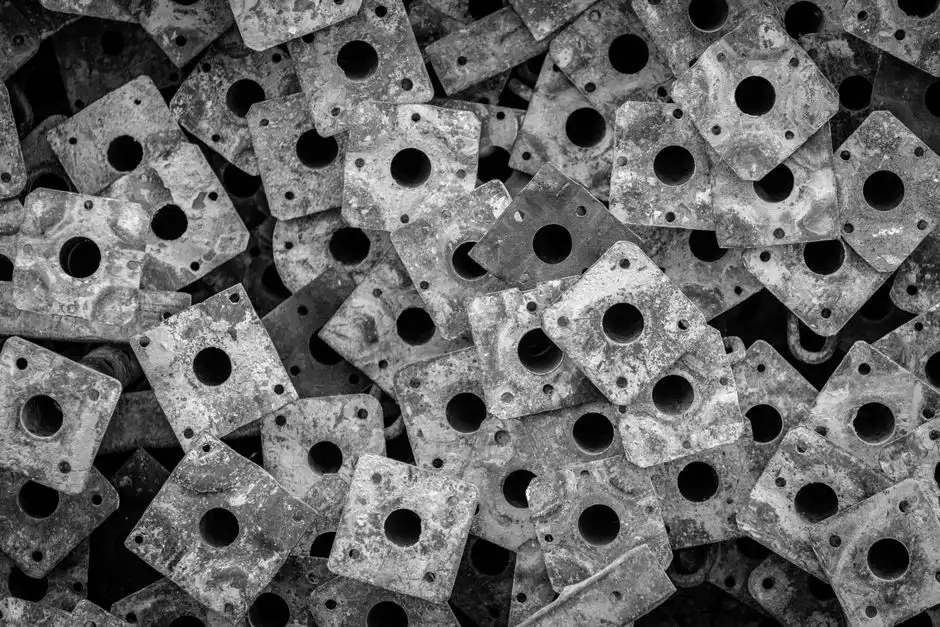
A plate-and-frame filter press separates conditioned sludge by pumping it into closed chambers bounded by filter cloth; solids accumulate on the cloth and form a cake as liquid passes through as filtrate (Advanced Chemical Systems, 2020). The operating cycle begins with plate closure, followed by filling, pressure filtration, cake formation, depressurization, cake discharge, cloth washing, and return to service.
Pressure is one control variable, not a universal design constant. Matec Industries’ equipment guidance refers to common filter-press operation at 5–7 bar and high-pressure operation close to or above 16–21 bar (Matec Industries). Those are supplier references for equipment capability, not recommended settings for an aluminum plant. The acceptable pressure basis must be established from plate and frame strength, feed condition, cloth behavior, equipment configuration, and pilot results.
Operators must control or record feed solids, sludge conditioning, cloth specification, filtration pressure, feed rate, cycle time, and cake-discharge method. Changes in aluminum production, cleaning frequency, chemical dosing, or upstream solids capture can alter the dewatering feed even when the nominal flow remains stable.
Automation changes the operating model, not the feed. Fournier Industrial states that its filter press can operate 24/7 without operator intervention (Fournier Industrial). Site feasibility still depends on available utilities, maintenance access, instrument reliability, chemical supply, and cake handling. Automatic plate closure, washing, and discharge should therefore be evaluated as an integrated control and maintenance system.
The mechanical basis for an industrial plate-and-frame filter press for aluminum sludge dewatering is straightforward, but diagnosing performance requires checking several variables together rather than changing one setting blindly.
| Observed symptom | Checks to perform | Evidence needed before adjustment |
|---|---|---|
| Slow filtration | Check feed solids, conditioning effectiveness, feed rate, cloth condition, and pressure behavior. | Feed and filtrate records; pressure trace; dosing history. |
| Excessive filtrate turbidity | Check cloth damage, bypass or sealing condition, feed characteristics, and whether solids are passing through. | Filtrate samples; cloth inspection; batch records. |
| Rising pressure | Check feed rate, clogging or blinding, cake development, and whether the filtration phase exceeds the established cycle. | Pressure and flow trend; feed condition; cloth history. |
| Incomplete cake release | Check conditioning, cake-release mechanism, cloth condition, and residual cake left during washing. | Discharge observations; maintenance and dosing records. |
| Cloth blinding | Check retained solids, oil or grease carryover, wash effectiveness, and whether the cloth is compatible with the sludge chemistry. | Cloth inspection; wash-cycle records; feed characterization. |
For operator training, use the equipment-specific sequence, instrument readings, interlocks, and emergency procedure. The general cycle above is a process explanation, not a substitute for the manufacturer’s operating manual.
Compare Plate-and-Frame, Automatic, and Pilot Options
The configuration decision should follow the variability of the aluminum sludge stream and the plant’s labor and control requirements, not filtration area alone. HydropureWater’s verified catalog lists manual, hydraulic, and fully automatic PLC-controlled plate-and-frame presses across 1 m² to 500 m² of filtration area (HydropureWater verified product catalog).
| Option | Relative operating characteristics | Selection question |
|---|---|---|
| Manual | Greater dependence on operator action for closure, discharge, or related cycle tasks. | Is labor availability sufficient, and is the sludge stream sufficiently stable? |
| Hydraulic | Provides hydraulic plate control while retaining a different degree of operator involvement. | Does the required control sequence justify this configuration? |
| Fully automatic PLC-controlled | Supports programmed operation, integration, and reduced manual intervention. | Are utilities, controls integration, maintenance access, and cake handling ready? |
| Pilot unit | Provides site-based evidence before full-scale commitment. | Is feed variability or achievable cake dryness too uncertain to specify from catalog data? |
Manual and hydraulic systems can suit smaller or less continuous installations where labor requirements are understood. Automatic PLC control is more relevant where repeatable cycles, integration with upstream treatment, or reduced operator intervention are priorities. It also requires a clearer engineering definition for interlocks, instrument packages, utilities, spare parts, and service access.
Filtration-area bands are useful for structuring an RFQ, but the area is not a capacity calculation. The appropriate frame count, chamber volume, plate dimensions, and operating sequence must be matched to measured feed behavior and the required batch cycle.
Pilot testing is the strongest route when the sludge changes materially or cake performance remains uncertain. Fournier Industrial explains that pilot units allow dewatering performance to be assessed on site under actual operating conditions (Fournier Industrial). A pilot should use representative sludge and vary the relevant conditioning and operating variables rather than demonstrate a single favorable batch.
When evaluating a plate-and-frame filter press for aluminum sludge dewatering, ask suppliers to state which performance figures come from representative pilot data and which are catalog capabilities. Do not compare claims unless the feed solids, conditioning chemistry, target cake output, cycle sequence, and filtrate destination are aligned.
Size the Filter Press from Real Plant Data
Filter-press sizing begins with measured sludge feed, not with a generic solids-loading rule. The buyer needs average and peak feed rates, operating hours, available batch window, and the variability associated with aluminum production, washing, etching, anodizing, or coating operations.
The feed characterization should include suspended-solids concentration, particle-size distribution, solids properties, pH, temperature, oil content, and all chemical-conditioning details. These inputs determine whether the sludge is pumpable and filterable, how much chemical is required, which cloth should be evaluated, and whether the resulting cake can be discharged and handled.
The output target must be equally explicit. Define the required cake moisture or dryness, acceptable cake consistency, discharge method, filtrate reuse plan, and any applicable discharge or pretreatment requirement. The supplied research does not establish a universal regulatory limit or an aluminum-specific cake-moisture target, so those requirements must come from the plant’s permits, reuse specification, and disposal contract.
HydropureWater’s available plate-and-frame filtration area spans 1 m² to 500 m² (HydropureWater verified product catalog). This range can frame preliminary equipment classes for an RFQ, but it cannot determine the required area for a particular installation.
Request the same data from every supplier so that proposals can be compared on an equivalent basis:
| Proposal field | Required basis |
|---|---|
| Measured feed flow | Average, peak, operating hours, and batch-cycle assumptions. |
| Feed solids | Representative suspended-solids concentration and solids characterization. |
| Conditioning chemistry | Chemical, dose basis, application point, and test results. |
| Proposed filtration area | Calculated from the selected feed and cycle basis, with assumptions disclosed. |
| Operating-pressure basis | Normal filtration pressure, maximum design basis, and relevant instrumentation. |
| Automation level | Manual, hydraulic, or fully automatic PLC-controlled configuration and scope. |
| Pilot evidence | Feed origin, test conditions, measured outputs, and limitations. |
| Cake output | Target moisture or dryness, projected batch mass, and discharge route. |
| Filtrate destination | Reuse, further treatment, or discharge route and any sampling requirement. |
The supplied sources do not contain enough aluminum-specific data to calculate cycles per day, cake tonnage, or required filtration area for a specific plant. Those outputs require representative feed data and a validated cycle basis. If the sludge is variable, include automatic chemical dosing for sludge conditioning in the trial scope so that changes in feed condition can be managed deliberately.
Ask each supplier to identify whether its area calculation uses measured average flow, peak flow, chamber filling time, filtration time, cake-release time, and cleaning time. A proposal that omits those assumptions is not comparable, even if the stated filtration area is identical.
Make a Supplier-Ready Equipment Decision
A defensible equipment decision separates six questions: whether the feed fits the process, whether conditioning works, whether the equipment can scale the validated cycle, whether controls and utilities support operation, whether cake and filtrate have destinations, and whether service arrangements match the plant’s risk needs.
Ask suppliers to identify the proposed filtration area, operating-pressure range, feed and filtrate connections, cloth options, cycle sequence, PLC controls, utilities, maintenance access, and included services. Each proposal should separate verified equipment capability from performance that must be established under the plant’s conditions.
For reference, the National Research and Innovation Agency study reported 56.00% solids-removal efficiency at 4% w/w using cotton cloth, but its feed was simulated activated sludge containing CaCO₃ rather than aluminum wastewater (National Research and Innovation Agency). The result cannot be presented as an aluminum-plant guarantee. Ask whether each proposed performance figure came from a laboratory test, pilot trial, or full-scale installation, and compare feed chemistry, conditioning, cloth, pressure, cycle, and output definitions.
| Decision stage | Pass criterion | Supplier evidence to request |
|---|---|---|
| Process fit | Feed is characterized and the proposed treatment sequence addresses identified interference. | Representative feed analysis and treatment-train description. |
| Validation | Conditioning, cloth, and operating basis have been tested on representative sludge. | Pilot protocol, raw results, and limitations. |
| Scale-up | Proposed area and chamber capacity are tied to the validated cycle. | Calculation sheet and operating assumptions. |
| Controls and utilities | Automation, interlocks, service access, and utilities are defined. | GA drawings, I/O list, utility schedule, and maintenance plan. |
| Solids and liquid routes | Cake discharge, filtrate management, and sampling responsibilities are assigned. | Mass-balance diagram and operating procedure. |
| Commercial support | Scope, exclusions, spare parts, training, and service response are documented. | Detailed quotation and service terms. |
Request total-cost categories rather than an equipment price alone: equipment, installation, chemicals, cloth replacement, energy, operator time, maintenance, cake disposal, and filtrate treatment. The supplied research provides no defensible price range, so a budget should be built from a scoped quotation using site data.
HydropureWater’s 1 m² to 500 m² filtration-area range and three operating modes provide the relevant product context (HydropureWater verified product catalog). They describe available configurations, not a site-specific performance guarantee. Final selection should follow the decision matrix above.
Frequently Asked Questions
How much does a filter press for aluminum processing wastewater cost?
The supplied research contains no defensible price range for this application. Request a quotation using measured sludge flow, feed solids concentration, conditioning requirements, filtration-area basis, automation level, installation scope, utilities, cloth requirements, cake-handling method, and filtrate treatment needs. Ask that the quotation separate equipment from installation, commissioning, controls, accessories, and site-specific performance guarantees.
How do I size a filter press for aluminum sludge?
Do not select filtration area from a generic rule or the equipment range alone. Provide measured average and peak feed rates, feed solids, particle-size distribution, pH, temperature, oil content, conditioning chemistry, operating hours, and the required cake and filtrate outcomes. Where feed behavior or achievable dryness is uncertain, require pilot testing under representative conditions and use the measured cycle to develop the sizing calculation.
Should I buy a manual, hydraulic, or automatic plate-and-frame filter press?
HydropureWater’s verified catalog offers manual, hydraulic, and fully automatic PLC-controlled configurations across 1 m² to 500 m² of filtration area (HydropureWater verified product catalog). Select among them by weighing labor availability, cycle consistency, controls integration, maintenance access, capital complexity, and feed stability—not by assuming that automatic equipment guarantees better dewatering. Include site utilities and cake handling in the feasibility review.
Can a filter press meet the final discharge or reuse requirement for aluminum wastewater?
The press produces a concentrated cake and a separate filtrate, but it does not by itself establish final reuse suitability. Evaluate representative filtrate against the plant’s specific reuse or discharge criteria, including any required further treatment, sampling, or pretreatment. The supplied research provides no universal aluminum-process limit, so the plant’s permit or receiving-system requirement governs acceptance.
Which filter cloth works best for aluminum processing sludge?
The National Research and Innovation Agency found cotton cloth performed better than drill cloth in a CaCO₃ simulation at 1–4% w/w (National Research and Innovation Agency). No aluminum-specific cloth comparison was supplied. Select cloth by testing representative sludge against the required cake output, filtrate quality, release behavior, chemical compatibility, and expected blinding; then confirm the chosen cloth through the operating cycle.