Which Wastewater Streams Need Separate Treatment?
Cooling tower blowdown should normally be treated as the principal Bahçelievler data center process-wastewater stream because evaporation concentrates dissolved salts and cooling-treatment chemicals in the residual water. Domestic sewage must remain hydraulically and legally separate: it has different contaminants and permit requirements from industrial process wastewater. The preliminary treatment boundary should also identify equipment-backwash wastewater, equipment-cleaning wastewater, glycol-bearing waste, condensate and emergency drain-water flows. No Bahçelievler flow or treatment parameters for those secondary streams appear in the supplied research, so each requires representative sampling and characterization rather than an assigned capacity. The data center wastewater treatment guide supports this stream-by-stream approach.
The cooling architecture must be fixed before equipment sizing. An open cooling tower, closed-loop liquid-cooling system or hybrid arrangement produces different blowdown volumes and water chemistries; IT load alone is not a sufficient design parameter. RSP Engineers likewise identifies cooling tower blowdown as the principal process-wastewater source in most large-scale data centers and distinguishes it from sanitary sewage because cooling water contains concentrated minerals and treatment chemicals.
Build a wastewater inventory with one row per stream and record its source, estimated flow range, temperature, chemical constituents, destination, treatment objective, sampling method and responsible discharge route. Glycol-bearing and contaminated first-flush streams should not be assumed to enter the cooling-blowdown treatment train.
Preliminary Flow and Chemistry for Bahçelievler
The preliminary blowdown balance is B = E ÷ (CoC − 1), where B is blowdown, E is evaporative loss and CoC is cycles of concentration. The supplied HydropureWater Bahçelievler source reports 180,000–220,000 L/day of blowdown for a preliminary 20 MW case at CoC 5–6 and 1,500–3,000 ppm TDS, pH 7.5–9.0, silica 20–80 mg/L as SiO₂ and temperature 30–40°C for preliminary screening, attributed to Ecologix (2025). These are comparison values, not approved Bahçelievler design values.
The Istanbul guide reports roughly 720,000 L/day of makeup for a 20 MW site at WUE 1.8 L/kWh and about 3,600,000 L/day for a 100 MW AI-ready campus at PUE 1.2, attributed to Ecologix (2025). It also requires drift loss of approximately 0.02% of circulation rate to be added to the site-specific makeup balance. Because those cases describe different cooling configurations, they cannot be transferred directly to a Bahçelievler site without an agreed water balance. Use the supplied cooling-blowdown treatment methodology to reconcile IT load, cooling architecture, evaporation, drift and blowdown.
| Parameter | Supplied preliminary value | Bahçelievler design action |
|---|---|---|
| 20 MW blowdown | 180,000–220,000 L/day at CoC 5–6; Ecologix (2025) | Use only for initial equalization and treatment checks |
| TDS | 1,500–3,000 ppm at CoC 5–6; Ecologix (2025) | Confirm with source-water and blowdown samples |
| pH | 7.5–9.0 at CoC 5–6; Ecologix (2025) | Confirm actual chemical program and treatment need |
| Silica as SiO₂ | 20–80 mg/L at CoC 5–6; Ecologix (2025) | Use as an RO-scaling screening basis |
| Temperature | 30–40°C at CoC 5–6; Ecologix (2025) | Confirm representative blowdown temperature |
| Makeup reference | Roughly 720,000 L/day for a 20 MW site at WUE 1.8 L/kWh; Ecologix (2025) | Recalculate from the selected Bahçelievler cooling design |
| Drift loss | Approximately 0.02% of circulation rate; Ecologix (2025) | Add to the site-specific makeup balance |
Before design freeze, obtain representative source-water and blowdown analyses covering TDS, pH, silica as SiO₂, suspended solids, temperature, calcium, sulfate, heavy metals, residual biocides and phosphonates. Review the complete cooling-water chemical inventory: antiscalant, biocide and corrosion-inhibitor residuals can determine membrane compatibility regardless of TDS. The supplied research also notes that silica, calcium carbonate and calcium sulfate are the principal scale formers constraining conventional RO performance.
Recommended On-Site Treatment Train
The baseline treatment train is equalization → DAF or lamella clarification → multi-media filtration → UF → RO → reuse or permitted reject management. Each stage should have a defined flow duty, monitoring point, control response and bypass philosophy. The supplied design basis calls for 24–48 hours equalization HRT with slow-speed mixing, peak-flow capacity, batch segregation, offline holding and a defined bypass strategy.
Choose an industrial DAF pretreatment system when suspended solids, oil or precipitated metal hydroxides are the main clarification duty. The supplied DAF capacity range is 4–300 m³/h. Consider lamella clarification when footprint is controlling; the supplied loading range is 20–40 m³/m²·h. Neither range determines the Bahçelievler duty without representative solids and hydraulic data.
Multi-media filtration should use anthracite, sand and garnet and achieve SDI below 5 before UF. The supplied basis specifies a 0.03 µm PVDF ultrafiltration system with feed turbidity up to 300 NTU, SDI below 3 and 2,000–40,000 L/h per skid. Select the number of skids against the confirmed blowdown flow, required redundancy and cleaning frequency.
| Stage | Supplied design basis | Supplier acceptance evidence |
|---|---|---|
| Equalization | 24–48 hours HRT; slow-speed mixing | Peak-flow handling, segregation, offline holding and bypass controls |
| DAF or lamella clarification | DAF: 4–300 m³/h; lamella: 20–40 m³/m²·h | Demonstrated solids, oil or metal-hydroxide removal at selected flow |
| Multi-media filtration | Anthracite, sand and garnet; SDI <5 | SDI, backwash recovery and treated-water results |
| UF | 0.03 µm PVDF; feed up to 300 NTU; SDI <3; 2,000–40,000 L/h per skid | Permeate quality, flux, redundancy and cleaning cycle |
| RO | 75–80% conventional recovery | Recovery and flux at the specified CoC and chemistry |
| Reject management | İSKİ-permitted route or brine concentration and crystallization | Permit basis, complete mass balance and residual-solids route |
Apply RO where the recovered permeate can serve as cooling-tower makeup. The supplied conventional recovery reference is 75–80%; recovery above 90% requires additional controls. Require membrane manufacturers to review silica, calcium carbonate and calcium sulfate scaling risk and to approve the selected antiscalant, biocide and corrosion-inhibitor program. Treat reject management as part of the same process: without a permitted İSKİ route or an approved concentration and crystallization solution, reuse continuity cannot be demonstrated.
Choose Direct Discharge, RO Reuse or Zero Liquid Discharge?
Direct discharge is viable only if SKKY Table 16 compliance is demonstrated, İSKİ permits the connection and the receiving WWTP confirms hydraulic and pollutant-loading capacity. RO reuse is appropriate when freshwater reduction and lower sewer discharge are priorities, the required recovery is compatible with the feed chemistry, and scaling, concentrate handling and performance guarantees can be established. Reserve zero liquid discharge (ZLD) for a confirmed no-liquid-discharge constraint such as a written sewer moratorium, explicit sub-basin requirement or corporate mandate.
The supplied Istanbul guide identifies three triggers for mandatory on-site treatment: municipal-limit exceedance, a ZLD or at least 70% recovery requirement, or inability of the local WWTP to accept the flow. It does not establish a Bahçelievler ZLD requirement or prove that the receiving WWTP lacks capacity; both points require written confirmation. The guide also states that brine concentration and crystallization can add 2–3× CAPEX and create meaningful parasitic load.
| Route | Select when | Do not select when | Evidence required before design freeze |
|---|---|---|---|
| Direct discharge | SKKY Table 16 compliance is demonstrated; İSKİ and the receiving WWTP accept the flow | Flow, temperature or chemistry is unverified, or sewer acceptance is unconfirmed | Applicable limits, written connection approval and confirmed WWTP capacity |
| RO reuse | Freshwater reduction is required, 70–80% recovery meets the objective, and concentrate can be managed | Scaling control, recovery or concentrate handling cannot be guaranteed | Site chemistry, recovery test, membrane warranty conditions and permitted reject route |
| ZLD | A written sewer restriction, sub-basin condition or corporate mandate prohibits liquid discharge | No no-liquid-discharge constraint has been confirmed | Written restriction, complete mass balance, energy study and residual-solids disposal plan |
Use the data-center wastewater treatment framework to test each option against confirmed discharge constraints, recovery objectives and continuity risks. Technology preference should not replace regulatory evidence.
Close the İSKİ Permit Package Before Design Freeze?
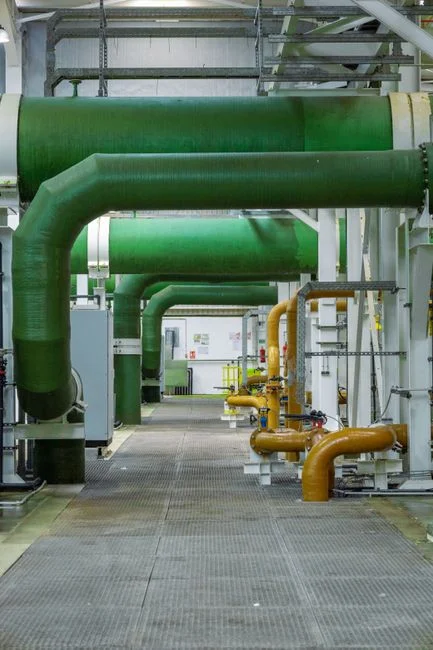
The permit package must be closed before equipment is ordered. Confirm the latest consolidated SKKY text, the applicable industrial limits in Table 16 and İSKİ’s current pretreatment and connection rules. The supplied guides warn that local rules and tariffs changed within the preceding 12 months, so an older summary is not an adequate approval basis.
Obtain written İSKİ confirmation of the receiving WWTP’s hydraulic and pollutant-loading capacity, the applicable discharge-fee tier and required pretreatment controls. The supplied research provides no current Bahçelievler tariff, sewer capacity or discharge consent; request those items rather than inferring them from conditions in another province. The permit-closeout methodology illustrates why the industrial connection pathway must be documented before final equipment selection.
Submit or retain a coordinated technical package containing:
- The final site water balance, including evaporation, drift, blowdown and contingency flows.
- Representative source-water and blowdown analyses.
- The complete cooling-water chemical inventory and residual concentrations.
- Expected water and chemistry changes associated with higher-density racks.
- Equipment-selection calculations for equalization, pretreatment, UF and RO.
- The waste mass balance for sludge, spent chemicals and RO concentrate.
- Emergency storage, offline holding and approved contingency routes for each waste stream.
- Monitoring, sampling, reporting and permit-compliance responsibilities.
Do not assume that direct disposal without pretreatment or discharge into a stormwater route is acceptable. Discharge approval must follow the applicable industrial connection and permitting pathway. Equipment selection should remain conditional until the confirmed discharge route and pretreatment obligations are documented.
Budget and Equipment-Supplier Due Diligence
No Bahçelievler-specific treatment quotation appears in the supplied research. A Genesis Water Tech (2025) comparison case reports a 15 MW project with 60% blowdown recovery, $200,000 CAPEX and a 6.7-year simple payback on water alone. A separate Genesis Water Tech (2025) benchmark gives $250,000–$500,000 installed for a 50,000 GPD RO skid and $1.50–$3.00 per thousand gallons treated. These are industry comparisons, not Bahçelievler prices or design commitments.
| Cost or guarantee | External comparison | Procurement requirement |
|---|---|---|
| Installed RO skid | $250,000–$500,000 for 50,000 GPD; Genesis Water Tech (2025) | Request an itemized Bahçelievler quotation including pretreatment, membranes, controls and utilities |
| Treatment cost | $1.50–$3.00 per thousand gallons treated; Genesis Water Tech (2025) | Define the analysis boundary, power price, chemical use and operating hours |
| Comparison case | 15 MW, 60% recovery, $200,000 CAPEX and 6.7-year simple payback on water alone; Genesis Water Tech (2025) | Do not transfer the result without Bahçelievler flow, water tariff, recovery and reject-route inputs |
| Integrated train | No site quotation supplied | Price equalization, clarification, filtration, UF, RO, PLC-controlled dosing and reject management separately |
Request a complete itemized quotation covering equalization, DAF or lamella clarification, multi-media filtration, UF, RO, PLC-controlled chemical dosing and the selected reject-management option. Require guarantees for treatment flow, UF permeate quality, RO recovery and flux at the specified CoC rather than isolated equipment performance. Request evidence of antiscalant compatibility, membrane-material compatibility and reject-management performance.
The lifecycle comparison should include chemical consumption, membrane cleaning, sludge or concentrate handling, energy, sampling, monitoring, maintenance and compliance reporting. Require the supplier to identify exclusions and state which operating assumptions support each guarantee. A lower equipment price is not comparable unless the scope, feed chemistry, recovery target and reject route are the same.
Frequently Asked Questions
How much does treatment cost for a Bahçelievler data center?
No site-specific price is supplied for Bahçelievler. The available comparison is $250,000–$500,000 installed for a 50,000 GPD RO skid and $1.50–$3.00 per thousand gallons treated, attributed to Genesis Water Tech (2025). Treat these only as initial benchmarks. Request an itemized local quotation covering equalization, pretreatment, membranes, controls, utilities and reject management, together with the assumptions used to calculate operating cost.
What treatment capacity does a 20 MW Bahçelievler data center need?
The preliminary reference is 180,000–220,000 L/day of blowdown at CoC 5–6, attributed to Ecologix (2025), but it is not a final Bahçelievler design value. Recalculate from the selected cooling architecture, evaporative loss, drift and operating cycles, then validate the result through representative source-water and blowdown sampling.
Which equipment should a supplier quote?
The quote should cover equalization, DAF or lamella clarification, multi-media filtration, UF, RO, PLC-controlled chemical dosing and the selected reject-management option. Require integrated performance at the specified CoC, including treatment flow, UF permeate quality, RO recovery and flux, plus chemical-compatibility evidence and a defined concentrate route.
Can the treated blowdown be discharged directly to İSKİ?
Only after demonstrated SKKY Table 16 compliance, İSKİ connection approval and receiving-WWTP acceptance. Obtain written confirmation of hydraulic and pollutant-loading capacity, the current fee tier and required pretreatment controls; preliminary benchmarks cannot establish that approval.
When is zero liquid discharge justified?
ZLD should follow written confirmation of a sewer moratorium, explicit sub-basin requirement or corporate mandate. The supplied Istanbul guide states that brine concentration and crystallization can add 2–3× CAPEX and create meaningful parasitic load, so the restriction and whole-life cost must be demonstrated before selecting that route.
Related Equipment
- industrial DAF pretreatment system — specifications, capacity range, and technical data