What treatment does a Bağcılar data center need in 2026?
A Bağcılar data center generally needs an on-site treatment train for cooling-tower blowdown and utility wastewater rather than uncontrolled sewer discharge. The baseline train is equalization, DAF or lamella clarification, multi-media filtration, UF, RO for cooling-tower makeup reuse, and compliant management of RO concentrate. At CoC 5–6, a 20 MW facility may generate about 180,000–220,000 L/day of blowdown, typically around 1,500–3,000 ppm TDS. Before design freeze, the project must verify SKKY Table 16 limits, İSKİ connection rules, receiving-WWTP capacity, source-water chemistry and the final cooling-water treatment program.
Cooling-tower blowdown is the concentrated residual stream left after evaporation. Dissolved salts and treatment chemicals remain in the water, while biocides, corrosion inhibitors, heavy metals and altered pH may also be present. It is normally the principal wastewater stream, but the project scope must also inventory domestic wastewater, equipment-backwash wastewater, glycol-bearing waste and emergency drain-water flows. The supplied research does not provide Bağcılar quantities for those streams, so they cannot be assigned assumed capacities during concept design.
The recommended baseline is equalization, DAF or lamella clarification, multi-media filtration, UF, RO-based reuse and a permitted reject-management route. A DAF system for cooling-tower blowdown pretreatment removes suspended solids, oils and precipitated metal hydroxides before filtration; lamella clarification is the alternative when footprint is the controlling constraint.
Bağcılar-specific flow, permit and sewer-capacity conclusions still require confirmation with İSKİ. The research does not include a Bağcılar discharge consent, receiving-WWTP capacity value or site-specific pretreatment approval. Water Utility Report, last updated 2026-04-14, identifies water-quality performance and the destination of concentrated cooling discharges as current data-center scrutiny points. The site-entry comparison with the Andijan data-center treatment methodology and the Vancouver cooling-blowdown reference supports separating engineering assumptions from local approvals.
Establish the wastewater and blowdown design basis
The blowdown balance is B = E ÷ (CoC − 1), where B is blowdown, E is evaporative loss and CoC is cycles of concentration; blowdown equals 25% of makeup at CoC 4 and 20% at CoC 6, according to Genesis Water Tech and Ecologix (2025), as presented in the Istanbul guide.
Makeup water depends on facility load, cooling architecture and the selected CoC. At WUE 1.8 L/kWh, the Istanbul guide reports roughly 720,000 L/day of makeup for a 20 MW site and about 3,600,000 L/day for a 100 MW AI-ready campus at PUE 1.2 (Ecologix, 2025). The same guide requires drift loss of approximately 0.02% of circulation rate to be added to the makeup calculation.
These figures are preliminary benchmarks, not Bağcılar design values. Closed-loop liquid cooling can reduce consumption to 5–10% of withdrawal, but the Istanbul guide says most 2026 builds still specify hybrid air/liquid systems or open towers. The treatment scope must therefore follow the selected cooling architecture rather than the IT load alone.
| Design input | Published benchmark | Project application |
|---|---|---|
| 20 MW makeup water | Roughly 720,000 L/day at WUE 1.8 L/kWh | Confirm against selected cooling system and Bağcılar source water |
| 100 MW makeup water | About 3,600,000 L/day at PUE 1.2 | Check whether parallel treatment trains are required |
| 20 MW blowdown | Approximately 180,000–220,000 L/day at CoC 5–6 | Use as a preliminary equalization and treatment check |
| 100 MW blowdown | Approximately 900,000–1,100,000 L/day | Verify hydraulic and reject-management arrangement |
| Drift loss | Approximately 0.02% of circulation rate | Add to the site-specific makeup-water balance |
Source-water and blowdown testing must cover TDS, pH, silica as SiO₂, suspended solids, temperature, calcium, sulfate, heavy metals, residual biocides and phosphonates. The complete cooling-water chemical program must also be reviewed because treatment compatibility depends on the actual chemical inventory, not only on TDS. The data-center wastewater treatment in a water-stressed region provides the corresponding preliminary sizing methodology.
Characterize the wastewater before selecting treatment
At CoC 5–6, the Istanbul guide gives a preliminary blowdown chemistry envelope of 1,500–3,000 ppm TDS, pH 7.5–9.0, silica 20–80 mg/L as SiO₂ and temperature 30–40°C (Ecologix, 2025). These values should be used for preliminary equipment screening and then replaced or confirmed through site sampling.
The Bursa guide reports suspended solids of 10–50 mg/L even with basin filtration, attributable to corrosion products, biofilm fragments and airborne particulates (Genesis Water Tech, 2025). That is not a site-specific Bağcılar solids loading; the owner must establish the actual load through representative samples.
| Parameter | Preliminary evidence | Why it affects equipment selection |
|---|---|---|
| TDS | 1,500–3,000 ppm at CoC 5–6 (Ecologix, 2025) | Influences RO concentrate concentration and discharge route |
| pH | 7.5–9.0 (Ecologix, 2025) | Controls chemical dosing and membrane compatibility |
| Silica as SiO₂ | 20–80 mg/L (Ecologix, 2025) | Contributes to RO scaling risk |
| Suspended solids | 10–50 mg/L with basin filtration (Genesis Water Tech, 2025) | Sets clarification and filtration duties |
| Residual biocides and phosphonates | Expected cooling-water constituents (Ecologix, 2025) | Must be checked against membrane and chemical-control limits |
| Trace Cu and Zn | May result from corrosion-inhibitor breakdown (Ecologix, 2025) | Influences pretreatment and discharge-compliance tests |
Residual biocides, phosphonates, trace Cu and Zn cannot be handled reliably by TDS alone. Silica, calcium carbonate and calcium sulfate are the three scale-formers identified by the supplied Istanbul and Bursa guides from IDE Tech (2025) that constrain conventional RO performance.
Glycol-bearing waste and any contaminated first-flush or emergency wastewater require separate characterization. The sources identify these as relevant data-center waste streams but provide no treatment parameters for them. The regional data-center wastewater treatment methodology emphasizes that sampling and chemical control must precede membrane selection. For Bağcılar, equipment should therefore be selected only after each stream is segregated and its physical, chemical and emergency-disposal route is defined.
Follow the blowdown treatment process from equalization to reuse
The recommended process flow is equalization → DAF or lamella clarification → multi-media filtration → UF → RO → reuse or permitted reject management. Each stage should have a defined duty, design flow, monitoring point and bypass philosophy rather than being treated as a catalogue of equipment.
- Equalization: Provide 24–48 hours of hydraulic retention time with slow-speed mixing to buffer TDS, pH and temperature variation. The Istanbul guide advises against aeration because CO₂ stripping could alter calcium carbonate equilibrium.
- DAF or lamella clarification: Remove suspended solids, oils and flocked metal hydroxides before filtration. The supplied DAF data covers 4–300 m³/h, while the Istanbul guide gives lamella surface loading of 20–40 m³/m²·h. Use the DAF hydraulic sizing methodology for the detailed calculation.
- Multi-media filtration: Use anthracite, sand and garnet to polish the feed to SDI <5 ahead of UF.
- UF: Specify 0.03 µm PVDF membranes, feed acceptance up to 300 NTU and consistent SDI <3. The supplied UF range is 2,000–40,000 L/h per skid. A 0.03 µm PVDF ultrafiltration pretreatment skid must be selected against the actual flow and redundancy requirement.
- RO reuse: Use 75–80% recovery as the conservative conventional default for blowdown-to-cooling-tower reuse. The supplied guide states that operation above 90% requires controlled salt precipitation upstream and dynamic RO cycling.
- Reject management: Branch the final design to permitted sewer discharge under İSKİ approval or to brine concentration and crystallization for ZLD.
| Stage | Design basis from supplied research | Required design check |
|---|---|---|
| Equalization | 24–48 hours HRT; slow-speed mixing | Peak flow, batch segregation and off-line holding |
| DAF or lamella | DAF: 4–300 m³/h supplied range; lamella: 20–40 m³/m²·h | Solids loading, oil, recycle and footprint |
| Multi-media filter | Anthracite, sand and garnet; SDI <5 | Backwash recovery and treated-water quality |
| UF | 0.03 µm PVDF; up to 300 NTU feed; SDI <3; 2,000–40,000 L/h per skid | Flux, redundancy and cleaning frequency |
| RO | 75–80% conventional recovery; above 90% requires additional controls | Silica, calcium carbonate and calcium sulfate scaling |
| Reject management | İSKİ-permitted discharge or brine concentration and crystallization | Permit route, mass balance and residual solid disposal |
PLC-controlled dosing should handle pH correction, antiscalant and biocide across the wet stages. The reject system remains part of the treatment train rather than an afterthought: without a permitted route, the reuse system cannot provide dependable continuity.
Choose direct discharge, reuse or zero liquid discharge
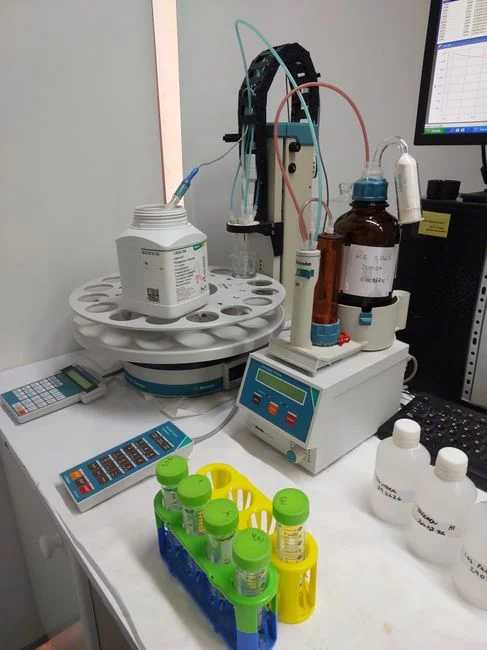
Direct discharge is appropriate only if TDS, temperature rise, heavy metals and residual biocides fall within applicable SKKY Table 16 and current İSKİ connection requirements, and the receiving system accepts the daily flow. Because the research supplies no Bağcılar consent or receiving-WWTP capacity, this pathway cannot be approved from generic benchmarks.
RO reuse is the supplied articles’ default for most 20–100 MW sites because it reduces freshwater demand and sewer discharge without the full crystallizer burden. The decision matrix below distinguishes engineering suitability from unverified local assumptions.
| Pathway | Select when | Do not select when |
|---|---|---|
| Direct sewer discharge | SKKY Table 16 compliance is demonstrated; İSKİ permits the connection; receiving-WWTP hydraulic and pollutant capacity is confirmed | Flow, temperature or chemistry is unverified, or the sewer lacks demonstrated acceptance |
| RO reuse | The priority is freshwater reduction and lower sewer discharge, while 70–80% recovery meets the project objective | Scaling control, concentrate handling or recovery guarantees cannot be established |
| Partial or full ZLD | A sewer moratorium, explicit sub-basin requirement or corporate mandate rules out liquid discharge | The restriction has not been confirmed in writing |
The Istanbul guide gives a three-condition trigger for mandatory on-site treatment: effluent exceeds municipal limits, the area carries a ZLD or ≥70% recovery requirement, or the local WWTP cannot accept the flow. Those conditions must be tested against Bağcılar evidence; the supplied research does not establish that the local WWTP lacks capacity or that a Bağcılar ZLD requirement exists.
ZLD should be reserved for a confirmed no-liquid-discharge constraint. The Istanbul guide says brine concentration and crystallization can add 2–3× the CAPEX and create meaningful parasitic load. For comparison, Genesis Water Tech (2025) published a 15 MW water-stressed case at 60% blowdown recovery with $200,000 CAPEX and a 6.7-year simple payback on water alone. The Bursa guide states that including avoided discharge fees, energy recovery and sustainability benefits can compress payback to 3–5 years. These are comparison cases, not Bağcılar quotations.
The supplied Bursa research also gives a 50,000 GPD RO-skid reference of $250,000–$500,000 installed and $1.50–$3.00 per thousand gallons treated (Genesis Water Tech, 2025). It is an industry benchmark only. A Bağcılar budget should be built from the selected recovery, analysis, equalization volume, pretreatment, controls, utilities and reject route, with an itemized local quotation.
Build the permit and procurement package
The permit package must be closed before design freeze, not after equipment selection. Confirm the latest consolidated SKKY text, the applicable industrial limits in Table 16 and İSKİ’s current pretreatment and connection rules. The supplied guides warn that local rules and tariffs changed within the preceding 12 months, so older summaries are not sufficient.
Obtain written İSKİ confirmation of the receiving-WWTP’s hydraulic and pollutant-loading capacity, applicable discharge-fee tier and required pretreatment controls. No supplied source provides the current Bağcılar tariff, sewer capacity or discharge consent; those must be requested rather than inferred from Istanbul or Bursa conditions.
| Package item | Evidence required | Procurement consequence |
|---|---|---|
| Source-water and blowdown analyses | Full chemistry plus cooling-water chemical inventory | Finalizes pretreatment and membrane materials |
| İSKİ and SKKY confirmation | Current applicable limits, connection rules, flow acceptance and tariff | Determines whether direct discharge remains viable |
| Supplier guarantees | Flow, UF permeate quality, RO recovery and flux at specified CoC | Links payment and acceptance to measurable performance |
| Chemical compatibility | Antiscalant, biocide and inhibitor compatibility statement | Protects membrane warranty and operating performance |
| Reject route | Permit basis or crystallization and residual-disposal plan | Completes the water balance and continuity case |
Request itemized quotations covering equalization, DAF or lamella clarification, multi-media filtration, UF, RO, PLC-controlled chemical dosing and the selected reject-management option. Ask suppliers to guarantee treatment flow, UF permeate quality, RO recovery and flux at the specified CoC. Also request evidence of antiscalant compatibility and reject-management performance.
The owner should provide site-specific source-water and blowdown analyses, the full cooling-water chemical inventory and anticipated changes associated with higher-density racks. The treatment system must be treated as a permit-risk and continuity-control item: the Istanbul guide identifies permit exposure, shutdown risk and community acceptance as material project risks.
Frequently Asked Questions
What treatment system does a 20 MW data center in Bağcılar need?
Use the preliminary case of 180,000–220,000 L/day of blowdown at CoC 5–6, as reported by Ecologix (2025) in the Istanbul guide. A practical starting train is equalization, DAF or lamella clarification, multi-media filtration, UF, RO and controlled reject management. Confirm the actual flow through the selected cooling design and site water balance.
How much does cooling-tower blowdown treatment cost?
No Bağcılar quotation is supplied. The research gives an industry reference of $250,000–$500,000 installed for a 50,000 GPD RO skid and $1.50–$3.00 per thousand gallons treated (Genesis Water Tech, 2025). Request an itemized local quotation covering equalization, pretreatment, membranes, controls, utilities and reject management; do not use the benchmark as a fixed project price.
Should the project use RO reuse or zero liquid discharge?
Choose RO reuse when the objective is freshwater reduction without a confirmed no-liquid-discharge constraint. Choose ZLD only after obtaining written confirmation of a sewer moratorium, sub-basin requirement or corporate mandate. The supplied guides note that ZLD can add 2–3× the CAPEX and a meaningful parasitic load.
Which treatment equipment should a data-center supplier demonstrate?
Ask for demonstrated performance of the complete train, not isolated equipment. Require treatment-flow data, UF permeate quality, RO recovery and flux at the specified CoC, plus chemical-compatibility and reject-management commitments. The reuse compliance reference and packaged wastewater treatment reference provide useful structures for comparing supplier submissions.
What permits and tests are required before the treatment train is designed?
Before design freeze, obtain the current SKKY Table 16 limits, İSKİ connection and pretreatment requirements, and written confirmation of receiving-WWTP hydraulic and pollutant capacity. Test source water and blowdown for TDS, pH, silica, suspended solids, temperature, calcium, sulfate, heavy metals, residual biocides and phosphonates, and review the complete cooling-water chemical program.