
Why Istanbul Is a Water-Stress Data Center Site in 2026
Istanbul sits at the southeastern edge of the Marmara basin, where the city's two-million-cubic-meter-per-day demand already runs against a finite supply system, and seasonal drought (typically July–September) periodically forces ISKI to reduce industrial allocations. A 2026 data center built on evaporative cooling in this basin cannot assume cheap, unmetered municipal water is permanent infrastructure — 75–90% of global data centers still rely on water-based cooling (per KETOS, 2025), and the same supply stress that affects Istanbul residents is now part of every environmental impact assessment a hyperscaler signs.
At an industry-average WUE of 1.8 L/kWh, a 20 MW Istanbul site needs roughly 720,000 L/day of makeup water; a 100 MW AI-ready campus at PUE 1.2 needs about 3,600,000 L/day (Ecologix calculation, 2025). Because 70–80% of that makeup evaporates in an open cooling tower, only 20–30% of withdrawal exits as blowdown — but that 20–30% is the stream a Turkish engineer must treat, meter, and either reuse or discharge under permit. Closed-loop liquid cooling reduces consumption to 5–10% of withdrawal, but most Istanbul builds in 2026 still specify hybrid air/liquid or open towers, so the blowdown problem is the design driver, not the cooling-architecture choice.
Regulatory anchors a 2026 Istanbul facility must design against include the SKKY (Su Kirliliği Kontrolü Yönetmeliği) discharge tables, ISKI pretreatment and connection rules, and the EWC-aligned waste codes for cooling blowdown (11 01 09* family). For comparison with cooler-climate EU peers, see our Stockholm data center blowdown treatment guide.
Cooling Tower Blowdown Chemistry: What a Turkish Plant Engineer Has to Treat
Blowdown volume follows the relationship B = E / (CoC − 1), where E is evaporative loss: at CoC 4 the blowdown equals 25% of makeup, and at CoC 6 it drops to 20% (per Genesis Water Tech, 2025; Ecologix, 2025). The math is small in percentage terms but large in absolute volume — a 20 MW site at CoC 5 cycles roughly 180,000–220,000 L/day of blowdown that has to be clarified, filtered, and either reused or discharged.
With Marmara municipal supply at roughly 250–500 ppm TDS, an Istanbul cooling tower running at CoC 5–6 produces a blowdown in the 1,500–3,000 ppm TDS window. Expected influent parameters for the treatment-train designer: pH 7.5–9.0, silica 20–80 mg/L as SiO₂, temperature 30–40°C, plus residual biocides, phosphonates, and trace Cu/Zn from corrosion-inhibitor breakdown (per Ecologix, 2025). Three species cap conventional RO recovery: silica, calcium carbonate, and calcium sulfate — the same scale-formers that limit brackish RO to 75–80% recovery before flux decays and cleaning frequency spikes (IDE Tech, 2025).
| Parameter | Makeup (Marmara supply) | Circulating water (CoC 5–6) | Blowdown (design influent) |
|---|---|---|---|
| TDS (ppm) | 250–500 | 1,250–3,000 | 1,500–3,000 |
| pH | 7.0–8.0 | 7.5–8.5 | 7.5–9.0 |
| Silica as SiO₂ (mg/L) | 5–15 | 25–90 | 20–80 |
| Temperature (°C) | 10–20 | 25–35 | 30–40 |
| Cu + Zn (mg/L) | <0.05 | 0.2–1.0 | 0.5–2.0 |
| Free Cl₂ / biocide (mg/L) | 0.5–1.0 (target) | 0.2–0.5 | 0.1–0.3 (residual) |
20–30% of total makeup exits as this blowdown stream (KETOS, 2025) — the engineer designs for that fraction, not for the evaporated 70–80%.
Istanbul Discharge Limits vs. Reuse Targets: Which Path the Plant Should Take
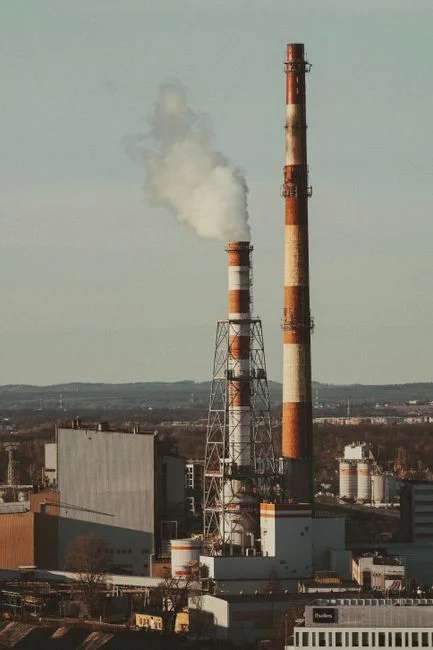
SKKY and ISKI industrial discharge thresholds cap the parameters a blowdown typically violates: TDS (SKKY Table 16 industry limit, generally <2,000 ppm for sewer acceptance), temperature ΔT above receiving water (typical 3–5°C limit), heavy metals (Cu, Zn tied to corrosion-inhibitor chemistry), and residual biocides. Ecologix (2025) defines a three-condition trigger that makes on-site treatment mandatory: (1) effluent exceeds municipal limits, (2) the site is in a water-scarce area committing to ZLD or ≥70% recovery, and (3) the local WWTP cannot accept the daily volume. Istanbul satisfies conditions (2) and (3) in most districts today.
The economic pressure is structural: direct discharge fees in water-stressed regions run $5–15 per thousand gallons (Genesis Water Tech, 2025), and ISKI's industrial tariff in 2025–2026 has moved toward a multi-tiered structure that penalizes high-volume users. For any new Istanbul site drawing from a stressed grid, the math tips toward cooling-tower makeup reuse as the 2026 default. ZLD is reserved for hyperscale builds or specific municipal-moratoria sites, because brine concentrators and crystallizers add 2–3× the CAPEX and a meaningful parasitic load.
For Mediterranean comparison points where the same reuse-default logic applies, the Barcelona data center blowdown treatment guide covers a similar SKKY/ISKI-equivalent regulatory environment, while the Madrid data center blowdown treatment guide shows what high-recovery RO looks like under a tighter discharge-fee regime.
The 2026 Process Train for an Istanbul Data Center Blowdown Stream
The defensible 2026 train for an Istanbul blowdown stream runs equalization → DAF or lamella clarification → multi-media filtration → UF → RO, with reject branched either to brine concentration/crystallization (ZLD) or controlled sewer per ISKI permit.
Step 1 — Equalization basin. 24–48 hours of HRT to buffer TDS, pH, and temperature swings so downstream equipment sees a stable feed. Mix with slow-speed paddles; avoid aeration to prevent CO₂ stripping that would shift calcium carbonate equilibrium. Step 2 — DAF or lamella clarification. Removes suspended solids, oils, and flocked metal hydroxides before they load the filters. The DAF clarification step for cooling tower blowdown (4–300 m³/h DAF range) handles variable solids well; lamella plates at 20–40 m³/m²·h are an alternative when footprint is tight. Step 3 — Multi-media filtration. Anthracite/sand/garnet polishing to SDI <5 ahead of UF; the multi-media filtration polishing stage protects membrane life. Step 4 — UF as RO pretreatment. 0.03 µm PVDF membranes rated for up to 300 NTU feed and delivering consistent SDI <3; the UF pretreatment ahead of the RO typically operates in the 2,000–40,000 L/h range per skid. Step 5 — RO for blowdown-to-makeup reuse. The RO unit for blowdown-to-cooling-tower reuse is sized at 75–80% recovery as the conservative default; pushing past 90% requires controlled-salt-precipitation upstream (per IDE Tech's MAXH2O logic, 2025). Step 6 — Reject management. RO concentrate either feeds a brine concentrator + crystallizer (ZLD) or is discharged under an ISKI permit when salinity, temperature, and metals are within acceptance limits. Across all wet stages, the PLC-controlled chemical dosing skid handles pH correction, antiscalant, and biocide feed to keep recovery and flux on target.
| Stage | Function | Key spec | Operating target |
|---|---|---|---|
| Equalization basin | Flow/TDS buffering | 24–48 h HRT | ΔT < 3°C across day |
| DAF | Oil, TSS, metal-hydroxide removal | 4–300 m³/h per unit | TSS < 30 mg/L out |
| Multi-media filter | SDI polish | Anthracite/sand/garnet | SDI < 5 out |
| UF (PVDF) | RO pretreatment | 0.03 µm, 2,000–40,000 L/h | SDI < 3 out |
| RO (BWRO) | Blowdown-to-makeup reuse | 75–80% recovery default | Permeate TDS < 50 ppm |
| Brine/concentrate | Reject handling | ZLD or ISKI-permitted sewer | Per SKKY Table 16 |
For DAF sizing in detail — air-to-solid ratio, recycle rates, retention times — see the DAF design parameters 2026 guide.
Right-Sizing for 20 MW vs. 100 MW Istanbul Sites
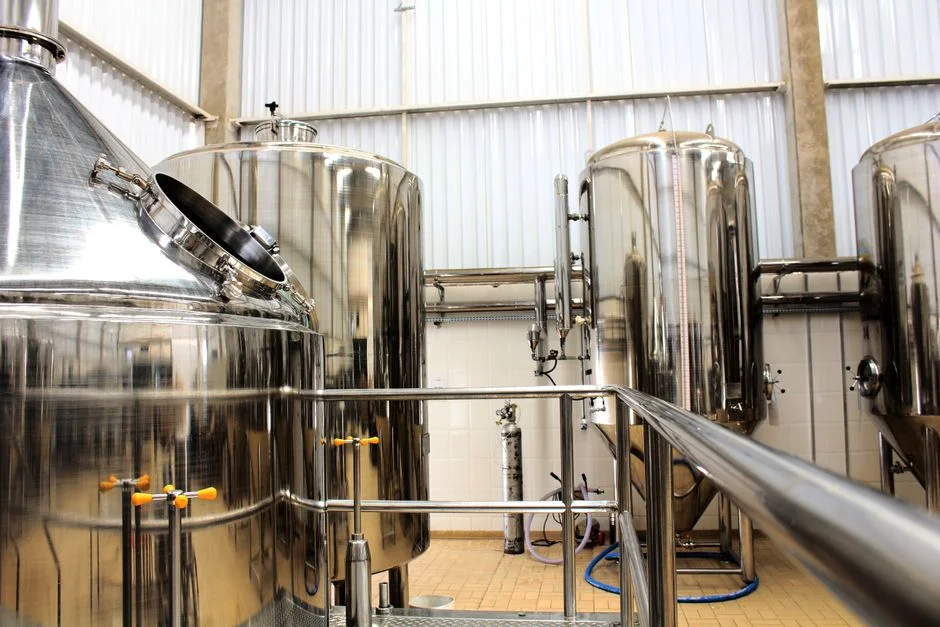
The same process train scales linearly with IT load, but the equipment room footprint, equalization volume, and reject-handling complexity change step-wise. At CoC 5–6, a 20 MW Istanbul site needs ~720,000 L/day of makeup and ~180,000–220,000 L/day of blowdown — this fits a single skid-mounted train (one DAF, one multi-media, one UF, one RO) in a single equipment room with the PLC-controlled chemical dosing skid alongside. The 20 MW case is the right place to start the BOM.
A 100 MW AI-ready campus needs ~3,600,000 L/day of makeup and ~900,000–1,100,000 L/day of blowdown (Ecologix, 2025). This pushes the design into parallel trains, dedicated equalization sized for 48 hours, and serious reject handling — IDE Tech (2025) cites 100 MW sites consuming up to 2,000,000 L/day, and Ecologix (2025) places hyperscale AI data centers in the 1.14–1.70 million L/day range before AI-driven density uplift. Drift loss of ~0.02% of circulation rate must be added to the makeup water calculation (Ecologix, 2025). Because AI-dense racks now exceed 50 kW per rack and pull PUE and WUE upward, any 2026 design should be sized for the next rack generation, not the current one — oversizing equalization by 20–30% is cheap insurance.
| Parameter | 20 MW site | 100 MW site |
|---|---|---|
| Makeup water (L/day) | ~720,000 | ~3,600,000 |
| Blowdown at CoC 5–6 (L/day) | 180,000–220,000 | 900,000–1,100,000 |
| Equalization HRT target | 24–48 h | 48 h (parallel cells) |
| DAF / MMF / UF / RO trains | 1+1+1+1 | 3–4 parallel, duty + standby |
| Reject pathway | ISKI-permitted sewer typical | ZLD or sewer + brine conc. |
Cost, Payback, and Compliance: Making the 2026 Business Case
Genesis Water Tech (2025) published a worked 15 MW / water-stressed example: 60% blowdown recovery, $200,000 CAPEX, 6.7-year simple payback on water alone. Once avoided discharge fees, energy recovery from concentrate-side pressure exchangers, and corporate sustainability targets are included, payback typically compresses to 3–5 years. For Istanbul, the same calculation should overlay ISKI discharge fees, Turkish-lira-denominated industrial water tariffs, and the EU-aligned CSRD-style disclosure pressure that any site serving EU tenants will face.
The compliance value is harder to put on a bid sheet but is real: meeting SKKY Table 16 eliminates permit risk and the shutdown exposure that comes with a single non-compliance event. Dumping blowdown to sewer in a water-stressed Marmara basin is increasingly a social-license issue — not just a permit issue — and community opposition to a hyperscaler in 2025–2026 has repeatedly translated into construction delays and revised operating consents. The CAPEX line for DAF + multi-media + UF + RO plus the PLC-controlled chemical dosing skid is therefore an insurance policy with measurable monetary value, not a sustainability add-on.
Frequently Asked Questions
What wastewater and cooling blowdown treatment does a data center in Istanbul, Turkey need?
A 2026 Istanbul data center typically needs an equalization basin, DAF or lamella clarification, multi-media filtration, UF, and either an RO reuse loop or controlled discharge under an ISKI permit. The train is sized for a blowdown of 1,500–3,000 ppm TDS at CoC 5–6, with reject branched to a brine concentrator + crystallizer (ZLD) or to ISKI-permitted sewer. The PLC-controlled chemical dosing skid handles pH correction, antiscalant, and biocide across the wet stages.
How much blowdown does a 20 MW Istanbul data center actually produce?
At WUE 1.8 L/kWh and CoC 5–6, a 20 MW site needs ~720,000 L/day of makeup and produces ~180,000–220,000 L/day of blowdown (per Ecologix, 2025). Roughly 70–80% of makeup evaporates; 20–30% is the treatable blowdown stream. Add ~0.02% of circulation as drift loss to the makeup figure.
Can an Istanbul data center discharge cooling tower blowdown directly to the ISKI sewer?
Only if TDS, temperature ΔT, heavy metals, and residual biocides are all within SKKY Table 16 and the local ISKI connection limits. With Marmara supply at 250–500 ppm TDS and CoC 5–6, blowdown routinely hits 1,500–3,000 ppm TDS — above typical ISKI acceptance for direct discharge without pretreatment. On-site DAF + multi-media + UF (and usually RO) is the standard path to compliance.
What is the realistic RO recovery on cooling tower blowdown in Istanbul?
Conventional BWRO caps at 75–80% recovery before silica, calcium carbonate, and calcium sulfate scaling dominate (IDE Tech, 2025). Pushing to 90%+ requires a controlled-salt-precipitation step upstream of the RO plus dynamic RO cycling — a real option for hyperscale sites, but a CAPEX jump that most 20 MW colocation builds don't need.
When does ZLD make sense for an Istanbul data center?
ZLD is justified when ISKI imposes a sewer moratorium, when the site is in a sub-basin with explicit ZLD requirements, or when the hyperscaler has a corporate water-positive mandate that makes any liquid discharge unacceptable. For most 2026 Istanbul builds, blowdown-to-cooling-tower reuse at 70–80% RO recovery is the lower-CAPEX, lower-parasitic-load default.
Related Equipment
- DAF clarification step for cooling tower blowdown — specifications, capacity range, and technical data
- multi-media filtration polishing stage — specifications, capacity range, and technical data
- UF pretreatment ahead of the RO — specifications, capacity range, and technical data
- RO unit for blowdown-to-cooling-tower reuse — specifications, capacity range, and technical data
- PLC-controlled chemical dosing skid — specifications, capacity range, and technical data