In Hobart, wastewater treatment plant costs vary dramatically by scale and technology. Municipal projects, such as the $314M Macquarie Point relocation, include pipeline infrastructure, while industrial systems, like those for food processing or mining, range from $500K to $10M+ depending on capacity and treatment level. Key cost drivers include technology selection, energy use, and local permitting. Use this guide’s cost-per-volume calculator to estimate your project’s budget and ROI.
Why Hobart’s Wastewater Treatment Costs Are Unique: 3 Local Factors Driving Your Budget
TasWater’s 2025 industrial fee structure imposes a direct operational burden of $0.85 to $2.10 per m³ on businesses discharging into the municipal sewer, making on-site treatment a financial necessity for high-volume users. Hobart’s regulatory environment and geography create specific cost escalations that engineers must account for during the feasibility phase. EPA Tasmania’s 2024 discharge limits for sensitive catchments, such as the Derwent River, require biological oxygen demand levels below 20 mg/L and total suspended solids below 30 mg/L, often necessitating tertiary treatment stages that add 15-20% to equipment capex.
Hobart's maritime climate significantly impacts biological treatment efficiency. Average winter temperatures often drop below 10°C, reducing the metabolic rate of nitrifying bacteria. To maintain compliance with ammonia limits, engineers must design aeration tanks 15–25% larger than those in Queensland or New South Wales, or integrate heated reactors to ensure consistent biological activity. Hobart’s rocky dolerite terrain drives pipeline installation costs to between $1.2M and $3.5M per kilometer for buried sewer lines, as seen in recent infrastructure expansions near Selfs Point.
| Factor | Cost Impact / Parameter | Hobart-Specific Consideration |
|---|---|---|
| TasWater Industrial Fees | $0.85 – $2.10 / m³ | Based on pollutant load and flow volume |
| EPA Tasmania BOD Limit | < 20 mg/L | Requires secondary or tertiary treatment |
| Pipeline Construction | $1.2M – $3.5M / km | High cost due to rocky dolerite terrain |
| Biological Tank Sizing | +15% to +25% Volume | Compensates for low winter temperatures |
| Engineering Labor | $120 – $180 / hour | Certified wastewater specialists in Tasmania |
Wastewater Treatment Plant Cost Breakdown: Capex vs. Opex for Hobart Projects
Capital expenditure for a Hobart-based wastewater plant is typically divided into equipment procurement, civil works, and automation, with the remainder allocated to permitting and commissioning. In Tasmania, engineers must apply a 12% capex multiplier for corrosion-resistant materials due to the high salinity environment of the Derwent estuary. Additionally, Tasmania’s status as an active earthquake zone requires seismic reinforcement for all structural tanks and heavy machinery mounts, adding approximately 8% to the total civil construction budget.
Operational expenditure is dominated by energy consumption, which accounts for 30–50% of annual costs. For example, a 500 m³/day Membrane Bioreactor system in Hobart costs approximately $120,000 per year in electricity. Chemical dosing contributes another 15–25% to the opex. Many facilities integrate PLC-controlled chemical dosing for Hobart’s variable industrial flows to prevent over-dosing and reduce waste.
| Cost Component | Percentage of Total | Annual Estimate (500 m³/day Plant) |
|---|---|---|
| Energy (Electricity) | 30 – 50% | $110,000 – $130,000 |
| Chemical Dosing | 15 – 25% | $35,000 – $55,000 |
| Membrane Replacement | 10 – 15% | $45,000 (Amortized over 5 years) |
| Sludge Disposal | 5 – 10% | $20,000 – $35,000 |
| Maintenance & Labor | 10 – 20% | $40,000 – $60,000 |
Technology Comparison: Which System Fits Your Hobart Project’s Budget and Compliance Needs?
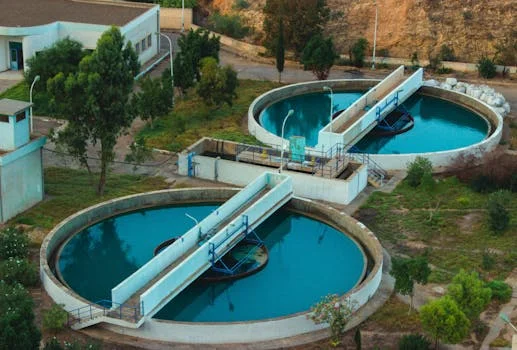
Conventional Activated Sludge remains the baseline for large-scale municipal expansions in Hobart due to its relatively low capex. However, it requires a large footprint and often struggles to meet stringent nutrient removal standards without additional tertiary filters. For industrial sites with limited land availability, MBR systems offer a compact alternative, achieving 99% BOD removal despite a higher capex.
For Hobart’s seafood and food processing sectors, Dissolved Air Flotation is the primary choice for pre-treatment. DAF systems effectively remove fats, oils, and grease and suspended solids. While DAF systems have lower energy requirements, they require consistent chemical management to maintain high removal efficiencies. Sequencing Batch Reactors provide a middle ground, offering flexibility for facilities with highly variable seasonal flows.
| Technology | Capex ($/m³/day) | Energy (kWh/m³) | Footprint | Best For |
|---|---|---|---|---|
| CAS | $1,500 – $3,000 | 0.5 – 0.8 | Large | Municipal sewage |
| MBR | $3,000 – $6,000 | 0.8 – 1.2 | Small | Hospitals, High-purity reuse |
| DAF | $2,000 – $4,500 | 0.3 – 0.5 | Medium | Seafood processing, FOG removal |
| SBR | $2,200 – $4,000 | 0.6 – 1.0 | Medium | Wineries, variable flows |
Hobart Wastewater Treatment Cost Calculator: Estimate Your Project’s Budget in 5 Steps
Generating an accurate budget for a Hobart wastewater project requires a structured approach that accounts for both standardized equipment costs and localized environmental variables. Follow these five steps to reach a baseline estimate:
- Step 1: Define Flow and Load: Determine your average daily flow and peak hourly flow. Identify influent concentrations for BOD, TSS, and Nitrogen.
- Step 2: Select Core Technology: Use the comparison table above to choose a technology. For example, a 1,000 m³/day plant using DAF for pre-treatment starts at a base equipment cost of approximately $2.5M.
- Step 3: Apply Hobart Multipliers: Add 12% for corrosion-resistant materials and 8% for seismic structural integrity. Add an additional 5% for EPA Tasmania-specific instrumentation.
- Step 4: Infrastructure and Pipelines: If the site is not adjacent to an existing discharge point, calculate pipeline costs at $1.2M–$3.5M/km. Include $50,000 for a TasWater-compliant flow meter and sampling manhole.
- Step 5: Calculate Total Opex: Sum the energy costs, chemical costs, and sludge disposal. In Tasmania, sludge disposal costs range from $150 to $300 per tonne depending on the moisture content and transport distance.
Example Calculation: A medium-sized Hobart food processor with a 1,000 m³/day flow choosing DAF + Disinfection would face an estimated $3.2M Capex and approximately $280,000 in annual Opex.
Local Suppliers and Permitting: How to Avoid Costly Delays in Hobart
The permitting timeline in Hobart is a critical factor that can inflate project costs if not managed correctly. EPA Tasmania typically requires 6–12 months for the approval of new wastewater discharges, involving detailed Environmental Impact Assessments that can cost between $20,000 and $50,000. TasWater approvals for industrial user agreements usually take 4–8 weeks, but fees are strictly applied based on the pollutant load.
When selecting suppliers, it is essential to work with vendors who understand Australian standards, as these often align with Tasmanian requirements. Local contractors must be TasWater-approved for any works connecting to the municipal grid. A common pitfall for Hobart projects is underestimating the seasonal variability of sludge production; during peak production months, sludge handling costs can double, making on-site dewatering equipment a high-value investment to reduce volume before transport.
ROI Analysis: When Does a Wastewater Treatment Plant Pay for Itself in Hobart?
For private sector projects in Hobart, the Return on Investment is calculated by balancing the high initial capex against the avoidance of TasWater trade waste fees and EPA fines. EPA Tasmania violations can result in fines ranging from $10,000 to $100,000 per event, not including the cost of potential production halts.
Water reuse provides a secondary revenue stream. While municipal water in Hobart costs approximately $4.20/m³, treated effluent suitable for irrigation or industrial cooling can be produced for an operational cost of roughly $1.50/m³. This creates a "savings gap" of $2.70/m³. For a facility using 500 m³/day, water reuse can save over $450,000 annually.
| Financial Metric | Industrial Pre-treatment (DAF) | Full Treatment + Reuse (MBR) |
|---|---|---|
| Initial Capex | $1.2M | $2.5M |
| Annual Opex | $85,000 | $220,000 |
| Annual Savings (Fees/Water) | $350,000 | $800,000 |
| Simple Payback Period | 3.4 Years | 4.2 Years |
| 10-Year Net NPV | $1.8M | $3.9M |
Frequently Asked Questions
How much does a small wastewater treatment plant cost for a Hobart hotel?
A 100 m³/day MBR system designed for a luxury hotel or resort in the Hobart region typically costs $600,000 in capex and $60,000 per year in opex.
Do wastewater treatment plants in Hobart require EPA Tasmania approval?
Any system that discharges treated water into the environment or exceeds specific volume thresholds for sewer discharge requires EPA Tasmania approval.
What’s the cheapest wastewater treatment option for a Hobart