Why Rubber Wastewater Needs an Application-Specific Press
A filter press for rubber processing wastewater separates suspended solids from water by pumping conditioned slurry into filter chambers, forcing liquid through filter cloth and producing a compact solids cake and a filtrate stream. A plate-and-frame press is a practical dewatering option when the plant needs configurable chambers, recoverable filtrate and relatively compact cake handling. HydropureWater offers filtration areas from 1–500 m² with manual, hydraulic or fully automatic PLC-controlled operation. Final selection still depends on the wastewater’s solids profile, contaminants, conditioning needs, batch volume and cake-moisture target; the supplied CaCO₃ study is a useful but non-rubber-specific reference.
A filter press is a pressure-filtration device that separates liquid from solids through filter cloth, producing filtrate and a compact filter cake. In rubber sludge dewatering, that definition must be applied to the actual waste stream rather than to nominal press capacity. Tire manufacturing and molded-rubber or compounding operations can produce variable wastewater containing suspended elastomer residues, fillers, oils and greases, additives and process chemicals. The supplied research does not provide rubber-specific numerical limits for these constituents, so characterization data must come from representative plant samples.
The central separation is between what the cloth can capture and what remains dissolved. Suspended particles are retained in the cake; dissolved contaminants are not removed merely because the liquid passes through the cloth. pH, soluble additives and any process chemicals therefore remain separate pretreatment and downstream-treatment decisions.
Before selecting equipment, characterize suspended solids, particle-size distribution, oil and grease, elastomer residues, fillers, additives, pH and chemical additions across representative production conditions. This evidence defines whether equalization, oil recovery, clarification, flotation, conditioning or additional liquid treatment is required before the press. For preliminary treatment concepts, see how a dissolved-air flotation machine handles oily or floatable material; the final choice still depends on the sample results.
Process Flow from Wastewater Collection to Cake Discharge
Filter-press performance depends on the quality and concentration of the slurry entering the chambers, not only on the press geometry. Build the process around representative waste characterization, equalization, removal of unsuitable floatables, conditioning, controlled filling, filtration, cake release and filtrate management. Polymer or coagulant selection should be confirmed through jar or pilot testing because a chemical that performs well on one rubber stream may perform poorly after production additives or wash cycles change.
- Collect and characterize wastewater across normal production, batch dump, wash and upset conditions.
- Equalize flow and solids loading before selecting a feed rate or batch volume.
- Remove free oil and unsuitable floatables where required.
- Thicken or condition the slurry to improve capture and cake release.
- Fill the chambers, apply filtration pressure and terminate the cycle at a defined endpoint.
- Release the cake, wash or replace cloth as necessary, and manage the filtrate stream.
Within each chamber, cloth retains solids while filtrate passes through the plates into a common manifold. M.W. Watermark notes that fine particles may initially pass through the cloth, while deposited material subsequently narrows the effective openings and improves separation during the cycle. This means start-up filtrate and final filtrate should be assessed separately rather than blended into one acceptance sample.
ChemREADY states that filter presses work best with slurries containing 50–60% solids and recommends a clarifier before the press for slurries at 5–10% solids. These are general process-design considerations, not rubber-specific requirements. A high-efficiency sedimentation tank may provide equalization or solids concentration where the characterization supports it. Chemical dosing can be coordinated through an automatic chemical dosing system, but the dose, polymer type and control strategy still need test support.
| Process stage | Required information | Decision output |
|---|---|---|
| Collection and characterization | Flow, solids, particle distribution, oils, pH and additives | Design wastewater and solids balance |
| Equalization and pretreatment | Peak load, settling behavior, floatables and required solids concentration | Clarifier, flotation or tank scope |
| Conditioning | Representative sample results and trial data | Polymer or coagulant selection and dose |
| Filtration and cake release | Pressure, cycle endpoint, cloth behavior and cake-handling requirement | Press configuration and operating procedure |
| Filtrate management | Quality across start-up and final filtration stages | Recycle, further treatment or discharge assessment |
The filtrate branch is not an automatic reuse stream. Determine whether it can return to process, enter a treatment train or support discharge only after its quality is measured and the applicable limits are established. Recovered liquid may carry dissolved additives or fine particles that are not visible in a single end-of-cycle sample.
Choose the Right Filter Press Configuration

The four filter-press categories identified by M.W. Watermark are plate-and-frame, recessed-chamber, membrane and automatic presses, but these labels describe design features rather than complete applications. Rubber plants should compare them by feed consistency, required cake dryness, labor availability, cycle frequency and the consequences of an interrupted batch.
Conventional plate-and-frame systems offer configurable chamber volumes and an established dewatering process. They are suitable when the plant needs operational flexibility and straightforward access to cloth and plates. Recessed-chamber designs retain solids within recessed frames and require the associated discharge method to be considered during layout and labor planning.
Membrane presses apply pressure across the cake surface rather than relying only on conventional plate filtration. The Suez Water Handbook lists membrane pressure as 15 b and states that even pressure can produce drier, more homogeneous cakes that are easier to unload and easier to adapt to polymer-conditioned sludge. Membrane systems also carry additional complexity: pressurization fluid is fed separately to each plate, membranes require regular replacement and cake release must be supervised. The Suez source therefore does not characterize the equipment as automatic despite its conventional appearance.
Automatic configurations can reduce plate-shifting time and support high-duty operation. M.W. Watermark identifies fast-action automatic plate shifters on many high-capacity presses, while ChemREADY identifies automatic presses used for 24-hour operation in mining and chemical plants. For rubber duty, automatic handling should be linked to a stable feed and a reliable cake-discharge route rather than used as a substitute for characterization.
HydropureWater’s verified catalog lists filtration areas from 1–500 m² and manual, hydraulic or fully automatic PLC-controlled operation. A plate and frame filter press for sludge dewatering should therefore be specified against site data; catalog area alone does not establish throughput.
| Configuration | Principal strength | Principal limitation to resolve | Best fit for rubber-plant review |
|---|---|---|---|
| Conventional plate-and-frame | Configurable chambers and established dewatering operation | Cloth condition, filling consistency and labor for cake removal | Variable but characterized batches where operational flexibility is required |
| Recessed chamber | Compact solid retention within recessed frames | Discharge and access requirements | Sites with an appropriate cake-discharge layout |
| Membrane | More uniform cake pressure and improved drying; 15 b listed by Suez | Separate pressurization, membrane replacement and supervised release | Applications where cake dryness and uniformity justify added complexity |
| Automatic | Faster plate shifting and suitability for high-duty operation | Stable feed, controls, safety provisions and maintenance capability | Repeated batches with reliable feed and downstream cake handling |
Assess sulfur-bearing additives and rubber residues as a separate application concern. Their implications for odor, toxicity, disposal or worker exposure must be established from the waste composition and local requirements before a cake-reuse, disposal or storage route is selected.
Size the Press with Site-Specific Operating Data
A defensible tender requires a measured production and slurry profile, not a filtration area selected from average flow alone. Give suppliers enough information to state how their proposed chamber count, plate dimensions and cycle schedule meet the plant’s actual batch and production requirements.
| Input group | Information to request | Why it affects sizing |
|---|---|---|
| Wastewater | Average and peak flow, temperature, suspended-solids concentration, particle-size distribution, oil and grease content | Defines equalization, feed rate, pretreatment and contaminant risks |
| Conditioned slurry | Solids concentration, solids capture across the proposed cloth, cake yield, target moisture, settling performance and expected polymer consumption | Determines cycle volume, dewatering duty and operating costs |
| Production | Batch frequency, working volume per cycle, available pressing hours, acceptable cycle time and annual operating days | Links equipment throughput to real plant availability |
| Supplier proposal | Basis of filtration area, chamber count, plate dimensions, feed method, operating pressure and cycle schedule | Creates a comparable and auditable design basis |
Do not infer batch capacity from filtration area alone. The slurry’s solids concentration, retained solids, target moisture and accepted cycle time determine the working volume that a selected chamber geometry can handle. Pressure is also a constraint rather than a free performance variable. ChemREADY lists 21–30 bar as a general high-pressure example; actual operating pressure must remain within the plate design and manufacturer limits and suit the slurry behavior.
Use a representative rubber-process sample in laboratory or pilot work. The National Research and Innovation Agency study used CaCO₃-simulated activated sludge at 1–4% w/w, not rubber wastewater. Its 56.00% solids-removal result at 4% w/w therefore establishes a cloth-comparison result for that surrogate only; it cannot be used as a rubber-wastewater performance guarantee.
The sizing calculation should reconcile solids in, solids captured and solids in the cake with filtrate volume and moisture. It should also include downtime for cloth washing, cake discharge, maintenance and production variability. A supplier that quotes filtration area without exposing these assumptions has not provided a complete sizing basis.
Select and Validate the Filter Cloth
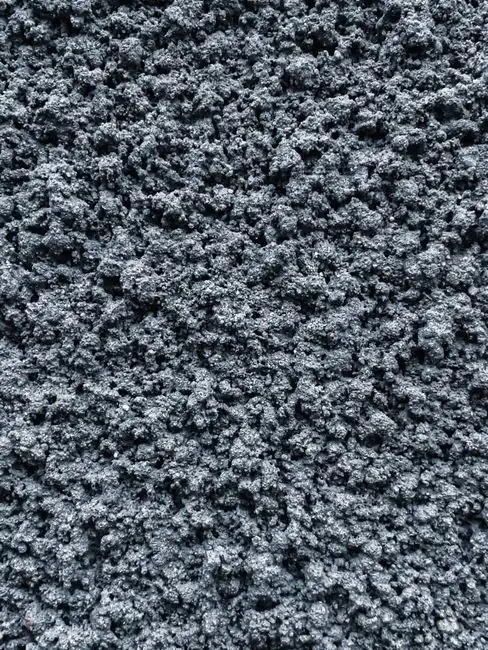
Filter cloth is the active separation medium, so cloth selection must be based on a representative rubber slurry. Relevant inputs include material, weave, pore characteristics, surface texture, tensile compatibility and chemical resistance. Particle distribution and conditioning chemistry also matter because they influence capture, blinding and release.
The National Research and Innovation Agency project compared cotton cloth with drill cloth using CaCO₃-simulated activated sludge at 1–4% w/w. Cotton cloth produced better performance, and the study reported 56.00% efficiency at 4% w/w. That result establishes a qualified comparison within the tested system; it does not establish filtration efficiency, cake moisture, cycle time or cloth life for rubber processing wastewater.
Run comparative trials with candidate cloths and record solids capture, filtrate clarity, cake release, blinding tendency, cycle duration and deterioration after repeated use. Check cake quality across the chamber because local unevenness can indicate poor feed distribution, cloth mismatch or non-uniform conditioning.
Do not judge cloth performance from one filtrate sample. M.W. Watermark explains that fine particles may pass through at the beginning of a cycle, while deposited material subsequently narrows the effective openings and improves filtration efficiency. Acceptance should therefore identify where and when each filtrate sample was taken.
Specify replacement criteria and include initial cloth sets, spare sets and replacement cost in the comparison. For media-related components and accessories, review the available water-treatment parts, valves and media options while keeping rubber-specific cloth qualification as a separate acceptance task.
Operate the Press to Protect Cake Quality and Equipment
Consistent operation depends on controlling feed distribution, filtration pressure, cycle termination, cake release, cloth maintenance and start-up filtrate diversion. The operating sequence is straightforward: fill the chambers, apply filtration pressure, compact the cake, end filtration, release the cake and prepare the press for the next batch. The difficulty lies in defining the feed rate, pressure and endpoint from representative tests rather than from trial-and-error on production batches.
Where membrane pressing is used, distinguish mechanical dewatering from optional heated drying. The Suez Water Handbook lists membrane pressure as 15 b. For its identified application, partial heating can produce 35–45% dry-solids content and reduce heating time to 2–4 hours; it states that 90% dry solids is feasible but requires a 24-hour heating period and is not economically sensible in that case.
Heating is not automatically the best option for rubber sludge. Assess chemical composition, odor, worker exposure, downstream cake use and energy demand before accepting a longer cycle. A cleaner release or lower final moisture may justify heating only if the resulting cake has a defined destination and the operating energy is available.
Use symptoms to direct troubleshooting. Shortened cycles can indicate cloth blinding or inconsistent feed. Wet cake can result from uneven chamber filling, unsuitable conditioning, premature cycle termination or insufficient pressure within the equipment limit. Difficult release can point to sticky contamination, inadequate conditioning or a cloth surface that does not match the residue.
Set controls to divert start-up filtrate where required, record pressure and cycle history, inspect cloth after each campaign, and respond to changing production conditions rather than preserving settings that were developed for a different slurry. Operators should know the approved pressure range, emergency-release procedure, feed isolation requirements and criteria for stopping a batch.
The operating manual for the proposed plate and frame filter press for sludge dewatering should translate these controls into measurable actions, including feed-rate adjustment, endpoint testing, cloth-washing frequency and maintenance response to abnormal cycles.
Make the Purchase Decision on Total Delivered Performance
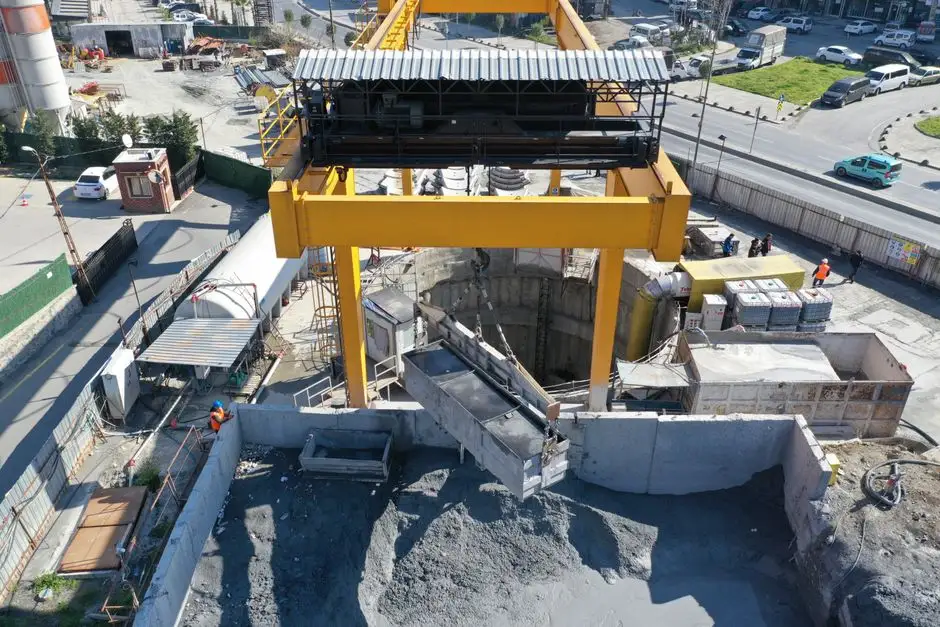
Compare bids on delivered outcomes, not on press price or filtration area alone. A supplier should identify the proposed filtration area, chamber count, operating modes, control scope, feed and discharge connections, materials, safety provisions, cloth options, spare parts and technical support. Require each bidder to state the operating conditions and site data underlying its selection.
Request a performance protocol using representative rubber wastewater. Define filtrate quality, cake moisture, cycle time and repeatability as acceptance outcomes, and state whether results apply to one batch, a defined production sequence or an extended trial. Include the treatment of start-up filtrate, because accepting only final-cycle filtrate can conceal early particle passage.
| Budget or risk area | Information required from each bidder | Comparison method |
|---|---|---|
| Press package | Area, chamber count, plate arrangement, operating mode, controls and connections | Compare against the same written site basis |
| Process equipment | Equalization, pretreatment, dosing, auxiliary tanks and pumps | Separate equipment and installation scope |
| Installation and commissioning | Civil works, utilities, controls, safety documentation, testing and operator training | Use itemized schedules rather than a lump sum |
| Operating resources | Cloth sets, wear parts, polymer use, energy demand and labor for cake removal | Compare lifecycle inputs and responsibilities |
| Downstream handling | Cake destination, filtrate reuse or treatment route and associated quality responsibilities | Confirm downstream capacity and acceptance criteria |
| Compliance risk | Pressure equipment, guarding, electrical controls and applicable discharge or reuse documentation | Identify the governing local requirement during design |
No reliable generic capital-cost figure is supported by the supplied research for this application. Require vendors to itemize price, scope, exclusions, commissioning obligations and warranty terms so that proposals can be compared like for like. A useful supplementary reference is the 2026 sludge dewatering system cost and operating-cost guide, but it should not replace application-specific quotations.
For recovered-liquid decisions, compare the MBR versus conventional activated sludge for rubber and plastics wastewater and the DAF system engineering selection guide only as downstream or pretreatment concepts. Neither changes the requirement to characterize the actual filtrate.
Frequently Asked Questions
What should a supplier know to quote a filter press for rubber processing wastewater?
Provide average and peak wastewater flow, suspended-solids concentration, particle-size distribution, oil and grease, pH, temperature, process additives, conditioning results and production batch data. Also specify the working volume per cycle, available pressing hours, acceptable cycle time, cake-moisture target and filtrate destination. These inputs allow the supplier to state the filtration-area basis, chamber count, plate dimensions, feed method, operating pressure and cycle schedule rather than quote from flow alone.
Is a membrane press better than a conventional plate-and-frame press for rubber sludge?
Not universally. The Suez Water Handbook states that membrane pressure can improve cake dryness and uniformity, but the system is more complicated, requires regular membrane replacement and supervised cake release. Choose it when the cake benefit justifies added maintenance and control complexity. A conventional press may be the more practical starting point for variable batches, subject to representative cloth and conditioning trials.
How much does a filter press for rubber wastewater cost?
The supplied research contains no defensible quotation for this application. Request an itemized price covering the press, pretreatment and dosing equipment, auxiliary tanks and pumps, installation, controls, cloth sets, wear parts, commissioning and training. Ask each supplier to state exclusions and warranty terms, then compare the scope using the same site data. Treat polymer consumption, energy, labor and downstream cake handling as separate operating-cost inputs.
Can HydropureWater configure a plate and frame press for manual, hydraulic or automatic operation?
Yes. The HydropureWater verified product catalog lists filtration areas from 1–500 m² with manual, hydraulic or fully automatic PLC-controlled operation. The plate and frame filter press for sludge dewatering options should be selected against the required cycle frequency, operator availability, feed stability, safety scope and cake-handling method.
What performance data should be included in a purchase specification?
Use a representative rubber-process sample and define solids capture, filtrate quality, cake moisture, cycle time and repeatability. Separate start-up and final-cycle filtrate samples because early particle passage may narrow as cake forms. Record conditioning dose, polymer type, operating pressure, feed sequence, cloth selection, cake-release performance and cloth deterioration over repeated cycles. The 56.00% efficiency reported at 4% w/w in the CaCO₃-simulated sludge study should not be presented as a rubber-wastewater guarantee.