What Wastewater Streams Does a Nha Trang Data Center Need to Treat?
A Nha Trang data center usually needs a source-specific treatment train for cooling-tower blowdown, cooling effluent, construction fill-and-flush water, and domestic sewage—not one generic wastewater system. Blowdown is concentrated because dissolved salts and treatment chemicals remain when water evaporates, so characterization should cover conductivity, total dissolved solids, hardness, alkalinity, chloride, metals, biocides, corrosion inhibitors, and pH. The University of Georgia Cooperative Extension describes blowdown as the water removed to prevent mineral and scale accumulation, while Water Utility Report, updated 14 April 2026, explains the evaporation mechanism. Open evaporative cooling generally creates the largest concentrated discharge; closed-loop systems recirculate water and generally require only small additions, according to the University of Georgia Extension bulletin.
Construction wastewater must remain separate from routine operations. E&E News reports that Loudoun Water requires developers to test fill-and-flush water before it enters the treatment plant and has directed some discharges to appropriate disposal facilities. Domestic sewage normally belongs on the sanitary-sewer route and should not be mixed with concentrated cooling water before the reuse and discharge decision is settled. Treatment-plant sludge or spent media also needs its own residual-handling stream rather than entering the liquid treatment train.
| Stream | Main engineering concern | Initial routing decision |
|---|---|---|
| Cooling-tower blowdown | Concentrated salts and cooling chemicals | Characterize separately; evaluate sewer, pretreatment, or recovery |
| Cooling effluent or condensate | Flow, temperature, and chemistry depend on the cooling configuration | Confirm with the mechanical designer and utility |
| Construction fill-and-flush water | Residual pipe-cleaning materials and variable quality | Test and obtain acceptance before discharge |
| Domestic wastewater | Organic and sanitary load | Keep separate; route to the sanitary system unless reuse is defined |
| Treatment residuals | Spent media, sludge, and concentrate | Specify collection, storage, and final disposal |
The wider data-center wastewater treatment guide provides a useful source-segregation framework, but Nha Trang acceptance criteria and receiving-water conditions still require local confirmation.
Build a Nha Trang Water Balance Before Sizing Equipment
A defensible treatment capacity comes from a source-to-discharge water balance, not from total facility water consumption. ASCE states that the first step should be a water-balance study covering available sources, climate, cooling design, reclaimed water, treatment, reuse, and discharge. For a Nha Trang project, that balance should connect makeup water, evaporation, blowdown, cooling effluent, domestic wastewater, construction discharge, reclaimed water, and storage.
For evaporative cooling, blowdown depends on evaporation and the selected cycles of concentration. Genesis Water Technology reports that a tower operating at four cycles typically loses approximately 25%-30% of makeup water to blowdown. That commercial example is a calculation benchmark, not a Nha Trang design value: the project’s cycles, makeup chemistry, evaporation, and operating mode must be established by the mechanical designer.
ASCE also describes a data-center cooling-effluent system initially sized for roughly 20%-30% of total water supplied because effluent volume was difficult to predict; a flowmeter was installed to verify actual wastewater flow in the March/April 2024 magazine article. That approach should be translated into Nha Trang as a temporary hydraulic basis followed by metering, not copied as a universal capacity rule.
| Water-balance input | Information to obtain | Decision supported |
|---|---|---|
| Cooling configuration | Open evaporative, closed-loop, hybrid, or direct cooling | Whether a concentrated blowdown stream exists |
| Heat load and operations | Rack load, redundancy, operating hours, and expansion | Average and peak cooling demand |
| Makeup-water source | Quality, reliability, seasonal variation, and utility constraints | Water-use strategy and pretreatment |
| Cooling chemistry | Cycles of concentration and treatment program | Blowdown flow calculation |
| Event flows | Startup, flushing, shutdown, and maintenance discharge | Storage and diversion capacity |
| Measured flows | Makeup, blowdown, and effluent metering | Final treatment sizing and mass balance |
Do not issue a final equipment size until source-water chemistry, system chemistry, and measured or vendor-guaranteed flows are available. The cooling-blowdown treatment calculation provides a useful workflow for separating assumed values from site measurements.
Test the Water Before Selecting a Treatment Process

Treatment selection should follow source-water analysis because contaminants determine whether pretreatment, dissolved-solids removal, disinfection, or reuse controls are necessary. ASCE identifies seasonal sampling, pH, conductivity, total dissolved solids, chloride, silica, hardness, alkalinity, and microbial counts as relevant parameters for utility coordination. These parameters should be tested in both makeup and circulating cooling water, because the cooling program changes the chemistry leaving the loop.
Blowdown sampling must also identify the site treatment program. Water Utility Report, updated 14 April 2026, states that blowdown can contain elevated salts, heavy metals, biocides, corrosion inhibitors, altered pH, and other treatment chemicals. Tests should therefore cover metals, residual biocides, corrosion and scale inhibitors, dispersants, suspended solids, and any chemical that the mechanical designer expects to use.
Reclaimed water changes the operating envelope rather than eliminating water-quality control. ASCE reports that reclaimed water may cause more corrosion, scaling, and microbiological growth than potable water, so a return-to-loop route needs compatibility review and a revised chemical-control strategy. A UF commissioning protocol can inform sampling and performance verification once the treatment train has been selected.
| Sampling point | Required information | Purpose |
|---|---|---|
| Makeup-water source | pH, conductivity, TDS, hardness, alkalinity, chloride, silica, temperature, microbiology | Establish baseline and scaling risk |
| Cooling-loop water | Source-water parameters plus treatment-chemical residuals | Confirm cycles of concentration and operating controls |
| Blowdown | Loop chemistry plus metals, biocides, inhibitors, dispersants, and suspended solids | Select pretreatment and discharge route |
| Construction fill-and-flush water | Residual cleaning chemicals and pipe contaminants | Obtain utility acceptance before discharge |
| Reclaimed water | Full chemistry plus microbiological indicators | Assess return-to-cooling compatibility |
Sample across operating seasons because source-water quality and loop chemistry can change. Acceptance criteria must be agreed with the Nha Trang sewer authority or relevant environmental authority; U.S. discharge limits should not be imported as Vietnamese requirements. If no local criterion is available, identify it as an unresolved permitting input rather than assuming a limit.
Compare Discharge, Segregated Pretreatment, and Water Reuse
Municipal discharge is viable only if the receiving utility accepts both the hydraulic load and the expected chemistry. ASCE reports that cooling effluent can concentrate total dissolved solids and chloride that municipal wastewater plants do not normally target for removal. Segregated pretreatment is therefore preferable where the sewer authority specifies contaminant limits, even if no domestic biological load justifies a broad biological treatment plant.
Blowdown recovery can reduce freshwater demand, but it adds pretreatment, membrane-fouling, concentrate-management, and return-to-loop compatibility risks. Genesis Water Technology reports membrane recovery applications at 90%-95%, RO or NF concentration at 70%-80%, and overall zero liquid discharge recovery at 95%-99%. These are commercial benchmarks rather than guaranteed project performance. Its reported direct-discharge fees above $5-$15 per thousand gallons in water-stressed regions also cannot be applied to Nha Trang until local tariffs are verified. The same source notes that some jurisdictions enforce total dissolved solids limits below 1,500 mg/L; this is a warning about local acceptance, not a Vietnamese requirement.
| Route | When it fits | Principal risk or unresolved input |
|---|---|---|
| Municipal discharge | Utility accepts the flow, temperature, and chemistry | TDS, chloride, chemicals, or peak-flow rejection |
| Segregated on-site pretreatment | Authority defines enforceable pretreatment targets | Residual disposal and treatment-variable feed chemistry |
| Blowdown recovery and reuse | Freshwater savings justify recovery and concentrate management | Membrane fouling, scaling, corrosion, microbiology, and concentrate route |
| Zero liquid discharge | Severe local water or discharge constraints justify full recovery | Higher capital and solids-disposal complexity |
Closed-loop cooling may reduce water consumption by up to 70% compared with traditional open evaporative cooling, according to the University of Georgia Cooperative Extension bulletin. The project decision must therefore consider the cooling strategy and freshwater plan, not blowdown treatment alone. The reuse and zero-liquid-discharge decision framework sets out the treatment and concentrate questions that need resolution before selecting a route.
Translate the Chosen Route into an Equipment Train
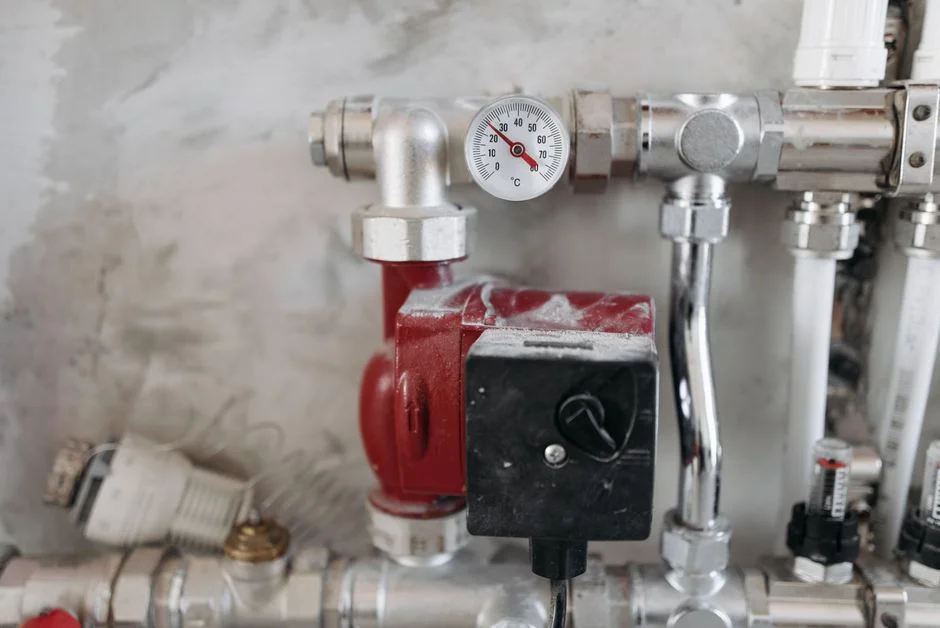
Equipment selection follows the contaminant and route decisions; it does not precede them. A suspended-solids, colloid, or microbial-control barrier ahead of sensitive membranes or reuse equipment may justify evaluating a hollow-fiber ultrafiltration system. The supplied catalog scope specifies 0.03 μm PVDF membranes, 2,000-40,000 L/h capacity, automatic backwash and air scour, and feed turbidity up to 300 ppm. These are selection boundaries, not proof of suitability for Nha Trang feed water.
Where the wastewater contains solids, oil, grease, or colloids that must be removed before filtration or membrane recovery, DAF wastewater pretreatment may be relevant. The supplied scope covers 4-300 m³/h across 13 models, micro-bubble flotation, and automatic skimming. If pH or coagulant control is required, an automatic chemical dosing system can provide PLC-controlled injection of coagulants, flocculants, pH adjusters, and specialty chemicals.
Domestic sewage should remain a separate hydraulic and process train. Where sanitary treatment and near-reuse-quality effluent are required, the supplied MBR scope uses submerged PVDF membranes, effluent below 1 μm, and capacity from 10-2,000 m³/day. None of these values establishes the required capacity; staff numbers, wastewater generation, operating hours, redundancy, and local reuse criteria must be supplied.
| Treatment objective | Equipment to evaluate | Design inputs still required |
|---|---|---|
| Remove suspended solids, colloids, and bacteria | Hollow-fiber UF | Feed turbidity, flow profile, fouling chemistry, recovery target |
| Remove floatable or clarified solids | DAF | Oil and grease, solids loading, pH, coagulant demand |
| Control pH and chemical addition | Automatic dosing | Target chemistry, chemical compatibility, duty cycle |
| Treat domestic sewage separately | MBR | Sanitary flow, effluent objective, redundancy, solids handling |
| Remove dissolved solids and recover permeate | RO, with UF or equivalent pretreatment as required | Feed TDS, scaling constituents, recovery, concentrate disposal |
UF is a pretreatment and separation barrier; it is not a substitute for desalination. Final selection requires feed analysis, a hydraulic model, a chemical-compatibility review, and written local acceptance criteria. No catalog unit should be represented as meeting a Nha Trang specification without that work.
Plan Monitoring, Commissioning, and Permit Interfaces
Operational controls must cover the points where chemistry or flow can affect compliance and equipment protection. Depending on the process, this includes flow, conductivity, TDS, pH, temperature, turbidity, and residual treatment chemistry, with sample points defined by the final process design. Off-specification startup, flushing, and commissioning flows should enter automatic diversion or storage rather than reach the sewer or receiving environment by default.
Permit interfaces should define discharge volume, chemistry, monitoring frequency, pretreatment acceptance, reporting, and emergency response with the Nha Trang sewer provider. The applicable environmental authority must also be identified. A U.S. NPDES permit or state limit should not be treated as a local requirement.
The commissioning plan should include construction fill-and-flush testing, operator training, membrane or media maintenance, spare parts, contingency storage, and a final mass balance. E&E News reports that utilities may require construction wastewater testing before treatment-plant acceptance, making this a live interface rather than a documentation exercise. After startup, compare assumed and measured blowdown, update treatment capacity and chemical consumption, and retain the operating envelope as the basis for future expansion.
This interface should be developed alongside the broader data-center wastewater treatment planning sequence, while replacing project-specific assumptions with Nha Trang utility conditions and site measurements.
Frequently Asked Questions
What wastewater streams should a Nha Trang data center segregate?
Segregate cooling-tower blowdown, cooling effluent or condensate, construction fill-and-flush water, domestic sewage, and treatment residuals such as sludge or spent media. Each stream has a different chemistry and acceptance route. Do not mix domestic sewage with concentrated cooling discharge until the sewer, pretreatment, or reuse decision has been confirmed.
How much does a data-center blowdown treatment system cost?
No reliable Nha Trang price can be stated without measured flow, feed chemistry, recovery target, pretreatment requirements, automation, and concentrate handling. Genesis Water Technology discloses a capital-cost benchmark of $50,000-$200,000 for typical data-center installations based on flow rates, but its scope and commercial context do not establish a local quotation. Request itemized equipment, installation, controls, membranes or media, chemicals, maintenance, residuals, and commissioning costs.
Can cooling-tower blowdown be reused as cooling makeup?
Yes, only after compatibility and recovery targets are established. Assess pretreatment, membrane fouling, scaling, corrosion and biological control, concentrate management, and the effect on cooling-loop chemistry. Genesis Water Technology reports 90%-95% membrane recovery, 70%-80% for RO or NF concentration, and 95%-99% overall ZLD recovery; these are commercial benchmarks, not guaranteed Nha Trang results.
Which treatment equipment should a supplier quote for a Nha Trang project?
Require the supplier to quote against a completed design basis: source-water analysis, measured blowdown flow, target discharge route, reuse plan, local acceptance criteria, future expansion, concentrate route, and utility requirements. This check prevents a membrane quote that omits pretreatment, chemical dosing, storage, automation, or residual disposal from being compared with a complete treatment scope.
Can the data center discharge blowdown to the municipal sewer?
Only after the Nha Trang sewer authority confirms acceptance of the expected flow and chemistry. ASCE reports that concentrated total dissolved solids and chloride are not normally targeted for removal by municipal wastewater plants, so direct acceptance should not be assumed. Obtain the applicable local criteria before selecting equipment or issuing a final discharge route.