Which Limits Govern Mason City Sewer Discharges?
Three rule layers govern a food-processing discharge to the Mason City sewer: 40 CFR Part 403 establishes the National Pretreatment Program framework and prohibited-discharge provisions; 40 CFR Parts 405–409 establish process-category numerical floors; and the Mason City POTW industrial-user permit imposes the enforceable site-specific conditions. The permit may be stricter because of hydraulic loading, interference, pass-through, sludge handling or receiving-water constraints (HydropureWater, 2026). Equipment selection should therefore begin with the current permit—not a generic food-processing benchmark.
The applicable categorical category depends on the plant’s regulated process. Part 405 covers dairy products, Part 406 grain mills, Part 407 canned and preserved fruits and vegetables, Part 408 canned and preserved seafood, and Part 409 meat products. A plant may need to identify which processes are regulated rather than assigning its entire site to one broad category. The 2026 food and beverage sewer-limit compliance guide explains how these federal layers connect to the permit.
| Rule or authority | Function in the decision | What the plant must establish |
|---|---|---|
| 40 CFR Part 403 | National Pretreatment Program framework, local limits and prohibited discharges | Applicable program requirements and prohibited-discharge controls |
| 40 CFR Parts 405–409 | Process-category numerical floors | Regulated process and applicable category |
| Mason City POTW permit | Enforceable site-specific discharge conditions | Current permit, appendices, local limits and monitoring obligations |
Before purchasing equipment, obtain the current permit, permit appendices, local limits and written application guidance directly from the Mason City control authority. Confirm which POTW receives the discharge and which authority administers the permit. The receiving utility—not a general industry article—sets the final enforceable ceiling.
What Mason City Requires Before Discharge
New significant users must submit a wastewater discharge permit application 180 days before any wastewater discharge; new sources and sources that become industrial users after a categorical standard applies must submit a pretreatment report at least 90 days before discharge begins (Mason City Code 6-2-15).
The application package should tie facility operations to the proposed treatment system. Include:
- Operations description, production rates, raw materials, chemicals, operating hours and proposed pretreatment.
- Process diagram, discharge points, floor plans, mechanical and plumbing plans, sewers, drains, appurtenances, locations and elevations.
- Daily maximum, daily average and monthly average wastewater flows, including daily, monthly and seasonal variation.
- Estimated flow and pollutant discharges, applicable pretreatment standards and the intended pretreatment method.
- A statement reviewed by an authorized industrial-user representative and certified by a professional engineer registered in Iowa, addressing consistent compliance or the need for additional pretreatment or O&M.
Mason City’s sampling rules require samples representative of daily operations. When required, pH, cyanide, total phenols, oil and grease, sulfide and volatile organics use at least four grab samples. Other pollutants generally use 24-hour flow-proportional composites where feasible; the Superintendent may permit time-proportional sampling or at least four grab samples after the user demonstrates that flow-proportional sampling is infeasible (Mason City Code 6-2-15).
Samples must be taken immediately downstream of pretreatment, or immediately downstream of the regulated process when no pretreatment exists, and before mixing with other waste. If nonregulated wastewater is mixed upstream, the plant must measure the flows and concentrations needed to apply the combined-waste calculation in 40 CFR 403.6(e) (Mason City Code 6-2-15).
If added pretreatment or O&M is required, the compliance schedule must identify major milestones. No increment may exceed nine months, and progress reports must be submitted so that no more than nine months elapses between reports (Mason City Code 6-2-15). Schedule this application work before procurement because treatment changes may require revised process information and certified design documents.
Characterize the Wastewater Before Sizing Equipment
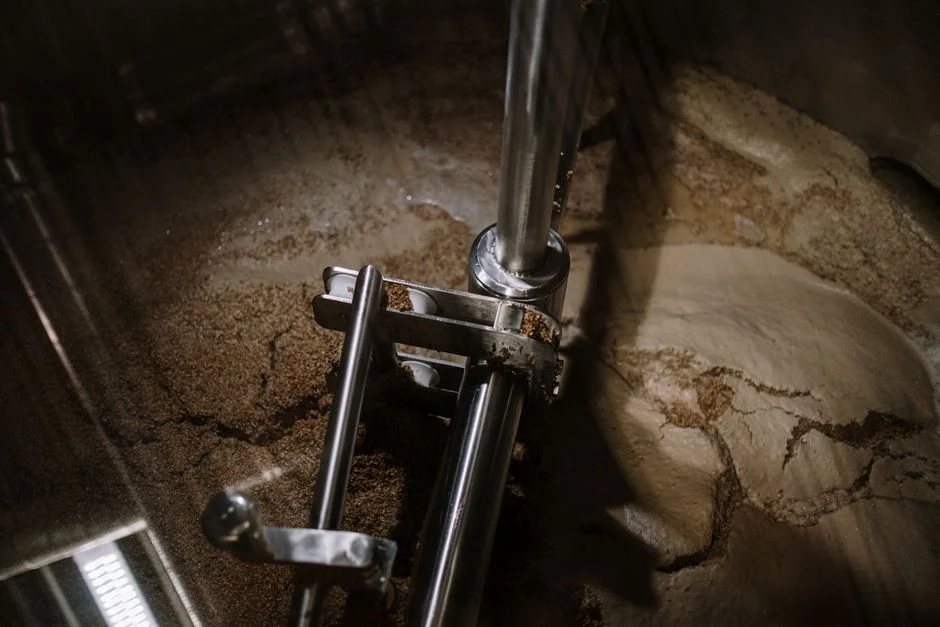
Forward flow, peak-to-average ratio, raw BOD and raw FOG form the primary design basis identified by HydropureWater for food and beverage pretreatment equipment. These values must come from representative plant data and the current permit; average flow alone does not describe the loading that equipment must handle (HydropureWater, 2026).
Build the sampling program around production chronology rather than a single compliance sample. Record operating hours, product changes, typical batch volumes, chemical use and discharge points. Sample normal production, cleaning and peak discharge, then document which stream or event each result represents. This approach follows the warning in the permit-specific pretreatment design guide that production changes, CIP cycles and seasonal peaks can alter flow and pollutant loads within hours.
| Design input | Evidence needed | Equipment decision affected |
|---|---|---|
| Forward flow | Continuous flow record and daily, monthly and seasonal averages | Equalization and treatment capacity |
| Peak-to-average ratio | Hourly flow with batch and CIP chronology | Equalization volume, hydraulic reserve and release rate |
| Raw BOD | Representative production-stream testing | Biological loading and reactor sizing |
| Raw FOG | Representative testing of high-FOG sources | DAF loading, recycle and conditioning |
| Representative TSS | Representative stream testing | Clarification, flotation and polishing |
HydropureWater’s 2026 article provides preliminary screening ranges rather than permit limits: raw BOD of 1,000–10,000 mg/L in dairy and meat processing; FOG reaching several thousand mg/L in fryer, rendering and stickwater streams; and total phosphorus commonly at 10–100 mg/L as P in cereal, dairy and meat wastewater. Replace these screening values with site data before sizing equipment.
Segregate concentrated production streams from washwater and cooling discharge before combining them. That makes each stream’s load traceable and prevents a diluted average from hiding a high-FOG dump. Include TSS, pH, temperature, flow chronology and chemical constituents in the sampling request because they affect clarification, biological loading and chemical control.
Temperature is both a permit parameter and a biological constraint. HydropureWater identifies CIP and cooking excursions above 40 °C as a risk to downstream nitrification biology (HydropureWater, 2026). Equalization must therefore buffer temperature and organic-load changes as well as hydraulic peaks.
Build a Treatment Train Around the Permit
A defensible food and beverage treatment sequence is screening, equalization, dissolved air flotation, biological treatment, chemical precipitation where required and final polishing. Every stage must answer a defined permit or process risk; equipment added without that linkage lacks a defensible sizing basis (HydropureWater, 2026).
| Unit operation | Primary risk addressed | Required design evidence |
|---|---|---|
| Rotary mechanical bar screen | Debris reaching pumps and downstream equipment | Screen opening, approach velocity, extracted-solids handling and installation constraints |
| Equalization basin | Hydraulic peaks, batch dumps, temperature excursions and load variation | CIP dump volume, usable storage, controlled release rate and mixing analysis |
| DAF | FOG, oil and grease and suspended solids | Measured FOG and TSS, surface loading and recycle |
| Biological treatment | Soluble organics and BOD | Loading assumptions, selected HRT and MLSS basis |
| Chemical precipitation | Phosphorus or another permit-controlled constituent | Flow- and load-linked dosing, alarms, event logging and solids removal |
| Final polishing | Residual solids or approved reuse objective | Permit target, solids loading, settling behavior and required footprint |
For preliminary screening, HydropureWater’s 2026 design reference gives DAF surface loading of 4–25 m/h and recycle of 20–40%. A supplier must still show how its proposed loading and recycle correspond to measured FOG and TSS. The food-processing DAF design guide explains the required translation from influent data to flotation performance.
Compare biological alternatives against the permit objective and site constraints. HydropureWater’s 2026 reference gives conventional activated sludge at 8–24 hours HRT and 3,000–5,000 mg/L MLSS, compared with 4–10 hours HRT and 8,000–12,000 mg/L MLSS for MBR. These are comparison references, not guarantees of compliance. MBR is most defensible where low solids, a constrained footprint or an approved reuse objective justifies membrane maintenance, aeration and control demands. The MBR membrane bioreactor design criteria provides the detailed selection basis.
For phosphorus control, use an PLC-controlled chemical dosing system tied to actual flow and load. Specify operator-visible alarms and event logging rather than relying on a fixed dose without a control basis. The industrial DAF system for food-processing wastewater should likewise be evaluated against measured loads rather than generic package capacity.
Troubleshoot the Most Common Compliance Failures
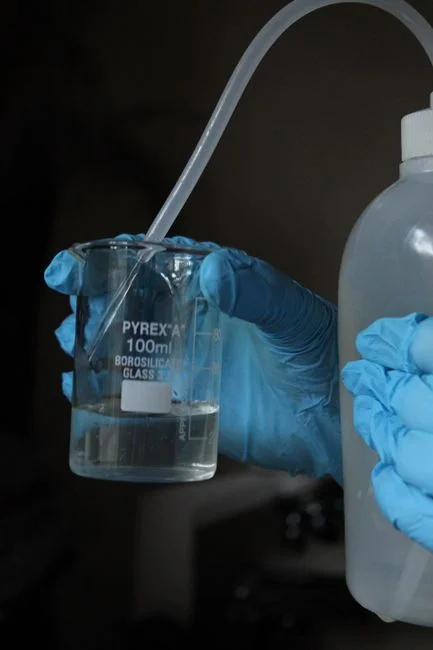
A permit rejection usually identifies a failed control condition, not necessarily an inadequate treatment train. Diagnose the symptom against the unit operation responsible for it before adding equipment or expanding biological capacity (HydropureWater, 2026).
| Symptom | First checks | Likely control failure |
|---|---|---|
| FOG pass-through | Coagulant dose, recycle performance, scum removal and hydraulic loading | DAF conditioning or hydraulic overload |
| pH excursion | Equalization volume, feed isolation, control sequence and trim loop | Equalization or chemical-control failure |
| CIP overload | Actual dump volume, basin capacity, feed isolation and release rate | Release rate exceeds treatment capacity |
| Solids or phosphorus breakthrough | Mixing, flocculation, chemical-dose control and solids removal | Poor flocculation or solids removal |
| Organic shock | Production segregation, flow control, dissolved oxygen and biological conditions | Production or flow-control excursion |
For FOG pass-through, inspect DAF conditioning and hydraulic performance before adding downstream biological capacity. For pH excursions, verify the upstream equalization and chemical-control train; final discharge treatment alone does not demonstrate stable upstream control.
When a CIP cycle exceeds treatment capacity, compare the actual dump with equalization capacity and the controlled release rate. Check feed isolation to ensure the wash stream cannot bypass the intended route. For solids or total-phosphorus breakthrough, examine mixing, flocculation, dose control and solids removal before increasing downstream capacity.
For organic shock, review production segregation, flow control, dissolved oxygen and biological conditions, including nitrification conditions where relevant. An AI-assisted process-control guide can help structure alarms and event records, but operators still need to identify the failed process condition.
Preserve the evidence after an upset: corrective action, affected batch, operating condition, sample result and notification decision. That record turns an operating event into usable evidence for POTW follow-up rather than an undocumented production problem (HydropureWater, 2026).
Document, Submit and Retain Compliance Evidence
Each permit condition should map to a sensor or sample point, measurement frequency, responsible role and reporting destination. A permit-compliance matrix exposes instruments that are installed without a defined record, review path or escalation rule.
HydropureWater’s 2026 article states that food and beverage permits commonly use 24-hour composite sampling for BOD, TSS, FOG and total phosphorus at monthly-to-quarterly frequencies, with continuous pH and flow monitoring for significant industrial users. Treat this as a verification prompt, not a universal schedule. Confirm the actual parameters, averaging periods, frequencies and exemptions in the current Mason City permit.
Maintain SCADA event logs, electronic discharge-monitoring reports and the applicable state noncompliance portal as one evidence trail. Retain alarm timestamps, operator actions, instrument status, flow-weighted sample records, laboratory results and submission confirmations. A passing laboratory sample does not erase an unreported weekend CIP excursion; the event record may be needed to explain the batch and demonstrate corrective action.
HydropureWater attributes a 10–20% reduction in chemical consumption to PLC-controlled dosing compared with manual feed (HydropureWater, 2026). Use that figure as a design comparison, not a guaranteed saving. Require calibration frequency, control response and treatment performance to be verified for the installed system.
Assign record ownership before startup. Operations should retain immediate event evidence; environmental personnel should track laboratory and reporting deadlines; engineering should control instrument calibration and process changes. This division avoids an automated reading being treated as proof of a complete compliance record.
What to Request Before Ordering a Treatment System
A defensible equipment brief begins with the permit and actual plant data. Request the current permit and appendices, local limits, production and CIP schedules, representative flow and pollutant data, discharge points, reuse objectives and reporting requirements. The 2026 pretreatment compliance guide can structure this information request, but the authority’s current documents must remain the controlling references.
Require each vendor to provide a written sizing basis covering:
- Forward flow, peak-to-average ratio, raw BOD, raw FOG and representative TSS.
- Biological loading, selected HRT and MLSS assumptions.
- Hydraulic reserve, including the basis for equalization and controlled CIP release.
- DAF surface loading and recycle tied to measured FOG and TSS.
- Controls, utility demands, alarms, event logging and sludge handling.
- A permit-compliance matrix, sampling plan, O&M assumptions and a named owner for each compliance record.
Do not accept a generic equipment price or universal performance guarantee before the vendor has reviewed the current permit and representative plant data. A supplier should explain how each proposed stage contributes to an enforceable permit condition and identify the operating evidence needed to demonstrate that performance.
Frequently Asked Questions
What discharge limits should a Mason City food plant use for preliminary design?
Use 40 CFR Part 403, the applicable process category under 40 CFR Parts 405–409, and the current Mason City industrial-user permit as the preliminary hierarchy. Only the permit establishes the final site-specific conditions, so obtain it before selecting or sizing equipment.
How much does food-processing pretreatment equipment cost?
The supplied research establishes no generic equipment price. Request a quotation tied to the permit, forward flow, peak-to-average ratio, raw BOD, raw FOG, representative TSS, controls, utilities and sludge handling. A price without that sizing basis is not comparable.
Should a Mason City food plant choose DAF or MBR?
Choose by the required treatment function. DAF addresses FOG, oil and grease and suspended solids; MBR combines biological treatment with membrane solids separation. MBR is most defensible where low solids, footprint constraints or an approved reuse objective justify membrane maintenance and higher capital and energy demands.
How quickly can a temporary pretreatment system be installed?
Mead & Hunt describes a 10-day delivery example for a 70,000-gallon-per-day temporary system with pH control, high oil and grease removal, one day of storage, a lift station and a sampling plan. Actual lead time depends on the approved design, site conditions, utility work and equipment availability, so require the vendor to confirm the project-specific schedule.
What should a plant do if it discovers an unreported CIP excursion?
Preserve event and batch records, verify corrective action, determine notification and reporting obligations, and retain the sample result with the operating evidence. Do not rely on a later passing sample to erase the excursion or the need to evaluate compliance.