What can—and cannot—be concluded about Volkswagen’s Vietnam plant
A defensible DAF capacity for Volkswagen’s Vietnam EV assembly plant cannot be calculated from public plant information because no supplied source provides its wastewater flow or pollutant loads. Size the system from the simultaneous peak flow after equalization, the flow-duration profile, suspended-solids and oil-and-grease loads, and the required removal efficiency. Check flotation area against hydraulic and solids-loading criteria, then confirm equalization, recycle flow, pressure and redundancy. For context, SIGMADAF lists indicative DAF hydraulic loading of 4–6 m³/m²/h and mass loading of 3–5 kg/m²/h, while HydropureWater’s standard range is 4–300 m³/h.
The commercial gap is straightforward: a catalogue capacity is not a plant design. The supplied research does not establish Volkswagen’s Vietnam wastewater flow, pollutant concentrations, production schedule, drainage segregation, pretreatment objectives or applicable regulatory limit. It therefore cannot support a final m³/h assignment, much less a train count.
A procurement-grade answer must distinguish five concepts that are often conflated:
- Design flow: the flow used to size the treatment train.
- Peak hourly flow: the maximum simultaneous flow during a defined production and discharge period.
- Operating flow: the flow the installed DAF can handle under the specified process conditions.
- Hydraulic capacity: the ability to pass flow without exceeding the selected hydraulic loading rate.
- Pollutant-removal capacity: the ability to remove the required suspended-solids, oil-and-grease and other floatable load.
The required plant inputs are segregated sanitary, cooling, process-rinse, paint, oily and stormwater flows; average and peak discharge profiles; suspended solids, oil and grease, COD and pH; discharge destination; and applicable limits. DAF system engineering specifications and selection guide provides useful context, but those parameters still have to be reconciled with verified plant data.
DAF is a clarification process: microfine bubbles attach to suspended solids and buoyant contaminants, carry them to the surface and are removed by a scraping mechanism. Use this method to develop an owner’s sizing basis and like-for-like RFQ, not an unsupported single-number claim.
The wastewater streams that drive DAF sizing
DAF duty must be defined stream by stream because a plant-wide average can conceal both the hydraulic peak and the contaminant load that actually controls flotation area. The following segregation matrix distinguishes candidate treatment routes; it is a screening framework, not a Volkswagen plant inventory.
| Stream to investigate | Character relevant to treatment selection | DAF decision point |
|---|---|---|
| Sanitary sewage | Organic matter and variable hydraulic discharge | Determine whether biological treatment is the more appropriate primary train. |
| Cooling-water blowdown | Potentially low pollutant concentration | Exclude from DAF if discharge or reuse criteria permit. |
| Process rinsing and component washing | Variable suspended solids, oils and surfactants | Sample for solids, FOG, COD, pH and batch discharge frequency. |
| Vehicle or floor drainage | Intermittent particulate and oily loads | Include flow-duration data when estimating DAF and equalization duty. |
| Paint-related wastewater | Project-specific combinations of pigments, organics and pretreatment chemicals | Use the Volkswagen paint shop wastewater treatment strategy only as context; verify the local plant’s actual streams. |
| Stormwater | Variable quality and rainfall-driven discharge | Define whether it enters the treatment train, is segregated, or requires another control strategy. |
SIGMADAF identifies suspended solids, oils, grease, emulsions and low- or medium-density pollutants as common DAF targets. It also notes that heavier solids may settle and remain at the bottom of the flotation tank. That distinction makes particle characterization important: a high flow containing mostly heavy settled solids may be better handled by another clarification route.
DAF does not independently remove dissolved COD. SIGMADAF reports COD reduction of 20–50%, depending on effluent type, chemical conditioning and system design, while clarifying that the process reduces COD associated with suspended or colloidal material rather than the dissolved fraction. Any plant with a substantial soluble COD load may therefore need biological or other downstream treatment.
Request flow-duration data rather than relying on a daily average. Shift washing, batch dumping and production-linked discharge can produce short peaks that control both flotation area and equalization requirements. Screen and protect the DAF inlet where fibrous or oversized debris could foul the equipment; the rotary mechanical bar screen is one equipment example, but its selection still depends on the actual debris characteristics.
The governing condition is straightforward: do not route clean or low-contaminant streams through DAF unless operations, discharge requirements or reuse objectives require it. Segregation usually gives a more defensible treatment train and avoids paying flotation-area costs for dilution flow.
Calculate the hydraulic DAF capacity
The flotation area must be calculated from the simultaneous peak flow entering the flotation stage after equalization, not from an unsupported plant average or theoretical production maximum. The calculation is:
required flotation surface area = design flow ÷ selected hydraulic loading rate
SIGMADAF gives an indicative hydraulic loading range of 4–6 m³/m²/h. That is a preliminary comparison range, not a plant-specific selection. The selected value must be justified against the measured wastewater characteristics, the treatment objective, the supplier’s guarantees and available pilot or analog-plant evidence.
| Calculation or comparison | Correct application | Procurement question |
|---|---|---|
| Peak flow entering flotation | Use the simultaneous peak after upstream equalization and stream segregation. | What flow is included, and what operating condition produces it? |
| Selected hydraulic loading | Compare calculated area against SIGMADAF’s indicative 4–6 m³/m²/h range. | Why is the proposed loading appropriate for these solids and FOG? |
| Train count | Test whether each train can carry its share while the others remain available. | What is the guaranteed flow with one train out of service? |
| Catalogue capacity | HydropureWater lists 13 standard models across 4–300 m³/h; this is a supplier range, not the Vietnam requirement. | Is the quoted figure nominal, maximum, or guaranteed under the specified wastewater? |
| Alternative catalogue scale | Fluence lists wastewater units from up to 30 to 130 m³/h, showing how supplier model ranges differ. | Does the offered configuration fit the plant duty without excessive turndown? |
Compare the calculated area with single-train and multi-train arrangements. Train selection should reflect operating redundancy, maintenance access and the consequence of taking a unit offline. A industrial DAF system should therefore be compared on guaranteed operating duty, not merely total installed flow.
The hydraulic check must also account for turndown. During low production, a large installed system may receive flow well below its design rate, changing recycle distribution, conditioning conditions and skimming behavior. Ask bidders to state the operating envelope and control response for normal production, low-flow periods, start-up and shutdown.
Finally, keep equalization out of the DAF’s quoted scope only if its boundary is explicit. If equalization, screening or chemical conditioning sits upstream of the flotation skid, the RFQ must identify where those functions are included. Otherwise, nominal DAF flow values will not be technically comparable.
Verify the solids-removal load
Hydraulic capacity does not prove solids-removal capacity. The design dry-solids arrival rate must be calculated from simultaneous peak flow, suspended-solids concentration and the applicable mass or volume loadings; concentration alone is not a loading check.
SIGMADAF gives an indicative mass-loading range of 3–5 kg/m²/h. Use that range for preliminary comparison, then require the selected supplier to confirm suitability using measured suspended-solids and FOG characteristics. The governing calculation should reconcile both constraints:
- The flow-based flotation area from the selected hydraulic loading rate.
- The solids-based flotation area from the relevant dry-solids mass arrival rate.
- The larger area, or a larger combined treatment area, selected only after the supplier has justified its design basis.
Chemical conditioning can be essential where colloidal material prevents reliable flotation. SIGMADAF identifies ferric chloride, aluminium sulfate, PAC and polymer flocculants among relevant options. The PLC-controlled chemical dosing system should be specified around verified wastewater chemistry, jar-test results, reagent storage and containment requirements rather than a generic dose.
Specify the treatment objective instead of relying on a generic removal percentage. SIGMADAF reports pollutant separation yields of 95–99% and says DAF separation efficiency can exceed 95%, depending on effluent type. These figures describe separation performance; they do not establish that the Volkswagen wastewater will meet its discharge or reuse requirement.
DAF can remove particulate COD associated with suspended and colloidal material, but it should not be credited with removal of dissolved COD. The RFQ should therefore define a DAF duty only where solids-associated organic load is an intended treatment target.
Request both routine and worst-case analytical data, including settleable solids, buoyant FOG, emulsions, pH and temperature. Chemical demand should also be identified because conditioning requirements affect the process-flow diagram, reagent storage, controls and operating cost. The DAF system engineering guide for oil-refinery wastewater is useful for identifying process questions, but oil-refinery data cannot substitute for automotive assembly wastewater characterization.
Choose the operating configuration and treatment train
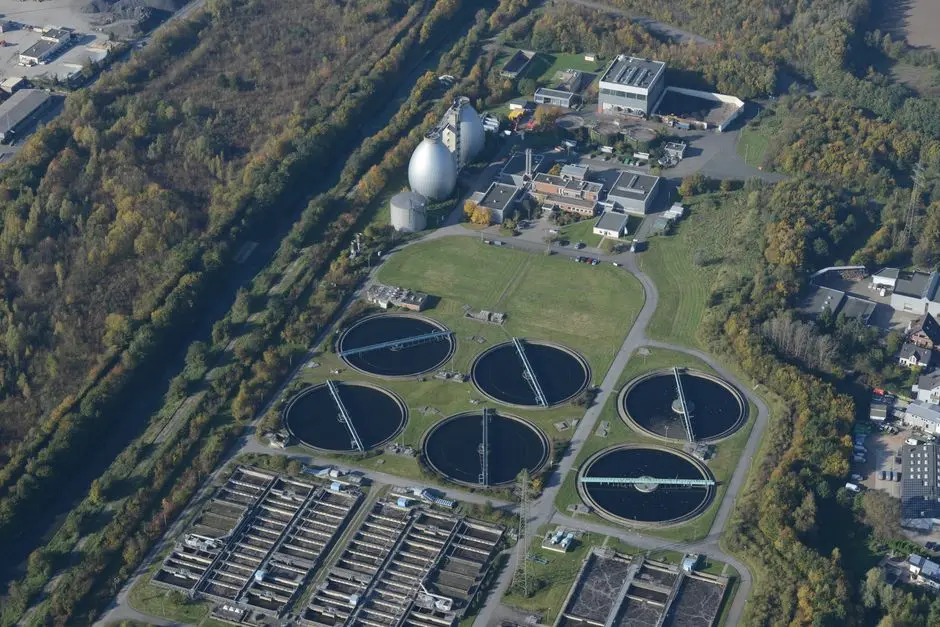
A reliable DAF configuration must define hydraulic, hydraulic-loading, solids-loading and maintenance conditions—not merely equipment dimensions. SIGMADAF states that normal recirculation is 10–40% of DAF operating flow, depending on effluent nature and suspended-solids content. Specify the design recycle rate against supplier calculations rather than assuming the upper end of that general guideline.
| Design item | Evidence-based basis | Supplier requirement |
|---|---|---|
| Recirculation | SIGMADAF gives 10–40% of DAF operating flow as the normal range. | State flow, pump duty, control method and wastewater-specific justification. |
| Saturation pressure | SIGMADAF gives 3–6 bar generally; Fluence describes its recycle stream at 4–6 bar. | Guarantee pressure, dissolved-air transfer and bubble performance at design flow. |
| Bubble size | SIGMADAF identifies 50–100 μm as the DAF micro-air bubble range. | Confirm the nozzle and operating condition achieve the specified distribution. |
| Process coverage | A functional train includes pretreatment, conditioning, flotation, skimming and sludge handling. | Show equipment boundaries, controls, interlocks and performance guarantees. |
| Redundancy | The required duty depends on operating and maintenance scenarios. | State available capacity with one train offline and prohibit untreated bypass. |
The process-flow diagram should include equalization, inlet screening, chemical conditioning, recycle pumping, air saturation, flotation, skimming, sludge withdrawal and downstream solids handling. The plate-and-frame filter press can be evaluated for recoverable sludge volume and dewatering duty, while the integrated MBR wastewater treatment system may be relevant if the treatment objective extends beyond DAF clarification. Neither should be included solely because it appears in a supplier portfolio; its duty must follow from the verified effluent target and residual contaminant load.
Choose a compact DAF solution when the relevant wastewater is dominated by floatable solids and FOG and the clarified effluent meets the applicable downstream requirement. Choose a broader train when sanitary flow, dissolved COD, stringent reuse criteria or discharge standards require biological or tertiary treatment. DAF is a unit process within a plant, not a complete wastewater treatment facility by default.
Define operating scenarios for normal production, peak discharge, start-up, shutdown and maintenance. Equalization may reduce short-duration hydraulic peaks, but it does not remove the underlying pollutant mass. If one train is offline, the remaining trains and equalization must cover the permitted treatment duty without an unpermitted or untreated bypass.
For a plant-specific benchmark rather than a generic catalogue substitution, the Volkswagen Hungary EV plant DAF capacity methodology illustrates the same need to distinguish plant-specific evidence from generic equipment sizing.
Build the owner’s DAF sizing and procurement basis
The RFQ should start with a controlled data request, not a requested capacity. The calculation cannot be closed until the owner supplies verified, time-correlated flow and pollutant information.
- Request segregated peak and average flows for sanitary, cooling, process-rinse, vehicle or component washing, paint, oily drainage and stormwater.
- Request the flow-duration profile, production and shift schedules, batch-discharge records and the 95th-percentile flow if available.
- Request routine and worst-case analyses for suspended solids, oil and grease, COD, pH and relevant process parameters.
- State the discharge destination, reuse objective, applicable limits and any pretreatment or sewer-discharge conditions.
- Provide soil, space, access, power and utilities constraints, plus the required level of redundancy.
Each bidder should identify design flow, maximum operating flow, flotation area, hydraulic loading, solids loading, train count, recycle rate, saturation pressure, bubble range, materials, controls, skimming capacity and turndown. The bid should also state whether equalization, chemical conditioning and sludge dewatering are included. Without a common scope boundary, quoted prices and capacities are not like-for-like.
| Buyer check | Required response | Reason for the check |
|---|---|---|
| Design basis | Calculated peak flow, selected hydraulic and solids loading, and resulting flotation area | Confirms that flow and pollutant duty were checked independently. |
| Configuration | Train arrangement and guaranteed capacity with one train unavailable | Tests redundancy rather than accepting total installed capacity. |
| Scope boundary | Included equalization, pretreatment, chemical dosing and sludge handling | Allows technical and commercial comparison. |
| Performance | Guaranteed flow, TSS or FOG removal, sludge concentration and operating availability | Converts catalogue claims into testable obligations. |
| Footprint | Flotation area and civil or skid dimensions | Fluence states that DAF can use about 25% of the equivalent conventional clarification area; this is a comparison point, not a Vietnam guarantee. |
Tie final selection to measurable guarantees. Sludge performance must also be verified because the supplied sources differ: Fluence reports sludge concentration can increase from 1% to 8–10%, while SIGMADAF reports 3–5%. The discrepancy shows that sludge performance is design- and wastewater-dependent; neither range should be inserted into the Vietnam RFQ as a guaranteed result.
The Volkswagen Germany EV plant DAF sizing analysis and Volkswagen Mexico EV plant DAF sizing analysis can support methodology review, but neither substitutes for Vietnam-specific flow, load and treatment-objective data.
Frequently Asked Questions
What DAF capacity is required for Volkswagen's new EV assembly plant in Vietnam?
No defensible plant-specific m³/h value can be stated from the supplied research because it contains no verified Vietnam wastewater flow, pollutant loads, production profile or pretreatment objective. Capacity depends on simultaneous peak flow after equalization, hydraulic loading, solids loading, treatment target and redundancy. Those inputs must be calculated before train count can be specified.
How much does a DAF system cost for an EV assembly plant?
There is no supported quotation for this project. A buyer should request a priced RFQ that states the design flow, flotation area, train count, equalization, screening, chemical conditioning, sludge dewatering, controls, civil works, installation and commissioning. Comparing quotations without this scope boundary would make the cost decision unreliable.
How should a DAF supplier be selected for Vietnam automotive wastewater treatment?
Select against guaranteed operating performance, not catalogue maximum capacity. Require the supplier to submit its design flow, maximum operating flow, hydraulic and solids-loading calculations, train arrangement, guaranteed capacity with one train offline, recycle rate, pressure, bubble range, controls, skimming capacity, turndown and wastewater-specific performance basis.
Does DAF replace biological treatment for EV assembly plant wastewater?
Not necessarily. DAF targets suspended solids, oils and grease and can remove particulate COD associated with those solids, but SIGMADAF states that it does not remove dissolved COD by itself. If the verified wastewater has a substantial soluble organic load, biological or other downstream treatment may remain necessary.
Can industrial wastewater equalization reduce the required DAF capacity?
Yes, when actual data justify it. Equalization can reduce short-term flow and load peaks that otherwise control flotation area, but it must be sized from discharge duration, batch volumes, production schedules and simultaneous peak flows. It also does not eliminate pollutant mass and must be included in the operating and maintenance scenarios.
What compliance criteria should determine the DAF design?
The applicable Vietnamese discharge, reuse or sewer-discharge criteria must be confirmed by the project’s applicable authority; no specific limit was supplied in the research. The owner should obtain the governing criteria and demonstrate that the complete treatment train—not DAF alone—meets them under worst-case flow and pollutant conditions. The Ho Chi Minh City effluent treatment plant guide may support local context, but it is not a substitute for the project’s enforceable approval conditions.
Related Equipment
- industrial DAF system — specifications, capacity range, and technical data