What Changes for Calgary Trade Waste in 2026?
Calgary manufacturers generally treat high-COD trade waste through a staged train rather than one universal machine: source control and characterization, solids or FOG removal where needed, biological COD reduction, and clarification or membrane separation before authorized discharge. For biodegradable streams, MBBR research using 1000–3500 mg/L influent COD found more than 80% COD removal and selected an 8-hour HRT as practical; performance was temperature-sensitive. Electrocoagulation is a demonstrated option for suitable mineral-processing streams. Final equipment selection depends on wastewater composition, flow variability, sewer requirements and sludge handling.
The City of Calgary explains that wastewater moves through a sewer network using gravity and pump stations to three treatment facilities that together serve more than one million residents each day (City of Calgary, 2026). That describes the shared municipal system; it does not establish that a particular industrial discharge is acceptable.
The manufacturer remains responsible for identifying the applicable sewer-discharge and pretreatment requirements for its discharge point, obtaining the necessary authorization and demonstrating that its proposed treatment train meets those requirements. The supplied research does not provide a current Calgary trade-waste COD limit, so no numeric local limit should be inferred from the municipal wastewater page.
The 2026 engineering priority is therefore specific: reduce organic loading and interfering contaminants at the source, then produce project-specific evidence that the selected process can handle the actual flow, temperature, wastewater variability and residual-sludge route.
Characterize the Waste Before Selecting Equipment
COD measures the amount of oxygen needed to oxidize organic and inorganic material in a wastewater volume and is commonly expressed in mg/L; ALAR’s COD explainer also notes that COD tests can be completed in two hours and often correlate closely with the slower BOD test (ALAR, 2026). That makes COD useful for frequent monitoring, but it does not make COD a complete industrial-wastewater analysis.
ALAR explicitly states that COD does not measure toxic materials. A high COD result can therefore conceal metals, solvents, biocides or other inhibitors, as well as organic material that is not readily biodegradable. Equipment should be selected from a representative process profile, not from a single laboratory number.
Request the following minimum information before comparing treatment systems:
- COD and BOD, with sampling method and analytical frequency;
- pH, temperature, hydraulic flow and pollutant load ranges;
- TSS, oil and grease, soluble and colloidal solids;
- nutrients where biological treatment may require them;
- metals, solvents, biocides and other process-specific inhibitors;
- pH-adjustment needs and any production, cleaning or shutdown discharges.
Collect representative samples across production, cleaning and shutdown periods. Record hydraulic flow in m³/h separately from pollutant load per day: biological capacity must accommodate both water throughput and the mass of degradable organics entering the reactor.
| Information required | Decision supported |
|---|---|
| COD and BOD | Organic-load magnitude and biodegradable fraction |
| Flow and load ranges | Equalization, reactor sizing and peak-load response |
| pH and temperature | Chemical control and biological operating envelope |
| TSS, FOG and oil and grease | Need for solids or floatables pretreatment |
| Toxicity and inhibitor screen | Whether biological treatment is suitable |
| Soluble and colloidal solids | DAF, clarification and membrane implications |
| Nutrients where relevant | Biological treatment readiness |
Where the characterization shows that chemical adjustment is required, an automatic chemical dosing system can provide controlled injection, but its use should follow the identified contaminant and pH conditions rather than precede them.
Build the Right Pretreatment Train
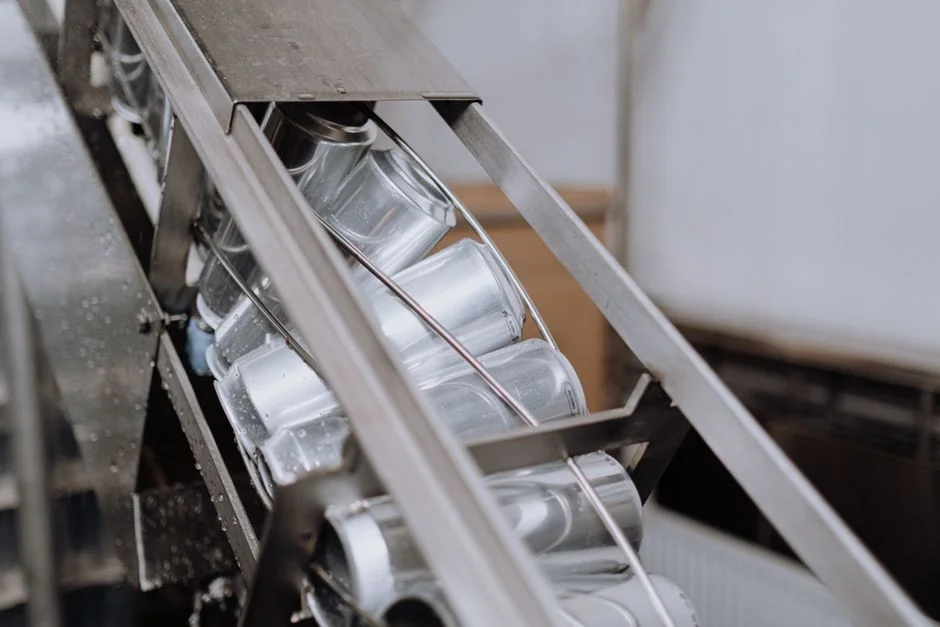
The treatment sequence should follow the waste: source control; screening or grit management where relevant; equalization; pH and chemical control; solids or FOG removal; biological COD reduction; and final solids separation. Each stage has a defined job, and physical removal should not be credited automatically as biological COD reduction.
For suspended solids, FOG, oil and grease and colloidal material, an industrial DAF wastewater pretreatment system is a relevant equipment option. The published DAF range is 4–300 m³/h across 13 standard models, with automatic skimming (HydropureWater product data, 2026). DAF is principally a floatables and solids-separation step; it should not be presented as a universal solution for soluble COD.
Chemical dosing links characterization to process control. The supplied dosing-system catalogue identifies PLC-controlled injection of coagulants, flocculants, pH adjusters and specialty chemicals (HydropureWater product data, 2026). The selected chemical, dose and control response should be verified against jar or pilot testing rather than copied from another waste stream.
Electrocoagulation is a case-specific alternative. A 2026 MDPI study applied electrocoagulation to mineral-processing wastewater from a Pb/Zn sulfide flotation plant with an initial COD of 424.29 mg/L. The researchers evaluated anode material, current density, initial pH and additives as operating variables (MDPI AG, 2026). That case demonstrates technical feasibility for that waste; it does not establish performance for unrelated industrial effluent.
| Contaminant or condition | Relevant pretreatment response | Key check |
|---|---|---|
| FOG, oil and grease, floatable solids | DAF with skimming | Confirm removal across production and cleaning periods |
| Suspended and colloidal solids | Screening, equalization and chemical conditioning or DAF | Measure TSS and inspect sludge or float removal |
| pH outside biological tolerance | Controlled chemical adjustment | Verify target pH and chemical demand |
| Compatible mineral-processing wastewater | Evaluate electrocoagulation | Pilot-test with the actual stream and assess sludge |
| Toxicity or persistent COD | Resolve source control or use a non-biological route | Complete toxicity and biodegradability testing |
The important boundary is contaminant-specific: DAF addresses floatable and suspended material; chemical dosing establishes a controlled condition for downstream treatment; electrocoagulation may suit particular mineral-processing streams. None should be selected from COD alone.
Compare Biological Treatment Routes for High COD
Biodegradable dissolved and colloidal organics require biological treatment because microorganisms consume the organic material; screening, DAF and chemical conditioning alone cannot provide that reduction. The sequence and reactor choice should therefore follow evidence that the waste is biodegradable at the relevant temperature and after pretreatment.
The supplied PubMed record establishes aerobic sequencing batch reactor treatment as an established route for high-COD wastewater, although the provided excerpt does not expose performance figures suitable for direct numerical comparison (PubMed, 2005). It supports route selection, not automatic sizing.
The more detailed MBBR study used influent COD of 1000–3500 mg/L and tested hydraulic retention times of 3, 5, 8 and 12 hours. It reported COD removal above 80% at the study conditions and selected an 8-hour HRT because 12 hours produced only about a 3-percentage-point improvement in removal efficiency (Juniper Publishers, 2026).
The same study reported MBBR COD removal of 80%, compared with 60–70% for activated sludge in its cited benchmark (Juniper Publishers, 2026). These are study-specific comparisons involving K3 carriers, not guaranteed project performance. Pilot testing should resolve differences in wastewater composition, temperature, loading and reactor configuration.
An MBR combines biological treatment with membrane separation. The supplied MBR system description combines activated sludge treatment with submerged PVDF membrane filtration, filtration below 1 μm, a footprint stated as 60% less than conventional systems and a stated capacity range of 10–2,000 m³/day (HydropureWater product data, 2026). Those are equipment specifications, not evidence that every high-COD stream will meet a given effluent quality.
| Route | Evidence in the supplied research | Decision issue |
|---|---|---|
| Moving bed biofilm reactor | More than 80% COD removal at 1000–3500 mg/L influent COD; 8-hour HRT selected in the study (Juniper Publishers, 2026) | Temperature response and project-specific loading |
| Aerobic sequencing batch reactor | Established high-COD treatment route identified by PubMed (2005); no comparable figures in the supplied excerpt | Cycle time, biomass control and effluent quality |
| MBR | Activated sludge with submerged PVDF membranes; filtration below 1 μm and 10–2,000 m³/day stated range (HydropureWater product data, 2026) | Footprint, membrane maintenance and residual solids |
| Conventional activated sludge | 60–70% COD-removal benchmark in the cited MBBR comparison (Juniper Publishers, 2026) | Clarification, footprint and sludge handling |
Media type, reactor configuration and membrane selection should follow the waste characterization, required effluent quality, minimum temperature, available footprint and residual-sludge constraints. The MBR wastewater treatment system is most relevant where membrane separation is required, but an MBR should not be treated as a substitute for biodegradability and toxicity assessment.
Design for Calgary's Temperature and Load Variations
The MBBR study found a pronounced temperature response: COD removal increased from approximately 70% to approximately 90% as temperature rose from 20°C to 25°C, and the study reported 94% removal at 32°C (Juniper Publishers, 2026). Temperature is therefore a design input for Calgary, not a footnote to the biological selection.
Require the supplier to state how the proposed configuration maintains performance at the project’s minimum wastewater temperature. The engineering questions are concrete: should the reactor be insulated, heated, housed indoors or operated at a longer hydraulic retention time? Each option affects capital cost, energy use, controls and winter commissioning.
Batch production, cleaning cycles and dilution can change both hydraulic and organic loading. The MBBR evidence above 2000 mg/L should not be generalized beyond the supplied study’s 1000–3500 mg/L influent-COD range without project-specific validation. A unit selected for average COD may not retain its performance, solids inventory or effluent quality during a concentrated discharge.
Include a winter commissioning plan with:
- biological acclimation before final acceptance;
- continuous temperature and dissolved-oxygen logging;
- observations of sludge condition and solids separation;
- COD response during normal production and cleaning periods; and
- contingency operation for upset loads or low temperatures.
The same engineering questions appear in a high-COD treatment process in another regional market, but transferring its design assumptions to Calgary still requires local temperature, wastewater and discharge data.
Separate, Dewater and Document the Residuals
Biological treatment converts biodegradable dissolved and colloidal material into biomass, so clarification or membrane separation is part of the treatment train rather than an optional end detail. Failure to manage that solids stream can undermine performance, storage capacity and compliance.
Where compact gravity solids handling is appropriate, the supplied lamella clarifier specification reports surface loading rates of 20–40 m/h and chemical consumption reduced by up to 30% through flocculation, recirculation and inclined-plate design (HydropureWater product data, 2026). These are published equipment claims and must be checked against the proposed wastewater and solids inventory.
Where dewatering is required, the supplied plate and frame filter press has a published filtration-area range of 1–500 m², with manual, hydraulic and fully automatic PLC-controlled operation (HydropureWater product data, 2026). The high-efficiency sedimentation tank and plate and frame filter press should be evaluated together as clarification and dewatering steps rather than isolated products.
| Residual-management item | Information to obtain before award |
|---|---|
| Expected sludge mass and water content | Process mass balance and measured pilot or trial data |
| Chemical and polymer demand | Operating estimate and sensitivity to wastewater variation |
| Storage | Maximum accumulation period, available volume and drainage requirements |
| Destination and handling | Authorized route, transport method and responsibility for sampling or manifests |
| Equipment performance | Filtration area, operating cycle, controls and automatic operation scope |
Bid documents should identify the sludge route rather than leave it as an installation issue. Final acceptance should include COD performance evidence, a solids and sludge mass balance, operating-cost records and confirmation against the applicable Calgary sewer authority requirements.
Use a Process-Selection Decision Framework
Start with the receiving objective: authorized sewer discharge, a defined internal reuse specification or another end use. COD alone does not establish which treatment train is appropriate. The decision then follows the contaminant and operating evidence.
If floatable material, FOG, oil and grease or suspended solids are material, evaluate DAF and chemical conditioning. If COD is predominantly biodegradable, compare biological routes. If the waste is compatible with an electrochemical process, evaluate electrocoagulation with a representative pilot rather than transferring results from a mineral-processing case.
Choose MBR versus conventional activated sludge using the required footprint, separation performance, reuse quality, operating complexity and residual-sludge route. For the chemical-wastewater application, see the engineering comparison of MBR versus conventional activated sludge for chemical wastewater. A metals-related case is discussed in the comparison of MBR versus conventional activated sludge for fabricated-metals wastewater, but those streams still require their own characterization.
- Define the sewer-discharge or reuse requirement.
- Characterize the waste across normal, cleaning and shutdown periods.
- Match pretreatment to the identified contaminants.
- Compare biological and non-biological routes against the target effluent quality.
- Size from peak flow, peak load, minimum temperature, retention time, redundancy and future production changes.
- Define the solids route and acceptance tests before equipment award.
| If the waste contains | Evaluate first | Required evidence before selection |
|---|---|---|
| Floatables, FOG, oil and grease | DAF and chemical conditioning | Representative separation and sludge/float results |
| Biodegradable soluble COD | MBBR, aerobic SBR or activated-sludge route | Pilot COD response across temperature and loading |
| Fine solids with a reuse requirement | MBR | Filtration performance, membrane maintenance and sludge mass |
| Compatible mineral-processing contaminants | Electrocoagulation | Stream-specific operating study and residual analysis |
Request a complete commercial package: process basis, guaranteed operating envelope, controls, utilities, chemical consumption, sludge estimate, installation requirements, commissioning tests, spare parts and local service support. Compliance risk is present when the supplier cannot provide wastewater-specific test data, a proposed performance envelope or a clear path from characterization to measurable acceptance criteria.
Frequently Asked Questions
What should a Calgary operator budget for high-COD trade-waste treatment?
Request an itemized lifecycle comparison rather than a single equipment price. The estimate should separate pretreatment, biological treatment, final separation, chemicals, energy, maintenance, commissioning and residual-sludge handling. Each option should use the same waste characterization, target effluent quality and operating envelope so the comparison reflects process differences rather than inconsistent assumptions.
How should an operator select a treatment supplier?
Ask for wastewater-specific performance evidence, a defined operating envelope, control narratives, installation and commissioning scope, residual-management responsibilities, warranty terms and measurable acceptance tests. The bid should show how temperature, toxicity, hydraulic variation and peak COD load were considered. Test data without the tested wastewater boundary is not enough for comparison.
What information is required to size an MBBR or MBR?
Sizing requires peak flow, peak COD load, minimum temperature, required HRT, variability and redundancy, as well as the target effluent quality and solids route. The MBBR study’s 8-hour and 12-hour HRTs are research findings, not universal design values; the MBBR’s 10–2,000 m³/day range is a published equipment range, not a plant-sizing calculation.
How can sewer-discharge compliance risk be reduced?
Keep COD and toxicity as separate acceptance issues, obtain the applicable sewer authority’s current permit and discharge criteria, and incorporate them into the design and commissioning plan. The shared Calgary collection system does not establish acceptance for a particular industrial stream, and the supplied municipal page does not provide a trade-waste COD limit.
When is reuse a defensible treatment objective?
Proceed only against a defined water-quality specification and a process capable of meeting it. The 2026 MDPI electrocoagulation study evaluated reuse effects for mineral-processing wastewater with an initial COD of 424.29 mg/L (MDPI AG, 2026), but that case does not establish reuse performance for every industrial stream. Pilot testing must verify the relevant contaminants and end-use requirements.