Why a Verified Malaysia RO Capacity Is Not Yet Available
No verified RO nameplate capacity exists for Panasonic Energy’s new Malaysian battery plant because Malaysia-specific wastewater flows, reuse demand, feed-water quality, and permit conditions are unavailable. Capacity must be calculated from the RO-eligible stream, not total plant wastewater: required permeate ÷ selected recovery = gross RO feed, and gross feed − permeate = concentrate. HydropureWater’s 2026 guides provide only comparators—1,500 m³/day for a defined Texas DAF–MBR–RO screening case and an 8,000–20,000 m³/day gross-feed envelope for a Mexico 35 GWh/year-class module-line benchmark. Neither establishes the Malaysian plant’s capacity.
The evidence hierarchy should remain explicit. A Malaysia-specific measured design basis is a site fact; a comparable Panasonic Energy benchmark is a screening comparator; an RFQ assumption is a proposal condition. The Panasonic Energy Texas RO-capacity methodology demonstrates the distinction: its 1,500 m³/day case is not a bid-ready plant capacity.
The Malaysia battery-separators market result was blocked by a security-verification page and supplied no flow, concentration, production, or disposal data. It therefore contributes nothing to RO sizing. Buyers should request source-by-source flow-meter records, batch volumes, production forecasts, operating hours, shift-change peaks, wastewater analyses, reuse demand, P&IDs, permit limits, and the concentrate-disposal route.
Until those records are available, any numerical Malaysian RO nameplate would be an unsupported extrapolation. The correct procurement response is to close the data gaps, identify the RO-eligible stream, and require suppliers to show the calculation.
Build the Malaysia Plant Water Balance Stream by Stream
The first task is to separate process duties before calculating membrane capacity. The Panasonic Energy Mexico battery-plant capacity calculation identifies four hydraulic and contaminant groups; applying that framework to Malaysia is a screening method, not evidence of Malaysian flows.
| Stream group | Expected contaminant or operating concern | Procurement boundary before RO sizing |
|---|---|---|
| NMP-bearing condensate | Recovered coating or drying solvent stream | Dedicated vacuum distillation or evaporative recovery; no direct biological-treatment or RO connection |
| Electrode-rinse and tab-wash water | Nickel, cobalt, lithium, fluorinated electrolyte residues and module-test slug loads | Dedicated equalization and measured pretreatment duty |
| Paint-shop, tab-welding and module-housing wash water | Oils, fillers, surfactants, overspray and solids | Characterization before clarification and biological treatment |
| Sanitary wastewater | Hydraulic peaks and a separate regulatory discharge or reuse route | Keep outside the industrial RO balance unless acquired P&IDs expressly connect it |
NMP-bearing condensate is a hard separation boundary. HydropureWater’s 2026 Mexico guide assigns it to dedicated vacuum distillation or evaporative recovery rather than biological treatment or RO. Electrode-rinse and tab-wash water enters dedicated equalization because test discharges may produce contaminant slugs.
Paint-shop, tab-welding, and module-housing wash water requires measured FOG, surfactant, and TSS data before selecting clarification. HydropureWater’s 2026 Mexico guide reports episodic FOG of 200–800 mg/L and episodic TSS of 300–1,500 mg/L for this stream. Those values are Mexico-guide screening evidence, not Malaysian measurements, but they identify the required tests and support the rotary mechanical bar screen as a possible headworks boundary.
Sanitary wastewater remains a separate hydraulic and regulatory duty unless the P&IDs and reuse plan establish otherwise. Total plant wastewater is not automatically gross RO feed; only confirmed permeate demand and streams actually selected for RO polishing enter the membrane calculation.
Calculate Gross RO Feed from Confirmed Permeate Demand
Gross RO feed is calculated from required net permeate and the selected RO recovery rate: required net permeate ÷ recovery rate = gross RO feed; gross RO feed − net permeate = concentrate. This definition must appear in every quotation because a stated m³/day can otherwise mean the wrong hydraulic duty.
| Input or output | Calculation or definition | Evidence status |
|---|---|---|
| Required net permeate | Confirmed battery cathode-rinse reuse demand | Malaysia value not supplied |
| Selected RO recovery rate | Permeate ÷ gross feed | Must follow feed chemistry, pretreatment, reuse quality and concentrate constraints |
| Gross RO feed | Required net permeate ÷ recovery rate | Must be calculated from verified Malaysian inputs |
| Concentrate | Gross RO feed − net permeate | Must have a defined disposal route |
| Mexico screening flow | 6,000–11,000 m³/day combined screening flow | HydropureWater’s 2026 Mexico 35 GWh/year-class benchmark |
HydropureWater’s 2026 Mexico guide combines 5,000–9,000 m³/day process wastewater with 1,000–2,000 m³/day sanitary wastewater. At 60% recovery, treating the entire 6,000–11,000 m³/day would imply 10,000–18,333 m³/day gross feed and 6,000–11,000 m³/day permeate. At 75% recovery, the same flow would imply 8,000–14,667 m³/day gross feed and the same permeate.
The resulting approximately 8,000–20,000 m³/day Mexico envelope is arithmetic from a 35 GWh/year-class screening benchmark. It is neither a Malaysian nameplate nor a measured General Escobedo duty. The separate Texas guide uses 1,500 m³/day for a defined DAF–MBR–RO screening case and states that it is not a bid-ready Panasonic Energy design capacity.
Each RFQ should state whether capacity means gross feed, net permeate at a specified recovery, or production over stated operating hours. It should also identify turndown, design feed flow, peak-flow basis, and concentrate flow. Recovery should be selected from feed chemistry, pretreatment performance, reuse-water quality, and disposal constraints. Once the stream is qualified, the industrial reverse osmosis system should be sized from the resulting duty, with the high-TDS RO design guide used to challenge membrane and pretreatment assumptions.
Protect the RO with Stream-Appropriate Pretreatment
Raw battery wastewater cannot be assumed to be suitable for direct RO feed. HydropureWater’s 2026 Texas guide gives a screening sequence of equalization, DAF, metal precipitation and clarification, MBR, then RO where verified flows and chemistry support the route.
| Stage | Stated screening benchmark | Malaysia procurement requirement |
|---|---|---|
| DAF | 4–300 m³/h; 80%–95% FOG removal; downstream TSS typically below 100 mg/L | Size from Malaysian flow, FOG, surfactant, TSS and batch peaks |
| Metal precipitation | Nickel, cobalt and lithium precipitation at pH 9–10 | Confirm metal species, loading, pH control and sludge route |
| MBR | PVDF hollow-fiber modules; turbidity below 1 NTU; MLSS of 8,000–12,000 mg/L | Validate flux, peak loading, fouling and pretreatment guarantees |
| RO feed qualification | SDI, conductivity, temperature, hardness, silica, organics and metals identified as determinants | Test the proposed Malaysian RO feed before final recovery and membrane selection |
The DAF machine should follow measured contaminants rather than an assumed battery-module profile. The Texas guide’s 4–300 m³/h range, stated FOG removal, and downstream TSS condition are screening benchmarks, not Malaysian design values.
The MBR membrane bioreactor wastewater treatment system must be selected together with upstream equalization and clarification. Its duty includes hydraulic peaks, contaminant slugs, and the required clarified feed condition. Metal-rich sludge from precipitation is separate from RO concentrate and requires a dedicated solids route, such as the plate-and-frame filter press.
HydropureWater’s 2026 Mexico guide gives a sanitary screening peak factor of 1.5–2.0× and a DAF screening envelope of 20–40 minutes HRT and 10–25 m³/m²·h surface loading. These remain benchmark assumptions, not Malaysian site facts. The RFQ should instead require measured batch volumes, shift-change demand, operating hours, and feed-water testing on SDI, conductivity, temperature, hardness, silica, organics, and metals.
Turn the Capacity Estimate into a Bankable RFQ
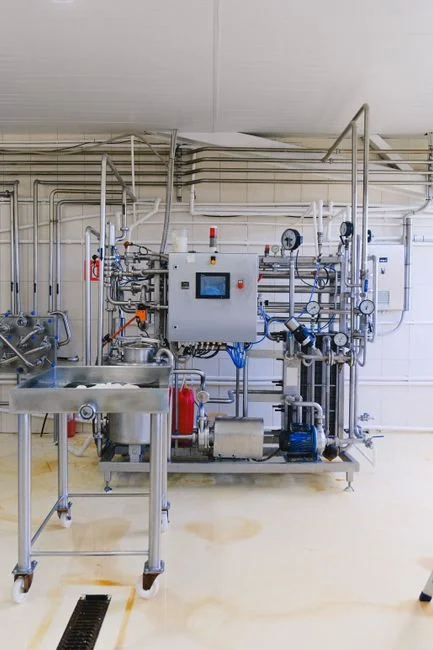
A bankable industrial wastewater RFQ must expose the whole calculation rather than award a nominal capacity. The first deliverable is a stream-specific water balance showing gross RO feed, net permeate, concentrate, selected recovery, reuse demand, discharge route, and operating hours.
The buyer should attach source-specific flow-meter records, wastewater-characterization results, batch volumes, shift-change peaks, production forecasts, and acquired P&IDs. Every capacity figure must identify its source and measurement period. Total plant flow cannot substitute for confirmed RO-eligible flow.
Each supplier should provide unit-sizing calculations, pretreatment and membrane-compatibility calculations, stream-segregation drawings, and a concentrate-management comparison. The quotation should also define pretreatment guarantees, product-water quality, membrane-fouling criteria, recovery definition, peak-flow basis, concentrate route, chemical and sludge assumptions, and integration responsibilities.
Pricing should separate equipment, installation, commissioning, performance testing, permits, energy, consumables, sludge handling, and replacement assumptions. A zero-liquid-discharge package should remain conditional on permit restrictions, discharge paths, or corporate commitments. HydropureWater’s 2026 Texas guide assigns an evaporator or crystallizer a 1.5×–2.5× increment to base-train capital expenditure.
Concentrate disposal is a sizing constraint, not a post-award detail. The 2026 high-salinity RO guide and the RO and UF membrane filter elements provide comparison points, but the binding proposal should state the selected recovery and confirm that the membrane warranty and operating assumptions match that duty.
Frequently Asked Questions
What should the budget be for RO at Panasonic Energy’s new battery plant in Malaysia?
No Malaysia-specific quotation or capacity basis is supplied. HydropureWater’s 2026 Texas screening range is $1.5 million–$6 million for the defined 1,500 m³/day DAF–MBR–RO case, equivalent to $1,000–$4,000 per m³/day. It is not a Malaysia estimate. Before requesting a price, require confirmed peak flow, feed analysis, reuse demand, NMP-recovery scope, concentrate route, and excluded installations to be stated.
How should a supplier demonstrate that its RO capacity is appropriate?
The proposal must define gross feed, net permeate, recovery, design operating hours, peak-flow basis, pretreatment duties, concentrate flow, and disposal route, then show unit-sizing and membrane-compatibility calculations. A nominal m³/day without those definitions is not comparable with a confirmed Malaysian design basis.
Which wastewater streams should be excluded from the Malaysian RO balance?
Exclude NMP-bearing condensate from direct biological-treatment and RO connections and assign it to dedicated recovery. Keep sanitary wastewater outside the industrial RO calculation unless acquired P&IDs and the reuse plan expressly connect it. Route electrode