What Is—and Is Not—Known About the Vietnam RO Capacity
No verified reverse-osmosis capacity is established for Panasonic Energy’s new battery plant in Vietnam from the supplied evidence. The capacity cannot be calculated without site-specific wastewater flows, production forecasts, stream routing, reuse demand, worst-case water analyses, pretreatment performance, P&IDs and permit limits. HydropureWater’s 1,500 m³/day DAF–MBR–RO case is only a 2026 screening benchmark, not a Vietnam design value. Procurement should establish the peak RO-eligible feed flow, apply a site-supported recovery rate, calculate permeate and concentrate, and confirm that pretreatment and disposal systems can handle the resulting duty.
The Panasonic Energy Texas RO capacity methodology identifies the same missing project information: current and projected production, source flows, cathode-rinse reuse demand, source-by-source analyses, metering records, acquired P&IDs, permit limits and peak operating scenarios. The absence of those records is a fundamental design gap, not a missing equipment-selection detail.
Vietnam’s consumer water-purifier market does not answer this industrial design question. Hisoair’s 2026 market review describes household and commercial drinking-water products, including Panasonic consumer RO models, rather than battery-manufacturing wastewater, process reuse or industrial brine disposal. Consumer product flow ratings cannot be substituted for a plant treatment boundary.
| Evidence item | Current status | Permitted use |
|---|---|---|
| Panasonic Energy Vietnam RO capacity | Not verified in the supplied evidence | Do not use for award or equipment sizing |
| 1,500 m³/day DAF–MBR–RO case | HydropureWater 2026 screening benchmark | Initial capital and equipment screening only |
| Permit flow, production forecast or site analysis | Missing project evidence | Obtain before calculating permeate production |
| RO hydraulic calculation | Can be prepared as a conditional method | Populate only with verified feed flow and selected recovery |
Build the Capacity Calculation from Verified Stream Data
The defensible capacity calculation starts with the verified peak RO-eligible feed flow, not total factory wastewater and not a permit threshold. Permitted discharge flow may include sanitary and process streams that do not enter the RO train, so it cannot define RO feed capacity by itself.
- Establish the average and peak verified feed flow, Qfeed.
- Select recovery, R, from feed chemistry, pretreatment performance, reuse-water quality and concentrate-disposal constraints.
- Calculate permeate production as Qpermeate = Qfeed × R.
- Calculate concentrate as Qconcentrate = Qfeed × (1 − R).
- Check equalization, pretreatment and concentrate handling against both average and peak cases.
HydropureWater’s 2026 acquisition guide uses 70%–85% RO recovery, corresponding to 15%–30% reject, only as an initial sensitivity range. The selected recovery must reflect the actual RO feed chemistry, demonstrated pretreatment performance, required cathode-rinse water quality and a viable concentrate route. It should not be chosen merely because it produces an attractive reuse balance.
For example, if the verified peak RO feed is represented by Qpeak and the selected recovery by R, the required permeate production rate is Qpeak × R and the concentrate rate is Qpeak × (1 − R). No Vietnam flow is inserted here because the supplied evidence does not provide one. The buyer must supply measured flows and an approved recovery before sizing an industrial reverse-osmosis system.
Average and peak cases are separate design checks. A nominal daily average does not establish peak hydraulic duty, and the concentrate generated at peak production can exceed the downstream disposal system’s normal capacity even when permeate demand is unchanged.
Define the RO Feed Boundary Before Selecting Equipment
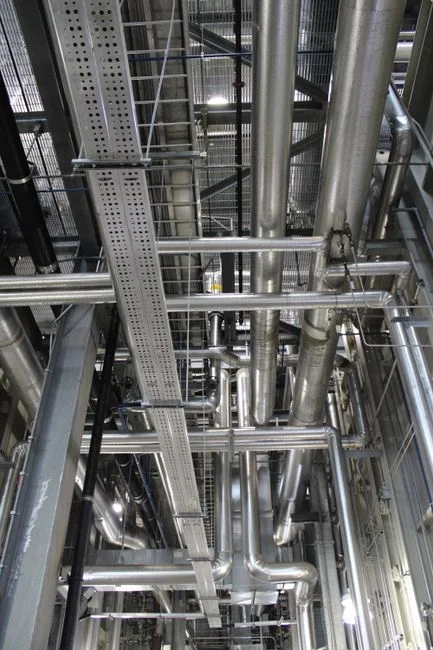
The RO feed boundary should contain only streams whose source flow, chemistry, hydraulic profile and destination are verified. HydropureWater’s 2026 acquisition guide identifies cathode coating with NMP solvent, graphite-slurry lines, metal-finishing rinse streams and sanitary wastewater as distinct battery-process streams. Each has a different contaminant profile and cannot be combined automatically into one RO feed.
| Source | Required flow and chemistry evidence | Provisional route | Decision evidence required |
|---|---|---|---|
| Cathode-coating rinse water | Measured flow; NMP, salts, metals and solids at peak conditions | Candidate RO feed for process reuse | Reuse specification and source analysis |
| Other cathode-rinse streams | Separate metering and source analysis | Determine independently | Routing shown on acquired P&IDs |
| Graphite-slurry stream | Flow, solids and chemical profile | Separate treatment scope unless physically connected | Hydraulic connection and destination |
| Sanitary wastewater | Flow, load and discharge route | Separate unless a connection is demonstrated | Permit and P&ID confirmation |
| NMP-bearing process water | Solvent concentration, flow and recovery inventory | Conditional NMP recovery; RO only if directly connected | Solvent mass balance and recovery records |
| Metal-finishing rinse | Flow, metals, pH and reuse or discharge destination | Separate route pending analysis | Source characterization and disposal plan |
Cathode coating is the first routing decision. If coating remains in-house and NMP is recovered, obtain the solvent mass balance, solvent inventory, recovery records and associated wastewater flow. If coating is outsourced, recalculate the remaining flow and contaminant balance; do not simply deduct an assumed flow. The same boundary logic applies to the broader battery-process routing problem discussed in the Panasonic Energy Mexico battery-plant RO capacity assessment.
NMP vacuum distillation is a conditional process-recovery unit, not an RO discharge-compliance unit. Keep it outside the RO scope unless the acquired P&IDs show a physical connection. The RFQ should request flow-meter records, wastewater analyses, production forecasts, operating scenarios, chemical inventories and NMP usage records for each candidate source.
Test the Reference DAF–MBR–RO Treatment Train
HydropureWater’s 2026 benchmark arranges the baseline sequence as equalization, DAF, metal precipitation and clarification, MBR, then RO, but that sequence is only defensible where verified flows and chemistry support it. The DAF and MBR wastewater treatment system must be selected with the RO duty, not purchased as isolated capacity claims.
The benchmark DAF screening range is 4–300 m³/h, with 80%–95% FOG removal and downstream TSS typically below 100 mg/L, according to HydropureWater’s 2026 acquisition guide. The benchmark MBR uses PVDF hollow-fiber modules, with effluent turbidity below 1 NTU and MLSS of 8,000–12,000 mg/L. Metal precipitation is placed at pH 9–10, with metal-rich sludge assigned to a separate filter-press scope.
| Stage | 2026 benchmark parameter | Sizing check |
|---|---|---|
| Equalization | Hydraulic and pH control | Verify peak accumulation, mixing and chemical compatibility |
| DAF | 4–300 m³/h; 80%–95% FOG removal; downstream TSS typically below 100 mg/L | Compare peak feed and variable solids loading |
| Metal precipitation and clarification | pH 9–10 | Verify metals, chemical demand and sludge generation |
| MBR | PVDF hollow-fiber; turbidity below 1 NTU; MLSS 8,000–12,000 mg/L | Confirm peak flux, loading and final RO feed quality |
| RO | Selected site-specific recovery and permeate rate | Size from verified feed, product quality and concentrate route |
| Sludge handling | Separate metal-rich sludge scope | Price from actual solids characteristics and destination |
These are benchmark values from HydropureWater’s 2026 guide, not Vietnam commitments. A nominal DAF or MBR capacity is not an adequate guarantee because pretreatment must demonstrate the required RO feed condition at the peak operating scenario. Equalization duty, chemical compatibility, hydraulic peaks, sludge handling and final RO feed quality must therefore be explicit procurement inputs.
The DAF pretreatment system should be evaluated together with downstream biological treatment and RO. If the verified feed chemistry or peak load falls outside the benchmark basis, the equipment scope and guaranteed outlet parameters must be revised before pricing.
Set the Reuse and Concentrate-Disposal Requirements
The industrial RO duty identified in HydropureWater’s 2026 guide is treatment of cathode-coating rinse water for reuse, with residual dissolved solids concentrated into a smaller reject stream. It should not be expanded automatically into general industrial pure-water production. The buyer must obtain a confirmed reuse-water specification covering process limits and the operating consequences of noncompliance.
Under the guide’s 70%–85% recovery benchmark, 15%–30% of the RO feed becomes concentrate. That stream requires a defined route: evaporation, permitted discharge or licensed industrial hauling. It must not disappear from the mass balance when permeate production is calculated.
Zero liquid discharge should remain conditional. HydropureWater’s 2026 guide treats ZLD as a strategic expansion and assigns an evaporator or crystallizer a 1.5x–2.5x increment to base-train capital expenditure. That condition applies if the permit, discharge constraints or corporate commitment require it; it is not a default battery-plant requirement.
The plate-frame filter press has a different duty. It handles metal-rich sludge from precipitation and clarification; it is not an RO-concentrate system. Any RFQ should keep these solids and liquid-reject scopes separate so that sludge characteristics, dewatering requirements and disposal routes are priced against the correct waste stream.
Before award, require the proposed reuse point, water-quality limits, monitoring frequency, consequences of off-specification permeate, concentrate flow and chemistry, receiving point, disposal authority, hauling contingency and responsible operator. These documents determine whether the selected recovery is technically and operationally viable.
Set a Conditional Budget and RFQ Basis
HydropureWater’s 2026 benchmark places the defined 1,500 m³/day DAF–MBR–RO treatment case at $1.5 million–$6 million, equivalent to $1,000–$4,000 per m³/day. This is an equipment-screening envelope, not a Vietnam capital estimate, because the project flow, wastewater characterization and site conditions are not established.
| Cost item | 2026 screening basis | Procurement condition |
|---|---|---|
| Base DAF–MBR–RO treatment train | $1.5 million–$6 million for 1,500 m³/day; $1,000–$4,000 per m³/day | Reprice after verified peak flow and chemistry |
| NMP vacuum distillation | Excluded from base treatment train | Include only if in-house coating requires solvent recovery |
| Evaporator or crystallizer | Excluded; 1.5x–2.5x capital increment for ZLD | Require permit, disposal or corporate basis |
| Metal-sludge filter press | Excluded as a separately installed unit | Price from sludge characteristics and disposal route |
| Automatic chemical dosing | Not quantified in the supplied research | Define chemicals, duty, controls and integration scope |
The exclusions matter. HydropureWater’s 2026 guide states that in-house NMP recovery moves the project toward the upper end of the base range, while outsourcing cathode coating may remove that scope after the flow and contaminant balance are reassessed. An automatic chemical-dosing system should not be included merely as a generic item; its duty depends on verified pH control, coagulant use and precipitation chemistry.
The guide’s avoided-disposal sensitivity is approximately $48 per day, or about $17,500 per year, at 300 m³/day of RO reject and $0.60 per 1,000 gallons. It is not a Vietnam quotation. Local disposal, water and hauling tariffs must be verified.
Require a binding proposal to be conditioned on acquired P&IDs, verified design flow, worst-case wastewater characterization, site conditions, reuse requirements, concentrate route and an itemized equipment quotation. The supplier should guarantee outlet parameters and disclose chemical assumptions, sludge assumptions, the NMP mass balance where applicable, integration with existing piping and controls, monitoring responsibilities and exclusions. The broader controls question should also be checked against the high-TDS RO engineering guide.
Frequently Asked Questions
What RO capacity is required for Panasonic Energy's new battery plant in Vietnam?
No verified capacity can be stated from the supplied evidence. HydropureWater’s 2026 acquisition guide uses 1,500 m³/day only as a defined DAF–MBR–RO screening benchmark. The buyer must first obtain acquired P&IDs, source-specific flows, production forecasts, wastewater analyses, reuse demand and permit limits.
How should the RO permeate production rate be calculated?
Multiply the verified peak RO-eligible feed by the selected recovery. Concentrate equals feed multiplied by one minus recovery. HydropureWater’s 2026 guide provides 70%–85% recovery as an initial sensitivity range, not a Vietnam design selection; actual recovery requires site-specific chemistry, pretreatment performance, reuse quality and disposal constraints.
What is the screening cost for the DAF–MBR–RO treatment train?
HydropureWater’s 2026 screening range for the defined 1,500 m³/day case is $1.5 million–$6 million, or $1,000–$4,000 per m³/day. Before requesting a binding price, require the buyer to define actual peak flow, pretreatment requirements, reuse quality, NMP recovery scope, concentrate disposal and excluded installations such as the metal-sludge filter press.
What should a supplier guarantee before equipment award?
The proposal should be conditional on acquired P&IDs, verified design flow, worst-case characterization and site conditions. It should guarantee outlet parameters and disclose chemical and sludge assumptions, the NMP mass balance where applicable, and responsibilities for integration with existing piping, controls and monitoring.
Does a permit flow threshold determine the required RO capacity?
No. HydropureWater’s 2026 guide identifies 50,000 gpd as a Texas combined process and sanitary flow boundary for individual-permit versus eligible general-permit treatment. That permit example does not apply to Vietnam and does not determine RO capacity. Permit limits govern outlet performance; verified stream flows and operating scenarios govern treatment capacity. The Vietnam industrial DAF capacity assessment provides a separate framework for distinguishing local project data from non-project benchmarks.