What Can—and Cannot—Be Stated About BYD's Vietnam DAF Capacity
A defensible DAF capacity cannot be calculated from the available research because BYD's Vietnam plant flow, wastewater characteristics and discharge criteria are not provided. DAF may be relevant for suspended solids, oil and grease, and colloidal contaminants, but required capacity must be based on the maximum treated flow—not average production flow—plus validated hydraulic variation and operating redundancy. HydropureWater's standard range is 4–300 m³/h across 13 models, but no model can be selected until site data are verified.
Four quantities must not be conflated:
- Plant production capacity describes vehicle output, not wastewater generation.
- Wastewater generation rate is the flow produced by the plant's process, utility and wash-water systems.
- DAF design flow is the governing flow that the treatment system must handle under approved operating and maintenance scenarios.
- Purchased capacity is the equipment rating selected to meet that design flow, potentially through several operating trains.
The supplied research contains no verified Vietnam-specific flow, pollutant loading, production phasing or receiving-utility basis. It therefore does not support a numerical DAF capacity for the BYD vehicle factory Vietnam project. Project announcements may establish that the plant exists, but they do not establish hydraulic or contaminant design loads.
What can be used is a selection boundary and a disciplined workflow. The DAF system engineering specifications and industrial selection guide provides the 13-model, 4–300 m³/h catalog range. That range allows suppliers to be compared against a calculated design flow, but it cannot replace the flow calculation. A defensible wastewater treatment RFQ should identify missing inputs, define treatment objectives and require each bidder to demonstrate how its proposed train meets them.
Verified Inputs Needed for a BYD Vietnam Treatment Design
The BYD Vietnam EV plant design basis must come from the plant team, EPC contractor and receiving utility, with plant announcements and investment documents used only to confirm project context. The data room should distinguish continuous process wastewater from intermittent wash water, stormwater, sanitary flows and utility discharges, and should identify which streams are included in the DAF scope.
| Input | Required information | Responsible source |
|---|---|---|
| Production and phasing | Vehicle production schedule, operating shifts, construction phases and changes that could alter wastewater generation | BYD plant team and EPC contractor |
| Hydraulic flow | Modeled and measured peak flows for each wastewater stream, including wash water, cooling blowdown and other included flows | EPC process engineer and plant operations team |
| Wastewater characterization | Representative samples analyzed for TSS, oil and grease, free and emulsified oil, COD, BOD, pH, temperature and conductivity, plus applicable battery-related or metalworking constituents specified by the EPC team | Accredited laboratory and process engineer |
| Discharge basis | Receiving utility limits, sampling protocol, permitted flow, pH band and the next treatment step for municipal, industrial or zero-liquid-discharge routing | Receiving utility and permitting authority |
| Treatment boundaries | Proposed upstream operations, downstream treatment, equalization, sludge route and required operating redundancy | EPC contractor and process engineer |
Representative sampling matters because automotive wastewater can vary with production activity and cleaning practices. A single laboratory result without flow weighting may not characterize the design load. The project team should document sampling points, operating conditions, sample preservation and the period represented by each result.
Potential pretreatment needs should be identified before DAF selection. Oil-water separation may be required for oily runoff; industrial wastewater equalization may control batch discharges; pH control may be necessary before flotation; coagulation and flocculation may be needed for fine particles; and metal-bearing streams may require segregation. These are treatment decisions to test with data, not automatic additions to the equipment scope.
The same evidentiary discipline applies to related BYD assessments. The BYD Hungary EV plant DAF capacity assessment and BYD Mexico EV plant DAF capacity assessment illustrate why plant-specific evidence is necessary; they do not supply a hydraulic basis for Vietnam.
Whether DAF Fits BYD's Vietnam Wastewater
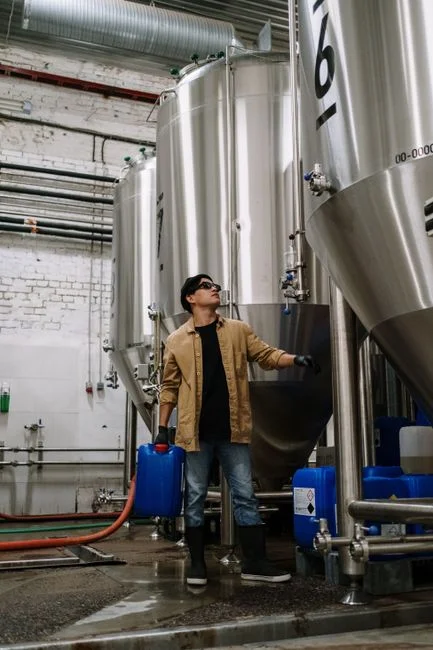
DAF is a fit when the treatment objective is to remove suspended solids, oil and grease, or colloidal material before downstream biological, membrane or reuse treatment. It is not justified solely because the project includes vehicle production. The wastewater streams, treatment objectives and receiving-utility requirements determine whether DAF closes a defined process gap.
The process described by Wikipedia, “Dissolved air flotation,” begins with equalized wastewater. Where required, coagulant and flocculant condition the contaminants. A portion of clarified water is pressurized and saturated with compressed air, then recycled to the flotation tank. Pressure reduction releases tiny bubbles that attach to suspended particles and oil, creating a floating layer removed by a skimmer.
Coagulation may be necessary when fine or colloidal material must be aggregated before flotation. The same source identifies ferric chloride and aluminum sulfate as possible coagulants. Chemical selection and dose must nevertheless be based on site-water testing and jar or pilot trials; the research does not establish a BYD Vietnam dose.
Geometry affects the design basis. Wikipedia reports approximately 3 minutes for circular DAF systems and 20–30 minutes for rectangular systems, while also describing circular systems as more efficient and rectangular systems as providing more residence time. Those values describe the supplied source's general comparison; the project designer must reconcile them with the specified operating envelope and the vendor's tested configuration.
Lamella or parallel-plate packing should be considered when additional separation surface is needed to improve separation efficiency. It may increase effectiveness within a constrained footprint, but it does not remove the need to establish hydraulic loading, contaminant removability and downstream treatment.
For equipment review, compare the HydropureWater industrial DAF system against the required process duty. If chemical conditioning is needed, evaluate a PLC-controlled chemical dosing system as part of the same process scope rather than as an unrelated accessory.
How to Calculate DAF Design Capacity
The DAF sizing calculation must start from the governing concurrent wastewater flow, because average plant output does not determine peak equipment demand. Use maximum concurrent process wastewater plus validated wash-water, cooling-blowdown and other included streams. Exclude streams that will receive separate treatment, but document their hydraulic loads and treatment destinations so they are not lost between disciplines.
| Calculation step | Method | Required evidence |
|---|---|---|
| 1. Define stream boundaries | List every wastewater source and identify whether it enters the DAF treatment train | Approved process wastewater flow diagram |
| 2. Establish concurrent flow | Combine maximum concurrent flows for all included streams rather than summing unrelated daily volumes | Measured data and approved production and utility scenarios |
| 3. Apply project-approved allowances | Document the hydraulic variation and operating allowances accepted by the project designer | Signed design criteria; no defensible percentage is supplied in the research |
| 4. Check stream segregation | Remove sanitary wastewater, stormwater, oily runoff or high-strength concentrates if they require separate treatment | EPC flow diagram and treatment-boundary decision |
| 5. Define train duty | State whether the nominal rate applies per train or across parallel trains | Approved operating philosophy and maintenance strategy |
| 6. Match equipment | Compare the resulting design flow and required configuration with the 4–300 m³/h, 13-model range | Vendor model loading and parallel-train proposal |
Do not add an assumed peak percentage or redundancy factor. The supplied research provides no defensible plant-specific allowance for either, and the project designer must approve those allowances against verified operating data. Similarly, a train arrangement cannot be selected by capacity alone: available footprint, maintenance access and the treatment objective during an outage must be considered.
The output at this stage is a preliminary design flow, a candidate train arrangement and a capacity envelope for budgetary inquiry—not a guaranteed treatment rate. The DAF system engineering specifications and industrial selection guide can then be used to check whether a candidate configuration falls within the catalog envelope. Influent testing, hydraulic modeling and treatment trials remain necessary before procurement guarantees are fixed.
DAF Operating and Performance Criteria to Specify
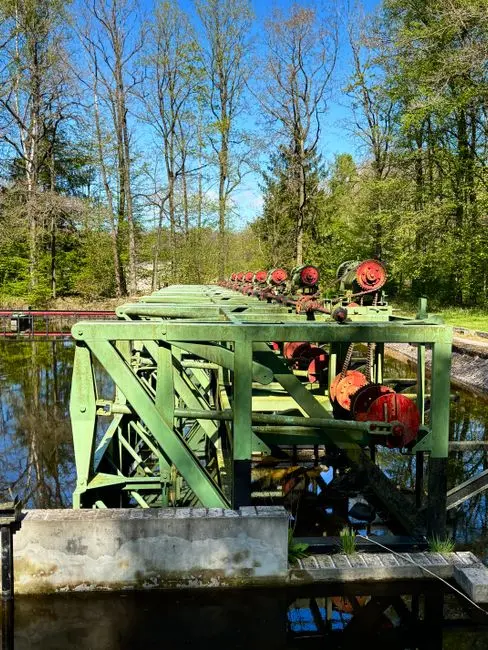
The DAF RFQ should specify the equipment envelope and make performance guarantees conditional on a defined influent range. The supplied HydropureWater engineering guide states a saturation pressure of 3–6 bar, bubble size of 20–100 μm and retention time of 20–60 minutes. Those values should be stated as the basis for the bidder's hydraulic and operating proposal.
| Specification item | RFQ requirement |
|---|---|
| Design basis | Defined design flow, influent TSS, oil and grease, pH and temperature range |
| Flotation system | Automatic skimming and micro-bubble generation for the defined treatment duty |
| Operating envelope | 3–6 bar saturation pressure, 20–100 μm bubble size and 20–60 minute retention time, as stated in the supplied guide |
| Hydraulic equipment | Equalization, recycle pumping, pressure vessel or air-saturation arrangement and associated controls |
| Instrumentation | Flow, pressure, level and chemical-control requirements identified by the supplier |
| Solids management | Skimmed sludge withdrawal, access, handling interface and downstream route |
| Separation enhancement | Lamella packing if required to provide greater separation surface and separation efficiency |
A performance guarantee must state what is measured and under what conditions. Tie any promised TSS or oil-and-grease removal to the agreed design flow and influent envelope. The research does not support a site-specific removal efficiency for BYD Vietnam, so neither the EPC team nor an OEM should convert general DAF capability into a numerical guarantee without representative wastewater testing.
Controls, recycle performance and pressure-system design influence whether the specified operating envelope is maintained. Require the offer to describe how changes in flow, pressure, sludge accumulation and chemical demand are managed. It should also identify alarms, local controls, remote monitoring, maintenance access and the limits of the supplier's scope.
For specification consistency, align the RFQ with the HydropureWater industrial DAF system envelope and the DAF system engineering specifications and industrial selection guide. Any departure from the stated pressure, bubble-size or retention-time range should be identified and technically justified.
Selecting DAF Equipment and the Rest of the Treatment Train
Equipment selection should follow the treatment-train decision, not precede it. A single-train arrangement may suit a verified load where continuity permits, while parallel trains may be required by peak flow, footprint constraints, redundancy objectives or the need to maintain treatment during maintenance. The deciding inputs are the calculated design flow, available area, permitted operating scenarios and the performance required when one train is unavailable.
HydropureWater's cataloged DAF applications include food processing, pulp and paper, textile, metalworking, petrochemical and municipal pretreatment. Automotive manufacturing should not be assigned a treatment duty merely because those categories contain industrial processes. Map each automotive wastewater stream against the actual contaminant objective, then determine whether DAF provides the required separation.
| Process need | Possible equipment role | Boundary to verify |
|---|---|---|
| Conditioning for flotation | PLC-controlled chemical dosing system | Dose, chemical compatibility and verification of required TSS or oil-and-grease removal |
| DAF solids dewatering | Plate-and-frame filter press | Sludge properties, dosing, cake handling and final waste route |
| Final treatment | Biological, membrane, disinfection or other downstream process | DAF is pretreatment, not a complete industrial wastewater plant |
| Zero-liquid-discharge route | Additional concentration and liquid-management equipment | Receiving-utility basis and complete system mass balance |
Do not treat DAF as a substitute for biological treatment, membrane treatment, disinfection or a complete managed wastewater plant. If DAF effluent proceeds to municipal, industrial or zero-liquid-discharge treatment, the downstream owner must accept the expected flow and quality.
Each supplier should state the performance boundary and exclusions in its offer. Identify which civil works, pretreatment, electrical supply, controls, sludge handling, installation, commissioning, operator training and acceptance testing are included. Without those boundaries, the lowest equipment quotation may not represent the cost of a functioning treatment system.
Procurement Checklist Before Ordering a DAF
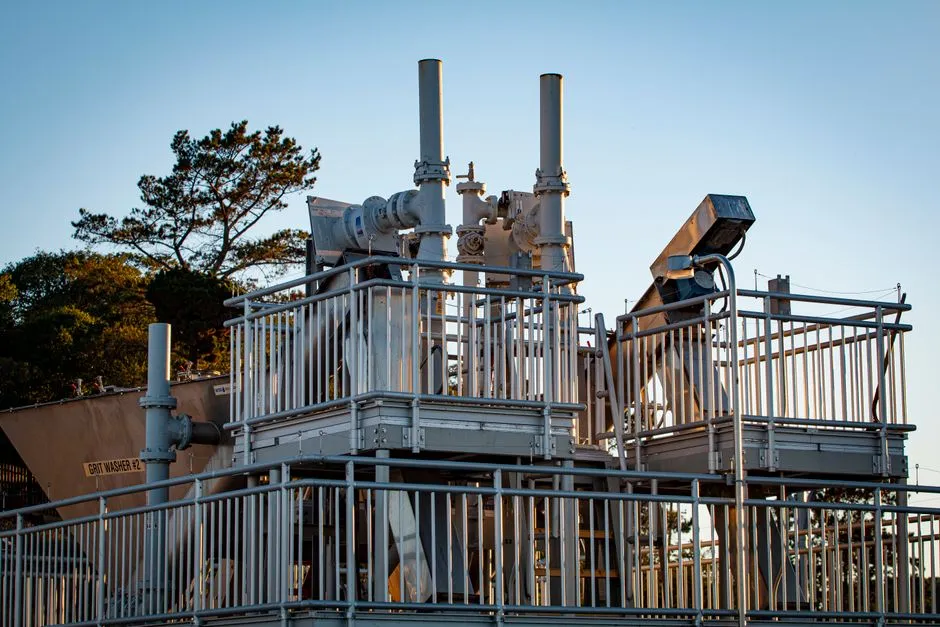
A DAF order should follow approval of the design flow and treatment envelope, not precede it. Before issuing or closing the wastewater treatment RFQ, obtain signed-off flow data, representative sampling results, operating conditions, pretreatment decisions and receiving-utility criteria. The package should identify whether sanitary wastewater, stormwater, oily runoff and high-strength concentrates are excluded because they have separate treatment routes.
Ask each OEM to state:
- Design flow and train arrangement;
- Footprint and civil interface;
- Pressure system, bubble specification and retention time;
- Controls, recycle pumping and skimming arrangements;
- Sludge withdrawal and downstream handling;
- Performance guarantees tied to a defined influent envelope;
- Service exclusions, installation scope and commissioning responsibilities.
Compare the quoted capacity against the calculated design flow. Check whether the stated rate is per train or across the installation, and whether the proposal maintains the required treatment objective during maintenance. Do not accept a catalog range alone as proof of suitability.
Factory testing, site acceptance, operator training and performance-test acceptance criteria should remain in the procurement scope. Define what will be tested, which instruments will be used, how samples will be taken and what constitutes acceptance. The HydropureWater industrial DAF system offer should be evaluated on those same requirements as every competing proposal.
The key procurement distinction is this: a preliminary estimate is a design flow and candidate capacity envelope based on currently verified inputs; a vendor-ready guarantee is a performance obligation at an agreed flow and influent condition. The first can support budget planning. Only the second can support equipment release.
Frequently Asked Questions
What specific DAF capacity in m³/h is required for BYD's new EV plant in Vietnam?
No specific m³/h capacity can be stated from the supplied evidence. The missing inputs are the verified concurrent wastewater flows, wastewater characterization, operating envelope and receiving-utility basis. The buyer should request measured and modeled peak flows for each construction phase, representative laboratory results and signed discharge criteria before applying the DAF system engineering specifications and industrial selection guide to select a model from the 4–300 m³/h range.
What drives the cost of DAF equipment for an automotive plant?
Cost is driven by equipment scale, train arrangement, pressure and recycle equipment, controls, pretreatment, civil works, sludge handling, installation and commissioning. No quotation or project-specific price is supplied, so a buyer should not rely on a generic unit rate. Request itemized quotations showing which duties and guarantees are included, plus separate allowances for site work, utility connections and downstream sludge disposal.
How should DAF suppliers be compared during an RFQ?
Compare offers against the same verified design flow, influent envelope and treatment targets. Require each supplier to state pressure, bubble size, retention time, train arrangement, controls, service scope and acceptance-test method. Then verify that every promised result applies to the specified BYD Vietnam wastewater conditions rather than to generic clean-water performance.
Can DAF alone meet the plant's discharge requirements?
DAF alone cannot be assumed to achieve final discharge compliance. The receiving utility's limits and the complete treatment train determine whether clarified DAF effluent can be discharged, reused or sent to another process. DAF may remove suspended solids, oil and grease and colloidal material, but biological treatment, membranes, disinfection or other required steps must be identified separately.
How long should equipment selection and delivery take?
The supplied research provides no Vietnam-specific equipment lead time. Ask each OEM for a project-specific schedule covering technical clarification, drawing approval, manufacturing, FAT, shipment, installation, commissioning and performance testing. The schedule should also reflect unresolved dependencies such as influent testing, discharge approval, civil design and the buyer's procurement process.
Related Equipment
- HydropureWater industrial DAF system — specifications, capacity range, and technical data