What can—and cannot—be confirmed about BYD's Mexico plant
A specific DAF capacity for BYD's new EV plant in Mexico cannot be verified from the supplied evidence because no source gives the plant's wastewater flow, TSS loading or permit target. Capacity should therefore be calculated, not assumed: design flow is divided by a hydraulic loading rate of 3–5 gpm/ft², while TSS load, 10–30 minute retention, 20–50% recycle and 0.005–0.060 lb air/lb TSS determine whether that area will actually clarify the wastewater. BYD's production volume alone is not a valid DAF sizing basis.
The evidence boundary matters because an equipment model, tank area and treatment claim can sound equally precise whether they are engineering results or catalogue assumptions. For this project, the verified answer is conditional: required DAF hydraulic area remains to be calculated from project wastewater data, and the treatment train cannot be selected until the influent envelope and treatment objectives are defined.
The supplied research does not establish a verified BYD Mexico automotive plant wastewater flow, TSS concentration, FOG level, permit limit, stream schedule or DAF tender requirement. Ayala Corporation's 2023 SEC Form 17-A, published April 15, 2024, identifies automotive and water-infrastructure activities within Ayala's business portfolio, but it does not establish a BYD Mexico EV plant wastewater design basis.
Three capacity concepts must remain separate:
- Hydraulic throughput is the volume the tank and piping can pass. It does not establish that suspended solids will be removed.
- Clarifier capacity under the specified influent envelope is the flow the DAF can treat while meeting the selected hydraulic-loading, air-to-solids, retention and recycle conditions.
- Full production capacity of the treatment train includes upstream segregation, equalization, chemical conditioning, the DAF, solids handling and downstream compliance or reuse provisions.
Accordingly, the appropriate sizing statement is: required DAF capacity for BYD's new EV plant in Mexico remains to be calculated from project flow, solids-loading and operating data; it must not be assigned from vehicle-production figures. The DAF system engineering specifications provide the calculation framework, not the missing BYD inputs.
Why EV production volume is not a DAF sizing input
DAF duty depends on the wastewater entering each treatment stream, not on the number of vehicles manufactured or the gross scale of the automotive plant. Factory production data describe output; they do not establish wastewater flow, pollutant mass loading, flow variability, temperature or the required separation between process and sanitary streams.
An EV plant may generate several distinct streams that should not be combined into one average-flow calculation by default. Industrial process water, stormwater, sanitary sewage, vehicle coating or wash water, and equipment rinses can differ substantially in flow, contaminant concentration and destination. The project team must determine which streams will enter industrial pretreatment, which will be handled separately, and whether a combined DAF is technically and operationally appropriate. The wastewater-handling framework for an expanding EV plant supports stream-by-stream evaluation rather than a plant-wide flow assumption.
HydropureWater's 2026 sizing guide makes the distinction explicit: a unit rated for 300 gpm can pass 300 gpm of clean water but still fail as a clarifier if solids loading and operating variables are unsuitable. For an EV plant, that means a catalogue flow rating is only a starting point after the actual treatment envelope has been established.
| Project information | What it can establish | What it cannot establish by itself |
|---|---|---|
| Vehicle production rate | Manufacturing activity and general plant scale | Wastewater flow, TSS load or required DAF hydraulic area |
| Segregated flow schedule | Sustained, 85th-percentile daily, peak and shock-load flows by stream | Clarification performance unless contaminant data are paired with it |
| Representative wastewater sampling | TSS, FOG, pH, temperature and variability of the selected stream | Complete treatment design unless combined with the flow schedule |
| Catalogue flow rating | Nominal hydraulic capability under stated assumptions | Suitability for the BYD plant without site-specific verification |
Before vendor selection, request a measured or engineering-estimated flow schedule covering sustained flow, design flow at the 85th percentile of daily flow, peak flow and shock loads. If those records do not yet exist, the model and contingency assumptions behind them should be identified. Without that schedule, a single nominal flow is not an auditable sizing basis.
The four-variable method for calculating required DAF capacity
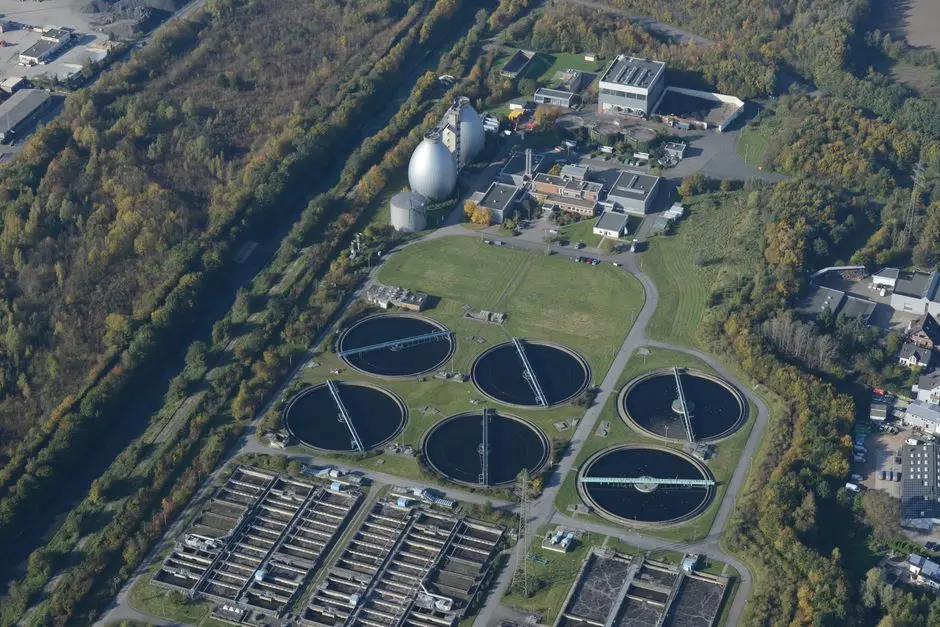
A defensible DAF calculation must satisfy four coupled variables simultaneously: hydraulic loading rate, air-to-solids ratio, retention time and recycle ratio. HydropureWater's 2026 complete DAF capacity and sizing calculation defines the industrial hydraulic-loading band as 3–5 gpm/ft², with 4 gpm/ft² as the typical design point.
- Establish the design flow. Use the 85th-percentile daily flow as the design basis, as specified in HydropureWater's 2026 guide. Brief excursions above the hydraulic-loading limit may be accommodated, but sustained overload must be checked separately.
- Calculate the tank area. Divide design flow by the selected hydraulic loading rate. The same guide identifies 3–5 gpm/ft² as the defensible industrial band and 4 gpm/ft² as the typical design point.
- Calculate and verify the solids-loading and air duty. Convert influent TSS concentration and design flow into TSS mass loading. The guide identifies an air-to-solids operating band of 0.005–0.060 lb air per lb TSS. This is coupled to coagulant and flocculant performance, so the chemistry must be established rather than inferred from flow.
- Verify retention and recycle conditions. The guide identifies 10–30 minutes of retention, a 20–50% recycle ratio and microbubbles of 10–100 µm as the relevant operating envelope. Confirm that the selected area provides the required retention and that the saturator, recycle pump and contact zone can maintain the required air and solids relationship.
| Calculation step | Engineering basis from HydropureWater's 2026 guide | Required verification |
|---|---|---|
| Design flow | 85th-percentile daily flow | Separate sustained, peak and shock-load streams |
| Hydraulic loading | 3–5 gpm/ft²; 4 gpm/ft² typical design point | Selected rate and resulting DAF hydraulic area |
| Air-to-solids ratio | 0.005–0.060 lb air/lb TSS | Influent TSS mass load, dissolved-air delivery and conditioning chemistry |
| Retention time | 10–30 minutes | Effective contact-zone and reaction-retention volume |
| Recycle ratio | 20–50% | Recycle flow, pressure, saturator capacity and pump duty |
| Microbubble size | 10–100 µm | Saturation conditions and contact-zone performance |
These variables cannot be optimized independently. Raising hydraulic loading shortens retention and reduces bubble–floc contact. Changing recycle flow or pressure can invalidate an otherwise correct tank-area calculation because the available dissolved-air mass changes with the operating condition. HydropureWater's 2026 guide also identifies a 60–80 psig saturator-pressure range. The DAF system engineering specifications should therefore be checked against the same influent data used for the area calculation.
Conditional sizing example—not a BYD plant specification
HydropureWater's 2026 sizing guide contains a worked case for food-processing wastewater at 200 gpm and 800 mg/L TSS. This example is useful for showing the calculation sequence, but it is not verified data for BYD's Mexico automotive plant and must not be repeated as a plant specification.
In the source example, 200 gpm converts to approximately 45 m³/h. That flow is placed in the guide's 20–80 m³/h mid-class bracket, corresponding to models 4–8. At the guide's typical design point of 4 gpm/ft², the calculation is:
DAF hydraulic area = 200 gpm ÷ 4 gpm/ft² = 50 ft²
The guide identifies that calculated area as the correct starting point for vendor selection—not as a complete equipment selection. The supplier must still demonstrate retention, recycle flow and pressure, air-to-solids ratio, chemical conditioning and peak-load response. An industrial DAF system should therefore be quoted against the calculated duty and operating envelope, not against the example's headline flow.
HydropureWater's 2026 guide reports expected TSS removal of 92–97% for properly conditioned influent in the worked configuration. That is an example result from the source, not a promised removal rate for BYD wastewater. Actual performance depends on verified wastewater chemistry, upstream treatment, hydraulic distribution and operating control.
The example demonstrates why the RFQ needs both flow and contaminant data. Substituting an unverified BYD flow for 200 gpm would leave the TSS load, air demand and retention unresolved; substituting the 800 mg/L TSS concentration would add a food-processing assumption that has not been demonstrated for the plant.
Selecting a DAF configuration without overstating or understating capacity
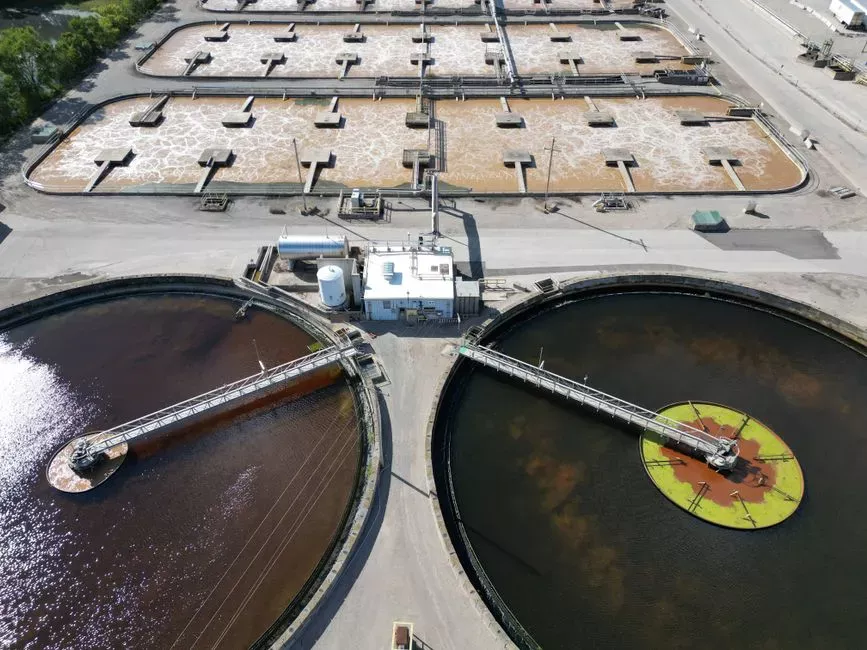
Equipment selection should follow the calculated duty, not precede it. HydropureWater's 2026 guide states that its standard DAF range covers 4–300 m³/h across 13 models. Above 300 m³/h, the guide identifies parallel standard trains or custom fabrication as the two engineering options. These are configuration boundaries, not a BYD capacity finding.
Catalogue ratings also carry influent assumptions. The 2026 guide states that standard flow ratings assume TSS at or below 1,000 mg/L, FOG at or below 500 mg/L and standard air-to-solids conditions. Site-specific wastewater outside that envelope therefore requires renewed calculation, particularly where a stream combines oil, emulsions, high suspended solids or variable chemistry.
For high-strength wastewater above 2,000 mg/L TSS, HydropureWater's 2026 guide recommends a 20–30% safety margin and a 2.5–3.5 gpm/ft² hydraulic-loading target. It also specifies 60–80 psig saturator pressure and identifies a 10–15% summer derate position for unheated influent operating between 5 °C and 30 °C.
| Configuration | When it is supported by the calculation | Main engineering check |
|---|---|---|
| Single standard train | Calculated duty falls within the applicable 4–300 m³/h catalogue envelope and the influent remains within verified assumptions | Hydraulic area, retention, recycle duty, chemical conditioning and footprint |
| Parallel standard trains | Calculated duty exceeds 300 m³/h and the wastewater is sufficiently characterized for identical operation | Inlet-manifold distribution; one train must not become overloaded |
| Custom rectangular tank | Variable wastewater, a single scum-removal arrangement or site constraints make parallel skids unsuitable | Hydraulic distribution, variable-flow operation, solids removal and site integration |
| Conditioning and equalization ahead of DAF | Representative data show unstable solids loading, FOG or chemistry requiring controlled feed | Flocculation method, chemical demand, retention and peak attenuation |
The choice should therefore be conditional. Parallel trains favor repetition of a well-characterized duty, but introduce hydraulic-distribution risk. A custom rectangular tank may better accommodate variable wastewater, one scum-removal mechanism or a constrained footprint, but it carries more site-specific design responsibility. Procurement should compare bids on calculated area, demonstrated operating envelope, hydraulic distribution, controls and downstream solids handling—not on nominal flow alone.
Information required before issuing the DAF RFQ
An auditable RFQ requires source data, named owners and documented assumptions for each stream that will enter industrial pretreatment. The decisive package should allow every vendor to reproduce the same area, air demand, retention and recycle calculations.
| Required input | Detail to request | Responsible source |
|---|---|---|
| Wastewater flow schedule | Average, 85th-percentile daily, peak and shock-load flows for each proposed DAF stream | BYD plant engineering or EPC contractor |
| Representative influent data | TSS, FOG, pH and temperature from representative sampling, including seasonal variation | Plant environmental team or accredited sampler |
| Treatment objective | Anticipated discharge or reuse target and applicable permit or receiving-facility requirements | Environmental lead and local authority |
| Upstream treatment concept | Segregation, equalization, coagulation and flocculation assumptions before flotation | Process engineer and EPC contractor |
| Supplier calculation | Governing flow, hydraulic-loading rate, calculated area, retention, recycle flow and pressure, A/S calculation, expected TSS removal and peak-load response | Each DAF bidder |
Request the flow schedule first, then representative sampling from the actual streams proposed for pretreatment. If plant records are incomplete, require the engineering estimate, source data, operating assumptions and sensitivity checks to be identified. That preserves an audit trail instead of presenting an assumption as a verified condition.
Ask bidders to state whether upstream equalization and chemical conditioning are included. These decisions change the hydraulic loading, air-to-solids ratio and retention requirements. Where automatic chemical feed is part of the proposed treatment train, require the PLC-controlled chemical dosing skid to be linked to the agreed coagulant and flocculant strategy rather than treated as an unrelated accessory.
Any bidder offering a BYD-specific DAF capacity from vehicle-production volume alone should be asked to identify the wastewater flow and contaminant data behind the selection. Without that evidence, the offer is an unsubstantiated catalogue estimate, not an engineered bid.
Frequently Asked Questions
How is the required DAF capacity for BYD's new EV plant in Mexico calculated?
Calculate DAF hydraulic area by dividing the verified design flow by the selected hydraulic loading rate, then verify retention, recycle and air-to-solids performance before selecting equipment. HydropureWater's 2026 guide identifies the 85th-percentile daily flow as the design basis, a 3–5 gpm/ft² hydraulic-loading band, 4 gpm/ft² as the typical design point, 10–30 minutes of retention, a 20–50% recycle ratio and an air-to-solids range of 0.005–0.060 lb air/lb TSS. The supplied research does not establish the BYD design flow, so no specific area can yet be calculated responsibly.
How should an engineer select a DAF supplier for an EV plant wastewater system?
Require each bidder to submit its governing flow, selected hydraulic-loading rate, calculated DAF hydraulic area, retention time, recycle flow and pressure, air-to-solids calculation, expected TSS removal and peak-load response. A model name or nominal flow rating is insufficient because HydropureWater's 2026 guide shows that a unit can pass clean water at its rated flow without providing clarifier performance under unsuitable solids-loading or operating conditions.
What permit or reuse risk should be checked before purchasing a DAF?
Check the proposed wastewater streams, representative TSS and FOG results, treatment objective and final equipment proposal against the applicable discharge or reuse requirements. The supplied research does not establish a BYD-specific permit limit, so a compliance claim should not be accepted until the environmental authority and plant team confirm the governing objective. This also determines whether the proposed DAF, chemical conditioning and downstream solids handling form a complete compliance train.
What should a buyer request to compare DAF costs and prepare the budget?
Request a quotation tied to the verified flow schedule, contaminant data, calculated area, upstream treatment concept, chemical system, controls, recycle equipment and downstream solids handling. No BYD-specific price or cost range is supplied by the research, so a credible comparison requires quotations against the same design basis. Differences in stream segregation, equalization, conditioning and train configuration will otherwise appear as equipment-price differences even when they represent different treatment scopes.