How nanofiltration removes hardness from industrial wastewater
A nanofiltration system for high hardness wastewater can achieve strong hardness removal at lower operating pressure than reverse osmosis, but scaling control is the central design constraint. In a 2025 Springer study of industrial resin-regeneration effluent, optimized polyamide spiral-wound NF operation at 7 bar, 10 L/min, and pH 4.62 produced 97.7% total hardness removal, 99.4% sulfate removal, 80.9% chloride removal, and 29.9% water recovery. However, a separate long-term pilot study found abundant inorganic scale on NF membranes treating high-hardness water. The practical solution is therefore not NF alone, but feed-specific pretreatment, staged recovery, monitoring, and an agreed cleaning strategy.
Nanofiltration is a pressure-driven membrane process positioned between ultrafiltration and reverse osmosis. The 2018 Ain Shams Engineering Journal review attributes NF separation to both pore-size flow and solution-diffusion mechanisms. NF membranes commonly carry surface charge, so rejection depends not only on ion size but also on electrostatic interactions between the feed ions and the membrane.
In the 2025 Springer study, the tested element was a polyamide thin-film composite spiral-wound module, model NE4040-90. It measured 4 × 40 inches, had an effective area of 7.9 m², and was specified for 85–95% NaCl rejection and 90–95% CaCl₂ rejection. These values describe the test element, not a universal guarantee for an industrial NF train.
Divalent ions generally encounter stronger rejection than monovalent ions because membrane charge can exclude multivalent ions more effectively. The 2025 study attributes sulfate’s higher retention to its greater valency and size, combining stronger electrostatic exclusion with steric hindrance. Chloride rejection is therefore usually lower than sulfate rejection, although feed composition can alter the result.
That qualification matters for industrial design. The Springer study reports that co-existing sodium sulfate and sodium chloride change membrane rejection relative to single-salt systems. Calcium can compete with sodium, while membrane charge relative to its isoelectric point changes with pH. Engineer the NF train around the complete feed chemistry, not around a generic hardness-removal percentage.
RO and UF membrane elements should be selected against the verified NF duty, operating envelope, and pretreatment design rather than by nominal salt rejection alone.
What the operating evidence shows
The 2025 Springer study demonstrates strong separation on a specific resin-regeneration effluent, but its optimized recovery cannot be transferred directly to another plant. The experiments used wastewater from cationic ion-exchange resin regeneration at a synthetic fiber manufacturing plant in Iran. The reported optimized result came from a laboratory response-surface study, not a long-term full-scale wastewater demonstration.
The experimental envelope was pressure from 5–7 bar, feed flow from 10–15 L/min, and pH from 2–6. Within that envelope, the model identified 7 bar, 10 L/min, and pH 4.62 as the optimum. Recovery increased with pressure and decreased with feed flow, while pH had minimal influence on recovery.
Sulfate removal was strongly pressure-dependent and declined slightly as pH increased. Total hardness rejection followed a similar pressure trend but was less sensitive to pH. Chloride rejection increased with pH, with pH exerting the strongest influence among the tested variables. These relationships were developed for this membrane, feed, and experimental design.
| Test parameter or output | 2025 Springer study value | Engineering interpretation |
|---|---|---|
| Operating pressure | 5–7 bar | Test envelope, not a universal operating range |
| Feed flow | 10–15 L/min | Applicable to the study’s pilot setup |
| Feed pH | 2–6 | Wastewater was adjusted for testing |
| Optimized conditions | 7 bar; 10 L/min; pH 4.62 | Modeled optimum for the tested feed and membrane |
| Water recovery | 29.9% | Study-specific result |
| Total hardness removal | 97.7% | Study-specific optimized result |
| Sulfate removal | 99.4% | Study-specific optimized result |
| Chloride removal | 80.9% | Study-specific optimized result |
| Electrical conductivity reduction | 92.23% | Study-specific optimized result |
Do not transfer the study pH blindly. Membrane charge changes relative to the isoelectric point, and mixed electrolytes alter ion competition and feed-permeate pH behavior. A site trial should establish whether pH adjustment improves separation without creating precipitation, membrane damage, or an unacceptable downstream salt load.
NF, RO, or industrial softening for high-hardness water
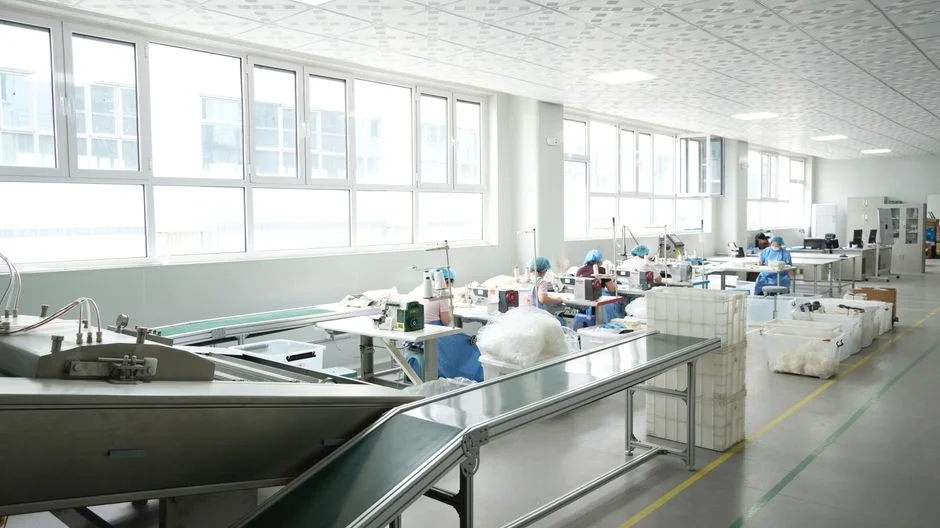
NF is the appropriate candidate when partial desalination and hardness reduction meet the reuse or discharge objective without requiring the broader dissolved-solids rejection of reverse osmosis. The 2018 IOP Conference Series: Earth and Environmental Science review distinguishes NF from adjacent processes: it offers lower energy consumption than RO and higher rejection than UF. That makes NF a practical middle option, not a substitute for RO when the permeate specification demands near-total salt removal.
| Decision issue | NF | RO | Industrial ion-exchange softening |
|---|---|---|---|
| Primary role | Remove hardness and selected dissolved ions while producing partially desalinated permeate | Broader dissolved-solids rejection for higher-purity permeate | Replace hardness-forming ions through ion exchange |
| Evidence cited in the supplied research | 2018 IOP review identifies lower energy consumption than RO and higher rejection than UF | 2025 Springer study treats RO as the higher-pressure benchmark for more complete ion removal | ScienceDirect review describes simple operation, promising effluent quality, high cost, and demanding operating conditions |
| Key procurement question | Can the required hardness, sulfate, chloride, and conductivity reductions be met at a sustainable recovery? | Is broader desalination required, and is the resulting brine load acceptable? | Can regeneration, resin replacement, and brine handling costs be justified? |
| Main caution | Hardness concentration can promote scaling | Higher pressure and concentrated reject require site-specific assessment | Conventional regeneration creates an operating and waste-management burden |
ScienceDirect’s combined pilot train—biological contact oxidation and precipitation, followed by UF and NF—achieved 98% total hardness removal, 86% total alkalinity removal, 91% soluble total solids removal, and total desalination above 95%. These are combined-process results, not NF-only performance. The unit steps had distinct functions: upstream biological and precipitation treatment, UF solids protection, and NF as the main salt-separation stage.
For procurement, compare NF with an RO water purification system when the required salt balance or permeate purity exceeds NF performance. Compare it with an industrial water softener system when hardness removal is the only dominant treatment need or regeneration economics are favorable.
Use a simple decision rule: validate NF when partial desalination and hardness reduction satisfy the reuse target; evaluate RO when broad salt rejection is essential; evaluate softening when the hardness objective can be met more economically without membrane concentrate. Brine disposal, water recovery, and downstream reuse chemistry must be included in all three comparisons.
Build a pretreatment and membrane process that resists scaling
High-hardness feed can convert an NF system that initially demonstrates excellent rejection into a fouling-limited installation. The ScienceDirect pilot found that high-hardness water accelerated changes in membrane-process parameters and produced abundant inorganic scale, concentrated particularly toward the membrane outlet. The scale contained C, O, Na, Mg, Al, Si, S, Cl, Ca, Ti, and Fe.
The same pilot evaluated a practical sequence: biological contact oxidation plus precipitation, then UF, then NF. The first stages reduced the fouling load entering the NF unit; UF provided a solids barrier; NF performed the principal dissolved-ion separation. Regular cleaning of the UF and NF membranes restored process parameters and prolonged membrane-process operation, according to the ScienceDirect study.
| Process stage | Primary purpose | Design evidence required |
|---|---|---|
| Solids or oil-and-grease removal | Protect downstream membranes from suspended solids, colloids, oil, grease, and FOG | Characterize contaminants and verify removal with the actual industrial stream |
| Biological contact oxidation and precipitation | Remove organic load and reduce hardness-forming constituents before membrane separation | Jar and pilot tests establishing pH, chemical dose, residuals, and sludge handling |
| UF | Provide a solids-protection barrier before NF | Turbidity, suspended-solids, flux, backwash, and compatibility data |
| NF | Remove hardness and selected dissolved ions | Site pilot, scaling forecast, recovery sensitivity, and cleaning validation |
UF pretreatment for nanofiltration can remove bacteria, colloids, and suspended solids without chemicals and can use automatic backwash and air scour. However, catalog turbidity acceptance is not a substitute for site-specific compatibility testing. Establish the actual flux, cleaning response, and feed chemistry before relying on the UF stage.
For industrial streams containing suspended solids, oil and grease, FOG, or colloidal matter, DAF pretreatment for industrial wastewater should be evaluated ahead of the membrane train. Where precipitation is used, the required chemical, dose, pH, sludge-handling route, and residual chemistry must be established through jar and pilot testing rather than assumed.
Instrument the train with feed and permeate pressure, feed and permeate flow, conductivity, pH, differential pressure or normalized permeate flux, and hardness monitoring. Establish scheduled membrane inspection and a written cleaning procedure with acceptance criteria for performance recovery. If chemical dosing is required, an automatic chemical dosing system should be evaluated against the verified pretreatment chemistry and feed variability.
Size the NF system around recovery, cleaning, and future capacity
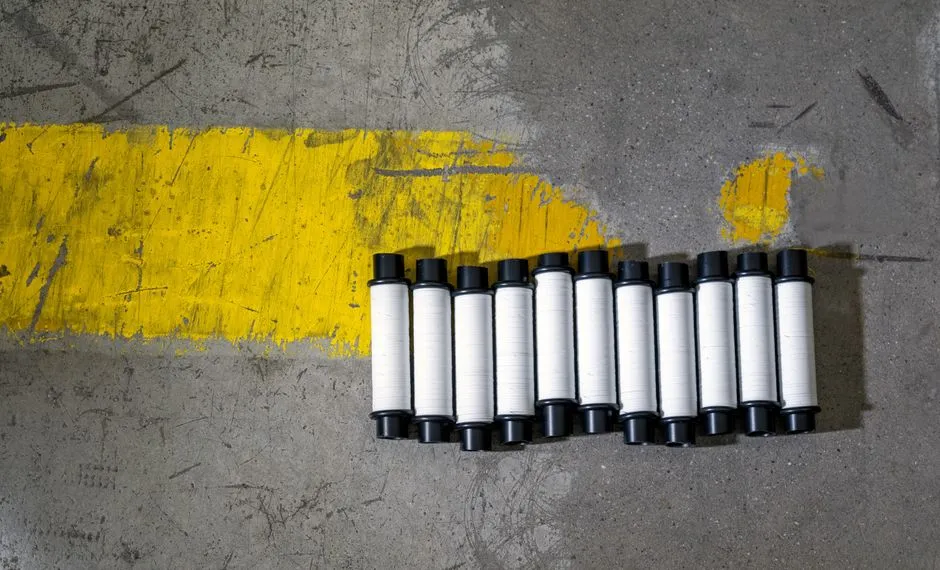
Size the NF system from the actual water balance and scaling risk, not from the 29.9% recovery reported in the 2025 Springer study. That figure applies to a specific resin-regeneration effluent, membrane, and experimental envelope. A supplier should show how feed flow, recovery, concentration, and cleaning requirements change with the proposed pretreatment.
The supplier needs a complete feed characterization: flow, total hardness, calcium and magnesium fractions, sulfate, chloride, conductivity, alkalinity, pH, temperature, suspended solids, organics, and relevant industrial contaminants. Missing inputs leave both membrane area and concentrate disposal poorly defined.
| RFQ item | Required supplier response |
|---|---|
| Basis of design | Measured feed flow and complete water analysis, including variability and contaminants |
| Membrane system | Module model, membrane area, train arrangement, operating pressure, feed flow, and expected recovery |
| Performance calculation | Permeate-quality calculations with a feed-to-permeate and reject mass balance |
| Scaling control | Feed-specific scaling forecast, antiscalant strategy, and recovery sensitivity analysis |
| Cleaning | Cleaning frequency, expected chemistry, acceptance criteria, and effect on normalized performance |
| Resilience | Redundancy and future-capacity options justified by the confirmed operating envelope |
Require the supplier to state membrane area, module model, operating pressure, feed flow, recovery, antiscalant strategy, cleaning frequency, expected cleaning chemistry, and permeate-quality calculations. The 2025 study’s 7.9 m² effective area is an element-level reference for understanding the scale of published performance data; it is not a sizing factor for another plant.
The scaling forecast must use the actual feed composition. Recovery sensitivity should show which constituents become limiting as the feed is concentrated. Generic recovery guarantees should be rejected unless they define the tested feed, operating envelope, cleaning regime, and test duration.
Use the RO and UF membrane element range to verify that the selected NF element matches the documented duty. Also define replacement strategy and compatibility with water-treatment valves and filter media. Add redundancy only after plant variability and the operating envelope are confirmed; the supplied research does not support a generic capacity multiplier.
Test before committing to full-scale operation
Full-scale acceptance should test stable membrane performance, not only initial permeate quality. Establish the reuse or discharge criteria before the pilot: hardness, conductivity or TDS, relevant ions, turbidity, and recovery. These limits must reflect the complete site water balance and downstream constraints.
Run the pilot with actual industrial wastewater after characterizing the feed. A synthetic substitute may demonstrate nominal separation but will not expose the site’s scaling, fouling, cleaning demand, or chemical compatibility. Use the [high-TDS RO system design guide](/blog/14965-ro-system-for-high-tds-wastewater-2026-engineering-guide.html) as a broader framework for comparing membrane-system constraints, not as a substitute for NF-specific testing.
Track permeate flux, transmembrane pressure or normalized flux, differential pressure, conductivity, pH, hardness, sulfate, chloride, recovery, and cleaning frequency. The run should be extended deliberately to expose scaling and fouling that short rejection tests may miss. This requirement follows the ScienceDirect study’s long-term finding that high-hardness feed produced abundant inorganic scale.
After each cleaning, verify that the documented procedure restores normalized performance. Commercial acceptance should also cover membrane compatibility, controls, interlocks, permeate-quality monitoring, cleaning instructions, and replacement-element availability. The supplier should provide documented support for commissioning and operator training.
Include energy, chemical consumption, labor, membrane replacement, and concentrate handling in the lifecycle comparison. The [industrial wastewater operating-cost breakdown](/blog/17-wastewater-treatment-operating-costs-breakdown.html) provides the structure for that evaluation, while the project-specific feed analysis and pilot records provide the inputs for each cost line.
Frequently Asked Questions
What is the best nanofiltration system for high hardness wastewater?
The best system is the one whose membrane, pretreatment, recovery, and cleaning strategy match the actual feed and reuse or discharge target. The 2025 Springer study’s 97.7% total hardness removal demonstrates strong separation potential for resin-regeneration effluent, not a universal guarantee. Confirm performance with actual wastewater and a scaling-sensitive pilot.
How much does an industrial NF system cost?
The supplied research establishes treatment performance but does not provide equipment prices. Request a site-specific quotation covering flow, membrane area, pretreatment, controls, skid or installation, chemical dosing, cleaning, replacement elements, energy use, and concentrate management. Compare offers using the same feed basis and recovery definition; otherwise the quotations are not comparable.
Do high-hardness wastewater streams need pretreatment before NF?
They should be evaluated for pretreatment rather than assumed to need a fixed configuration. The ScienceDirect pilot used biological contact oxidation, precipitation, and UF before NF, and its long-term operation produced abundant inorganic scale. Site testing must determine whether solids control and hardness-forming constituent management are sufficient, and what chemical and sludge consequences they create.
How do I size an NF system for industrial wastewater?
Provide measured feed flow and complete water chemistry, then require a mass balance, scaling forecast, recovery sensitivity analysis, membrane area, operating pressure, flux, and fouling controls. Check the proposed area against the feed variability and cleaning frequency. The 7.9 m² effective area in the 2025 study is an element reference, not a universal sizing basis.
What should I include in an industrial NF supplier RFQ?
Request the feed analysis, permeate targets, recovery definition, membrane and train specification, pretreatment, controls, monitoring, cleaning procedure, performance guarantees, operating documentation, commissioning support, and replacement-element availability. Require pilot evidence using the actual wastewater. Treat a recovery guarantee as incomplete unless it states the tested feed, operating conditions, duration, cleaning regime, and acceptance criteria.