What Can—and Cannot—Be Verified for the German Plant
No verified reverse-osmosis capacity can be stated for Panasonic Energy’s new battery plant in Germany from the supplied evidence. The evidence contains no site-specific wastewater-flow schedule, reuse-demand profile, feed-water analysis, operating calendar or issued capacity approval for the German plant. Neither the project announcement nor a generic battery-sector RO example establishes its hydraulic design basis. Public confirmation that the plant exists therefore does not confirm treatment capacity. The defensible answer is conditional: establish the verified RO-eligible feed, worst-case chemistry, pretreatment duty, reuse requirement and concentrate route before issuing a capacity-based RFQ.
HydropureWater’s related Panasonic Energy Texas RO-capacity methodology and Panasonic Energy Mexico RO-capacity comparison identify comparable missing inputs at those sites. Their screening examples are not transferable design data for Germany.
| Item | German-site status in supplied evidence | Required before capacity award |
|---|---|---|
| Plant existence | Publicly referenced | Distinguish project status from treatment design |
| RO nameplate capacity | Not verified | Bid-ready hydraulic calculation |
| Wastewater flows and peaks | Not supplied | Meter records, production forecasts and operating scenarios |
| Feed-water chemistry | Not supplied | Source-specific analyses and worst-case characterization |
| Reuse and discharge requirements | Not supplied | Reuse criteria, permit conditions and concentrate route |
| Equipment design basis | Not issued | Acquired P&IDs and final verified design flow |
Build the Capacity Basis from Separate Wastewater Streams
The RO-eligible feed must be built from separately verified streams, not from a site-wide wastewater total. Request current and projected production, source-by-source wastewater flows, flow-meter records, operating scenarios and cathode rinse-water reuse demand. Keep process and sanitary streams segregated until their chemistry, treatment objectives and routing are established. This separation is necessary because combining streams can change both hydraulic loading and membrane pretreatment requirements.
HydropureWater’s 2026 battery-plant benchmark identifies cathode coating with NMP solvent, graphite-slurry anode lines, metal-finishing rinse streams and sanitary wastewater as streams with different contaminant profiles. It does not treat them as an automatic common RO feed. The industrial RO duty identified in that benchmark is cathode-coating rinse-water treatment for reuse, not general industrial pure-water production.
Cathode coating is therefore a routing decision. If coating remains in-house, the NMP solvent mass balance, inventory and wastewater flow may justify including closed-loop solvent recovery in the capital scope. If coating is outsourced, that equipment may leave scope, but the remaining flow and contaminant balance must be recalculated rather than reduced by assumption. A preliminary review of an industrial wastewater pretreatment system should follow the same stream-based approach.
| Evidence request | Decision supported |
|---|---|
| Production forecast and operating calendar | Average and peak wastewater generation |
| Source-specific flow-meter records | Verified feed flows and peak factors |
| Acquired P&IDs and source-by-source analyses | Eligible RO streams and contaminant loading |
| Cathode rinse-water reuse demand | Required permeate production and product-water quality |
| Chemical inventories, NMP usage and solvent-recovery records | Whether closed-loop NMP recovery belongs in scope |
| In-house versus outsourced coating decision | Final stream balance and equipment boundary |
Calculate RO Feed, Permeate and Concentrate Capacity
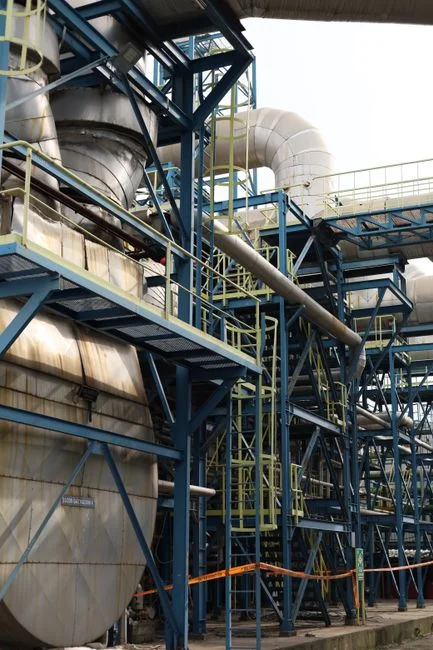
The reverse-osmosis capacity calculation starts with the verified RO-eligible feed flow and a selected recovery rate. Permeate production equals feed flow multiplied by recovery; concentrate generation equals feed flow minus permeate. These quantities must remain separate in every RFQ because “1,500 m³/day” can mean feed, permeate or an entire treatment train.
HydropureWater’s 2026 benchmark uses 70%–85% recovery and 15%–30% reject only as a screening sensitivity. Recovery must ultimately reflect feed chemistry, pretreatment performance, required reuse-water quality and concentrate-disposal constraints. The same source’s defined 1,500 m³/day DAF–MBR–RO case is not an input to the German calculation unless German design data independently support that flow.
Specify capacity in both daily and operating-hour terms. An RFQ should state design feed flow, operating hours, turndown, permeate capacity, recovery basis and concentrate flow. Also check equalization, peak-factor and hydraulic continuity: a daily average alone cannot establish membrane, pretreatment or disposal capacity. The comparison should reference the relevant industrial RO water treatment system definition, not rely on a supplier’s unqualified “capacity” label.
| Calculation item | Definition | Evidence required |
|---|---|---|
| RO feed capacity | Verified flow entering the RO train | Meter data, P&IDs and peak scenario |
| Permeate capacity | Feed flow × selected recovery rate | Design recovery and reuse demand |
| Concentrate capacity | Feed flow − permeate flow | Recovery rate and disposal route |
| Installed treatment capacity | Combined pretreatment, RO, equalization and solids handling | Worst-case chemistry and hydraulic continuity |
| Screening sensitivity only | 70%–85% recovery and 15%–30% reject in HydropureWater’s 2026 benchmark | Not a German design assumption |
Protect RO with a Site-Appropriate Pretreatment Train
Pretreatment should be sized as a coordinated duty around the RO, not purchased as an isolated capacity claim. HydropureWater’s 2026 benchmark arranges equalization, DAF, metal precipitation and clarification, MBR and then RO, but only where verified German flows and chemistry support that sequence. Each stage has a distinct function: hydraulic and pH control, floatable removal, metal removal, biological treatment and solids separation, followed by rinse-water production.
For preliminary screening, the same benchmark gives the DAF a range of 4–300 m³/h, 80%–95% FOG removal and downstream TSS typically below 100 mg/L. It specifies a PVDF hollow-fiber MBR, effluent turbidity below 1 NTU and MLSS of 8,000–12,000 mg/L. A PVDF MBR pretreatment system should be evaluated against those stated conditions only as a screening reference.
HydropureWater’s benchmark places nickel, cobalt and lithium precipitation at pH 9–10 and directs metal-rich sludge to a separate filter press. A high-efficiency sedimentation tank and plate-frame filter press therefore require explicit sludge and integration assumptions. Suppliers should state chemical use, peak flow, sludge characteristics, equalization duty and guaranteed outlet parameters.
| Screening component | HydropureWater 2026 benchmark | German procurement condition |
|---|---|---|
| DAF | 4–300 m³/h; 80%–95% FOG removal; downstream TSS typically below 100 mg/L | Confirm against verified flow and composition |
| MBR | PVDF hollow-fiber modules; turbidity below 1 NTU; MLSS of 8,000–12,000 mg/L | Confirm feed, loading and guaranteed outlet quality |
| Metal precipitation | pH 9–10 for nickel, cobalt and lithium | Validate species, pH, chemical dose and sludge route |
| Sludge dewatering | Separate filter press for metal-rich sludge | Define rheology, disposal route and installation boundary |
Define the German Permitting and Concentrate Route
The German site’s permit, sewer-discharge conditions, reuse criteria and written regulatory assessment must define the discharge basis. The supplied research does not establish Germany-specific permit limits for Panasonic Energy’s plant. A permit threshold or public project announcement cannot substitute for site-specific regulatory review.
HydropureWater’s 2026 Texas guide identifies 50,000 gpd as a permit-selection boundary for individual versus general permit treatment in its cited Texas framework. That figure is not a German threshold, an RO-sizing input or evidence of the German plant’s flow. The buyer should obtain the applicable permit, application engineering report and written regulatory assessment rather than infer acceptance from a nominal flow.
Concentrate disposition must be resolved before the RO recovery rate is fixed. The options are a permitted discharge, an authorized industrial-waste route, evaporation or zero liquid discharge. Each creates different cost, continuity and operating obligations. For screening only, HydropureWater’s 2026 benchmark assigns an evaporator or crystallizer a 1.5x–2.5x capital increment to the base treatment train. Zero liquid discharge should not be prescribed unless the permit, available discharge path or corporate commitment requires it; the related high-salinity reverse-osmosis design guide provides further context.
| Concentrate route | Decision question | Required evidence |
|---|---|---|
| Permitted discharge | Do the permit conditions accept the selected concentrate quality and flow? | Site-specific permit and written assessment |
| Authorized industrial waste | Can the route accept the chemical and physical properties? | Waste characterization and written authorization |
| Evaporation | What duty follows from the verified concentrate flow? | Mass balance, energy data and vendor guarantee |
| Zero liquid discharge | Is it required by the permit, disposal path or corporate commitment? | Written requirement and comparative capital/operating assessment |
Use Energy Recovery as a Conditional Design Optimization
An energy recovery device changes the energy and hydraulic design, not the need to establish the verified RO feed. WaterTechOnline’s 2026 article reports PX pressure-exchange efficiency above 93% in its cited application. It also describes an Hubei LFP cathode facility producing 50,000 tons of LFP cathodes per year where RO and UHPRO with PX technology reduced the flow entering the thermal process by 90%.
Both figures are application evidence, not design guarantees for Panasonic Energy Germany. The RO requirement still derives from feed flow, recovery duty and reuse demand. An energy recovery device should be included only after evaluating actual feed salinity, operating pressure, system energy use, membrane-replacement effects, lifecycle cost and compatibility with the selected RO configuration. It can reduce pumping energy, but it does not replace pretreatment, membrane-area sizing or concentrate-route resolution.
Turn the Design Basis into a Comparable RFQ
Comparable bids must use the same capacity definition and design basis. Require every bidder to state design feed flow, permeate capacity, operating hours, turndown, recovery rate, concentrate flow, feed-water quality, product-water target and treatment-capacity convention. Include an auditable calculation connecting the verified RO-eligible stream to permeate and concentrate production.
Request itemized pricing for RO equipment, membranes and vessels, equalization, DAF or lamella clarification, MBR, electrical and controls, installation, commissioning, performance testing, sludge dewatering, chemical dosing, justified energy recovery, permits, energy, consumables and replacement assumptions. Chemical systems should be included explicitly; an automatic chemical dosing system quotation needs defined chemical assumptions and control responsibilities.
HydropureWater’s 2026 Texas benchmark prices a defined 1,500 m³/day DAF–MBR–RO case at $1.5 million–$6 million, equivalent to $1,000–$4,000 per m³/day. Use this only as a comparison screen, not a Germany estimate. The benchmark excludes NMP vacuum distillation, an evaporator or crystallizer, and a separately installed metal-sludge filter press. Those omissions must be priced separately where applicable.
| RFQ field | Bidder response required | Acceptance test |
|---|---|---|
| Capacity convention | Feed, permeate, concentrate and operating hours | No ambiguous nominal-capacity statement |
| Design basis | P&IDs, flow, chemistry, peaks and reuse demand | Matches acquired German site data |
| Performance | Product quality and guaranteed pretreatment outlets | Defined feed and worst-case conditions |
| Scope and exclusions | Itemized equipment, installations and omissions | Comparable commercial boundaries |
| Concentrate and sludge | Final disposal routes and operating assumptions | Permit-compatible and priced |
| Conditions | Binding proposal tied to site documents and final quotation | Reprice if verified inputs differ materially |
Make the award conditional on the acquired P&IDs, verified design flow, worst-case wastewater characterization, site conditions and final equipment quotation. A nominal capacity alone does not establish membrane area, pretreatment adequacy, compliance or lifecycle performance.
Frequently Asked Questions
Can a specific RO capacity be given for Panasonic Energy’s German plant?
No. The supplied evidence does not contain a verified German wastewater-flow schedule, source-specific feed analysis, reuse-demand profile or issued capacity approval. Obtain those inputs and the acquired P&IDs before assigning a nameplate capacity.
Is 1,500 m³/day the required capacity for the German plant?
No. HydropureWater’s 2026 Texas guide uses 1,500 m³/day for a defined DAF–MBR–RO screening case. It is not a verified Panasonic Energy Germany flow. The German calculation must begin with independently verified RO-eligible feed flow.
How should competing quotations be compared?
Normalize every bid to design feed flow, permeate output, operating hours, recovery rate, concentrate flow, pretreatment guarantees, product-water target and exclusions. Then check that each calculation uses the same verified design basis. A lower price based on lower feed capacity or omitted pretreatment is not comparable.
How should a buyer decide between discharge and zero liquid discharge?
Request the German permit, discharge criteria, concentrate characterization, available industrial-waste route and any corporate commitment to water reuse or zero liquid discharge. Include evaporation or crystallization only when the permitted route or project requirement justifies it; a screening capital increment cannot substitute for that site-specific decision.