When MVR Is the Right Treatment for High-TDS Wastewater
An MVR evaporator can concentrate high-TDS wastewater by compressing secondary vapor and reusing its latent heat, but it is not a universal high-salinity treatment system. Successful selection depends on feed TDS, scaling ions, hardness, suspended solids, boiling-point elevation, viscosity, volatility, and required recovery. A forced-circulation design can reduce scaling and fouling by preventing boiling in the main heat exchanger. Pretreatment should remove solids and control scale-forming species before evaporation. MVR generally produces concentrated brine or slurry plus reusable distillate; complete zero liquid discharge also requires crystallization or solids dewatering.
MVR evaporation is a thermal concentration step, not a complete treatment train by itself. In a typical arrangement, vapor leaving the evaporator is compressed, increasing its pressure and saturation temperature. The compressed vapor then condenses in the main heat exchanger and transfers latent heat to the circulating wastewater. This distinguishes MVR from single-effect evaporation, which consumes an external heating medium such as steam.
Three applications need separate qualification. Clean high-salt brine may be suitable for MVR when hardness, silica, and suspended solids are controlled. High-strength organic wastewater can be suitable, but COD, viscosity, fouling tendency, volatility, and distillate carryover must be evaluated. Mixed industrial streams containing both scaling ions and volatile organics generally require the most conservative pretreatment and materials review.
The Water academic review, 2023, describes high-salinity treatment as a combination of concentration and crystallization. That distinction matters during procurement: the evaporator produces concentrated brine or slurry and a distillate stream, while crystallizers, centrifuges, or dewatering equipment handle the final solids route.
Before requesting a quotation, provide feed flow; a full TDS and ionic profile; hardness and scale-forming ions; suspended solids; COD; viscosity; boiling-point elevation; volatile compounds; pH; temperature; and the required distillate quality. For comparison, RO treatment design for high-TDS wastewater may reduce the volume before the residual concentrate reaches MVR, but it does not replace final brine management.
How the MVR Concentration Process Works
MVR follows an auditable water path from feed characterization to product discharge, with each stage affecting heat transfer, compressor protection, and downstream solids handling.
- The feed is characterized and pretreated for suspended solids, scale-forming species, and, where relevant, volatile organics.
- Preheated feed joins the circulating evaporator liquid.
- The mixture passes through the main heat exchanger. In forced-circulation service, the loop pressure suppresses boiling in the exchanger.
- Pressure reduction downstream of the exchanger allows boiling in the separation stage.
- Vapor is separated from the concentrated liquid, compressed, and returned to the heat exchanger.
- Condensed distillate is collected, while the concentrated product is discharged for crystallization or dewatering.
Compression is what makes the circuit practical. The vapor generated from the circulating liquid has latent heat but is at approximately the boiling temperature of the wastewater. ENCON’s MVR evaporator technical description explains that compression raises the vapor pressure and saturation temperature so it can condense in the main heat exchanger and transfer usable heat to the liquid.
Its forced-circulation flash arrangement places boiling downstream of the main heat exchanger rather than inside it. This reduces the tendency to foul or scale and can reduce cleaning downtime and loss of evaporation rate. The alternative is not automatically inferior: each circulation arrangement must be matched to feed viscosity, solids loading, and scale tendency.
The basic water balance is:
Evaporation rate = feed flow − concentrate flow
Distillate flow should equal the calculated evaporation rate after accounting for sampling, product losses, and any measured imbalance. It must then be checked against the selected equipment rather than inferred from feed flow alone.
Concentration also changes the thermal load. As dissolved solids increase, boiling-point elevation increases, raising the required temperature difference and potentially increasing compressor power. Feed temperature, operating pressure, concentration factor, and concentrate viscosity therefore belong in the vendor’s heat and mass balance. A more complete comparison with high-salinity RO technology comparison is useful when deciding whether RO, MVR, or a hybrid train best matches the feed and recovery target.
Feed Characterization Parameters That Control MVR Performance
TDS alone cannot determine MVR feasibility because the species that become concentrated can control scaling, fouling, vapor carryover, and compressor load.
| Parameter | Why the buyer needs it | Information required from the site |
|---|---|---|
| TDS | Sets the water-removal problem and influences concentration. | Representative feed analysis and the proposed concentrate analysis. |
| Hardness and scale-forming ions | Calcium, barium, magnesium, and silica can create heat-transfer deposits. | Full ionic profile, including calcium, barium, magnesium, and silica. |
| Suspended solids | Solids can coat transfer surfaces and foul the system. | TSS, particle distribution, and settleability or filtration behavior. |
| COD | Distinguishes biodegradable, fouling, and volatile organic loads. | COD plus constituent identification and volatility assessment. |
| Viscosity | Affects heat transfer and the suitable circulation arrangement. | Viscosity measured across the proposed concentration range. |
| Boiling-point elevation | Increases required heat-transfer temperature difference and compressor work. | Updated boil-point profile for the actual waste stream. |
| pH and temperature | Influence corrosion, precipitation, and volatility. | Normal operating range, variability, and chemical-adjustment strategy. |
| Volatile compounds | May carry into distillate or condense on compressor components. | VOC screening, ammonia data where relevant, and expected peaks. |
| Recovery target | Defines concentrate concentration and final solids handling. | Desired distillate flow, concentrate concentration factor, and reuse specification. |
| Final solids route | Determines whether crystallization, filtration, or dewatering is required. | Expected brine consistency, solids properties, and disposal route. |
As the concentrate becomes more concentrated, calcium, barium, magnesium, silica, suspended solids, and organic films can behave differently from the raw feed. EPA’s 2018 Clean Water Technology review, as summarized in HydropureWater’s 2026 organic-MVR guidance, reports median influent TDS of 46,900 mg/L and final TDS of 103 mg/L—approximately 99.8% removal—for pretreated shale-gas wastewater under the stated conditions. That result supports the importance of upstream scale control, but it does not establish a general performance guarantee for other high-TDS feeds.
High-TDS service therefore requires concentration-factor testing. Feed analysis alone cannot predict viscosity, scale saturation, or boiling-point elevation at the final concentration. The lamella clarifier for solids removal before MVR must be selected against the measured solids load and required clarity, not feed TDS alone.
HydropureWater’s 2026 sizing guidance for organic MVR service uses a heat-transfer temperature difference no greater than 9°C. That is a design rule, not a universal limit for every wastewater. BPE and concentrate viscosity must be included when selecting compressor pressure ratio, heat-transfer area, and operating control strategy.
Separate confirmed data from vendor assumptions. Require bench-scale or pilot boil analysis, scale prediction, viscosity-versus-concentration data, and an updated boiling-point profile based on the actual waste stream. A feed average does not cover seasonal or batch variability without documentation.
Pretreatment That Protects Heat Transfer and Compressor Reliability
Pretreatment should remove the specific contaminants most likely to reduce heat-transfer performance or reach the compressor.
| Feed risk | Potential consequence | Treatment decision |
|---|---|---|
| Suspended solids and organic films | Reduced heat-transfer coefficient, shorter run length, and rising energy demand. | Provide solids removal and polishing before evaporation. |
| Calcium, barium, magnesium, and silica | Scale on transfer surfaces and restricted flow. | Use a site-specific precipitation, filtration, or other hardness-control strategy. |
| Oil, grease, FOG, and colloids | Coating of surfaces, unstable separation, and foaming. | Remove upstream and verify residual load after treatment. |
| Entrained liquid droplets | Possible erosion or damage to compressor blades. | Use separation and mist elimination; monitor vapor quality. |
| Volatile organics | Carryover into distillate and contamination of the vapor circuit. | Assess removal requirements, VOC controls, and online distillate monitoring. |
The failure sequence is physical rather than cosmetic. Deposits and films reduce heat-transfer performance; higher temperature differences then increase energy demand. Vapor droplets can carry contaminants into the compressor, while uncontrolled volatile compounds can compromise distillate quality. Pretreatment must therefore be defined as an integrated system rather than a generic solids-removal tank.
For suspended solids, FOG, oil, grease, and colloidal material, an industrial DAF pretreatment system is a logical starting point. HydropureWater’s 2026 DAF range is 4–300 m³/h across 13 standard models, subject to feed-specific sizing. A lamella clarifier for solids removal before MVR can provide further solids separation when the required residual is lower. HydropureWater’s Lamella Clarifier product reports surface loading rates of 20–40 m/h and up to 30% lower chemical consumption; those values still require confirmation against the selected feed and configuration.
DAF does not remove all dissolved hardness. An automated chemical-dosing system may be needed for pH control, precipitation, or antiscalant strategy, but the chemical and solids-separation sequence must be validated with the actual concentrate.
HydropureWater’s 2026 guidance identifies VOC carryover and mist elimination as both distillate-quality and compressor-protection risks. Online monitoring should therefore be considered where volatile compounds are present.
The Japan Technical Association of the Pulp and Paper Industry’s Operational Experiences of MVR Evaporator in Gotsu Mill, published in 2023, demonstrates the operating consequence of missed controls. Scale-related heater blockage and compressor vibration occurred; stronger vapor-drain cleaning and compressor cleaning were required before stable operation. Pretreatment and monitoring are not ancillary work when they protect the core heat-transfer and compression assets.
Evaporator Architecture, Materials, and Compressor Selection
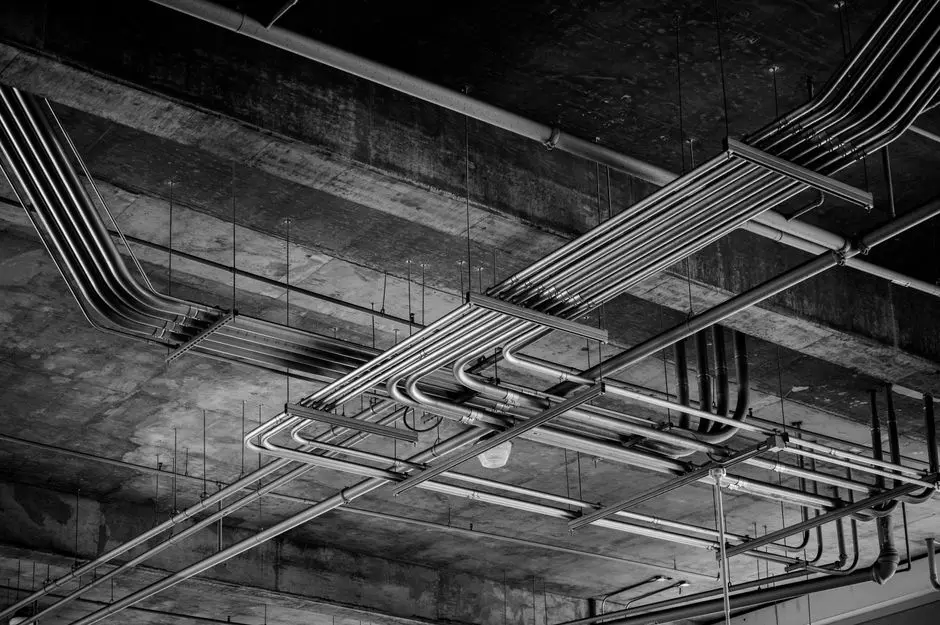
Evaporator architecture should follow the chemistry and concentrate behavior established by feed testing, not a preferred equipment name.
| Design choice | Documented advantage | Buyer question |
|---|---|---|
| Plate heat exchanger | Compact footprint and large exposed heat-transfer area. | Is the fouling rate and cleaning access acceptable for this feed? |
| Shell-and-tube heat exchanger | Larger footprint but greater resistance to scaling and fouling. | Does the added footprint or cost provide the required reliability? |
| Forced circulation | Keeps boiling out of the main heat exchanger and reduces scaling tendency. | Can the circulation rate be maintained at the final concentrate viscosity? |
| Rotary-lobe compressor | ENCON identifies this option for smaller systems. | Is the machine suitable for the proposed vapor flow, pressure ratio, and contamination level? |
| Centrifugal fan | ENCON identifies this option for larger systems. | How does efficiency and surge margin change across the operating range? |
ENCON’s MVR evaporator technical description states that plate heat exchangers provide a compact footprint and large exposed area, while shell-and-tube exchangers require more footprint but offer greater resistance to scaling and fouling. Forced circulation should be compared with falling-film or other arrangements once viscosity and scaling tendency are known. For sticky or increasingly viscous concentrates, a falling-film window may be unsuitable, and higher circulation or a different architecture may be required.
Compressor selection must follow the system duty rather than unit size alone. ENCON describes rotary-lobe compressors for smaller units and centrifugal fans for larger applications. The proposal should state the vapor flow, pressure ratio, suction and discharge conditions, compressor efficiency curve, and turndown range.
Protection requirements should be explicit. HydropureWater’s 2026 guidance identifies wet vapor, excessive superheat, and entrained-liquid carryover as material compressor risks. Require interlocks or alarms for vapor dryness, superheat, liquid carryover, and abnormal pressure or temperature. An MVR equipment package with valves and instrumentation should make those functions visible in the control philosophy and guarantee schedule.
Materials are a chemistry decision. HydropureWater identifies titanium or 2205 duplex exchangers for organic-acid feeds, but the final selection must follow temperature, pH, chloride content, oxidation conditions, and contamination risk. Chloride-bearing feeds should not inherit a generic stainless-steel specification without review.
Automation should cover feed, concentrate discharge, distillate transfer, temperature, pressure, liquid level, alarms, and clean-in-place operation. Continuous monitoring remains necessary even with automated controls; the Gotsu Mill case shows that fouling and vibration can still disrupt operation.
Recovery Targets, Distillate Quality, and the Zero-Liquid-Discharge Boundary
MVR recovers water as distillate, but complete zero liquid discharge depends on how the remaining salts and concentrated organics leave the site.
Distillate quality depends heavily on carryover control. HydropureWater’s 2026 organic-MVR guidance identifies COD and TDS targets near 500 mg/L as common engineering goals for controlled organic service. These are not universal regulatory limits. They apply only when volatile carryover, mist elimination, and process stability are effectively controlled.
For US indirect dischargers, 40 CFR Part 403 general pretreatment rules and applicable local POTW limits govern the discharge route. Part 403 does not establish a universal 500 mg/L COD limit, so the local permit and reuse specification must be included in vendor guarantees.
HydropureWater’s 2026 article also cites China’s GB 8978-1996 Class I COD limit of 100 mg/L in a circumstance where additional polishing after MVR was required. That comparison reinforces that a common design target is not automatically a discharge permit.
Water recovery and solids closure are separate objectives. The evaporator can return distillate to process, but the concentrate still contains the removed salts and concentrated contaminants. A crystallizer produces solid salts; a centrifuge or plate-and-frame filter press for concentrated brine solids removes free water and leaves a managed cake for disposal. The plate-and-frame product range includes filtration areas from 1 m² to 500 m² and manual, hydraulic, or fully automatic PLC-controlled operation.
Those downstream choices change the project scope, energy profile, and waste form. The Energy Reports mine-water study, published in 2022, combined coagulation clarification, reverse osmosis with DTRO, and evaporation and crystallization. It did not present evaporation as the entire zero-discharge plant. A high-TDS MVR project should likewise show where concentrate crystallization or mechanical dewatering begins and ends.
Energy, Capital Cost, and Payback for a High-TDS MVR Project
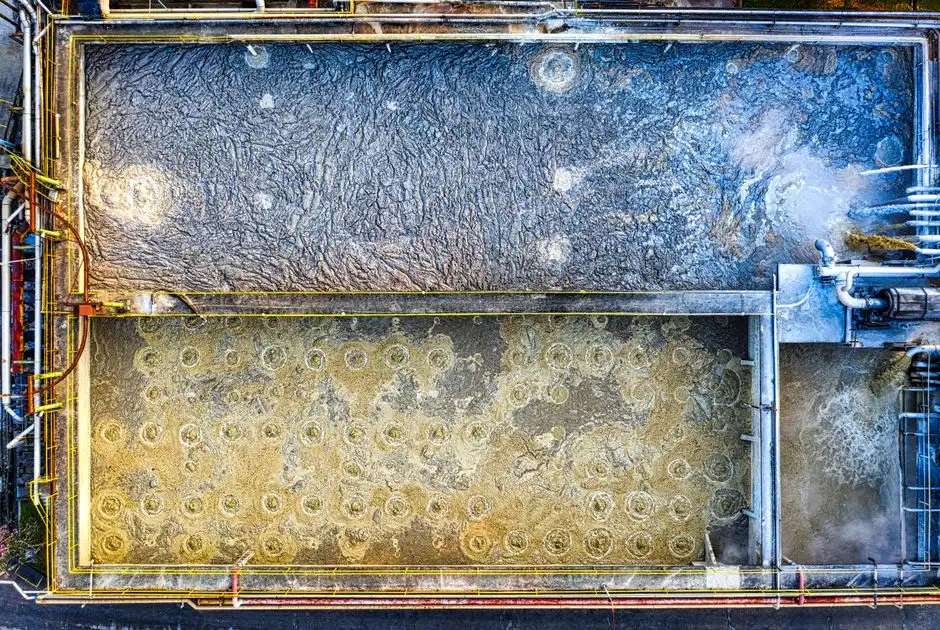
An MVR business case must reconcile evaporation capacity, compressor electricity, pretreatment, concentrate handling, and disposal on the same mass-balance basis.
MVR reuses vapor latent heat, whereas single-effect evaporation consumes steam. HydropureWater’s 2026 organic-service guidance reports an 80–90% reduction in steam demand relative to single-effect evaporation under its stated conditions. That is a useful comparison, but it is not a site-specific guarantee and does not include the electricity required by pretreatment or downstream solids handling.
The same HydropureWater guidance presents 0.02–0.05 kWh/kg evaporated water as an earlier MVR sizing band and cites a 20 kWh/m³ reference value, equivalent to about 0.02 kWh/kg. These figures are screening references, not guaranteed specific energy. BPE, brine temperature, concentration factor, heat-transfer temperature difference, and compressor efficiency determine actual consumption.
| Cost or performance item | Published reference | Scope requiring reconciliation |
|---|---|---|
| 10 m³/h organic MVR capital cost | $1.2M–$5M in HydropureWater’s 2026 model. | Materials, evaporation rate, pretreatment, controls, and downstream equipment. |
| Modeled operating cost | $0.30–$0.80/m³ in HydropureWater’s 2026 organic-service model. | Electricity tariff, chemical use, labor, maintenance, cleaning, residue disposal, and water value. |
| Hauling and disposal comparison | About $2.50/m³ in the same model. | Local transport, treatment, and disposal charges. |
| Dairy payback case | About 4.9 years simple payback at $1.8M capital cost; potentially approaching 3 years with reuse and avoided fines. | Feed flow, water value, avoided disposal, fines basis, and all operating costs. |
| Commercial operating benchmark | ENCON reports $0.01–$0.02 per gallon as a typical operating cost. | Not directly interchangeable with a per-cubic-metre project model without defined boundaries. |
| Gotsu Mill operating result | 13% energy-cost reduction versus a multiple-effect vacuum evaporator, reported in 2023. | Site-specific operating comparison after heater and compressor cleaning. |
These numbers have different scopes and must not be combined into a synthetic savings claim. The ENCON per-gallon benchmark and HydropureWater per-cubic-metre model may use different utility prices, feed assumptions, labor, maintenance, and residue-disposal boundaries.
Require every bidder to state evaporation capacity, feed and concentrate TDS, distillate flow, BPE, compressor power, steam use, construction materials, performance guarantees, CIP assumptions, pretreatment requirements, and excluded downstream costs. The Gotsu Mill result should remain an operational benchmark: it showed stable operation after correcting heater blockage and compressor vibration, and its reported 13% energy-cost reduction was site-specific.
How to Select an MVR Supplier and Freeze the Equipment Scope
A comparable request for proposal should make assumptions, test work, guarantees, and exclusions visible before commercial evaluation begins.
- Submit representative wastewater data. Provide the complete ionic profile, organics, suspended solids, viscosity, pH, temperature, variability, and sampling method. A single grab sample is insufficient where the stream changes by batch or shift.
- Define recovery and disposal requirements. State distillate use, concentration factor, required brine consistency, final solids route, and applicable permits. Distinguish water recovery from complete ZLD.
- Require feed-specific engineering. Each bid should include a heat and mass balance, BPE calculation, scale and fouling assessment, compressor curve, materials recommendation, utility estimate, and guarantee schedule.
- Freeze pretreatment scope. Identify solids removal, hardness management, chemical dosing, filtration, VOC control, monitoring, and CIP requirements. State which units are included and which remain with the site.
- Compare commercial terms and support. Review spare parts, controls integration, service scope, operator training, and long-term support. Energy or cost claims should not replace test data or enforceable guarantees.
Site testing is warranted where chemistry is variable, scaling behavior is uncertain, or the proposed concentration has not operated on the actual waste. Request bench-scale or pilot data and written assumptions behind every performance guarantee. The equipment scope should include the valves, instrumentation, and control components needed to protect the process—not only the evaporator vessel and compressor.
Before freezing the scope, challenge any proposal that infers suitability from TDS alone. It should identify the feed constituents, recovery duty, final solids route, and pretreatment sequence without leaving those items as later “exclusions.” That discipline is the difference between a vendor nameplate estimate and a bankable MVR design.
Frequently Asked Questions
How much does an MVR evaporator cost for high-TDS wastewater?
HydropureWater’s 2026 model places a 10 m³/h organic MVR at $1.2M–$5M and reports modeled operating cost of $0.30–$0.80/m³. These are not quotations for a specific high-TDS feed. Request a price split across the evaporator, compressor, materials, pretreatment, controls, installation, commissioning, downstream solids handling, utilities, and residue disposal. Provide feed analysis, flow, recovery target, utility tariffs, and the required guarantee schedule so bidders can quote comparable boundaries.
Can MVR treat any high-TDS wastewater?
No. TDS establishes water-removal demand but does not establish scalability, fouling behavior, volatility, or heat-transfer feasibility. Calcium, barium, magnesium, silica, suspended solids, COD, viscosity, BPE, volatile compounds, and the required recovery can disqualify a single-stage arrangement or require a hybrid flowsheet. Obtain bench-scale or pilot evidence and an updated boiling-point profile for the actual stream.
Is MVR enough for zero liquid discharge?
No. MVR produces distillate and a concentrated brine or slurry. For complete solids closure, the concentrate requires crystallization, centrifugation, or mechanical dewatering before disposal or reuse. Define the final solids route during MVR selection because it affects evaporation duty, heat integration, equipment scope, and operating cost.
How do I size an MVR evaporator for high-TDS wastewater?
Size the complete system rather than the evaporator alone. Give bidders feed flow, feed and proposed concentrate TDS, evaporation rate, BPE, heat-transfer area, compressor power, pretreatment requirements, distillate specification, and downstream solids handling. Ask each vendor to balance these inputs in one heat and mass balance and state its operating guarantees and excluded costs. This prevents a nominal evaporation rate from being disconnected from concentrate chemistry and compressor protection.
Should I use RO or MVR for high-TDS wastewater?
RO can reduce water volume before the residual concentrate reaches MVR, while MVR concentrates the remaining high-strength stream. The Energy Reports mine-water study, published in 2022, used coagulation clarification, reverse osmosis with DTRO, and evaporation and crystallization in sequence. The correct choice depends on feed chemistry, water recovery, concentrate management, pretreatment, and discharge or reuse requirements. Compare RO treatment design for high-TDS wastewater with an MVR heat and mass balance before selecting either as a stand-alone solution.