What Sydney Water requires before discharge
Sydney manufacturers generally treat trade waste and high-COD effluent through a staged, permit-led process: characterise the waste, segregate incompatible streams, equalise flow and load, remove oil, grease and suspended solids, then use biological treatment to reduce soluble organic load before polishing or reuse. Sydney Water requires consent to discharge and specifies required pre-treatment equipment, maintenance and prohibited discharges in the permit. Technology selection depends on COD, flow variability, pH, toxicity, solids and the reuse objective. Laboratory evidence supports biological and electrocoagulation options, but their results must not be treated as guaranteed site performance.
Sydney Water’s current commercial trade wastewater guidance requires businesses discharging trade wastewater to obtain consent before connecting or discharging to its system. A business producing only small quantities may fall under a deemed process, so the proposed activity should be checked against Sydney Water’s current rules rather than assumed to be exempt. The manufacturing discharge comparison and international trade-waste pathway illustrate why local acceptance criteria must frame the engineering brief.
The approval application should define the business activities, proposed pre-treatment equipment, on-site contacts and relevant land-use or operating approvals. Fees and charges apply. Sydney Water also states that higher waste-quality charges may apply where permit requirements are not met, so equipment compliance affects the operating cost rather than only the capital scope.
The permit is an engineering document. It specifies what pre-treatment must be installed, how it must be operated and serviced, and what may or may not be discharged. Sydney Water may inspect the site, and non-compliance may lead to enforcement or disconnection. Food scraps, fats and oils, chemicals, motor oil, solvents and solid medical waste must not enter the system.
| Approval input | What the applicant should establish | Engineering consequence |
|---|---|---|
| Business activities | Manufacturing steps, cleaning methods and wastewater sources | Defines stream segregation and potential contaminant loads |
| Pre-treatment details | Equipment type, capacity basis, controls, maintenance and servicing | Links the proposed treatment train to permit conditions |
| Site contacts | Responsible on-site owner or operator | Provides a route for operational notices and compliance management |
| Land-use and operating approvals | Development approval and relevant operating consents | Confirms the proposed facility and discharge are permitted at the site |
Characterise the effluent before choosing a treatment train
COD is a measure of the oxygen demand associated with organic material, while BOD measures the biological consumption of oxygen during organic-matter breakdown; neither value is interchangeable with suspended solids. A high COD result identifies an organic-load issue but does not reveal whether the load is soluble, particulate, oily or toxic, so equipment selection requires a broader characterisation.
The design dataset should cover COD, BOD, flow and flow variation, pH, suspended solids, oil and grease, dissolved salts, toxicity and relevant process chemicals. Each production stream should be sampled and mapped separately. Mixing concentrated and dilute streams can conceal both the source of the COD and incompatible chemical additions. The same separation logic is used to prepare wastewater for sewer discharge limits, although industrial acceptance criteria must be set for the actual site and current Sydney Water requirements.
The national trade-waste guidance identifies several sewer risks: corrosion, hydraulic overload, blockages from solids or grease, volatile or toxic releases, contamination of sludge and substances that pass through the treatment plant. These risks should be tested against the proposed discharge rather than reduced to a COD limit. The supplied national guidance was published in November 1994, so it remains a risk framework but cannot substitute for current Sydney Water approval or project-specific testing.
| Measurement or condition | Decision supported | Buyer must request |
|---|---|---|
| COD and BOD | Organic load and biological treatment requirement | Representative results and analytical methods |
| Flow and production profile | Equalisation, peak loading and equipment sizing | Continuous and batch-production data |
| pH, suspended solids, oil and grease | Equalisation and physical pretreatment design | Stream-specific sampling across operating scenarios |
| Dissolved salts, toxicity and process chemicals | Compatibility with biological treatment and discharge | Complete chemical inventory and toxicity assessment |
| Proposed discharge or reuse | Final treatment objective | Current permit limits or written reuse specification |
Build a treatment train that matches the pollutant
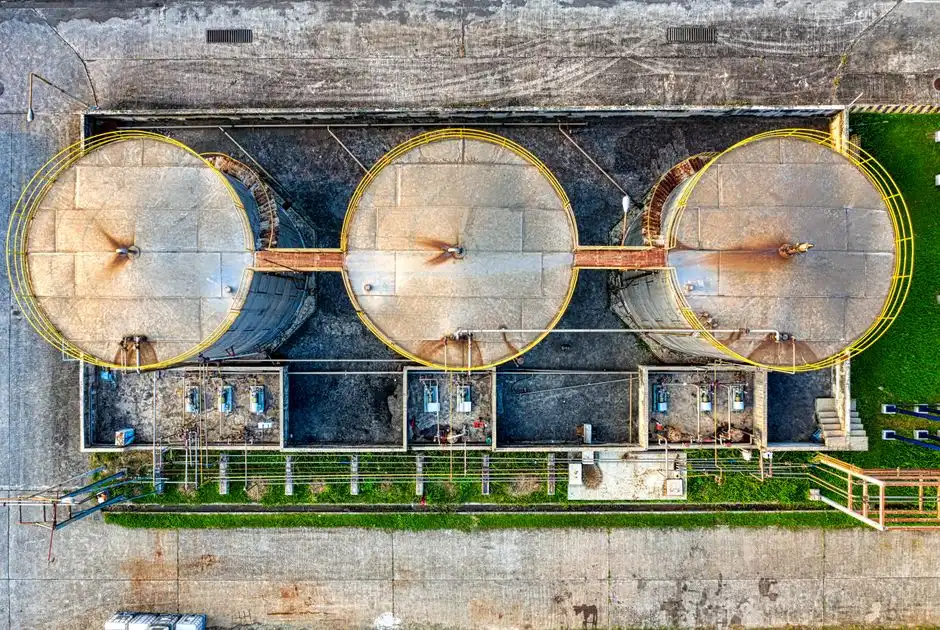
A defensible treatment train starts with source reduction and segregation, then controls flow before removing pollutants that can damage or overload downstream processes. Remove or recover concentrated process streams, eliminate unnecessary wash water, and keep prohibited chemicals and FOG out of the connection. Equalisation then buffers flow and load; its duty, storage and pumping arrangement must come from the measured production profile rather than a generic flow assumption.
Where suspended solids, colloids, oil and grease must be removed before biological treatment, dissolved air flotation is an appropriate pretreatment option. The industrial DAF wastewater pretreatment system range supplied for this article covers 4 to 300 m³/h across 13 models. That range is catalogue evidence, not a site selection: the selected unit must match the measured solids, FOG and hydraulic duty.
Biological treatment is the primary route for biodegradable high-COD load, but temperature, hydraulic retention time, toxicity and feed characteristics must be tested. A lab-scale MBBR study published by Juniper Publishers examined COD between 1,000 and 3,500 mg/L. It selected an 8-hour hydraulic retention time as optimum with COD removal above 80%, while 12 hours produced about 86% removal. The same study reported a sharp biological-response change between 20 and 25°C, with COD-removal efficiency increasing from about 70% to about 90%. These results support temperature-aware design; they do not guarantee performance for a Sydney manufacturing stream.
Membrane or advanced treatment should be evaluated as a polishing or reuse stage, not as a substitute for source control and adequate biological pretreatment. The MBR membrane bioreactor for industrial wastewater reuse combines biological treatment with membrane solids separation. Where soluble contaminants, metals or colour require specific removal, electrocoagulation may be a project-specific option. An MDPI study began with 424.29 mg/L COD from mineral-processing wastewater, so that result cannot be transferred directly to other manufacturing streams.
| Train stage | Problem addressed | Required design evidence |
|---|---|---|
| Source reduction and segregation | Concentrated COD, incompatible chemicals, avoidable wash flow | Stream map, chemical inventory and production losses |
| Equalisation | Flow and load variation | Measured production and discharge profile |
| DAF | Suspended solids, colloids, oil and grease | Solids, FOG and hydraulic characteristics |
| Biological treatment | Biodegradable soluble organic load | COD, BOD, temperature, toxicity and retention-time trials |
| Polishing or reuse | Residual solids and specified reuse quality | Permit or reuse specification plus pilot-derived process data |
Compare treatment options by application
Treatment selection should follow the pollutant and operating objective, not the highest headline COD-removal percentage. DAF addresses physical contaminants, biological treatment reduces biodegradable organics, MBR couples biological treatment with fine solids separation, and electrocoagulation can target project-specific contaminants. Equalisation controls hydraulic and load variation but does not remove dissolved COD.
The supplied DAF evidence covers suspended solids, FOG, oil and grease and colloidal matter. The MBR evidence describes activated sludge combined with submerged PVDF filtration below 1 μm. DAF can therefore protect downstream biological or membrane processes, while MBR can provide compact solids separation where reuse quality justifies it. Technology can be combined; however, DAF does not remove dissolved biodegradable COD by itself, and MBR performance remains dependent on the biological process and upstream pretreatment.
The MBBR and electrocoagulation results are not directly comparable because they came from different waste matrices, reactor configurations and treatment objectives. Before selecting a route, use MBR and conventional activated-sludge comparison to define biological alternatives and biological-treatment evaluation for industrial wastewater to structure site trials.
| Option | Best-fit problem | Main limitation |
|---|---|---|
| Segregation and equalisation | Variable flow, concentrated streams and incompatible additions | Does not itself remove the pollutant |
| DAF | Suspended solids, colloids, oil and grease | Limited direct removal of dissolved biodegradable COD |
| Biological treatment | Biodegradable high-COD load | Temperature, retention time and toxicity affect performance |
| MBR | Biological treatment with fine solids separation and reuse potential | Requires effective upstream pretreatment and biological operation |
| Electrocoagulation | Specific soluble contaminants, metals or colour where project testing supports it | Published results are application-specific and require new testing |
Prepare a supplier-ready scope and approval package
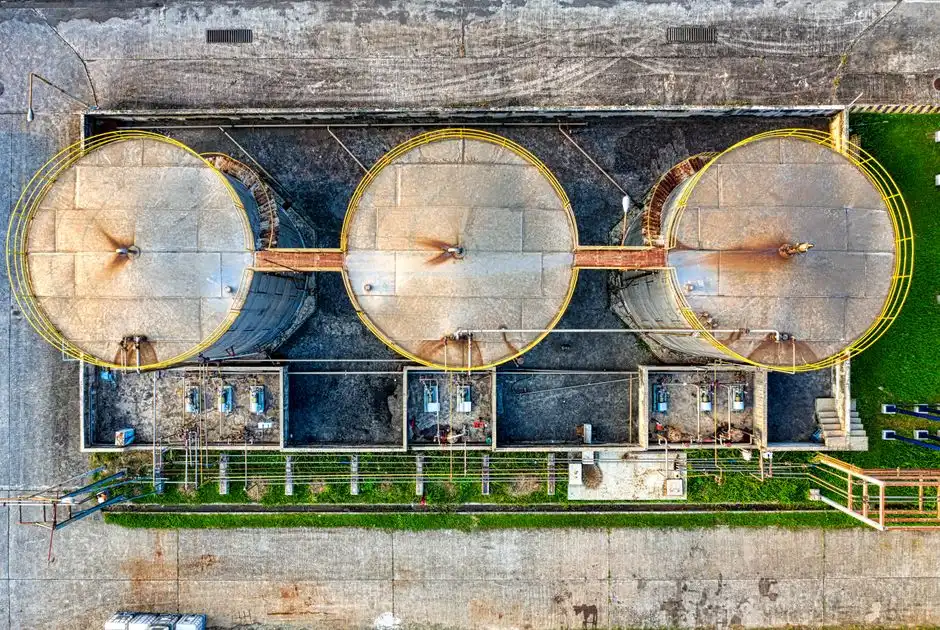
A supplier should receive enough measured information to size the treatment train without guessing. Request the wastewater characterisation report, production flow profile, stream map and intended discharge or reuse outcome. State the required flow basis, duty cycle, treatment objectives, footprint constraints, utilities, automation requirements and future-expansion provisions.
Require each proposed stage to identify the measured pollutants it addresses and show how the final effluent will be monitored. The scope must also cover sludge, FOG and recovered-stream management. Treatment equipment transfers contaminants into concentrated residues; it does not remove the need for an authorised disposal or recovery route. For solids-management options, see the plate-and-frame filter press and the industrial filter-press process flow.
Submit the proposed pre-treatment details and supporting operating information with the Sydney Water application. Because the supplied national guideline is dated November 1994, verify current Sydney Water requirements directly before finalising equipment, acceptance tests or discharge assumptions. The approval package should connect measured wastewater data to each unit’s duty and identify the final monitoring and compliance obligations.
| Scope item | Required deliverable | Approval or acceptance link |
|---|---|---|
| Wastewater basis | Characterisation report, flow profile and stream map | Supports permit application and design sizing |
| Equipment basis | Stage-by-stage duty and pollutant-removal rationale | Demonstrates compliance with proposed pre-treatment |
| Operations | Controls, maintenance, monitoring and alarm requirements | Supports permit operating and servicing conditions |
| Residuals | Sludge, FOG and recovered-stream management plan | Confirms no untreated waste or unapproved residue enters the system |
Frequently Asked Questions
What treatment routes are permitted for Sydney manufacturing effluent?
The permitted route depends on the approved pre-treatment and current Sydney Water permit. Source reduction, segregation, equalisation, physical pretreatment, biological COD removal and polishing may form a train, but discharge remains subject to consent, operating conditions and prohibited inputs.
How should a supplier be selected for high-COD industrial wastewater?
Ask the supplier to trace every proposed stage to measured pollutants and flow data, identify residence-time and temperature assumptions, and provide acceptance criteria for the final effluent. References to MBR and conventional activated-sludge alternatives should support the selected route rather than substitute for site-specific evidence.
How much will treatment cost for a Sydney wastewater permit?
The supplied Sydney Water material confirms fees, charges and possible higher waste-quality charges but does not publish a universal treatment price. Request a quotation based on wastewater characteristics, flow, treatment objectives, utilities, footprint and residuals, together with the applicable Sydney Water fee schedule.
What inputs are needed to size an MBR or DAF unit?
Provide flow and production profiles, COD, BOD, suspended solids, oil and grease, pH, toxicity, temperature and the intended discharge or reuse specification. Use