What makes Baomahun trade wastewater different?
Baomahun manufacturers should treat trade waste and high-COD effluent as a source-separated industrial stream rather than rely on a single treatment unit. The defensible route is source control and screening, equalization, pH and nutrient management, biological treatment for biodegradable COD, followed by solids separation and polishing where reuse or discharge requires it. Local constraints matter: Baomahun raw water may exceed 1,000 NTU turbidity and contain trace mercury, while inland freight and customs add a 25-40% logistics premium. Final equipment must be selected after influent testing and reviewed against current EPA-SL permit conditions.
Chemical oxygen demand represents the oxygen required to oxidize organic and inorganic substances in water, and high COD can cause oxygen depletion, harm aquatic life and disrupt ecological balance (Water & Wastewater, “How To Reduce Cod in Wastewater Treatment,” supplied research). For a Baomahun buyer, that definition should lead to source characterization rather than immediate selection of a biological package.
The legal review by Njala University identifies mining, trade and commerce, transportation, construction, small-scale manufacturing and hospitality as sectors affecting Sierra Leone’s water quality. It also notes that stormwater can carry sediment, waste oil and solid waste into waterways. Sanitary sewage is organic and pathogen-bearing; industrial trade waste may contain process chemicals and fluctuating COD; stormwater should remain separate unless testing demonstrates that it can enter the treatment train without changing the process design.
Baomahun-specific risks also justify separating raw water from process wastewater. The HydropureWater Baomahun guide, “Baomahun Data Center Wastewater & Cooling Blowdown Treatment,” reports wet-season stream sediment, 2015 catchment surveys of artisanal miners handling mercury amalgam in stream channels, and a raw-water profile exceeding 1,000 NTU with organics and trace mercury. Those findings do not automatically define the trade-waste composition, but they show why uncontrolled site drainage and raw-water dilution cannot be assumed.
Before designing the plant, verify whether a municipal sewer serves the site and obtain the sewer authority’s written acceptance, prohibited discharges, pretreatment limits and monitoring obligations. The historical Public Health Act 1937 consent-to-discharge arrangement described in the Njala University review is not a substitute for current approval.
Build the treatment train around the source of COD
Source control determines whether the biological process receives a treatable organic load or an industrial shock load. Identify cleaning chemicals, oils, dyes, edible oils, suspended solids and high-strength batch discharges at their points of generation, then construct the treatment train in the following order.
- Segregate streams: keep sanitary sewage, industrial trade waste and stormwater separate unless each stream has a defined reuse or discharge destination.
- Screen and remove gross solids: use a rotary mechanical bar screen for rags, plastics, fibrous debris and material that could damage pumps or overload biological treatment.
- Equalize the load: use an equalization tank to buffer batch discharges and flow variation. Site testing must establish flow, pH, COD, BOD, TSS, nutrients and temperature rather than relying on a generic design value.
- Correct chemistry before biology: apply PLC-controlled automatic chemical dosing for pH adjustment and coagulant, flocculant or specialty-chemical requirements demonstrated by the waste profile.
- Remove oils and colloids where necessary: DAF pretreatment for oils, colloids and suspended solids can protect downstream biological treatment. The supplied DAF equipment range is 4-300 m³/h.
- Apply biological treatment to biodegradable COD: this is the appropriate route for material the microorganisms can decompose, subject to nutrient balance and process inhibition.
- Reserve advanced oxidation for recalcitrant fractions: the advanced oxidation process generates hydroxyl radicals that can oxidize recalcitrant organic compounds, but it should follow appropriate pretreatment and biological treatment rather than serve as a universal first stage.
- Manage residuals: contain, dewater and route sludge to an authorized destination. Water & Wastewater identifies effective sludge management as essential to preventing secondary pollution.
| Process position | Primary function | Buyer check before approval |
|---|---|---|
| Source segregation and screening | Removes rags, plastics, fibrous debris and high-solids batches | Inventory every process stream and batch discharge |
| Equalization | Buffers hydraulic and concentration shocks | Measure flow, COD, BOD, TSS, pH, nutrients and temperature |
| Chemical dosing | Controls pH and supports precipitation or coagulation | Specify chemicals from actual influent chemistry |
| DAF pretreatment | Removes suspended solids, FOG, oil, grease and colloidal matter | Confirm oils and colloids are present and define waste-oil recovery |
| Biological treatment | Reduces biodegradable COD | Verify biodegradability, nutrients, inhibition and sludge handling |
| Advanced oxidation | Targets remaining recalcitrant or inhibitory compounds | Identify the compound and validate need after pretreatment |
| Sludge management | Controls residuals from biological and chemical treatment | Confirm licensed destination and dewatering method |
COD should therefore be divided into readily biodegradable, slowly biodegradable and non-biodegradable or inhibitory fractions. A high COD test alone does not show which fraction dominates or whether a biological system can treat the stream safely.
Select biological treatment for the actual load
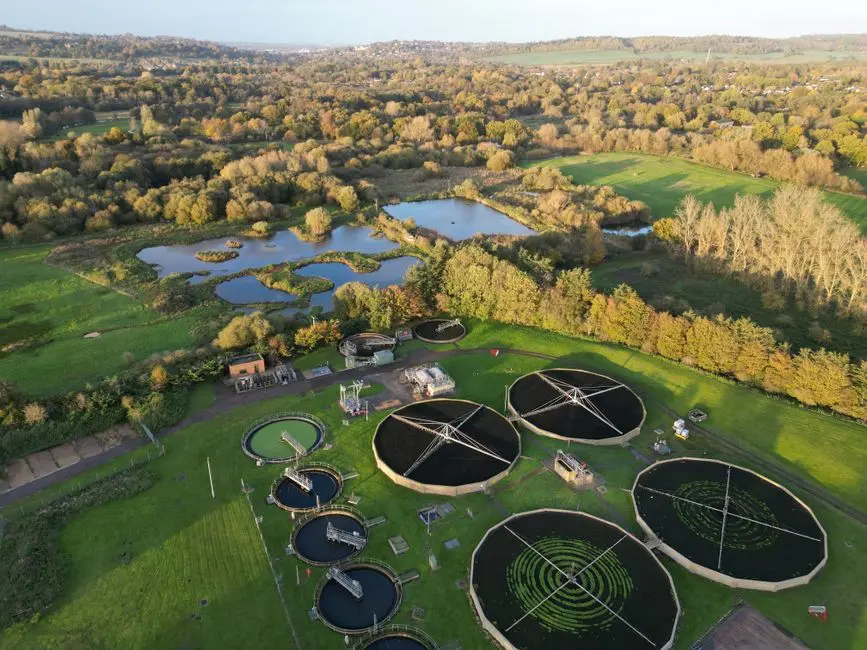
Biological wastewater treatment is the appropriate starting point for biodegradable COD because it decomposes organic matter, while nitrogen and phosphorus must be balanced for the biological system to function effectively (Water & Wastewater, supplied research). The choice between a packaged anoxic-oxic plant and an MBR should follow the load, footprint, reuse objective and operating constraints.
| Selection issue | Packaged A/O treatment | MBR |
|---|---|---|
| Process | Anoxic/oxic contact oxidation with sedimentation and disinfection | Activated sludge combined with submerged PVDF membrane filtration |
| Cited equipment range | 1-80 m³/h | 10-2,000 m³/day |
| Physical footprint | Compact package suitable for smaller flows | Compact footprint where membrane solids separation justifies it |
| Effluent objective | Conventional biological treatment followed by project-specific polishing | Stronger solids separation and a route to near-reuse-quality effluent |
| Filtration claim | Not applicable | Supplied research describes effluent below 1 micrometre filtration |
| Operator requirement | Cited WSZ system is fully automated and requires no dedicated operator | Confirm membrane cleaning, monitoring and remote support requirements |
The cited WSZ A/O package treatment plant is an option for smaller, relatively domestic or sanitary flows. It should not be treated as a default for variable industrial trade waste without an influent study. The supplied sources provide no guaranteed COD outlet for either package in Baomahun, so any outlet value must be established through pilot work, vendor guarantees tied to the actual waste profile, or both.
An MBR membrane bioreactor for high-COD industrial wastewater is more defensible where near-reuse quality, a compact footprint or tighter solids separation is required. It also introduces membrane cleaning, replacement and integrity-monitoring obligations. For expansion or flows beyond the selected package, consider future clarification and biological-polishing modules rather than oversizing biological capacity without quantifying influent variability.
One textile facility reported 90% COD reduction by combining biological treatment, advanced oxidation, source separation and pretreatment (Water & Wastewater, supplied research). That is a documented process precedent, not a guaranteed result for Baomahun. An industrial wastewater sulfide-removal review is relevant where sulfide is detected, because toxicity or inhibition must be resolved before biological loading.
Polish and disinfect before reuse or discharge
Polishing requirements depend on the destination: irrigation, process-water reuse, sewer discharge and licensed off-site haul-out have different acceptance routes. The facility must define the intended reuse standard and obtain current written acceptance rather than treating “reuse” as a general permission to discharge.
| Condition or objective | Potential equipment | Evidence or decision requirement |
|---|---|---|
| High-quality solids separation | Lamella clarifier | Cited surface loading rate is 20-40 m/h; system includes flocculation, sludge recirculation and inclined-plate separation |
| Suspended solids, colloids or turbidity before membranes | Multi-media filtration or ultrafiltration | Cited UF system handles turbidity up to 300 ppm and includes automatic backwash and air scour |
| Cooling-loop or process-water disinfection | On-site chlorine dioxide generator | Baomahun cooling-tower application cites 0.5-1.0 mg/L residual; confirm dose through contact-time, pH and permit study |
| Integrated reuse polishing | JY integrated purification skid | Cited configuration combines coagulation, flocculation, sedimentation, filtration and automatic backwash; capacity 10-200 m³/h and surface-water turbidity up to 3,000 mg/L |
| Sludge removal before licensed disposal | Plate-and-frame filter press | Cited Baomahun sludge train reports 25-35% dry-solids cake |
Where high solids separation is required, a high-efficiency lamella sedimentation system is the relevant selection. Use ultrafiltration for solids and turbidity control when the downstream process or reuse specification requires it. An integrated water-purification skid may reduce duplicated equipment where its cited capacity and raw-water conditions fit the duty.
If chlorine dioxide is selected, an on-site chlorine dioxide generator supports controlled generation. The 0.5-1.0 mg/L residual in the supplied Baomahun guide applies to its cooling-tower application, not automatically to trade wastewater. Disinfection design must use the facility’s contact time, pH, receiving environment and permit condition.
Sludge is part of the discharge decision, not residual space. The HydropureWater Baomahun guide reports 25-35% dry-solids cake from its plate-and-frame train and states that un-dewatered septic sludge is not acceptable for economical highway haulage. A plate-and-frame sludge dewatering press should therefore be considered before licensed transport, subject to waste characterization and destination approval.
Choose between onsite treatment, sewer discharge and haul-out

EPA-SL permit verification comes before equipment selection. The Njala University review notes that EPA-SL regulates construction companies through environmental impact assessment licences with environmental management plans, while the HydropureWater Baomahun guide states that new discharge to land or water requires an EPA-SL permit. Facilities in or draining from mineral-bearing catchments must also review Sections 90 and 91 of the Mines and Minerals Act 2009.
| Disposal route | Best fit | Key checks |
|---|---|---|
| Onsite treatment and reuse | Waste is treatable and land application or process reuse has a permitted route | EPA-SL conditions, land area, pretreatment, storage and monitoring |
| Municipal or industrial sewer pretreatment | Written sewer acceptance is available and the waste falls within stated limits | Authority approval, prohibited materials, COD and pH limits, sampling and surcharge rules |
| Licensed off-site haul-out | Treatment is impractical, reuse is unavailable or site constraints prevent a complete train | Licensed hauler and receiving facility, waste profile, dewatering, transport route and destination confirmation |
The Baomahun data-center guide offers a transferable screening example, not a universal trade-waste rule: where a site exceeds 5 ha and an EPA-SL irrigation permit is obtainable, reuse may be practical; where it is under 2 ha or drains toward a protected water body, haul-out may be more suitable (HydropureWater, “Baomahun Data Center Wastewater & Cooling Blowdown Treatment,” supplied research). Apply that logic only after reviewing the actual trade waste, land constraints and receiving-water sensitivity.
The same guide states that Bo District has no municipal sludge-treatment route. That makes licensed haul-out planning and dewatering material to the disposal decision rather than an afterthought. If sewer pretreatment is considered, obtain current written acceptance and pretreatment limits; the historic Public Health Act 1937 arrangement is not evidence of present permission.
Budget, test and commission the 2026 installation
A defensible quotation begins with site-specific influent and effluent characterization. Test COD, BOD, TSS, flow, pH, nutrients, temperature and conductivity, plus process-specific contaminants such as oil and grease, dyes, sulfides, metals or biocides. Sampling must capture production cycles and high-strength discharges; a single daytime sample is not enough to size equalization or biological treatment.
| Procurement item | Information required from the supplier | Buyer decision or acceptance test |
|---|---|---|
| Design basis | Guaranteed design flow, influent range and treated-water quality | Check against the site characterization and required destination |
| Equipment duty | Process calculations, materials, utilities and operating envelope | Review P&IDs and equipment submittals |
| Controls | PLC architecture, alarms, interlocks, instrumentation and remote support | Review PLC control architecture for industrial wastewater and site responsibilities |
| Operator requirement | Attendance, training, routine visits and remote monitoring | Price local service support separately |
| Installation scope | Civil works, foundations, power, drainage, connections and commissioning | Define battery limits clearly |
| Residuals and consumables | Sludge route, chemical use, media or membrane replacement and spare parts | Include lifecycle cost and authorized disposal inputs |
| Commissioning | Flow balance, pH control, nutrient dosing, biological start-up, clarified-water quality and sludge dewatering | Include disinfection tests where specified |
Price logistics as a separate risk. The HydropureWater Baomahun guide estimates that inland freight and customs add 25-40% over Asian or European supply for the referenced 2026 data-center equipment package. It describes full three-stream process equipment for a 5 MW hyperscale campus as low single-digit millions of US dollars, excluding civil works and generator backup; that is a data-center reference frame, not a trade-waste price estimate. No sourced quotation for the proposed Baomahun plant is available, so request a site-specific capital and operating cost breakdown.
Operating costs should be itemized for chemicals, energy, sludge transport and disposal, media or membrane replacement, maintenance and remote monitoring. Membrane selection must also address local supply and replacement support; the supplied guide identifies membrane replacement as a dominant operating-cost driver in its data-center application.
Require permits, waste profiles, P&IDs, equipment submittals, operating manuals, spare-parts lists and local service support as contractual deliverables. Where filtration is proposed, ask the supplier to explain element selection, cleaning compatibility and replacement supply; RO or UF membrane elements should be evaluated against the actual feed chemistry rather than selected by generic capacity claims.
Frequently Asked Questions
How should a Baomahun manufacturer select a high-COD treatment system?
Select the process from the source profile: segregate streams, remove gross solids and shock loads, equalize the wastewater, correct pH and nutrients, then apply biological treatment to biodegradable COD. Add advanced oxidation only for recalcitrant or inhibitory fractions and polishing only where the reuse or discharge route requires it. The supplied research provides no guaranteed Baomahun COD outlet, so require pilot evidence or a site-specific performance guarantee.
What information is needed before comparing treatment-plant quotations?
Require flow, COD, BOD, TSS, pH, nutrients, temperature, conductivity and process-specific contaminant data from production-representative sampling. The quotation should state design flow, treated-water quality, utilities, operator needs, controls, installation boundaries, sludge handling, commissioning tests, manuals and spare parts. This is a concrete due-diligence check because neither the WSZ nor MBR package range alone establishes suitability for high-COD trade waste.
Can advanced oxidation replace biological treatment?
Not as a general rule. The Water & Wastewater COD guide identifies hydroxyl radicals as the advanced oxidation mechanism for recalcitrant compounds and biological treatment as effective for decomposing organic matter. A textile facility reported 90% COD reduction only by integrating biological treatment, advanced oxidation, source separation and pretreatment. Buyers should therefore identify the specific residual compound and test whether it remains after appropriate biological treatment.
How much should a Baomahun industrial wastewater treatment plant cost?
The research contains no trade-waste plant price, so a responsible budget cannot state one. The HydropureWater Baomahun guide gives only a 2026 data-center reference: low single-digit millions of US dollars for full three-stream process equipment for a 5 MW hyperscale campus, excluding civil works and generator backup, with a 25-40% inland freight and customs premium. Ask each supplier for a site-specific price covering process equipment, civil interfaces, installation, utilities, chemicals, sludge handling, commissioning and local service.
Should the treated wastewater go to the sewer, be reused onsite or hauled off-site?
Choose only after confirming EPA-SL requirements and written sewer acceptance. Onsite reuse requires a permitted destination and adequate space; sewer pretreatment requires compliance with current authority limits; haul-out requires a licensed hauler, receiving facility and dewatering plan. The supplied Baomahun guide states that there is no municipal sludge-treatment route in Bo District, so sludge logistics must be assessed before either route is approved.
Which supplier and delivery terms should a buyer require in 2026?
Ask suppliers to identify local commissioning personnel, remote-support arrangements, spare-parts holding, membrane or media supply and responsibility for consumables. Obtain landed-cost quotations that explicitly account for the 25-40% inland freight and customs premium reported for Bo District in the HydropureWater Baomahun guide. Do not accept a delivery date or performance guarantee that is not tied to the documented waste profile and signed acceptance tests.