Which Limits Govern a Mining Plant Discharging to a Boaz Sewer?
Mining and metals plants near Boaz meet pretreatment limits by treating wastewater to the requirements of the local publicly owned treatment works before discharge at the industrial sewer connection. Under 40 CFR Part 403, categorical standards may apply, including 40 CFR Part 437 for ore mining and dressing and Part 433 for metal finishing where applicable, but EPA says local limits are site-specific and can be numeric or narrative. A practical train equalizes variable flows, adjusts pH, coagulates and flocculates contaminants, removes precipitated metals and solids, filters residual particles, and dewaterens the resulting sludge. The controlling POTW sewer-use ordinance, permit conditions and monitoring protocol must be verified before equipment sizing.
The governing distinction is the discharge path. An indirect discharge to a POTW collection system is addressed through the Clean Water Act pretreatment program, while a direct discharge to surface water follows the separate NPDES permitting pathway. A site can have both if it also discharges directly to surface water, but an NPDES permit is not the controlling document for waste sent through a sewer connection.
Federal pretreatment requirements establish the framework. EPA states that POTWs impose local limits at the industrial user's end-of-pipe discharge, at the point of connection to the POTW collection system. Local limits protect the POTW, its sludge and receiving waters, and may be numeric or narrative requirements, including best management practices.
The supplied research does not identify the exact POTW serving a particular Boaz-area facility or a Boaz-specific numerical limit. A generic industry range must therefore not be presented as a local requirement. The same caution applies to categorical classification: determine the actual subcategory and applicable production or process information.
| Permit item to verify | Evidence required before equipment sizing |
|---|---|
| Controlling POTW and sewer-use ordinance | Current official ordinance and confirmation of the receiving POTW |
| Industrial-user authorization | Permit, approval, applicable conditions and effective dates |
| Categorical status | Part 437 ore mining and dressing or Part 433 metal finishing applicability and subcategory |
| Discharge limits | Local numerical and narrative limits, prohibited discharges and applicable categorical requirements |
| Monitoring | Approved parameter list, sampling point, method, frequency, duration and reporting method |
| Commercial terms | Surcharges, monitoring costs and consequences of noncompliance |
For another sector-specific framing, see the mining and metals pretreatment compliance guide and the mining-plant sewer-limit workflow for nearby communities. Neither substitutes for the actual Boaz-area permit file.
Characterize Each Wastewater Stream Before Selecting Equipment
Mining wastewater must be separated into representative design cases because acid drainage, process blowdown, washdown, runoff and metal-finishing waste cannot safely be treated as one average stream. Genesis Water Technologies describes mining wastewater as commonly having high suspended solids and potentially high acidity, with metals, heavy metals, organic compounds and metalloids such as iron, arsenic and manganese. Those are screening considerations, not proof that every Boaz-area discharge contains them.
Require source-separated samples from every proposed sewer-connected stream. Mining and metal-finishing wastewater characterization should cover pH, flow, TSS, relevant metals, sulfate and TDS. The supplied sources support these analyte categories but do not establish universal site-specific concentrations or a universal flow.
| Design input | Information required | Equipment implication |
|---|---|---|
| Stream chemistry | Representative pH, metals, sulfate and TDS | Determines whether metals precipitation and polishing are required |
| Hydraulic profile | Average flow, peak flow, batch duration, shock loads and clean-out events | Sets equalization and solids-separation duties |
| Solids character | TSS, settleability, oil and grease, colloids and particle behavior | Distinguishes DAF from lamella clarification |
| Operational context | Temperature, seasonal variation and chemical-storage constraints | Sets materials, controls and operating limits |
| Mixing compatibility | pH regimes and potential hazardous reactions | Determines segregation and separate treatment requirements |
Map the peak discharge profile, not just daily average flow. Shift changes, dump-leach cycles and mill clean-outs can create short hydraulic and chemical loads that an undersized equalization basin cannot absorb. A design based only on average flow can therefore overwhelm pH control or solids separation.
Identify free oil, grease, colloids and predominantly settleable metal-hydroxide solids. These findings determine whether flotation or lamella clarification is the better starting point. Keep streams with incompatible pH regimes or chemistries that could create hazardous reaction products separate until their compatibility is established and written approval is obtained.
The industrial heavy metals removal methods comparison is useful for narrowing candidate treatment mechanisms, but equipment selection still needs site samples and a measured hydraulic profile.
Equalize and Condition the Water for Predictable Treatment
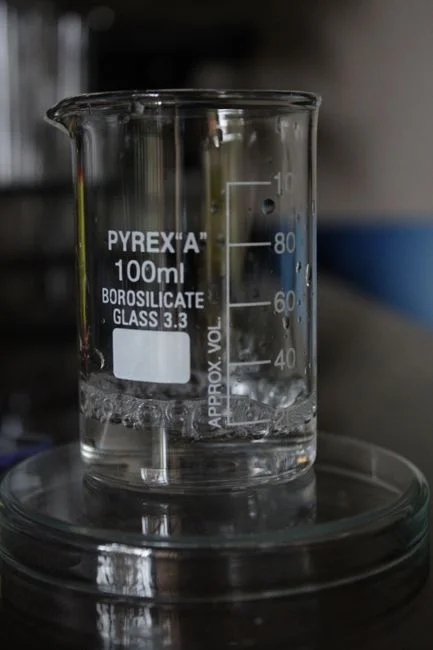
Equalization must precede uncontrolled chemical dosing because batch discharges can change flow and chemistry faster than a treatment train can respond. The basin must be evaluated against the actual peak discharge profile, including shift changes, dump-leach cycles and mill clean-outs, rather than an assumed steady flow.
Genesis Water Technologies establishes the process sequence: restore pH first, then apply coagulants and flocculants so suspended solids and small metal particles form larger clumps for removal by clarification and post-filtration. The pH-adjustment step supports precipitation of dissolved metals; coagulation and flocculation make suspended solids and fine metal particles easier to separate.
- Route each approved stream through equalization and remove materials that would damage downstream equipment.
- Adjust pH in a controlled reactor and verify the metals-precipitation window on actual influent.
- Add coagulant and flocculant in staged stages.
- Send conditioned water to solids separation, followed by filtration if required by the permit.
- Return filtrate from sludge dewatering to the plant headworks where the POTW approves that arrangement.
An automatic pH and coagulant dosing skid should provide operator-setpoints, interlocks and alarms tied to the permit target and upstream flow conditions. Staged control is preferable when influent chemistry varies because it allows the operator or controller to adjust reagent feed in response to measured conditions rather than applying a fixed dose to every batch.
Jar testing should establish reagent selection, dosage and pH operating window; pilot testing should confirm settling or flotation behavior. Do not transfer a vendor's pH target or chemical dose into the site design without tests on representative wastewater. Generator output is not a substitute for influent characterization.
Corrosion inhibitors, ion-exchange materials or biocides should be added only when source characterization, equipment metallurgy or the sewer authority demonstrates a need. Unnecessary chemical additions increase cost, residuals, sludge volume and permit-review complexity. The PAC dosing guide explains staging in more detail, although the chemical must still be selected from site testing rather than copied from another industry's process.
Choose DAF or Lamella Clarification for the Solids Load
DAF is generally the stronger starting point when oil, grease or fine colloidal metals must be removed; lamella clarification generally fits streams dominated by dense metal-hydroxide sludge, higher flows and constrained floor area. Neither machine replaces chemical precipitation, because the treatment sequence conditions contaminants before solids separation.
| Selection factor | DAF | Lamella clarification |
|---|---|---|
| Primary stream character | Oil, grease, fine colloidal metals | Predominantly settleable metal-hydroxide flocs |
| Separation mechanism | Microbubbles attach particles and float them for skimming | Inclined plates increase effective settling area |
| Supplier-reported selection range | 4–300 m³/h | 20–40 m/h surface-loading rate |
| Supplier-reported hydraulic information | 5–25 m/h hydraulic loading | Inclined-plate design reduces footprint; chemical consumption reduction of up to 30% reported by HydropureWater |
| Main procurement checks | Oil loading, bubble performance, skimming and peak flow | Floc settleability, sludge blanket, plate loading and access |
The DAF range, hydraulic loading and lamella values above are supplier-reported design information from HydropureWater, not permit limits or universal performance guarantees. They should be checked against the supplier's current technical proposal and site data before being incorporated into an equipment schedule.
Assess both options against the same inputs: peak and average flow, solids and oil loading, required removal, available chemicals, expected sludge characteristics, floor area, operator access and installed cost. The supplier's DAF system for mining wastewater solids removal and high-efficiency sedimentation tank should be evaluated against those common criteria rather than selected from nominal capacity alone.
Hydraulic and chemical upsets can carry floc through either device. Specify how the unit responds to excessive flow, poor conditioning and carryover, and confirm that the selected machine has access for maintenance and sludge withdrawal. The DAF versus clarifier selection guide provides a useful side-by-side framework, while the final decision should use site-specific chemistry and loading.
Polish the Effluent and Manage the Residual Sludge
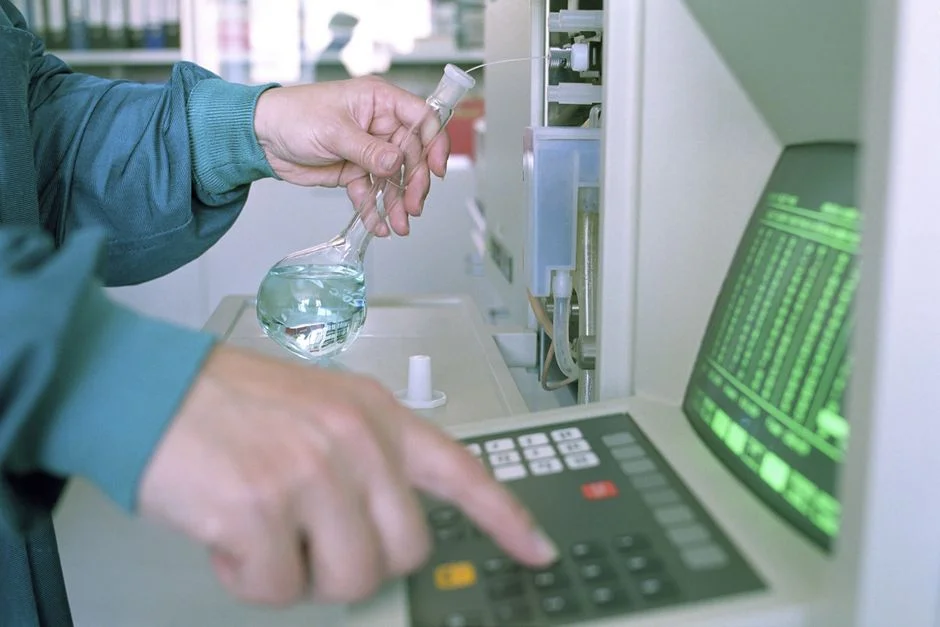
Filtration is the final physical polishing barrier before the sewer connection when the local limit and residual-solids risk justify it. Genesis Water Technologies identifies filtration as the treatment step that removes specific organic matter and suspended particles after clarification. A multi-media or other suitable filter should therefore be selected from the permit requirement, expected carryover and backwash implications.
Require final TSS monitoring even when upstream clarification appears effective. Chemical underdose, hydraulic surge, poor floc settleability and filter failure can produce particulate carryover. Confirm the filter medium, filtration rate, backwash trigger, wash-water recovery and the point at which an effluent-quality alarm diverts or stops discharge.
Where its sequence matches the actual plant requirements, evaluate the integrated JY water-purification unit. HydropureWater describes coagulation, flocculation, sedimentation, filtration and automatic backwash in one unit, reports mine-water-treatment capacities from 10–200 m³/h, and states that its surface-water treatment can reduce turbidity below 3 mg/L. These are supplier-reported product figures, not evidence that the unit will meet a Boaz sewer permit without site testing.
Add chlorine-dioxide disinfection only if the sewer-use ordinance, collection-system configuration or industrial-user permit requires microbial control. A mining discharge does not automatically require disinfection. The same rule applies to the multi-media filtration equipment: equipment capability does not establish a permit requirement.
Clarifier or DAF sludge must be managed as a waste stream. Characterize it, select an authorized disposal route and use a plate-and-frame press where dewatering is required. HydropureWater reports filter-press filtration areas from 1–500 m² with manual, hydraulic and fully automatic PLC-controlled operation, but the correct area requires sludge solids, feed rate and cycle-time data.
Compliance must be demonstrated at the actual discharge point under the POTW's required monitoring protocol. Clear overflow and a passing sample from another location do not replace point-of-connection evidence.
Build a Pretreatment Acceptance Test the POTW Can Audit
Acceptance testing converts a treatment proposal into documented operating evidence before routine sewer discharge begins. EPA identifies the industrial user's point of connection to the POTW collection system as the local-limit enforcement point, so the sampling plan must connect equipment performance to that location and the permit's monitoring instructions.
| Package component | Minimum record |
|---|---|
| Design basis | Approved process train, permit limits, source characterization and peak-flow basis |
| Chemical safety | Handling plan, storage controls, secondary containment, training and emergency procedures |
| Instrumentation | Calibration records, pH and flow verification, pump records and alarm tests |
| Monitoring | Sampling plan, chain of custody, approved methods, frequency and reporting schedule |
| Performance | Startup sequence, process-water test results, final samples and POTW acceptance |
| Contingency | Failed-sample response, bypass protocol, stop-discharge conditions and escalation plan |
Specify automatic alarms and fail-safe responses for pH excursions, chemical-feed failure, high flow, clarifier carryover and filter differential-pressure or effluent-quality triggers. Establish a bypass prohibition or documented bypass response consistent with the industrial-user permit and sewer-use requirements.
The startup sequence should progress through dry commissioning, water flush, chemical calibration, empty-receiver testing, controlled process-water introduction, performance sampling and POTW acceptance before routine discharge. Keep records of pH, flow and every required pollutant against the applicable categorical and local requirement. The more stringent applicable requirement governs the design basis.
For failed samples, investigate the mass balance, chemical dose, hydraulic loading, sampling error, bypass events and equipment performance before discharge resumes. Comparable documentation formats are discussed in the Payette food and beverage pretreatment workflow and the Franklin chemical-plant compliance guide.
Questions to Ask Before Ordering a Treatment System
A credible bid must identify the permit basis before presenting equipment. Ask each bidder to name the controlling POTW, applicable categorical subcategory, proposed permit limits and the permit-design basis. If the proposal cannot trace these requirements to current local documents, the equipment selection is premature.
Request the process basis, source characterization, peak-flow basis, chemical-consumption assumptions, mass balance and expected performance calculations. A bid based only on average daily flow is incomplete because it does not show how batch discharges, clean-outs or shock loads will be controlled.
Require a written allocation of responsibility for pretreatment, chemical storage, secondary containment, sludge dewatering, final sampling, controls, commissioning and operator training. Treat comprehensive pretreatment and automatic dosing as separate scopes unless the proposal expressly prices both. The effluent-treatment buyer guide provides additional procurement checks.
Ask for comparable mining or metals service and an explanation of how variability and upset conditions were managed. Confirm that final sizing and performance guarantees remain conditional on site-specific wastewater testing and current POTW requirements. The supplied research does not support a universal turnkey capacity or cost for a Boaz mining plant.
Frequently Asked Questions
What does a mining plant near Boaz need to know before requesting a treatment-system price?
The supplier needs the controlling POTW requirements, current sewer-use ordinance and industrial-user permit; source-separated influent analyses; average and peak flows; contaminant and solids loading; available footprint; required treatment stages; sludge characteristics; electrical and controls requirements; and the expected disposal route for treatment residuals. The supplied research provides no defensible universal price for a Boaz-area mining plant. Capital cost depends on flow, contaminant loading, chemistry, local limits and sludge handling, while operating cost depends on reagent demand, power, solids removal, backwash and dewatering. Request a scope-based quotation with these inputs identified.
How should DAF and lamella capacity be sized for a mining wastewater plant?
Size from representative peak flows and loadings, not a generic supplier range. HydropureWater reports a DAF range of 4–300 m³/h, but that is a supplier-reported product span rather than the site's design flow. The bidder needs the average flow, peak-flow profile, batch duration, solids and oil loading, required removal, chemical assumptions, footprint and operating mode. Lamella selection additionally requires expected metal-hydroxide floc characteristics and sludge handling. Jar and pilot testing should support the final selection.
What delivery lead time should a buyer require from a treatment-system supplier?
The supplied research does not support a fixed lead time for a Boaz-area project. Require the bidder to identify dependencies for manufacturing, civil work, electrical integration, controls, chemical-system commissioning, trial runs and POTW acceptance. Also clarify which engineering, permits, operator training and performance testing are included. A production date alone does not demonstrate when the plant can lawfully begin routine discharge.
What are the main compliance risks when discharging mining wastewater to a POTW?
The highest-risk errors are applying the wrong sewer authority, treating a generic industry limit as the local requirement, overlooking an applicable categorical standard, designing only for average flow, or commissioning without representative wastewater. A separate risk is treating equipment capability as proof of compliance: the final sample must be collected at the required point and under the POTW's monitoring protocol. Corrective work should be completed after any failed sample before routine discharge resumes.
Related Equipment
- DAF system for mining wastewater solids removal — specifications, capacity range, and technical data