What PAC Dosing Does in Pharmaceutical Wastewater
In this article, PAC means powdered activated carbon, following the terminology used by Gericke in its modular PAC dosing system overview; S5 uses PAC for polyaluminum chloride, which is a separate coagulation application. Powdered activated carbon adsorbs pharmaceutical residues and other dissolved organic contaminants onto its surface, after which the PAC-bound material must be separated from the water stream. This distinction matters because powdered activated carbon and liquid polyaluminum chloride should not be evaluated as interchangeable technologies.
Pharmaceutical residues can interfere with biological treatment. A study published by Oxford University Press reported that activated-sludge bacteria did not adapt to degrade oseltamivir (Tamiflu®) and that pharmaceutical input was associated with loss of nutrient-removal performance. That finding identifies a treatment risk; it does not establish that powdered activated carbon will remove every pharmaceutical compound under every operating condition.
Powdered activated carbon is generally used for pharmaceutical micropollutant adsorption, whereas polyaluminum chloride is used for coagulation and floc formation. The latter may support solids separation, but the supplied research does not establish pharmaceutical-micropollutant removal by liquid PAC. For a pharmaceutical wastewater application, specify the target compounds, matrix, required removal, and downstream solids-handling route before selecting equipment. The broader context of COD removal treatment options should not be used to import performance values from a different wastewater to the pharmaceutical case.
Evidence from Pharmaceutical and Full-Scale Wastewater Trials
The published evidence supports powdered activated carbon as a compound- and matrix-dependent treatment, not a universal performance guarantee. Two studies provide useful benchmarks with materially different configurations and wastewater matrices.
| Matrix | Treatment configuration | PAC or pretreatment conditions | Measured result | What the result proves—and does not prove |
|---|---|---|---|---|
| Pharmaceutical synthesis wastewater | Powdered activated carbon adsorption before and after Fenton oxidation | Fenton oxidation was used in the studied treatment sequence | Fenton oxidation reduced COD by 84% and reduced etodolac to 0.7 mg L−1, according to Wiley’s study Removal of Organic Matter and Etodolac from Pharmaceutical Industry Wastewater by PAC Adsorption, published in 2017 | It demonstrates treatment of wastewater collected from the final stage of etodolac chemical synthesis. It does not establish that every pharmaceutical stream will achieve the same result. |
| Pharmaceutical synthesis wastewater | PAC adsorption equilibrium study | Optimum equilibrium conditions reported as t = 16 hours and m = 10 g L−1 | These conditions were identified for the wastewater studied by Wiley in 2017 | They are case-study values, not default equipment-sizing values. The tested matrix, pretreatment, and target compound must be represented in site trials. |
| Municipal oxidation-ditch activated sludge | PAC added directly to a full-scale activated-sludge reactor | Three-week trial; DOC-normalized PAC doses of 0.7–2.6 mgPAC/mgDOC and highlighted doses of 10–25 mg/L | Elsevier’s 2022 study reported 63–83% carbamazepine reduction and 67–69% diclofenac reduction; its highlights gave a broader 63–84% range for discharged carbamazepine and diclofenac at 10–25 mg/L | It shows compatibility with the tested municipal activated-sludge process. It does not transfer directly to an isolated, high-strength pharmaceutical wastewater. |
The municipal trial also reported no energy-consumption increase, no interference with nitrification, oxidation-reduction potential or dissolved oxygen in the oxidation ditch, and no impact on effluent turbidity or mixed-liquor suspended-solids settleability. The trade-off was a 7–9% increase in final sludge production. After dosing stopped, PAC remaining in return sludge showed residual adsorption capacity for some pharmaceutical compounds, but the study does not support a general claim about how long that capacity persists or what performance can be expected.
How a Pharmaceutical PAC Treatment Train Works
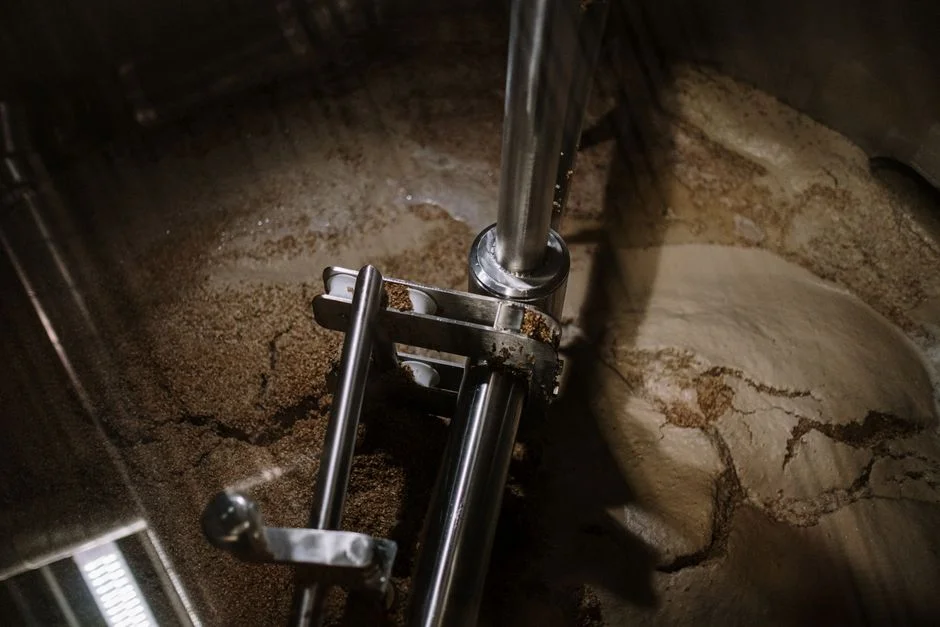
A reliable pharmaceutical PAC treatment train combines characterization, controlled powder preparation, effective adsorption contact, solids separation, sludge management and performance verification. Skipping any one of these steps leaves a major performance or operating-cost variable unresolved.
- Characterize the wastewater. Request the target pharmaceutical compounds, expected concentrations, COD, organic matrix, pH, flow profile, toxicity, and applicable effluent or reuse targets. Include representative samples and a flow profile that captures batch discharges as well as steady flow.
- Select pretreatment. The Wiley study demonstrates the relevance of Fenton oxidation for a specific etodolac synthesis wastewater: its COD reduction and resulting etodolac concentration were measured after that pretreatment. It does not show that Fenton oxidation is necessary for every pharmaceutical stream.
- Prepare and store PAC. Select the powder storage format according to available space, storage duration, delivery logistics and operator capability. The powder-handling system must deliver a consistent feed rather than relying on uncontrolled manual dosing.
- Meter the dose. Use measured wastewater flow to pace PAC addition, with configurable operating limits, deviation monitoring and a defined response when the flow signal or feeder condition is abnormal.
- Disperse and contact. Mixing must distribute PAC uniformly and create a homogeneous stream before separation. Gericke states that its Vortex mixing vessel supports effective dispersion and homogeneous mixing, while also warning that dosing fluctuations can affect removal, operating cost and process stability.
- Separate PAC-bound solids. Provide solids capture downstream of the contact stage. Depending on the selected process, a DAF system for PAC solids separation or a lamella clarifier for PAC floc separation may require evaluation. The choice must follow from the wastewater characteristics and validated separation performance.
- Manage sludge. Include the additional solids load in the downstream sludge route. The 7–9% sludge-production increase reported in Elsevier’s 2022 municipal trial is directly relevant to pharmaceutical sludge management planning.
- Verify and optimize. Measure pharmaceutical removal, COD, solids capture and sludge generation before fixing the operating setpoint. Gericke’s industrial-scale testing scope covers machine testing, process verification, performance evaluation, product trials and operator training.
The solids-handling scope may include a sludge dewatering filter press. It should not be specified from the adsorption stage alone: feed solids concentration, dewatering demand, operating hours and cake-disposal route are separate design inputs.
Compare the Main PAC Dosing-System Architectures
No single powder-storage format is universally preferable; the correct configuration follows from the site’s flow, space, delivery, staffing and maintenance constraints. Powdered activated carbon systems should be evaluated as an integrated package because storage, conveying, dosing, mixing and controls each affect the actual delivered dose.
| Architecture | Feed and dose control | Footprint and installation | Storage and exposure | Maintenance and changeover | Best-fit application |
|---|---|---|---|---|---|
| Horizontal powder silo | Powder feed through a controlled feeder into the PAC make-up and mixing route | Orientation must be matched to available building geometry and handling access | Enclosed powder storage; delivery, dust control and spill containment remain design requirements | Access to feeders, filters and drive components must be retained | Sites with space and access suitable for a horizontal silo |
| Vertical powder silo | Powder feed through a controlled feeder with flow-paced controls | Useful where vertical space and structural conditions are available; the complete package still requires installation review | Enclosed storage with site-specific dust and spill provisions | Changing storage format requires a defined powder changeover procedure | Sites able to accommodate vertical storage and service access |
| Big Bag storage | Bag-based powder feed into the controlled dosing system | Generally suited to a defined floor area and material-handling route | Requires bag handling, dust control, spill response and defined emptying procedures | Bag changeover and residual-material management must be included in the operating procedure | Lower-volume or operationally simpler supply arrangements |
| Liquid polyaluminum chloride | Liquid chemical metering with flow-paced controls; this is coagulation, not powdered activated carbon adsorption | Eliminates powder dissolution and make-up equipment but requires compatible liquid storage and pumping | No powder dust exposure; liquid storage remains subject to chemical compatibility and containment requirements | Requires metering-pump and liquid-delivery maintenance | Sites seeking coagulation for solids capture where pharmaceutical adsorption is not the stated objective |
| Activated-sludge PAC addition | Powder PAC is dosed into the biological reactor | Can retrofit the existing treatment train without a separate post-adsorption clarification stage | Powder handling and dust controls are still required | Introduces PAC into the biological solids and sludge-management system | Municipal or mixed networks with recalcitrant compounds, subject to site validation |
Gericke identifies horizontal silos, vertical silos and Big Bag arrangements, plus containerized or existing-facility installation. A compact modular layout may reduce building-height and civil-work demands, but it does not guarantee that every installation avoids modification. By contrast, Elsevier’s 2022 study characterized PAC addition to activated sludge as a lower-investment municipal option with favorable cost positioning and no energy-consumption increase, while also recording the sludge-production penalty. That configuration should not be assumed suitable for a high-strength pharmaceutical process stream.
Where granular activated carbon is considered as an alternative, compare it separately: it is a fixed or packed adsorbent route rather than a powder-dosing system. The decision should address regeneration, bed capacity, transfer logistics and solids handling rather than treating the two media as interchangeable.
Specify Controls, Mixing, Safety, and Maintenance
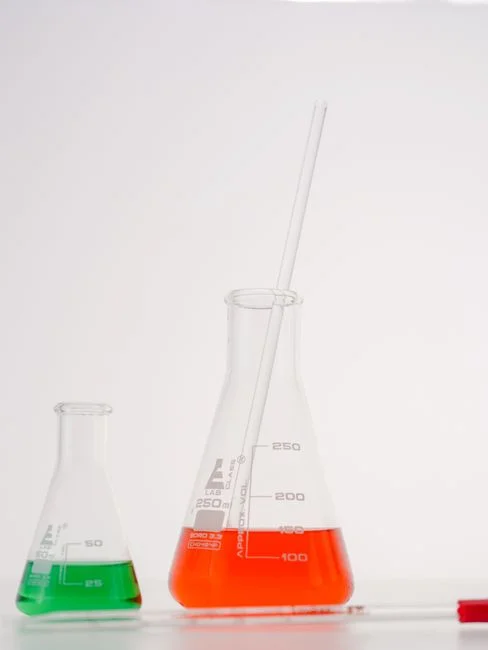
The dosing system should control the PAC delivered to the wastewater, not merely pump a chemical at a preset rate. A flow-paced control architecture, visible failure states and maintainable powder handling are necessary to make site trials transferable to routine operation.
| Specification area | Minimum procurement requirement | Supplier evidence requested | Acceptance or verification action |
|---|---|---|---|
| Dose control | Control linked to measured wastewater flow, operator-configurable limits, flow deviation indication and a defined loss-of-signal response | Controls narrative, signal list, alarm matrix, fail-safe behavior and control philosophy | Simulate flow changes and instrument failures; verify commanded dose, actual feeder response and event recording |
| Powder preparation | Defined storage, conveying, feeding and mixing functions within one mechanical scope | Feed-rate range, drive data, filter and wear-part details, calibration method and available configurations | Run the selected PAC under representative feed conditions and record consistency |
| Mixing | Uniform dispersion before separation, with an identified mixing arrangement and maintained access | Mixer arrangement, impeller or recirculation arrangement, and commissioning procedure | Observe distribution and sample the mixed stream for solids and contaminant consistency |
| Electrical and process safety | Dedicated electrical sections, electrical isolation, fail-safe shutdown, local access, dust control and spill containment | Electrical drawings, risk review, protective-device list and emergency procedure | Witness shutdown tests, access checks and containment provisions |
| Powder changeover | Safe procedure for silo or bag replacement without uncontrolled dust release or dose interruption | Written method, required tools, isolation steps and waste handling | Witness a representative changeover during commissioning |
| Maintenance | Safe access to feeders, filters, mixers, sensors and drives | Maintenance manual, inspection intervals, spare-parts list and service-response commitment | Complete an operator walkdown and maintenance demonstration |
| Downstream sludge | Defined route for PAC-contaminated solids, including concentration, dewatering demand and disposal | Mass-balance inputs and interface drawings for solids handling | Measure solids generation during trial and confirm downstream capacity |
A PLC-controlled chemical dosing system can serve as the control and injection component, but it is not a substitute for PAC storage, conveying, make-up and mixing. Require the full mechanical and controls scope in the offer. For the sludge route, a sludge dewatering filter press should be assessed against measured solids characteristics rather than assumed sufficient.
Gericke identifies dedicated electrical sections, process monitoring, commissioning support, maintenance services, spare-parts availability and operator training as lifecycle requirements. These deliverables belong in the commercial scope and acceptance plan, not in an untested promise of future support.
Build a Site-Specific Dose and Performance Validation Plan
Published removal percentages are benchmarks rather than universal acceptance criteria. The 2017 Wiley etodolac result used 10 g L−1 and 16 hours, while the 2022 Elsevier municipal trial used 10–25 mg/L or DOC-normalized doses of 0.7–2.6 mgPAC/mgDOC in an activated-sludge configuration. Neither dose nor contact time can be transferred directly to another wastewater.
| Validation stage | Required activity | Recorded output | Decision supported |
|---|---|---|---|
| Representative sampling | Sample the actual pharmaceutical wastewater and characterize target compounds, COD, organic matrix, pH, toxicity and flow variability | Validated influent dataset and sample representativeness record | Whether the proposed treatment train and analytical programme address the real stream |
| Baseline | Establish untreated and pretreatment-only performance for each target compound | Baseline concentration and removal profile | Attribution of performance to PAC rather than pretreatment or matrix change |
| Stepwise dose testing | Test a sequence of PAC doses under controlled flow and wastewater composition | Removal, COD, residual solids and PAC consumption | Provisional operating dose and expected operating-cost sensitivity |
| Contact-time confirmation | Confirm the contact period required for the selected configuration | Compound and COD response against contact time | Contactor and mixer sizing |
| Separation efficiency | Measure solids capture downstream of PAC contact and identify carryover | Separated-solids balance and residual suspended material | DAF, lamella clarification or other separation requirements |
| Pharmaceutical analysis | Analyse the target compounds rather than inferring removal from COD | Compound-specific inlet and outlet concentrations | Whether the treatment objective is met |
| Sludge generation | Measure solids capture, sludge production and dewatering demand | Sludge mass balance and downstream handling requirement | Residual solids-management cost and capacity |
| Final setpoint | Confirm the selected dose, contact time, mixing and solids-capture settings | Signed operating window and exception response | Acceptance and handover |
During the trial, log wastewater flow and composition, target compound, organic matrix, pH, PAC condition, feed consistency, mixing effectiveness and solids capture. Acceptance criteria should come from the site permit, reuse specification, pretreatment agreement and validated treatment objective. The supplied research does not establish a universal discharge limit for PAC-treated pharmaceutical wastewater, so no external regulatory limit should be imported without jurisdiction-specific review.
Gericke’s testing and commissioning programme provides a useful procurement checklist: request machine testing, process verification, performance evaluation, product trials, commissioning support and operator training. For broader treatment selection, the municipal wastewater COD treatment methods can help frame biological compatibility, but site wastewater data remains the controlling evidence.
Choose the Right System Using a Procurement Decision Framework
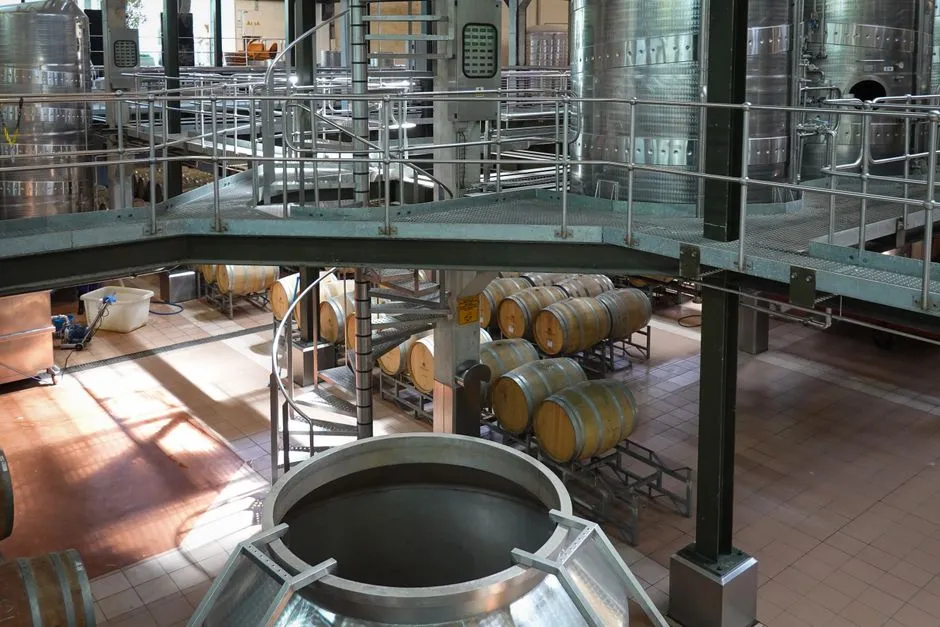
A pharmaceutical PAC system should be shortlisted from the treatment objective and site constraints, not from a published removal percentage alone. The two supplied studies support two different decision paths, neither of which is universal.
| Site condition | Initial architecture to evaluate | Conditions before selection | Main procurement risk |
|---|---|---|---|
| Isolated, high-strength pharmaceutical wastewater with defined target compounds | Dedicated PAC adsorption, mixing and downstream solids separation | Representative wastewater testing and an agreed effluent or reuse objective | Over- or under-sizing from transferring a study dose to a different matrix |
| Municipal or mixed network with recalcitrant pharmaceutical compounds | PAC addition to activated sludge | Confirmation that biological compatibility, sludge handling and compound control are acceptable | Additional sludge production and uncertain transfer of municipal results to a changed matrix |
| Objective is coagulation rather than pharmaceutical adsorption | Liquid polyaluminum chloride dosing followed by solids separation | Clarification that pharmaceutical removal is not being credited without evidence | Technology mismatch and unsupported performance claims |
Issue the same procurement package to each candidate. It should include design and peak flow, wastewater analysis, required compound removal, available footprint and height, storage duration, utility limits, sludge-disposal route, operator capability and local service coverage. The manufacturer should also state whether its offer is a complete modular package or a collection of separately engineered components.
Request a total-cost comparison covering PAC consumption, delivery and storage, labor, energy, maintenance, wear parts, downstream sludge handling, testing, commissioning and spare parts. Elsevier’s 2022 study supports lifecycle cost comparison and found PAC addition to the activated-sludge reactor favorable compared with literature data for PAC or granular activated carbon post-treatment and similar to post-ozonation, but it does not provide a universal price for a pharmaceutical PAC dosing system.
For each supplier, require performance assumptions, guarantee boundaries, trial method, controls architecture, powder-handling safeguards, acceptance tests, commissioning deliverables, training, warranty and spare-part response times. Gericke’s integration argument is relevant here: combining storage, conveying, dosing, mixing and controls can reduce interface burden, installation time and project risk. It should be evaluated as a documented deliverable, not accepted as a procurement assumption. A broader site-design reference is available in the industrial effluent treatment plant design.
Frequently Asked Questions
What PAC dose and contact time should be used for pharmaceutical wastewater?
No single dose or contact time can be specified from the supplied studies. Wiley’s 2017 etodolac study reported optimum equilibrium conditions of 10 g L−1 and 16 hours for wastewater collected from the final stage of etodolac chemical synthesis. Elsevier’s 2022 municipal trial used 10–25 mg/L PAC, or 0.7–2.6 mgPAC/mgDOC, in an activated-sludge reactor with a different matrix and treatment configuration. Use those results as trial references, then establish the setpoint with representative site wastewater.
How should the budget for a pharmaceutical PAC dosing system be prepared?
Ask suppliers for a total-cost comparison rather than a system price alone. It should include PAC consumption, powder delivery and storage, labor, energy, maintenance, wear parts, downstream sludge handling, testing, commissioning and spare parts. The supplied research provides no universal equipment price for a pharmaceutical PAC dosing system, so any budget should state its flow basis, wastewater assumptions, storage duration, solids route and treatment objective.
Which information should be requested before selecting a supplier?
Require evidence from the actual wastewater, a complete mechanical and controls scope, powder-handling safeguards, lifecycle support, commissioning and operator training. Ask for a site trial method, acceptance criteria, controls architecture, guarantee boundaries, spare-parts commitment, warranty and service-response times. A supplier should also identify every performance assumption that depends on wastewater composition, mixing, contact time and downstream solids capture.
What compliance risk remains after installing PAC dosing?
Compliance remains site-specific because performance depends on the permit, target compounds, wastewater matrix, dose, contact time and solids separation. The supplied studies do not establish a universal discharge limit for PAC-treated pharmaceutical wastewater. Define acceptance against the applicable permit, reuse specification and pretreatment agreement, and verify compound-specific removal rather than using COD reduction as a substitute.
Related Equipment
- DAF system for PAC solids separation — specifications, capacity range, and technical data