Why Landfill Leachate COD Is Difficult to Remove
Landfill leachate COD varies with refuse age and local conditions: the Frontiers in Environmental Science review published in 2024 reported 74,853 mg/L COD for young leachate and 3,098 mg/L for mature leachate, while Chinese samples ranged from 2,000 to 62,000 mg/L and averaged 19,250 mg/L. Chemical oxygen demand measures the oxidation demand of a sample; equal COD concentrations can contain different proportions of biodegradable and refractory organic matter. That distinction determines whether biological conversion, membrane separation or COD polishing can deliver the required outcome.
The 2024 Frontiers review also identifies ammonium nitrogen and heavy metals alongside refractory organic matter. A COD-only specification can therefore miss nitrogen limits, toxicity, residual solids, salinity effects and membrane or biological fouling. The objective must also state whether the water will be discharged, reused or treated to a defined intermediate standard.
Request characterization across leachate age, refuse composition, precipitation, seasonal temperature, flow and dilution. These inputs affect biological loading, equalization requirements, oxidation demand and the fouling burden placed on downstream equipment. A rotary mechanical bar screen can protect downstream treatment from debris, but it does not remove dissolved COD.
A single headline removal percentage is a weak basis for procurement. The appropriate landfill leachate treatment plant is defined by the COD fraction being removed, the evidence boundary, seasonal feed variability and the receiving-water or reuse requirement.
COD Removal Technologies Compared
Each process has a distinct role in a landfill leachate wastewater COD removal train: biological treatment converts biodegradable material, membranes retain dissolved or suspended contaminants, oxidation changes residual organics, and adsorption captures compounds that can be removed from the liquid phase. These technologies are often sequenced to address varying organic fractions.
| Technology | Reported performance and scope | Primary procurement issue |
|---|---|---|
| Activated sludge | 60%–80% COD removal, according to the Frontiers review, 2024 | Biodegradability, biological loading, temperature and solids separation |
| Anaerobic digester | 70%–85% COD removal, according to the Frontiers review, 2024 | Start-up, alkalinity, temperature and residual soluble COD |
| Activated carbon | 85%–95% COD removal in the scope reviewed by Frontiers, 2024 | Media replacement or regeneration and breakthrough monitoring |
| Ozonation | 70%–85% COD and 80%–90% color removal in the Frontiers review, 2024 | Reagent demand, energy and by-product management |
| Fenton treatment | 75%–90% COD and 80%–95% organic-pollutant removal in the Frontiers review, 2024 | Reagent use, sludge production and residual chemistry |
| Reverse osmosis | 95%–99% removal of dissolved solids, heavy metals and organics in the Frontiers review, 2024 | Fouling, concentrate disposal, pretreatment and energy use |
For biological configurations, the activated-sludge review published through PMC in 2018 reports that UASB plus A/O achieved 80%–92% COD removal. Its MBR cases included one above 95% and another at 98.1%–99.25%; these are individual case results, not performance bands that every commercial system will reproduce.
An integrated MBR membrane bioreactor combines biological conversion with membrane solids separation. An industrial reverse osmosis system can provide broad contaminant separation, but the review’s 95%–99% value is not a COD-specific guarantee. Chemical addition should be tied to the selected train; an automatic chemical dosing system supports pH adjustment, coagulation or oxidation rather than replacing those processes.
Activated carbon and other adsorbents can polish residual COD but require replacement or regeneration planning. Oxidation processes require reagent, energy and by-product management. Neither should displace biological pretreatment unless site-specific testing demonstrates that the sequencing meets the permit and operating objectives.
Build a Treatment Train Around the COD Fractions
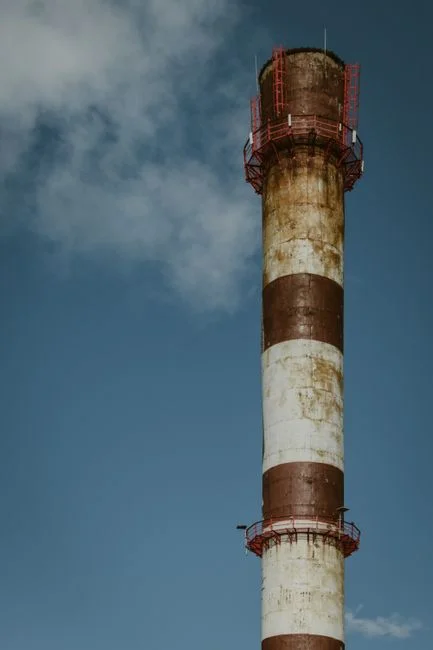
A defensible train removes contaminants in the order that protects biological and polishing equipment rather than placing a membrane or adsorbent directly on raw, variable leachate. Implementing a multi-stage approach ensures each technology operates within its optimal efficiency range.
- Characterize and equalize. Establish seasonal COD, BOD, ammonia, suspended solids, pH, temperature, salinity or chloride, metals where relevant, flow and toxicity.
- Remove debris and suspended material. Screen the feed and remove solids that could overload biological systems or foul downstream membranes.
- Reduce biodegradable COD biologically. Match anaerobic, aerobic, UASB A/O treatment or another biological configuration to leachate age, temperature and biodegradability.
- Separate biomass. Use settling or membrane separation according to the selected biological process and the solids carried into polishing.
- Polish residual refractory COD. Apply oxidation, adsorption or membrane treatment only where the discharge or reuse objective requires it.
A DAF pretreatment system can remove suspended solids, oil and grease, FOG and colloidal material. It is a pretreatment and solids-management step, not the principal process for dissolved biodegradable COD.
An MBR follows biological treatment when the process needs both conversion and membrane solids separation. For reverse osmosis, upstream biological treatment and effective solids removal are central to fouling control. The RO review value covers dissolved solids, heavy metals and organics collectively; it cannot be presented as an outlet COD guarantee.
Chemical dosing belongs only where the chosen process requires coagulants, pH adjustment or oxidation chemicals. An automatic dosing system enables controlled application, but dose selection and chemical demand still require site data and pilot evidence.
What Adsorbent Research Can—and Cannot—Prove
The 2026 mature-leachate study provides useful comparative batch evidence, but its optimized conditions also define a substantial scale-up gap. Moving from laboratory bench tests to full-scale operations requires addressing continuous-flow variables.
| Material | Optimized condition | Color removal | COD removal |
|---|---|---|---|
| Calcined paper mill sludge | pH approximately 7; 80 g/L adsorbent; 90 minutes; 250 rpm | 98% | 92% |
| Calcined paper mill sludge–montmorillonite composite | Same optimized conditions | 96% | 76% |
| Montmorillonite | Same optimized conditions | 50% | 60% |
Scientific Reports, published 2026-09-03, reported these results from batch experiments with mature landfill leachate. The study found that surface chemistry and site accessibility were more influential than surface area alone. It also stated that empirical kinetic and isotherm fits were not treated as proof of a specific adsorption mechanism. A good fit therefore cannot substitute for continuous-flow removal, exhaustion and regeneration data.
Two scale-up constraints remain explicit: an adsorbent dosage of 80 g/L and energy-intensive calcination. The authors identified dosage reduction, regeneration, continuous-flow operation and techno-economic assessment as unresolved work. These findings justify a pilot, not a plant-performance guarantee for a sludge-based adsorbent.
The broader Molecules review, published 2026-08-20, describes sludge-based adsorbents as promising and relates their physicochemical properties to contaminant removal and circular-economy objectives. That review also calls for further development and large-scale implementation. For solids handling after adsorbent use, a plate-and-frame filter press may be evaluated, but the filter press does not demonstrate that the adsorbent will meet a continuous-flow COD limit.
Use the batch results to rank materials and formulate a test program. Do not use them to accept a guaranteed outlet COD without continuous-flow validation, breakthrough monitoring, regeneration testing and a defined media-disposal route.
Specify, Pilot and Buy a COD Treatment System
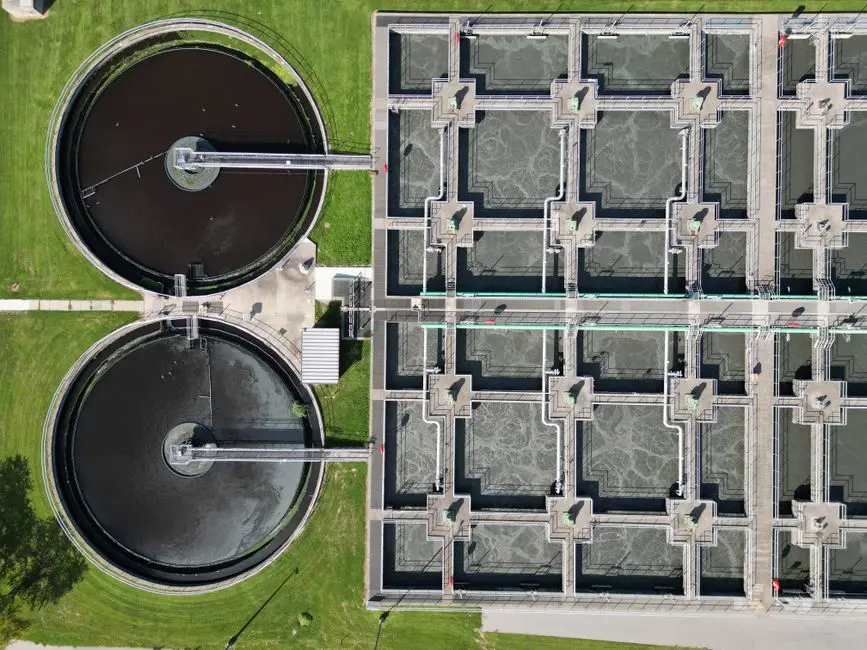
Supplier selection should be based on a documented treatment boundary and site evidence, not a catalogue percentage. Start with a site-specific characterization covering COD, BOD, ammonia, suspended solids, salinity or chloride, pH, temperature, relevant metals, seasonal flow and toxicity indicators.
Require every bidder to state whether its quoted COD reduction applies to raw leachate, biologically treated effluent, membrane permeate or final discharge. Ask for hydraulic and operating evidence, membrane-fouling controls, chemical or media consumption, sludge generation, cleaning access, automation scope, redundancy and lifecycle cost. Where price is requested, ask for the influent basis, flow profile, effluent duty, concentrate route, media or chemical replacement interval, installation boundary and acceptance test. The supplied research contains no defensible universal equipment price, so any budget must be built from those project-specific inputs.
Continuous-flow validation is essential when selection depends on the 2026 adsorbent findings because the reported results came from batch experiments. A pilot should use representative leachate, establish dosage and breakthrough, test regeneration, track residual COD and verify handling of the spent adsorbent.
| Published case | Reported conditions and result | Correct procurement use |
|---|---|---|
| UASB plus A/O | 23.5 kg COD/m³·d volumetric loading, 1.25-day hydraulic retention time and 80% COD removal in the activated-sludge review, 2018 | Case-study screening evidence, not a default loading rate |
| Anaerobic MBR | Average 62% COD removal at 4.87 kg COD/m³·d in the activated-sludge review, 2018 | Comparison case with a different feed and operating condition |
For a biological-plus-membrane concept, use the integrated MBR membrane bioreactor and industrial reverse osmosis system only after the bid defines biological duty, solids separation, pretreatment, concentrate handling and performance tests. The industrial wastewater COD removal guide offers a related framework for separating biological conversion from advanced polishing, while the MBR effluent quality comparison provides context for membrane alternatives.
Frequently Asked Questions
What should a landfill leachate COD removal budget include?
Request a project-specific quotation based on leachate flow and composition, required outlet COD, biological loading, pretreatment, solids handling, membrane or polishing requirements, chemicals, media replacement or regeneration, concentrate and sludge routes, installation, automation, validation and lifecycle operating costs. The supplied research provides no universal price, so compare offers only after each supplier uses the same duty and performance boundary.
How should a buyer select between biological, membrane and oxidation equipment?
Assign each process its required function. Biological treatment should convert the biodegradable COD fraction; membranes separate solids or dissolved contaminants; oxidation addresses susceptible residual organics; adsorption captures selected compounds. Compare suppliers by the stage they cover, the influent and outlet basis for their claims, fouling controls, consumables and acceptance criteria. The industrial wastewater COD removal guide should not replace leachate-specific design data.
Can the 2026 sludge-based adsorbent results be used to size a full-scale unit?
No. The 2026 Scientific Reports results were obtained under batch conditions using 80 g/L adsorbent, 90 minutes and 250 rpm at approximately pH 7. Use them to select materials for a continuous-flow pilot, not to establish full-scale dosage, breakthrough, regeneration or guaranteed outlet COD.
What determines whether the treatment train meets a discharge or reuse requirement?
The applicable permit and the receiving-water or reuse standard determine the required effluent quality. The supplied research supports comparisons among treatment methods but does not establish a universal numerical COD limit. Define the