What Auckland Manufacturers Must Prove Before Discharging Trade Waste
Auckland manufacturers generally treat high-COD trade waste with a staged process: remove or recover bulk solids, fats, oils and oil and grease; equalise the flow; reduce soluble organic load through biological treatment; clarify and polish the effluent; then monitor it against Auckland Council’s trade-waste requirements before sewer discharge. Equipment is selected from the waste characteristics, not COD alone. PHF Science notes that industrial effluent admitted as trade waste can raise heavy-metal concentrations and that municipal processes may not remove every contaminant, so pretreatment and monitoring must address the full acceptance criteria.
The governing local source to verify is Auckland Council’s Trade Waste Bylaw 2013. The supplied Auckland Council page returned HTTP 406, so this article does not reproduce numerical acceptance limits that could not be independently retrieved. A proposal should obtain the current bylaw and the applicable sewer-acceptance schedule directly from Auckland Council and record the version and date used.
COD is one parameter in a broader acceptance assessment. Flow and discharge timing, pH, suspended solids, oil and grease, metals and other contaminants may independently determine whether discharge is acceptable. PHF Science’s Assessment of the presence of heavy metals in municipal wastewater in Aotearoa New Zealand concludes that currently used treatment processes do not remove all heavy metals; therefore, a lower COD result does not prove that the trade-waste profile is acceptable. The same assessment notes that territorial authorities may permit industrial effluent into municipal networks as trade waste, making pre-discharge agreement essential.
| Document or input | What it must establish | Procurement consequence |
|---|---|---|
| Current sewer-acceptance schedule | Applicable analytical limits, prohibited contaminants and any site-specific conditions | Defines the final treatment and polishing objectives |
| Trade-waste consent | Authorised discharge point, operating conditions, monitoring and reporting duties | Confirms whether direct sewer discharge is permissible |
| Monitoring requirements | Parameters, methods, locations, frequency and responsible party | Sets the compliance-monitoring scope |
| Flow profile | Average and peak discharge, duration, operating pattern and discharge timing | Determines equalisation, hydraulic treatment and peak-flow strategy |
| Prohibited-contaminant list | Materials excluded from sewer discharge | Drives source control, segregation and pretreatment selection |
For metals, refer to industrial heavy-metal removal methods. If sulfide is present, use a separate assessment of industrial wastewater sulfide removal rather than assuming that general biological treatment will resolve it.
Characterise the High-COD Effluent Before Choosing a Process
A single inlet sample is insufficient for equipment selection because production, cleaning and discharge cycles can change both organic load and flow. Sampling should cover representative operating periods and identify when shock loads, cleaning chemicals or concentrated product losses occur. The sampling plan should state sample points, timing, flow weighting where relevant, laboratory methods and which operating conditions each sample represents.
The waste analysis should cover flow, COD or BOD, pH, suspended solids, oil and grease, temperature, nutrients and conductivity, together with contaminants relevant to the industry. If the manufacturer handles metals, solvents or sulfide-bearing streams, add those parameters and test the fractions that the council or proposed treatment process will regulate. No generic acceptance limit should be substituted for the applicable Auckland requirement.
| Design input | Decision supported | Minimum evidence to obtain |
|---|---|---|
| Flow profile | Equalisation and hydraulic sizing | Representative flow records and identified discharge timing |
| COD or BOD | Organic-load reduction | Representative analysis for relevant production and cleaning conditions |
| Oil and grease | Front-end recovery and biological protection | Representative oil and grease concentrations |
| Suspended solids | Solids removal and sludge generation | Representative solids analysis |
| pH and temperature | Chemical control and biological suitability | Operational variation, not one grab result |
| Nutrients and conductivity | Biological treatment and chemical-dose feasibility | Site-specific analysis |
| Industry-specific contaminants | Source control, metals removal or process exclusion | Identified species, total or dissolved form, and council relevance |
COD mass loading must also be distinguished from concentration. Equalisation may smooth flow, but it does not change the contaminant load; biological suitability depends on whether the organic matter is readily biodegradable, biodegradable only after hydrolysis or physical and chemical pretreatment, or largely non-biodegradable. The industrial COD removal treatment train provides a related process example, not evidence of performance at an unnamed Auckland plant.
PHF Science’s New Zealand assessment is a monitoring warning rather than an Auckland acceptance dataset. It shows why a supplier should not infer that municipal treatment removes all industrial contaminants. If the waste contains metals, coordinate characterisation with industrial heavy-metal removal methods; if it contains active pharmaceutical ingredients, the assessment boundaries for chemical dosing require a site-specific PAC dosing evaluation.
Build a Treatment Train from Collection to Sewer
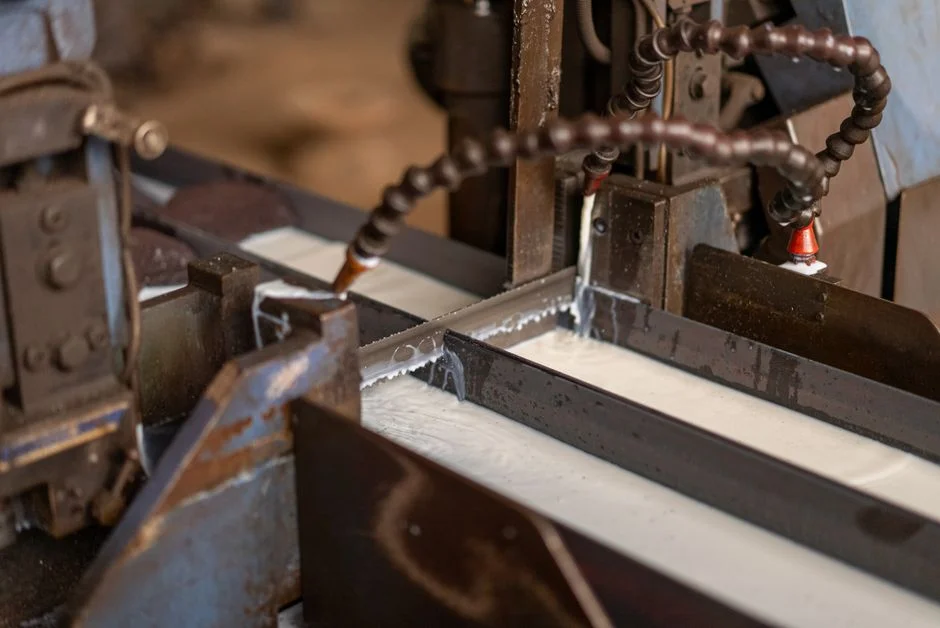
A defensible treatment train assigns each unit to a defined contaminant-removal or control duty. The sequence is conditional: screening, equalisation and solids or oil-and-grease removal come first where required; pH and chemical control protect downstream processes; biological treatment reduces soluble biodegradable COD; clarification separates biological solids; polishing and monitoring address the final discharge specification.
- Collect the relevant trade-waste streams and screen or recover bulk solids where necessary.
- Equalise flow and load, and remove free oil, grease and floatables before biological treatment where these are present.
- Adjust pH and apply coagulant or flocculant only as established by testing.
- Reduce biodegradable organic load biologically.
- Clarify the treated stream and route the separated solids to a defined sludge-handling route.
- Polish only against specified discharge or reuse criteria, then monitor before and during discharge.
| Stage | Primary function | Equipment selection rule |
|---|---|---|
| Equalisation and screening | Buffer flow and load variation | Size from the complete flow profile and operating schedule |
| DAF | Recover oil, grease, floatables and removable suspended or colloidal solids | Consider front-end DAF when the analysis identifies those duties |
| Chemical control | Set pH, coagulation and flocculation conditions | Establish chemical and dose through jar or pilot testing |
| MBR bioreactor | Combine biological treatment with membrane separation | Select where biological COD reduction and membrane solids separation are both required |
| Lamella clarifier | Separate flocculated or biological solids | Position after solids formation, with sludge recirculation considered |
| Polishing and disinfection | Meet defined final discharge or reuse requirements | Do not specify UV or chlorine dioxide without a documented requirement |
| Sludge dewatering | Separate residual solids for handling | Define the destination and required dewatering performance |
For waste containing oil, grease, FOG or removable solids, evaluate an industrial DAF system for high-COD pretreatment. HydropureWater’s DAF catalogue states a flow range of 4–300 m³/h, micro-bubble flotation and automatic skimming; these are manufacturer specifications, not verified Auckland site performance.
Position a lamella clarifier after flocculation or biological solids formation, where inclined-plate separation can concentrate solids for downstream dewatering. An MBR bioreactor for biological COD removal and membrane separation is relevant where the design requires both functions; its catalogue reports submerged PVDF filtration below 1 μm and capacities from 10 to 2,000 m³/day. Biological and chemical pretreatment also create sludge, so dewatering must be included as a separate decision. The lamella sedimentation product and plate-and-frame filter press address different points in that solids-handling route.
Match Each Treatment Objective to the Right Equipment
Equipment comparison should start with the contaminant or physical separation duty, not with the product name. DAF, lamella clarification and MBR can each reduce solids, but they perform different primary functions and should not be treated as interchangeable.
| Equipment | Primary function | Evidence or specification | Key procurement question |
|---|---|---|---|
| DAF | Oil-and-grease and floatables recovery; separation of removable solids | HydropureWater catalogue: 4–300 m³/h across 13 standard models | Does the waste analysis justify front-end DAF, and what oil-and-grease recovery is required? |
| Lamella clarifier | Clarified solids separation after flocculation or biological solids formation | HydropureWater catalogue: 20–40 m/h surface loading and up to 30% lower chemical consumption | Are these catalogue claims suitable for the specified feed, and what independent performance evidence is offered? |
| MBR bioreactor | Combined biological treatment and membrane separation | HydropureWater catalogue: 60% smaller footprint than conventional systems | What conventional system and treatment duty define this footprint comparison? |
| Automatic chemical dosing | Controlled delivery of coagulants, flocculants and pH-adjustment chemicals | Product scope must identify chemical, duty, containment, controls and interlocks | Has the chemical and dose been established through jar or pilot testing? |
The DAF catalogue identifies applications in food processing, pulp and paper, textiles, metalworking, petrochemicals and municipal pretreatment. The lamella loading-rate and chemical-consumption figures are manufacturer catalogue claims, not independent Auckland performance data. The MBR footprint claim also has a limited comparison basis and should not be presented as a site-specific saving.
Automatic chemical dosing should be specified as a control component, not used to conceal an unverified process assumption. The automatic chemical dosing system needs a defined chemical, storage requirement, duty, alarms and verification sequence. Final disinfection remains conditional: the UV treatment option or chlorine dioxide option should be selected only if the discharge specification, receiving-water requirements or reuse criteria require disinfection.
Do not select equipment from peak flow, COD or a treatment-target narrative alone. Give the supplier the complete waste analysis, flow profile, operating schedule, sludge route, electrical constraints and sewer-acceptance criteria, then require a proposed treatment train with measurable performance criteria.
Use New Zealand Monitoring Evidence to Assess Residual Risk
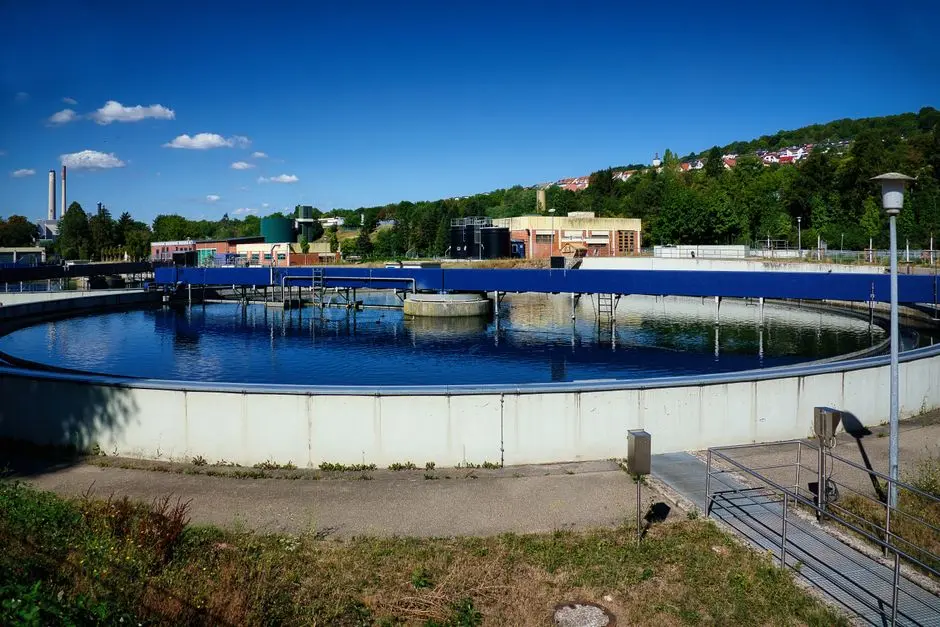
PHF Science’s New Zealand assessment reports municipal effluent concentrations and consent limits from several treatment plants; none of the examples below is an Auckland trade-waste acceptance limit. Their purpose is narrower: to demonstrate that municipal treatment processes do not remove all heavy metals and that source control and site-specific monitoring remain necessary.
| Location and monitoring evidence | Reported value | Correct interpretation |
|---|---|---|
| Akaroa treated effluent, January 2017 | Cadmium 0.019 mg/l | Reported municipal effluent concentration; the listed consent limit was < 0.0002 mg/l |
| Hastings treated effluent, 2022 | Acid-soluble chromium up to 0.0167 mg/l | Reported municipal monitoring value, not an Auckland trade-waste threshold |
| Hastings treated effluent, May 2023 | Chromium(III) 0.098 mg/l | Reported municipal monitoring value for the specified species |
| Hastings treated effluent, August 2022 | Chromium(VI) 0.009 mg/l | Reported municipal monitoring value for the specified species |
| New Plymouth treated effluent, 2019 | Acid-soluble lead 0.02 mg/l | Highest concentration identified in the PHF Science assessment for this parameter |
These results do not establish that the same metal, concentration or discharge will occur at an Auckland manufacturer. They demonstrate the failure mode that a lower COD result cannot reveal: a contaminant may remain in the effluent after municipal treatment. That makes source segregation, metals pretreatment where relevant, and final-site monitoring part of the compliance case.
The assessment’s stated purpose is to show that current processes do not remove all heavy metals. It also explains why industrial heavy-metal removal methods should be evaluated against the actual contaminant species rather than a generic metals-removal label. Historical municipal data cannot determine a site’s future result; they identify a residual risk that the buyer must close through its own characterization, treatment and monitoring evidence.
Specify, Monitor and Prove Compliance in Operation
Compliance must be demonstrated across the operating train, not inferred from one passing final sample. Require a sampling plan covering the inlet, each treatment stage and the final discharge. Define analytical methods, sample timing, flow conditions, frequency, laboratory accreditation requirements, record custody and who interprets exceedances.
Place operational controls in the supplier scope. These include automatic controls, alarms, fail-closed discharge arrangements where appropriate, bypass prevention, maintenance access, chemical containment and a documented sludge-disposal route. The PLC automation guidance can inform the control scope, but it does not replace site-specific fail-safe and compliance requirements.
Require the supplier to define performance criteria and demonstrate them through commissioning tests. Handover documents should include process calculations, as-built drawings, equipment manuals, control narratives, test records, operating instructions, spare parts, training and support arrangements. A plate-and-frame filter press specification guide can support the sludge-equipment review, but the disposal destination and acceptance conditions still require confirmation.
Discharge compliance and reuse or resource-recovery claims are separate specifications. A treated stream may meet a sewer condition but fail a reuse specification; recovered oil or sludge may also require a separate receiving route. Require each claim to have its own agreed test, quality criterion and operating condition.
Dilution is not treatment. Nor is a single passing sample or a lower measured COD sufficient proof that the industrial contaminant profile is acceptable. The compliance file should reconcile the analytical result with the approved method, discharge timing, flow and operating state, then retain the chain of evidence for audit.
Frequently Asked Questions
What should a high-COD trade-waste treatment system cost in Auckland?
There is no defensible price until the waste characterisation and sewer-acceptance criteria are fixed. Ask each bidder to price the equipment, chemical storage, civil works, installation, commissioning, monitoring, sludge removal, power and maintenance separately. Also request exclusions and assumptions, including replacement media, membrane cleaning, chemical supply, waste transport and off-site disposal. A lower equipment price may not represent the lower installed and operating cost.
What information is needed to size the treatment train?
Provide representative flow range, COD or BOD, suspended solids, oil and grease, pH, nutrients, temperature, relevant contaminants, operating hours and the applicable sewer-acceptance limits. Include the production and cleaning cycle, because a short high-flow event can control equalisation and solids-handling requirements even when average flow appears modest. Require the supplier to show which measured input drives each sizing decision.
How should a treatment-equipment supplier be selected?
Require a proposed treatment train, measurable performance criteria, test protocol, hydraulic drawing, controls scope, commissioning plan and maintenance assumptions. The bid should identify how each unit addresses the verified waste profile and how the final discharge will be monitored. Treat catalogue claims as claims requiring clarification; a supplier should explain its test basis and unresolved performance risk.
Can the supplier provide a reliable delivery date before the waste is characterised?
No. A defensible delivery period depends on fixed equipment scope, site-specific engineering, fabrication, shipment, installation and commissioning. Standard equipment fabrication may be distinguishable from these site-dependent activities, but the supplier should provide each milestone separately. Before accepting a date, require an approved process basis, current site drawings, utility information, access constraints and a written commissioning schedule.
What are the main compliance risks for direct sewer discharge?
The principal risks are unverified bylaw thresholds, prohibited contaminants, uncontrolled bypasses, inconsistent sampling and an undefined sludge-disposal route. Close them by obtaining the current Auckland requirements, agreeing pre-discharge acceptance, maintaining automatic isolation and alarms, sampling across relevant operating conditions, and recording the final destination of treatment residuals. Where pretreatment performance is uncertain, obtain a DAF-versus-clarifier comparison and use site testing before committing the process design.
For wastewater used in a different recovery or reuse context, the wastewater and cooling-blowdown treatment review is background material only; the controlling specifications remain Auckland sewer acceptance and the site’s own reuse requirements.