What Makes Canned Food Wastewater Difficult to Treat?
Canned food wastewater COD removal is usually achieved with a treatment train: remove screenings and suspended solids, recover free and emulsified oil, reduce biodegradable organics biologically, then polish residual COD if the discharge target requires it. A 2025 canned-vegetable study evaluated sequencing batch reactor treatment at solid retention times of 15 and 25 days using an 8-hour cycle. Food-processing guidance reports that streams commonly contain sugars, proteins, fats and starches, with a BOD/COD ratio usually above 0.4, making biological treatment the logical core. DAF is particularly useful upstream for oil, grease and solids.
Canned-food production can combine food residues, starches, sugars, proteins, fats and cleaning chemicals with production-dependent flow and concentration swings. HydroChemix’s food-processing characterization reports that influent COD often exceeds 5,000 mg/L and that the BOD/COD ratio is usually above 0.4. These are industry-level observations, not guaranteed values for every plant; a soup line, a vegetable blanching line and a plant-wide mixed stream can behave differently.
The important distinction is between soluble biodegradable COD, suspended organic matter, emulsified oil and non-biodegradable fractions. Suspended material can be removed physically. Emulsified oil requires a treatment mechanism that breaks or captures the dispersed phase. Biodegradable dissolved COD supports biological treatment, while refractory organics may remain after biological treatment or inhibit it.
A single grab sample cannot establish the design basis. Characterize wastewater over production, cleaning and idle periods, recording flow, COD, BOD5, oil and grease, suspended solids, pH and temperature. The food and beverage wastewater COD treatment-train design provides a broader selection framework, while the poultry-processing COD treatment comparison illustrates how stream composition changes technology decisions.
Build the Treatment Train Around the COD Fraction
The defensible process sequence is screening and equalization, oil and solids recovery, biological COD reduction, secondary solids separation, targeted polishing, and disinfection or reuse where required. Each stage should remove a pollutant fraction that would otherwise impair the next stage or determine whether the discharge target can be met.
- Screen and equalize. Remove vegetable pieces, starch-bearing solids and packaging debris before they enter pumps or biological reactors. Equalization should absorb production and cleaning peaks, but its required volume depends on the measured flow and concentration profile.
- Recover oil and floatable solids. A DAF system for canned-food wastewater pretreatment can recover free oil, grease, emulsified oil and floatable solids before biological treatment. HydroChemix identifies PAC coagulation as useful for removing fats, oils and suspended proteins during pretreatment or polishing.
- Reduce biodegradable COD biologically. The 2025 Sustainability study on canned-vegetable wastewater evaluated an SBR at solid retention times of 15 and 25 days with an 8-hour operating cycle. Those are study conditions, not universal design values for a food-processing plant.
- Separate biological solids. Settling, filtration or membrane separation prevents biomass carryover and determines whether the next stage receives a stable solids concentration.
- Polish only what remains. Coagulation-flocculation aggregates colloidal and suspended organics into separable flocs. Oxidation is more relevant to residual dissolved or refractory COD and should follow a residual-fraction diagnosis.
| Treatment step | Primary role | Selection condition | Main downstream issue |
|---|---|---|---|
| Screening and equalization | Remove debris and moderate variability | Required when production and cleaning create peaks or solids loads | Storage volume and pumping duty |
| DAF and oil recovery | Recover oil, grease and floatable solids | Material oil and solids loading; verify emulsified-oil response | Recovered waste and float-solids handling |
| SBR or other biological reactor | Reduce biodegradable COD | Favorable biodegradability and manageable pH, temperature and toxicity | Biomass separation, nutrient balance and sludge |
| Coagulation-flocculation | Remove colloidal and suspended organics | Residual particulate COD or poor floc separation | Chemical use and sludge volume |
| Advanced oxidation | Break down residual refractory organics | Residual dissolved COD remains after biological and physical treatment | Oxidant consumption and control complexity |
Where solids separation and reuse targets are demanding, an integrated MBR wastewater treatment system may form part of the biological stage, but membrane selection still depends on the actual oil, solids and biodegradability profile. No one technology should be selected before the train has been evaluated against hydraulic loading, discharge destination and reuse objectives.
Compare Biological, Chemical and Electrochemical COD Removal
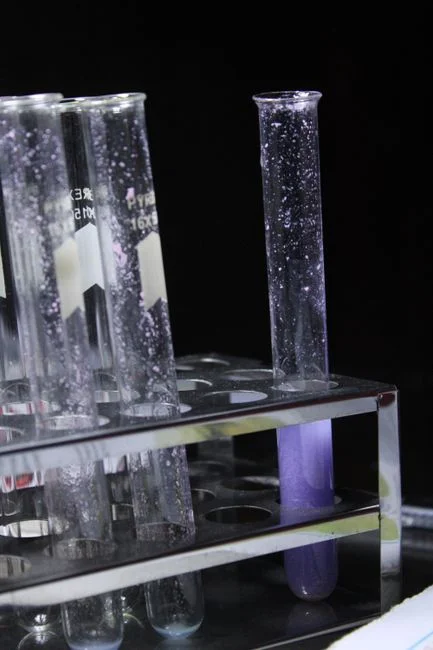
Biological treatment converts biodegradable organics into biomass and gases, while chemical and electrochemical methods remove or destroy COD through different mechanisms. Their appropriate role depends on which COD fraction remains and whether the objective is treatment, polishing or reuse.
| Technology | Main mechanism | Best-suited fraction | Operating sensitivity | Downstream burden |
|---|---|---|---|---|
| Biological treatment | Microbial conversion of biodegradable organics | Bulk biodegradable COD | pH, temperature, toxicity, nutrients and hydraulic loading | Biomass or sludge and secondary solids separation |
| Coagulation-flocculation | Neutralization and aggregation into separable flocs | Colloidal, suspended and emulsified organics | pH, coagulant type, mixing and wastewater chemistry | Chemical use and chemical sludge |
| Advanced oxidation | Oxidative breakdown of organic molecules | Residual dissolved or refractory COD | Oxidant delivery, pH, radical scavengers and reaction control | Oxidant demand and potentially altered by-products |
| Electrocoagulation | In situ coagulant generation and electrochemical destabilization | Requires matrix-specific evaluation | Electrode material, spacing, current, pH, conductivity and immersion | Electrode consumption and metal-bearing solids |
HydroChemix reports 60–85% COD removal for anaerobic digestion in its cited food-processing application, 40–90% for chemical treatment depending on wastewater characteristics, and COD removal exceeding 95% in optimized advanced oxidation configurations. These are context-specific commercial guidance figures, not guarantees for canned-food wastewater. The same source identifies biological treatment as the primary approach when the BOD/COD ratio is favorable and warns that biological systems can be inhibited by refractory or toxic compounds.
The electrocoagulation evidence requires tighter qualification. The Wasit University study “The Electrochemical removal of Oil and COD from petroleum wastewater” used a 2-liter coagulation cell and treated petroleum wastewater with initial COD of 710 mg/L and initial oil of 95 mg/L. Its optimum configuration used four aluminium and four iron electrodes, 2 cm spacing, 12 cm submergence, pH 7, 10.5 V and a 50-minute treatment time. The reported removals were 99.5% for COD and 94.2% for oil, with estimated energy consumption of 12 kWh/m³.
Those results belong to petroleum wastewater and that laboratory configuration; they cannot be transferred to canned vegetable wastewater. The electrocoagulation wastewater treatment process explains the mechanics, but a buyer still needs actual canned-food COD and oil characterization, a site trial and an assessment of sludge generation, electrode consumption and residual-solids handling. For coagulation and pH control, specify automatic chemical dosing for coagulation and pH control only after jar testing establishes the required operating window.
Size the System from Plant Data
Equipment sizing must begin with plant data, not a generic flow-per-production-ton assumption. The minimum design package should include average and peak flow; production and cleaning schedules; COD and BOD5; oil and grease; suspended solids; pH; temperature; nutrients; toxicity indicators; discharge route; and water-reuse targets.
Size hydraulic equipment around peak flow, then check organic loading independently. Equalization should precede disruptive batch discharges, with additional storage where the production schedule creates sharp peaks. Biological loading requires COD mass, biodegradability and retention-time calculations. DAF must be checked for oil, solids and flotation duty; chemical stages must be checked for coagulant demand and sludge separation.
| Design input | Question it must answer | Verification method |
|---|---|---|
| Flow profile | What are average, peak and batch-discharge flows? | Time-based flow monitoring across production, cleaning and idle periods |
| COD and BOD5 | How much COD is biodegradable, and what organic load reaches the reactor? | Composite sampling aligned with production operations |
| Oil and grease | Will free oil, emulsified oil or fat solids upset DAF and biology? | Representative sampling plus DAF or bench flotation trial |
| Suspended solids and pH | Will solids load or chemical conditioning exceed the separation stage? | Solids testing, settling or flotation trial and pH-response test |
| Temperature and toxicity indicators | Can biological treatment tolerate the actual discharge variation? | Temperature profile and site biological response |
| Discharge and reuse requirements | Which COD fraction must be removed, and where must the water go? | Permit, POTW acceptance criteria or reuse specification |
Conduct a site trial before finalizing the biological and chemical design. The trial should establish chemical demand, floc or float settleability, flotation performance, biological response and the operating response to production variability. Jar testing alone cannot establish biological loading or hydraulic capacity.
HydroChemix states that optimal chemical dosages must be determined through site-specific jar testing, so general dosage examples must not be treated as design values. During that work, verify the solids-separation function that will follow the flotation or chemical stage; a high-efficiency sedimentation tank still requires appropriate hydraulic loading, feed characteristics and sludge-removal provision. Use automatic chemical dosing for coagulation and pH control only with verified control logic and a chemical-storage and safety plan.
Control Operating Costs and Compliance Risk

Whole-life cost depends on the treatment mechanism because each option distributes costs across different operating burdens. Build a model for pumping, mixing and aeration energy; chemicals; electrode consumption where applicable; sludge handling; labor; monitoring; and maintenance. Compare each scenario against the required effluent quality, not simply the lowest reactor capital cost.
For chemical COD treatment, HydroChemix’s commercial guidance assigns chemical costs 40–60% of operating expenditure, energy 15–25%, sludge disposal 20–35%, and labor and maintenance 10–15%. These are industry-level guidance categories, not universal quotations for a canned-food plant. A biological train may shift more burden to aeration and biomass handling; an electrochemical option introduces power demand, electrode replacement and metal-bearing solids.
Discharge limits are location-specific. HydroChemix cites 50 mg/L for direct surface-water discharge in many jurisdictions and up to 500 mg/L for municipal sewer discharge, while emphasizing that limits vary by region, industry and receiving-water classification. Those figures are not universal canned-food requirements. Obtain the applicable permit or POTW sewer acceptance conditions, including the surcharge formula, before fixing the design COD target.
Base monitoring on permit requirements. The usual parameters to define locations for include COD, BOD5, oil and grease, suspended solids, pH and flow. Sludge handling also needs a defined route; the plate-frame filter press can be evaluated for dewatering, but the selected route must follow the waste classification and destination. Further planning context is available in the guide to meeting pretreatment limits before equipment selection.
Equipment Selection Checklist
A comparable proposal should expose the design basis, equipment sizing and operating consequences rather than only a package price. Ask each supplier to state design flow, organic loading basis, treatment objective, selected technology and expected duty cycle.
| Supplier information | Evidence requested | Why it matters |
|---|---|---|
| Design basis | Average and peak flow; COD, BOD5, oil and grease, solids, pH and temperature | Shows whether the proposal is sized for the actual matrix |
| Process design | Process flow, P&ID, hydraulic profile and equipment sizing calculation | Reveals capacity, head loss, redundancy and integration constraints |
| Controls and commissioning | Control narrative, duty/standby philosophy and commissioning plan | Connects equipment operation to production variability |
| Reference performance | Food-processing evidence with similar oil, solids and biodegradability | Limits unjustified transfer from unrelated wastewater |
| Operations | Sludge, chemical storage, fouling, odor, training, monitoring and maintenance plan | Defines the resources needed after handover |
| Commercial comparison | Footprint, energy, chemicals, consumables, sludge volume, automation, service and lifecycle cost | Supports a whole-life comparison rather than an equipment-only comparison |
Require pilot or site data when the proposed application differs materially from the reference. For a DAF-led train, request evidence that the proposed flotation unit handles the actual free and emulsified oil load; for a biological train, ask for the loading and retention calculations. The DAF system for canned-food wastewater pretreatment and integrated MBR wastewater treatment system should therefore be evaluated against the same plant-data package, not compared as standalone products.
Frequently Asked Questions
What does canned food wastewater COD removal cost?
There is no defensible universal price because cost depends on flow, COD mass, oil and solids loading, biodegradability, selected process and reuse or discharge requirements. Ask each supplier for installed cost and site-specific operating estimates covering energy, chemicals or electrodes, sludge handling, labor, monitoring and maintenance. HydroChemix’s commercial guidance provides operating-cost categories for chemical treatment, not a quotation for a canned-food plant.
What data is needed to size the treatment system?
Provide a time-based flow profile, COD, BOD5, oil and grease, suspended solids, pH, production and cleaning schedules, discharge route and reuse requirements. Also provide temperature, nutrient and toxicity information where biological treatment is proposed. These inputs are needed to separate hydraulic capacity from organic loading and to check equalization, DAF, biological retention and polishing duties.
Should canned-food wastewater use DAF, biological treatment or both?
Use DAF or equivalent pretreatment when oil, grease and floatable solids are significant enough to interfere with downstream treatment. Use biological treatment for the biodegradable bulk COD, with the 2025 canned-vegetable SBR study providing direct application evidence. Use chemical coagulation or advanced oxidation for residual fractions that the physical and biological stages cannot meet; do not use polishing as a substitute for proper upstream solids and oil control.
Which supplier and compliance risks should be checked before purchase?
Select a supplier that can provide process calculations, food-processing reference evidence, commissioning support and a clear waste-handling plan. Confirm the direct-discharge permit or POTW sewer acceptance conditions before finalizing the target COD, because local limits and surcharge formulas vary. Use automatic chemical dosing for coagulation and pH control only with site-tested demand, defined controls and chemical-storage safeguards.