How does electrocoagulation differ from chemical coagulation?
Electrocoagulation treats industrial wastewater by releasing Fe²⁺ or Al³⁺ from sacrificial anodes under 5–30 V DC at 10–150 A/m², achieving 95%+ TSS removal, 85–98% heavy metal reduction, and about 90% emulsified oil separation. A DC current applied to submerged iron or aluminum electrodes hydrolyzes those ions into polymeric hydroxides that flocculate solids, oils, and dissolved pollutants. Compared with chemical coagulation, EC cuts sludge volume by 30–50% and chemical spend by 40–60%, while electrode passivation and energy use remain the main design constraints.
The core mechanism is electrolytic generation of coagulants in situ. Chemical coagulation doses metal salts such as alum or polyaluminum chloride (PAC). EC instead releases metal cations directly from the electrodes, so no bulk coagulant is stored or handled on site. Textile wastewater case studies from 2024 report annual chemical procurement reductions of up to 60% after that switch.
Chemical coagulation often produces loose, high-moisture sludge from the added salt mass. Electrocoagulation produces 30–50% less sludge because the only added solids are the metal ions consumed from the electrodes. Hydrogen gas evolved at the cathode also floats flocs, which aids separation by dissolved air flotation (DAF) or sedimentation. That buoyancy effect is useful for emulsified oils and dissolved metals and often needs less narrow pH control than chemical flocculation.
What are the five process stages inside an electrocoagulation cell?
Electrocoagulation converts dissolved and suspended pollutants into separable solids in five stages. Rate and completeness depend on wastewater electrochemistry and cell geometry.
- Step 1: Electrode Immersion and Current Application: A series of sacrificial anodes and cathodes are submerged in the wastewater. A DC power supply provides a voltage range of 5-30V. The current density, typically maintained between 10-150 A/m², is the primary driver of the reaction rate.
- Step 2: Anode Oxidation: As electricity flows, the sacrificial anodes oxidize. Iron anodes release Fe²⁺ ions (Fe → Fe²⁺ + 2e⁻), while aluminum anodes release Al³⁺ ions (Al → Al³⁺ + 3e⁻). These ions serve as the primary coagulating agents.
- Step 3: Water Hydrolysis at Cathode: Simultaneously, water molecules at the cathode undergo electrolysis, producing hydrogen gas and hydroxyl ions (2H₂O + 2e⁻ → H₂ + 2OH⁻). This reaction naturally raises the local pH to 8-9, which is the ideal range for the next stage.
- Step 4: Floc Formation: The released metal ions complex with the generated hydroxyl groups to form polymeric hydroxides, such as Fe(OH)₃ or Al(OH)₃. These large flocs have high surface areas that adsorb contaminants, entraining suspended solids and emulsified oils into stable aggregates.
- Step 5: Separation: The resulting flocs are separated from the water column. Depending on the floc density and the amount of entrained hydrogen gas, they either settle to the bottom or float to the surface. Typical retention times range from 20 to 60 minutes.
Industrial flow typically follows: Influent → pH Adjustment (optional) → Electrocoagulation Cell → Flocculation Zone → Sedimentation or DAF systems for post-electrocoagulation floc separation → Effluent Discharge or Tertiary Treatment. For high-solids streams, plate frame filter presses for electrocoagulation sludge dewatering are used to raise cake dryness.
| Parameter | Typical Range | Impact on Process |
|---|---|---|
| Voltage (DC) | 5 - 30 V | Determines the driving force for ion release. |
| Current Density | 10 - 150 A/m² | Controls the rate of coagulant generation. |
| Retention Time | 20 - 60 min | Ensures complete flocculation of pollutants. |
| Electrode Spacing | 10 - 30 mm | Balances energy consumption vs. risk of clogging. |
What removal efficiencies should plants expect for TSS, COD, metals, and oils?
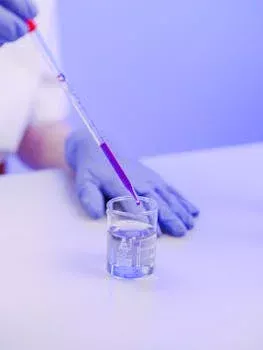
Removal depends on influent chemistry, but EPA 2024 data and industrial field tests give repeatable ranges. EC is often selected where emulsified fats and complexed heavy metals are poorly removed by biology or standard chemical dosing alone.
| Contaminant | Influent Range (mg/L) | Removal Efficiency (%) | Industry Example |
|---|---|---|---|
| TSS | 500 - 5,000 | 92% - 98% | Textile / Pulp & Paper |
| COD | 1,000 - 10,000 | 70% - 90% | Food Processing / Paper Mill |
| Heavy Metals (Cr, Pb, Ni) | 5 - 100 | 85% - 98% | Electroplating / Metal Finishing |
| Oils & Grease | 200 - 2,000 | 90% - 95% | Oil & Gas / Food Processing |
| Phosphates | 10 - 100 | 80% - 95% | Municipal / Fertilizer Mfg |
Variability usually tracks current density, electrode material, and contact time. Higher current density raises Fe²⁺ or Al³⁺ availability and tends to improve TSS and BOD removal. Iron electrodes are common for heavy metals because of cost and reactivity with dissolved ions; aluminum electrodes form lighter flocs that favor oil and grease separation. Where influent TDS exceeds 5,000 mg/L, pair EC with industrial reverse osmosis systems for high-salinity wastewater pretreatment, because high salinity drives electrode corrosion and energy loss.
Which parameters prevent electrode passivation and high energy use?
Long-term EC performance depends on electrode health and power draw. The main operational failure mode is passivation: an insulating oxide layer that raises resistance and slows ion release.
| Operational Parameter | Optimization Strategy | Troubleshooting Target |
|---|---|---|
| Electrode Polarity | Reverse polarity every 15-30 min | Prevents passivation and uneven wear. |
| pH Level | Maintain between 6.0 and 9.0 | Ensures optimal hydroxide floc formation. |
| Cleaning Cycle | Weekly 5% Citric Acid wash | Removes scaling and oxide buildup. |
| Conductivity | Supplement with NaCl if < 1.0 mS/cm | Reduces voltage requirements and energy cost. |
If flocs stay small or form slowly, check contact time and pH first. automatic pH adjustment systems for electrocoagulation optimization stabilize the reaction window. Calcium and magnesium scale is controlled with periodic 1–2% HCl descaling or softening pretreatment. Energy above 2.5 kWh/m³ usually points to fouled electrodes or excess current density; dropping current toward 50 A/m² and increasing cleaning frequency often restores efficiency. Iron electrodes typically last 1 to 2 years and aluminum 2 to 3 years; keeping current density below 100 A/m² and reversing polarity regularly can extend life by up to 50%.
When does electrocoagulation beat chemical coagulation on total cost?
EC usually carries higher CAPEX and lower OPEX than chemical coagulation. Procurement teams should compare total cost of ownership over a 5-to-10-year horizon.
| Parameter | Electrocoagulation | Chemical Coagulation | Engineering Note |
|---|---|---|---|
| CAPEX | $50k - $500k | $20k - $200k | EC requires power rectifiers and reactors. |
| OPEX (per m³) | $0.20 - $0.80 | $0.50 - $1.50 | EC savings driven by 0% chemical dosing. |
| Sludge Volume | 30-50% Reduction | Baseline | EC sludge is denser and easier to press. |
| Footprint | 0.5 - 2 m²/m³ | 1 - 3 m²/m³ | EC is modular and more compact. |
| Maintenance | Electrode Replacement | Pump Calibration | Electrodes last 1-3 years on average. |
EC fits plants with emulsified oils, heavy metals, tight sludge space, or highly variable textile loads where current can track pollutant concentration in real time. Chemical coagulation remains a lower-CAPEX option for high-flow municipal wastewater with stable influent and high electricity prices. For specialized streams such as medical wastewater treatment standards and equipment options, EC is often used as pretreatment to protect downstream biological membranes.
What field results and operating limits should plant engineers verify?
Measured plant data show what EC delivers when cell design and post-separation match the load.
Case Study 1: Textile Wastewater (India, 2024)
A dyeing facility faced high COD (3,500 mg/L) and intense color. An iron-electrode EC unit at 80 A/m² and 40-minute contact time achieved 92% COD removal and 98% color removal. OPEX fell from $1.20/m³ (chemical) to $0.35/m³, with equipment payback under 18 months.
Case Study 2: Electroplating Wastewater (Germany, 2023)
An electroplating plant needed EU limits for hexavalent chromium (Cr⁶⁺). Aluminum electrodes at pH 8.5 cut Cr⁶⁺ from 30 mg/L to less than 0.1 mg/L (99% removal). Sludge volume was 40% lower than the prior chemical precipitation system, reducing hazardous waste disposal fees.
Case Study 3: Food Processing Wastewater (USA, 2024)
A food processor had emulsified oils at 1,200 mg/L that blinded a DAF. EC pretreatment with 30-minute retention removed 95% of the oils, cut downstream DAF loading by 70%, and eliminated polymer dosing. For related regional design data, see food processing wastewater treatment in Canada 2025 engineering guide with local compliance cost data equipment checklist.
EC can inactivate 90–99% of bacteria and viruses by membrane rupture and floc entrapment; for full disinfection, pair it with chlorine dioxide disinfection for post-EC pathogen removal. Versus membrane bioreactors, EC removes dissolved metals and emulsified oils that foul MBR membranes and is often used as MBR pretreatment; see MBR vs. extended aeration cost difference 2025 engineering breakdown. Most industrial EC systems draw 0.5–2.5 kWh/m³; a 100 m³/day train at moderate current density typically uses about 150 kWh/day ($15–$30 depending on tariff). Moderate salinity improves conductivity, but TDS above 5,000 mg/L can pit electrodes and requires pretreatment or specialized alloys.
Who is electrocoagulation for, who should look elsewhere, and what is the next step?
This process fits industrial plants treating emulsified oils, heavy metals, color, or variable COD where chemical sludge volume and dosing cost dominate OPEX. High-flow municipal plants with stable influent and high power prices, or sites with TDS continuously above 5,000 mg/L and no desalination stage, should evaluate chemical coagulation or hybrid schemes first. Next step: measure influent TSS, COD, metals, oils, conductivity, and available power, then size current density (10–150 A/m²), retention time (20–60 min), and post-EC solids separation against the discharge permit.