Which Treatment Fits the Wastewater Fraction?
For mining and metals wastewater, factories should usually choose a clarifier for dense, rapidly settling mineral fines and DAF for conditioned oils, flotation reagents, colloids and buoyant precipitates. Neither mechanism removes metals that are genuinely dissolved in the water. The correct 2026 selection therefore depends on the dominant contaminant fraction, flow, TSS, particle-size distribution, pH and representative jar-test results—not on a generic equipment name or unit price.
Start by separating the stream into four practical fractions: dense, settleable mineral fines; colloidal or slowly settling fines; buoyant oils and flotation reagents; and dissolved metals. This prevents a solids-removal device from being credited with dissolved-metals treatment and shows where a dedicated precipitation or other dedicated metals-removal step must enter the train.
Lamella plates increase effective settling area; they do not change gravity sedimentation. A lamella clarifier therefore does not make oil, surfactant, colloidal or dissolved loads settleable. DAF instead attaches micro-bubbles to conditioned floc and removes the floated aggregate from the surface. However, DAF is not well suited to high concentrations of heavy, non-floating particles such as silt and clay, as noted by Fluence in its DAF selection material.
For a broader view of the downstream treatment boundary, compare industrial heavy-metals removal methods. The process-selection question is narrower than asking whether DAF or a clarifier is “better”; it is which mechanism addresses the dominant fraction, and what remains for polishing.
| Dominant contaminant fraction | Primary treatment decision | Required proof before selection |
|---|---|---|
| Dense, settleable mineral fines | Clarify first; use lamella plates when compact, high-rate settling is needed. | Particle-size distribution, settleability, peak flow and solids loading. |
| Colloidal or slowly settling fines | Condition the stream and assess DAF or another floc-based polishing process. | Jar-test dose, pH, settling, floatability and residual TSS. |
| Buoyant oils, reagents or low-specific-gravity precipitates | DAF is generally the better fit after suitable conditioning. | Oil and grease, reagent carryover, chemical demand and float recovery. |
| Dissolved metals | Specify a dedicated dissolved-metals process before final filtration or reuse. | Metal speciation, pH response and residual soluble-metal analysis. |
DAF or Clarifier: A Practical Selection Framework
Three decisions determine the treatment train: identify the dominant contaminant fraction, identify the discharge or reuse endpoint, and validate the proposed train with representative wastewater.
- Identify the dominant fraction. If dense tailings fines or metallurgical sludge dominate, begin with gravity sedimentation. If conditioned oils, flotation reagents, biological floc or low-specific-gravity precipitates dominate, assess DAF as the primary solids-removal mechanism.
- Identify the endpoint. Solids capture, underflow concentration, reuse and discharge are different objectives. The endpoint determines whether flotation, filtration, dissolved-metals treatment or another barrier is required downstream.
- Validate the train. Representative testing must establish chemical condition, settleability, floatability and expected residual TSS before equipment dimensions are fixed.
Select a lamella clarifier first when dense tailings fines or metallurgical sludge dominate and the objective is solids capture, underflow concentration or protection of downstream equipment. Conventional gravity sedimentation remains appropriate where settleable solids dominate and civil area is available.
Select an industrial DAF system when conditioned oils, flotation reagents, biological floc or low-specific-gravity precipitates must be removed before reuse or discharge. Chemical flocculation is usually part of that decision, so the chemical dosing system must be included in the process and commercial scope.
For combined streams, the defensible arrangement is clarifier followed by DAF: the clarifier removes bulk settleable solids, while DAF polishes the residual colloidal and buoyant fraction. This sequence is more defensible than asking DAF to carry a heavy non-floating mineral load.
For genuinely dissolved metals, specify precipitation or another dedicated dissolved-metals process. DAF or clarification may remove a precipitated or particulate metal fraction after conditioning, but neither should be presented as final removal of metal already dissolved in the water.
The jar-test program should compare pH conditions, coagulant and flocculant doses, settling behavior, floatability and residual TSS. For broader decision context, the mining-wastewater DAF-versus-clarifier selection guide can be used as a secondary reference, not as a substitute for site data.
How Each System Removes Solids
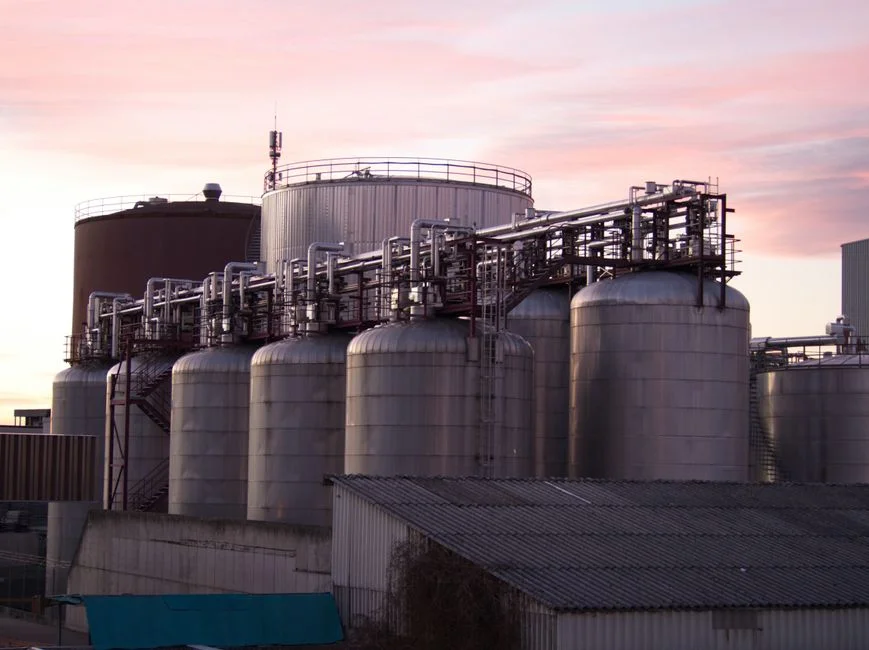
Clarification separates solids by gravity: particles settle under the surface overflow rate imposed by tank geometry, bottom sludge is withdrawn, and clarified water overflows a launder. A lamella clarifier adds inclined settling area and is useful where a compact, high-rate unit is required for mineral fines.
DAF pressurizes clarified water with air and returns it to the flotation tank. Depressurization forms micro-bubbles that attach to incoming floc. Clearwater Industries, cited in the supplied 2026 mining/metals selection research, reports a bubble diameter of 30–50 microns and a 15–45-second flash-mix range for flocculation tubes. These values belong to that equipment description; they are not universal mining design criteria.
The sludge route differs as well. A DAF unit produces a floating blanket that a skimmer removes, whereas a clarifier produces bottom sludge or underflow. Chemical conditioning also influences the flotation result: properly conditioned floc can form a thick float, while an untreated mineral slurry may not float efficiently.
Hahn’s 2010 flotation review reports 90% oil removal for DAF, but that is an application-specific review result, not a guaranteed mining/metals performance rate. Suppliers should demonstrate performance on the actual contaminant mix under stated flow, solids-loading and chemical conditions.
| Evaluation point | Clarifier or lamella clarifier | Dissolved air flotation |
|---|---|---|
| Separation mechanism | Gravity sedimentation | Micro-bubble attachment and flotation |
| Best-fit fraction | Dense mineral fines and metallurgical sludge | Conditioned colloids, oils, reagents and buoyant precipitates |
| Chemical requirement | Depends on settling behavior; flocculation may assist | Chemical condition is central; dose must be established by testing. |
| Sludge location | Bottom underflow | Floating blanket |
| Collection method | Sludge withdrawal from the bottom | Surface skimmer and collection trough |
| Key proposal data | Surface overflow rate, solids loading, flocculation and withdrawal design | Air-to-solids ratio, hydraulic loading, recirculation, rise rate, pressure, flow and chemical condition |
Design Inputs That Prevent Undersizing
An undersized train is usually caused by missing flow and contaminant data, not by choosing the wrong equipment label. Give suppliers seasonal low, average and peak flows, plus the duration and rate of batch discharges. A single average flow does not define hydraulic capacity.
Require analysis of the actual mining or metals stream: TSS, particle-size distribution, pH, temperature, oil and grease, and dissolved metals. For a clarifier, request the proposed surface overflow rate, solids loading, flocculation approach, sludge-withdrawal method and expected underflow consistency. A generic tank area is not an adequate design basis.
For DAF, request the proposed air-to-solids ratio, hydraulic loading, recirculation arrangement, rise or loading rate, pressure, flow rate and chemical condition. Also identify the expected float concentration, withdrawal arrangement and response to variable feed.
Equalization can stabilize wastewater characteristics and improve treatment efficiency, according to Hahn’s 2010 review, Fundamentals of Wastewater Flotation. Equalization is therefore an engineering control to evaluate, not an automatic substitute for adequate treatment capacity.
The 2011 Logan, Utah study by Utah State University recorded an optimum dose of 30 mg/L aluminum sulfate for algae and phosphorus removal from lagoon effluent. That result demonstrates that chemical optimization is empirical; it was not a mining application and must not be transferred as a mining dose.
Every supplier should state which guarantee applies to which contaminant, test method, loading condition and endpoint. The DAF and clarifier cost-comparison guide can help structure the RFQ, but stream-specific data remain necessary.
| RFQ input | Clarifier information required | DAF information required |
|---|---|---|
| Hydraulic basis | Seasonal flows, batch discharge profile, surface overflow rate and solids loading | Seasonal flows, batch discharge profile, hydraulic loading and recirculation flow |
| Influent characterization | TSS, particle-size distribution, pH, temperature, metals and settleability | TSS, particle-size distribution, pH, temperature, metals, oil and grease and floatability |
| Chemical system | Flocculant strategy, mixing basis and control philosophy | Coagulant and flocculant dose, pH control, contact basis and control philosophy |
| Performance basis | Expected TSS endpoint and underflow condition under stated loading | Expected TSS or oil endpoint, float condition and soluble-metal endpoint if applicable |
| Verification | Representative settleability or pilot evidence | Representative jar-test and pilot evidence with residual TSS and float recovery |
Cost, Footprint and Sludge-Handling Trade-offs
The supplied research does not provide a verified 2026 unit price for either DAF or a clarifier, so a general equipment-price claim would not be defensible. Request a budgetary quotation tied to flow, TSS, contaminant profile, materials of construction, site constraints and the selected performance guarantee.
Compare footprint qualitatively. Conventional gravity sedimentation can require more civil area, while lamella plates increase effective settling area within a smaller footprint. That comparison must also include access, sludge withdrawal, maintenance clearances, equalization and chemical equipment.
Compare sludge routes rather than treating both units as producing the same residue. DAF float is skimmed from the surface; clarifier underflow is withdrawn from the bottom and may require thickening or dewatering. Whether either sludge requires little additional dewatering must be established from the actual conditioned solids and pilot results.
The quote should include conditioning equipment, sludge dewatering, controls, installation, corrosion-resistant materials, utilities and downstream filtration. For example, the plate-and-frame filter press should be evaluated as part of the solids-handling route, while an ultrafiltration system may be relevant where reuse requires a finer solids barrier.
No fixed capital-cost premium or guaranteed dewatering reduction should be accepted without vendor-specific supporting data. Evaluate whole-train economics by including chemical consumption, sludge disposal, filtrate quality, filtration or membrane requirements and the value of recovered process water.
| Cost element | Clarifier scope | DAF scope |
|---|---|---|
| Primary equipment | Conventional or lamella tank, mechanism, launder and sludge withdrawal | Flotation tank, pump, saturation system, recycle arrangement and skimmer |
| Conditioning | Flocculation and mixing where required | Coagulant, pH adjustment and polymer dosing |
| Sludge route | Underflow thickening and dewatering | Float collection and required dewatering |
| Site and materials | Civil works, installation and corrosion-resistant materials | Civil works, installation, utilities and corrosion-resistant materials |
| Downstream treatment | Filtration, dissolved-metals treatment or reuse barrier as required | Filtration, dissolved-metals treatment or reuse barrier as required |
What to Put in the Equipment RFQ
A comparable RFQ begins with a process flow diagram showing every inlet, outlet, bypass, equalization step, chemical injection point, sludge collection point and sampling location. If those boundaries are unclear, vendors cannot quote equivalent systems or assign operating responsibilities.
Ask each bidder to state the design flow, contaminant loading, selected materials of construction, tank dimensions, mechanism type, drive details and utility requirements. The proposal should also identify which items are supplied, which are excluded and which must be provided by the plant.
Request a complete performance guarantee tied to TSS, oil and grease, or another specified contaminant, with the test method, loading condition and operating conditions stated. A general claim that the equipment “meets permit requirements” is not enough, particularly where the treated stream may contain dissolved metals outside the solids-removal step.
Ask for comparable reference installations or pilot data from similar metallurgical streams. Generic case studies should not be treated as guarantees, and case-study conditions should be checked against the proposed flow, chemistry, particle size and operating regime.
Require a sludge balance covering expected solids concentration, collection method, dewatering route and waste-disposal assumptions. For a combined clarifier and DAF train, identify interface responsibilities for clarifier underflow, DAF float, recirculation water and chemical control. This avoids duplicate equipment, conflicting operating limits and unclear performance boundaries.
The mining-wastewater DAF-versus-clarifier selection guide provides background on the decision, while compliance questions must be tied to the site’s actual permit and current applicable rules. The selection should be documented against mining and metals discharge-limit considerations, not against unsupported assumptions.
Frequently Asked Questions
What is the 2026 budget difference between DAF and a clarifier for mining wastewater?
There is no verified general 2026 unit price in the supplied research. Request capital and operating estimates based on flow, TSS, contaminant profile, materials, civil work, chemicals, controls, sludge handling and downstream treatment. Compare the whole train rather than the tank alone; ask vendors to identify operating costs and downstream consequences separately.
How should DAF and clarifier equipment be sized for a metals stream?
For a clarifier, provide seasonal and peak flows, TSS, particle-size distribution, settleability, pH and proposed surface overflow and solids loading. For DAF, provide the same water data plus oil and grease, floatability, chemical condition, hydraulic loading, air-to-solids ratio, recirculation and rise-rate basis. Jar tests and representative seasonal data are necessary because chemical demand and solids behavior are stream-specific.
Which supplier qualifications reduce compliance risk?
Require a project-specific guarantee tied to a named contaminant, test method, loading condition and endpoint. Also request comparable metallurgical references or pilot data, controls scope, sludge assumptions, installation responsibilities and post-commissioning support. Do not accept a generic certification or reference as proof that the proposed equipment will meet the site’s permit conditions.
Can clarification or DAF alone meet dissolved-metals limits?
No generic guarantee can be made. Clarification and DAF remove solids, and DAF can remove precipitated or particulate material after conditioning, but metal genuinely dissolved in the water requires a dedicated treatment step. Review the actual permit and current applicable rules with the process engineer, then specify residual soluble-metal analysis, precipitation or another treatment process where required. Local compliance context is also addressed in this mining-plant discharge-limit reference.