
An MBR wastewater treatment system in Nigeria combines activated sludge with submerged PVDF membranes (0.1–0.4 μm pore size). Effluent commonly meets industrial planning targets such as BOD below 30 mg/L and TSS below 50 mg/L. For a typical 500 m³/day plant in Lagos, installed capital still ranges from $800,000 to $2,000,000. Many operators model a 3–5 year payback from avoided fines and water reuse. Local fabricators now quote containerized packages with about 12-week lead times.
Why Nigerian Factories and Municipalities Are Switching to MBR Systems
Nigerian industrial and municipal plants adopt MBR to meet sector NESREA effluent limits and state tertiary rules while enabling reuse. Typical design targets remain BOD below 30 mg/L and TSS below 50 mg/L. A 500 m³/day industrial train still costs about $800,000–$2,000,000 installed, with modelled paybacks of 3–5 years from avoided fines and water reuse savings.
Nigerian factories adopt MBR because sector NESREA schedules and state tertiary rules leave little margin for secondary-only plants. Published sector instruments still govern discharge; the 2009 mining and minerals regulations set surface-water BOD at 30 mg/L, COD at 80 mg/L, and ammonia at 10 mg/L. Earlier briefs often used a single “2025 package” of BOD <30 mg/L, TSS <50 mg/L, and COD <125 mg/L as design targets. Buyers should confirm the schedule for their industry rather than assume one nationwide 2024 statute.
State rules add further pressure. The Lagos State Water Regulatory Commission (LSWRC) requires tertiary treatment for new industrial discharges. MBR membranes meet that gate through sub-micron solids and pathogen rejection. In northern states facing borehole stress, MBR permeate is reused for cooling, irrigation, and non-potable process water.
A Kaduna textile mill cut COD from about 450 mg/L to below 80 mg/L after MBR commissioning. TSS fell from about 150 mg/L to below 10 mg/L. Annual fine exposure dropped by roughly 78%, and modelled payback was 4.2 years. Stable compliance plus reuse revenue drives most industrial MBR inquiries today.
How MBR Systems Work: Process Flow for Nigerian Operators
MBR trains integrate biological oxidation with membrane solid–liquid separation for strict discharge and reuse limits. A typical MBR Membrane Bioreactor Wastewater Treatment System starts with coarse and fine screening (1–3 mm) plus grit removal. High oil-and-grease streams often need upstream Dissolved Air Flotation (DAF) before biology.
Flow then enters an anoxic zone for denitrification, converting nitrate to nitrogen gas. The aerobic tank holds mixed liquor suspended solids (MLSS) at 8–12 g/L. Hydraulic retention time (HRT) is 6–12 hours, and sludge retention time (SRT) is 20–50 days. Those long SRTs favour organisms that degrade complex organics. Operators in Lagos and Port Harcourt typically trend MLSS daily and waste sludge to hold the 8–12 g/L window.
Submerged PVDF membranes (0.1–0.4 μm) separate permeate from mixed liquor. In tropical service, net flux is commonly held at 15–25 LMH to limit fouling. Coarse-bubble scouring at about 0.2–0.4 Nm³/m²/h keeps the cake thin. That air often accounts for 30–40% of plant power. Final UV or chlorine dioxide disinfection polishes pathogens before discharge or reuse.
Long SRT and high MLSS also cut excess sludge by about 30–50% versus conventional activated sludge. That matters where landfill fees run N5,000–N15,000 per ton, depending on location and waste class.
| MBR Process Parameter | Typical Range for Tropical Climates | Significance |
|---|---|---|
| Membrane Pore Size | 0.1 – 0.4 μm (PVDF) | Ensures high effluent quality and pathogen removal. |
| Mixed Liquor Suspended Solids (MLSS) | 8 – 12 g/L | High biomass concentration for efficient organic removal. |
| Hydraulic Retention Time (HRT) | 6 – 12 hours | Adequate time for biological reactions. |
| Sludge Retention Time (SRT) | 20 – 50 days | Reduces sludge production, improves stability. |
| Membrane Flux Rate | 15 – 25 LMH | Optimized for fouling prevention in warm climates. |
| Membrane Scouring Airflow | 0.2 – 0.4 Nm³/m²/h | Prevents membrane fouling, consumes significant energy. |
MBR vs. Activated Sludge vs. MBBR: Which System Fits Your Nigerian Project?
MBR units deliver the smallest footprint and the highest effluent quality among common biological options on Nigerian industrial sites. Choice still hinges on land price, discharge permit, power tariff, and O&M skill. For a side-by-side engineering comparison, see MBR vs. activated sludge: Which is right for your Nigerian project?
Footprint: MBR systems need about 60% less space than conventional activated sludge plants at the same flow. That advantage is decisive on Lagos Island and other constrained plots. MBBR plants sit between the two because they still need clarifiers.
Effluent Quality: MBR typically produces BOD below 10 mg/L and TSS below 5 mg/L. MBBR and conventional activated sludge more often land at BOD 20–30 mg/L and TSS 20–40 mg/L. Reuse with those options usually needs tertiary filtration.
Energy Use: MBR specific energy is typically 0.8–1.2 kWh/m³ of treated water. Activated sludge uses about 0.3–0.5 kWh/m³, and MBBR about 0.4–0.7 kWh/m³. At Lagos tariffs around N140/kWh, a 500 m³/day MBR can cost N200,000–N400,000 more per month than activated sludge.
Capital Cost: Installed MBR CAPEX is commonly $1,500–$3,000 per m³/day of capacity. MBBR sits near $800–$1,500 per m³/day. Activated sludge is often $500–$1,200 per m³/day.
Maintenance: MBR membranes need CIP every 3–6 months and replacement on a multi-year cycle. Earlier Nigerian budgets often assumed 5–8 year membrane life. According to Judd on The MBR Site (page updated 2022), polymeric membranes are normally assumed at 8–12 years in life-cycle OPEX models. MBBR media often lasts 10+ years with lighter cleaning.
| Feature | MBR (Membrane Bioreactor) | MBBR (Moving Bed Biofilm Reactor) | Activated Sludge |
|---|---|---|---|
| Footprint | Very Compact (60% less than AS) | Compact (30-40% less than AS) | Large |
| Effluent Quality (BOD) | <10 mg/L (High) | 20-30 mg/L (Good) | 20-30 mg/L (Good) |
| Effluent Quality (TSS) | <5 mg/L (Very High) | 20-40 mg/L (Good) | 20-40 mg/L (Good) |
| Energy Consumption | 0.8-1.2 kWh/m³ (Higher) | 0.4-0.7 kWh/m³ (Moderate) | 0.3-0.5 kWh/m³ (Lowest) |
| Capital Cost ($/m³/day) | $1,500 - $3,000 (Highest) | $800 - $1,500 (Moderate) | $500 - $1,200 (Lowest) |
| Maintenance Intensity | Medium-High (membrane cleaning/replacement) | Low-Medium (media longevity) | Medium (mechanical equipment) |
| Sludge Production | Low (30-50% less than AS) | Moderate | High |
| Operator Skill | Medium-High | Medium | Medium |
Nigerian Compliance: Meeting NESREA and State-Level Wastewater Standards with MBR
MBR permeate routinely beats the BOD, TSS, and ammonia ceilings used in NESREA sector schedules and in Lagos tertiary mandates. Official schedules are sector-specific rather than a single 2024 omnibus rule. Mining and minerals regulations from 2009 list surface-water BOD 30 mg/L, COD 80 mg/L, and ammonia 10 mg/L. Many food and beverage briefs still design to BOD <30 mg/L, TSS <50 mg/L, COD <125 mg/L, and NH₃-N <10 mg/L as conservative planning limits.
State overlays add further gates. LSWRC tertiary treatment for new industrial discharges aligns with MBR filtration. Rivers State guidance for food and beverage plants calls for at least 90% BOD removal to surface waters. Field MBR trains commonly achieve 95–99% BOD and about 99% TSS removal when pre-treatment is adequate. COD removal of 92–97% and NH₃-N removal above 90% are typical on well-run industrial duties.
Advanced treatment can also shorten permitting. Lagos facilities that adopt membrane tertiary stages may qualify for accelerated review or green-certification pathways. Online pH, DO, and turbidity sensors are increasingly requested in permits. Modern MBR skids accept those instruments without custom rebuilds. For residual disinfection after the membrane, a PLC-controlled dosing for MBR CIP and pH adjustment keeps ClO₂ residual under control.
Keep sampling logs aligned with permit frequency. Monthly composite BOD and COD data, plus continuous turbidity where required, form the evidence pack NESREA inspectors request during audits.
| Parameter | NESREA 2025 Industrial Limit (mg/L) | Typical MBR Effluent Quality (mg/L) | MBR Removal Rate (%) |
|---|---|---|---|
| BOD₅ | <30 | <5 | 95 – 99 |
| TSS | <50 | <2 | >99 |
| COD | <125 | <30 | 92 – 97 |
| NH₃-N | <10 | <1 | >90 |
| Coliforms (CFU/100mL) | <200 | <1 | >99.99 |
MBR Wastewater Treatment System in Nigeria: Cost Drivers

Capital cost for a 500 m³/day industrial MBR still clusters between $800,000 and $2,000,000 installed. A 2,000 m³/day municipal train often lands between $1.5 million and $3.5 million. Drivers include membrane chemistry, module format, automation level, and whether the plant is containerized or civil-mounted.
PVDF flat sheet membranes for tropical climates are frequently preferred for fouling tolerance. Unit price can run higher than some hollow-fibre options. Containerized packages raise fabrication cost but cut site time versus 24–36 week import schedules. Local shops quoting about 12-week lead times also simplify spare-parts logistics.
Operating cost is dominated by power, CIP chemicals, and membrane replacement. At N140/kWh in Lagos, energy alone can reach $45,000–$70,000 per year on a 500 m³/day duty at 0.8–1.2 kWh/m³. Membrane replacement is commonly budgeted at $50–$100/m² of area. Judd’s OPEX framework on The MBR Site shows membrane life and flux dominate unit cost.Where available, Bank of Industry wastewater lending at about 9% interest can soften CAPEX cash flow for eligible borrowers.
| Cost Category | 500 m³/day Industrial MBR (USD) | 2,000 m³/day Municipal MBR (USD) | Notes |
|---|---|---|---|
| Capital Costs (Equipment & Installation) | $800,000 – $2,000,000 | $1,500,000 – $3,500,000 | Includes civil works, mechanical, electrical, automation. |
| Membrane Modules | $150,000 – $350,000 | $300,000 – $700,000 | Included in capital cost, but a significant component. |
| Annual Energy Costs | $45,000 – $70,000 | $180,000 – $280,000 | Based on 0.8-1.2 kWh/m³ and N140/kWh (Lagos). |
| Annual Chemical Costs (CIP, pH adjustment) | $8,000 – $15,000 | $20,000 – $40,000 | Citric acid, NaOCl, anti-scalants. |
| Annual Maintenance & Spares | $10,000 – $25,000 | $30,000 – $60,000 | Excludes membrane replacement. |
| Membrane Replacement (every 5-8 years) | $50,000 – $100,000 | $100,000 – $200,000 | A significant periodic expense. |
ROI Calculation: How to Justify MBR Investment for Your Nigerian Facility
ROI models for an MBR wastewater treatment system in Nigeria still converge on 3–5 year paybacks when avoided fines and reuse credits are counted honestly. Build the case in four steps that a plant manager can defend to finance.
Step 1: Calculate Avoided Fines. Use your last 12–24 months of NESREA or state notices. A Lagos food plant exceeding TSS limits has reported annual fine exposure near N12 million. Stable MBR compliance removes that line item.
Step 2: Estimate Water Reuse Savings. If 30% of a 1,000 m³/day permeate replaces borehole water at N250/m³, annual savings equal 1,000 × 0.30 × 365 × 250 = N27.375 million.
Step 3: Factor in Energy Costs. Compare MBR at 0.8–1.2 kWh/m³ with activated sludge at 0.3–0.5 kWh/m³ using your actual tariff. At N140/kWh in Lagos, net power usually rises, but fine and reuse savings typically dominate.
Step 4: Add Membrane Replacement Costs. Amortize $50–$100/m² over the membrane life you will actually budget. Use either the older 5–8 year assumption or the 8–12 year polymeric life Judd treats as normal.
Case Example: A 1,000 m³/day industrial MBR in Port Harcourt at $1.8 million CAPEX.
- Avoided fines: N15,000,000/year
- Water reuse savings (30% of flow): N27,375,000/year
- Increased energy cost (MBR vs. AS): N8,000,000/year
- Annualized membrane replacement: N4,000,000/year
- Net annual savings: (N15M + N27.375M) - (N8M + N4M) = N30.375M/year
- Payback Period: ($1.8M × N750/$) / N30.375M/year = N1,350M / N30.375M/year = 4.44 years.
That 4.44-year payback is typical when reuse and compliance credits are real, not aspirational.
Does professional grit removal improve MBR ROI?
Professional grit and sand removal usually improves MBR ROI by cutting abrasive wear and unplanned CIP downtime. In-house equalization tanks without dedicated grit capture let silica scour membranes. A packaged grit classifier upstream of biology is cheaper than one early membrane change-out on a 500 m³/day plant when modules cost $50–$100/m².
How do MBR and RO unit costs compare?
MBR and RO unit costs stack rather than substitute when reuse approaches boiler or potable quality. MBR typically spends 0.8–1.2 kWh/m³ producing low-TSS feed. RO then adds pumping energy and antiscalant cost on that permeate. For non-potable cooling or irrigation, MBR alone is usually enough. Specify RO only after confirming conductivity, silica, and hardness targets that bioreactors cannot meet alone.
Troubleshooting MBR Systems in Nigeria’s Tropical Climate
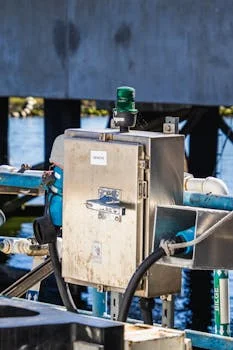
Membrane fouling remains the main reliability risk for tropical MBR plants. High wastewater temperature and unstable grid power amplify the problem. Operators should treat fouling, power loss, heat, mechanical damage, and sludge bulking as separate failure modes. A written response matrix posted at the control panel cuts mean time to recover after each event.
Fouling: Warm wastewater accelerates EPS and SMP production. MLSS above 12 g/L or high FOG loads thicken the cake layer.
- Fixes: Schedule CIP with citric acid for inorganic and organic foulants and NaOCl for biofouling. Keep scour air near 0.2–0.4 Nm³/m²/h. Strengthen FOG removal, including DAF where needed. A PLC-controlled dosing for MBR CIP and pH adjustment reduces under- and over-dosing during CIP.
Power Fluctuations: Loss of scour blowers and permeate pumps lets sludge settle on the membrane within minutes.
- Fixes: Fit VFDs on blowers and pumps. Back up scour blowers with UPS or generator so short outages do not bake on a foulant layer.
High Temperatures: Mixed liquor above about 35°C can raise fouling rates and shift microbial populations.
- Fixes: Shade tanks and containers first. Add heat exchange only when passive measures fail.
Membrane Damage: Abrasives and free chlorine above about 1 ppm residual on PVDF are common killers.
- Fixes: Keep fine screening tight with equipment such as HydropureWater’s rotary mechanical bar screen. Dose chlorine only after the membrane if a residual is required.
Sludge Bulking: Filamentous growth from DO below 1 mg/L or a high F/M ratio can block channels.
- Fixes: Hold DO near 2–3 mg/L and adjust wastage to restore F/M.
Selection Checklist Before You Buy an MBR in Nigeria
Nigerian buyers should lock seven items before awarding an MBR contract, or CAPEX and OPEX bids cannot be compared fairly. Skip any item and change orders usually appear during commissioning.
- Confirm the exact NESREA sector schedule and state permit limits that apply to your discharge point.
- Measure influent BOD, COD, TSS, FOG, and temperature across at least one production week.
- Decide reuse targets early: cooling, irrigation, or RO feed changes membrane and disinfection design.
- Specify pre-treatment: fine screens, grit removal, and DAF when FOG exceeds about 50–100 mg/L.
- State design flux (15–25 LMH in tropical service) and scour airflow (0.2–0.4 Nm³/m²/h) in the bid sheet.
- Require membrane life, CIP frequency, and spare-module lead time in writing, with Nigerian power quality assumed.
- Compare energy at your real tariff (for example N140/kWh in Lagos), not a generic overseas unit rate.
Main cost drivers remain membrane area, blower power, civil works, and automation. Soft factors such as local spare parts and operator training often decide whether the modelled 3–5 year payback survives the first wet season.
Procurement teams should also request a one-page mass balance showing design flow, peak factor, sludge production, and CIP chemical volumes. Without that sheet, energy and sludge haulage quotes are not comparable across vendors.
Who This Is For
Plant engineers, EPC contractors, and procurement managers sizing industrial or municipal MBR trains in Nigeria are the primary readers. Look elsewhere if you only need primary clarification for septic discharge, or if your permit already accepts pond effluent without reuse. Next step: gather influent BOD, COD, and FOG data, confirm the NESREA sector schedule that applies, and request a duty-specific MBR budget with energy and membrane-life assumptions stated.
HydropureWater can size membrane area, blower duty, and CIP chemistry against your influent sheet and permit limits when you are ready to compare bids on equal terms.
Frequently Asked Questions
What is the difference between MBBR and MBR wastewater treatment?
MBBR grows biofilm on plastic carriers inside an aerated tank, while MBR couples activated sludge with a membrane barrier. MBR effluent is typically much cleaner, often below 10 mg/L BOD, because solids are filtered rather than settled. Capital and operating costs for MBR are commonly two to three times those of MBBR at the same flow. Choose MBR when reuse or strict permits demand that extra barrier.
What is an advantage of MBR treatment for wastewater?
MBR’s main advantage is near-reuse permeate—often below 10 mg/L BOD and below 2 mg/L TSS—in a footprint up to 60% smaller than conventional activated sludge. That combination suits Lagos and other dense industrial estates where land cost rivals equipment cost. Lower sludge yield also reduces haulage where landfill fees are high.
How much does an MBR system cost in Nigeria?
Installed cost varies with capacity, automation, and membrane type. Small industrial packages around 10 m³/day may start near N30 million. Plants up to 2,000 m³/day often range from N300 million to N800 million including civil works. Always separate CAPEX from annual energy, CIP chemicals, and membrane replacement when comparing bids.
What are the disadvantages of MBR systems?
MBR drawbacks are higher CAPEX, higher specific energy, fouling risk, and the need for trained CIP operators. Those costs are offset when fines, water reuse, and land savings are large enough to keep payback inside about 3–5 years. Weak pre-treatment or unstable power will erase that advantage quickly.
Can MBR systems handle industrial wastewater in Nigeria?
Yes—food and beverage, textile, and pharmaceutical plants in Nigeria already run MBR trains successfully when pre-treatment is sized for FOG, grit, and pH. Skip or undersize screening and DAF, and membranes foul regardless of brand. Kaduna textile and Lagos beverage case data show the technology works once the front end is honest.


