Why Ogun State Factories Are Racing to Install Package Wastewater Treatment Plants
Ogun State requires package wastewater treatment plants to meet NAFDAC and OGEPA effluent standards, with penalties including facility sealing for non-compliance. Between February and June 2025, the NAFDAC Ogun II Office in Ota alone sealed the facilities of 39 illegal packaged water producers, citing untreated effluent as the primary violation. This underscores a growing enforcement trend, as the Ogun State Environmental Protection Agency (OGEPA) also sealed four industries in 2024 for failing to install necessary effluent treatment plants, with fines potentially reaching up to ₦5 million per violation. For industrial and municipal projects, compact systems like the WSZ Series (1–80 m³/h) deliver 90–95% BOD/COD removal in a buried or mobile footprint, costing approximately ₦25 million–₦250 million depending on capacity and automation. Ogun State's industrial expansion, evidenced by developments like the SONA Group’s 2019 plant inauguration in Sango-Ota, drives demand for efficient, compliant, and space-saving wastewater solutions. This guide provides essential 2025 technical specifications, cost benchmarks, and a supplier checklist to help navigate Ogun’s evolving regulatory landscape.
Ogun State Wastewater Regulations: NAFDAC vs. OGEPA Standards Explained
Navigating Ogun State's wastewater regulations is critical for industrial and municipal facility managers to avoid penalties and ensure operational continuity. Two primary regulatory bodies, NAFDAC and OGEPA, set distinct effluent standards tailored to their oversight. NAFDAC, primarily concerned with public health and consumer safety, enforces stringent standards for packaged water producers. These include maintaining a pH range of 6.5–8.5, ensuring turbidity is below 5 NTU, and achieving zero E. coli per 100 mL, as detailed in the NAFDAC Guidelines for Packaged Water (2023). OGEPA focuses on industrial and municipal discharges into the environment, setting limits that protect water bodies and ecosystems. For industrial effluent, OGEPA mandates limits such as Biochemical Oxygen Demand (BOD) below 30 mg/L, Chemical Oxygen Demand (COD) below 250 mg/L, Total Suspended Solids (TSS) below 50 mg/L, and oil and grease below 10 mg/L, as outlined in the Ogun State Environmental Protection Law (2020).
| Parameter | NAFDAC Standard (Packaged Water) | OGEPA Industrial Effluent Limit |
|---|---|---|
| pH | 6.5 – 8.5 | N/A (General water quality parameters apply) |
| Turbidity (NTU) | < 5 | N/A (General water quality parameters apply) |
| E. coli (per 100 mL) | 0 | N/A (Focus on microbial load for treated wastewater) |
| BOD (mg/L) | N/A | < 30 |
| COD (mg/L) | N/A | < 250 |
| TSS (mg/L) | N/A | < 50 |
| Oil & Grease (mg/L) | N/A | < 10 |
Effective wastewater management requires adherence to these regulations, and the permitting process involves obtaining pre-installation approval from OGEPA, followed by post-installation inspection and submission of quarterly monitoring reports.
Package Wastewater Treatment Plant Specifications: What Ogun Factories Need
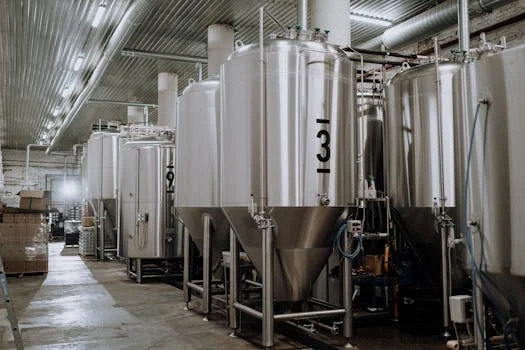
Selecting the right package wastewater treatment plant for a facility in Ogun State demands a thorough understanding of its technical specifications. These compact, pre-engineered systems are designed for modularity and efficiency, offering a viable solution for sites with limited space or specific treatment requirements. Flow rate ranges from 1 m³/h for smaller industrial operations or specific process streams, extending up to 80 m³/h for larger facilities, such as those found in the Sango-Ota industrial parks. For significantly larger municipal or industrial park needs, systems can scale up to 100–500 m³/h. A typical 500-employee textile plant in Ogun, for instance, might require a system with a capacity of around 5 m³/h. These plants achieve high removal efficiencies, typically 90–95% for BOD, 85–92% for COD, and 95% for TSS, aligning with stringent environmental standards.
| Specification | Typical Range (WSZ Series) | Application Example (Ogun State) |
|---|---|---|
| Flow Rate (m³/h) | 1 – 80 | 5 m³/h for a 500-employee textile plant |
| BOD Removal Efficiency (%) | 90 – 95 | Ensures compliance with OGEPA limits |
| COD Removal Efficiency (%) | 85 – 92 | Reduces organic load in discharged water |
| TSS Removal Efficiency (%) | > 95 | Minimizes suspended solids |
| Footprint (Buried System Depth) | 0.5 – 2 m | Ideal for Sango-Ota industrial parks |
| Energy Consumption (kWh/m³) | 0.3 – 0.6 | Optimized for cost-efficiency |
| Process | Anoxic/Aerobic (A/O) with Sedimentation & Disinfection | Standard for integrated treatment |
For facilities requiring robust, integrated sewage treatment, the WSZ Series offers a reliable solution. Explore the WSZ Series Underground Integrated Sewage Treatment Plant, a compact package wastewater treatment plant for Ogun State industrial zones.
Cost Breakdown: Package Wastewater Treatment Plants in Ogun (2025 Data)
Budgeting for a package wastewater treatment plant in Ogun State requires understanding both initial capital investments and ongoing operational expenditures. As of 2025, capital costs for package plants, specifically referencing the WSZ Series with capacities ranging from 1 to 80 m³/h, typically fall between ₦25 million and ₦250 million. Operational costs are more variable but can be estimated at ₦15–₦40 per cubic meter, covering energy consumption, necessary chemicals for disinfection or pH adjustment, and routine maintenance. A significant advantage of modern, fully automated systems is the reduction in labor costs, as many do not require a dedicated on-site operator.
| Cost Component | Estimated Range (for a 10 m³/h plant) | Notes |
|---|---|---|
| Capital Cost (₦) | 50,000,000 – 70,000,000 | Includes equipment, installation, commissioning |
| Operational Cost (₦/m³) | 20 – 30 | Energy, chemicals, maintenance |
| Potential Fines Avoided (₦/violation) | Up to 5,000,000 | OGEPA penalties for non-compliance |
| ROI Timeline (Years) | 2 – 5 | Based on fine avoidance and potential water savings |
| Local Supplier Cost Advantage | 20% – 30% lower | Compared to international suppliers |
| Local Supplier Lead Time (Weeks) | 8 – 12 | vs. 4 – 6 weeks for international |
Supplier Selection Checklist: 7 Questions to Ask Before Buying a Package Plant in Ogun
Choosing the right supplier for a package wastewater treatment plant in Ogun State is as critical as selecting the plant itself. A well-defined selection process can prevent costly errors and ensure long-term compliance. Firstly, inquire about the supplier's ability to guarantee NAFDAC and OGEPA compliance; they should readily provide effluent reports demonstrating their systems meet these standards. Secondly, assess the availability of local support. A supplier with a Nigerian service center, such as HydropureWater’s presence in West Africa, is invaluable for prompt maintenance and spare parts.
For sites needing to address challenging water quality, integrating a robust pre-treatment solution is key. Consider the Multi-Media Filter for Water Treatment, a pre-treatment system for Ogun’s high-turbidity wastewater.
To ensure effective microbial control and meet NAFDAC standards, particularly for packaged water producers, a reliable disinfection system is essential. Explore the Chlorine Dioxide Generator for Water Disinfection, offering NAFDAC-compliant disinfection for packaged water producers.
Understanding how wastewater regulations in other West African nations compare to Ogun State’s standards can offer valuable context. Learn more by reading about Industrial Wastewater Treatment in Accra: 2025 Engineering Guide with Costs, Compliance & Equipment Selection.
When evaluating treatment options, it's also beneficial to understand the cost implications of different technologies. For instance, exploring DAF vs Sedimentation Cost Difference: 2025 Engineering Breakdown with ROI & Decision Framework can provide insights into alternative pretreatment options for Ogun’s industrial wastewater.
Frequently Asked Questions
What are the primary regulatory bodies for wastewater in Ogun State?
The two main regulatory bodies are the National Agency for Food and Drug Administration and Control (NAFDAC), which sets standards for packaged water producers, and the Ogun State Environmental Protection Agency (OGEPA), which oversees industrial and municipal effluent discharges.
What is a 'package wastewater treatment plant'?
A package wastewater treatment plant is a pre-engineered, modular system that combines multiple treatment processes (biological treatment, sedimentation, disinfection) into a single, compact unit.
How does NAFDAC's wastewater standard differ from OGEPA's?
NAFDAC’s standards focus on ensuring the safety and potability of packaged water, emphasizing microbial purity and aesthetic qualities. OGEPA's standards for industrial effluent are broader, focusing on reducing pollutants to protect the receiving environment.
What is the typical cost range for a package wastewater treatment plant in Ogun State?
For package plants with capacities ranging from 1 to 80 m³/h, the capital cost in Ogun State typically falls between ₦25 million and ₦250 million.
What factors influence the ROI for a package wastewater treatment plant?
The return on investment is primarily driven by avoiding significant OGEPA fines for non-compliance, and potential savings through reduced water purchase costs if water recycling is implemented.