Industrial Wastewater Treatment in Accra: Compliance Benchmarks and Plant Risks
Industrial wastewater treatment in Accra must cut BOD to ≤20 mg/L, COD to ≤75 mg/L, and TSS to ≤30 mg/L when those older targets still appear in bid packs. A brewery case reached BOD 12.41 mg/L and COD 63.27 mg/L with DAF plus biology. Influent strength, land area, and permit timing decide the train.
Under Ghana’s Environmental Protection (Effluent) Regulations, 2025 (L.I. 2506), discharges must meet Ghana Standard GS 1212 as revised, and permits still sit on Environmental Assessment Regulations, 1999 (L.I. 1652). Earlier guidance used BOD ≤20 mg/L, COD ≤75 mg/L, and TSS ≤30 mg/L as industrial targets; operators must confirm the numeric limits written into the current permit before freezing design. Failure to comply can trigger fines up to GHS 50,000 (about $4,200) or shutdowns. During the 2023–2024 enforcement cycle, plants in the North Industrial Area and Tema drew penalties for color above 100 Pt-Co and oil and grease above 10 mg/L. Untreated brewery effluent can reach BOD 1,200 mg/L, so removal above 98% is often required to hit those older BOD ceilings.
Heavy metals remain a regulator focus for mining and electronics sites. Per Schedule 2 language long cited against L.I. 1652 materials, arsenic was held below 0.01 mg/L in some older schedules, with tight lead and cadmium ceilings. One Accra beverage plant moved from non-compliance to permit pass after screening, a DAF system for high-efficiency TSS and FOG removal in Accra’s food processing and textile industries, and aerobic polishing. That train also cut load on Ghana Water Company Limited (GWCL) sewers.
How to Select the Right Wastewater Treatment System for Your Accra Facility
System selection for Accra plants starts with measured influent pH, BOD, COD, TSS, FOG, and metals—not a generic catalogue train. Textile mills often need dye-focused oxidation or a compact MBR systems for space-constrained textile mills and breweries in Accra when color drives the permit. Food plants usually put grease recovery and organic load cut first. Most plants we size for Tema and Accra industrial plots run equalization at the lower end of 6–12 hours HRT when batch dumps dominate the day.
A practical Accra process order is screening, equalization, primary solids or FOG removal (DAF or sedimentation), secondary biology, then tertiary polish. In dense Accra CBD plots, footprint often decides the winner. Conventional activated sludge is cheaper in equipment dollars but needs large clarifiers. Membrane bioreactors combine biology and filtration in one compact block, which suits urban sites where land lease cost exceeds membrane OPEX.
| Industry Type | Primary Pollutants | Recommended Treatment Train | Key Equipment |
|---|---|---|---|
| Breweries | High BOD, COD, Sugars | Screening → Equalization → Aerobic/Anaerobic → Clarification | DAF, Aeration Tanks |
| Textiles | Dyes, Heavy Metals, pH | Coagulation → Flocculation → MBR → Carbon Filtration | automated chemical dosing for pH adjustment and heavy metal precipitation in Accra’s mining and textile wastewater |
| Food Processing | FOG, Proteins, TSS | Screening → DAF → Biological Treatment → Disinfection | Dissolved Air Flotation (DAF) |
| Mining | Heavy Metals, Acid Mine Drainage | Chemical Precipitation → Sedimentation → Ion Exchange | Clarifiers, Dosing Systems |
Automation cuts daily labor but raises the skill bar for membrane and DAF maintenance. Manual sedimentation is simpler, yet it often misses strict industrial TSS and color limits that Accra inspectors still enforce. Grid power in Accra commonly sits near GHS 0.80–1.20/kWh, so oxygen-transfer efficiency and load-following controls matter as much as nameplate CAPEX. Where plot depth is limited, an Underground Package Sewage Treatment Plant (WSZ Series) can place secondary treatment below grade and free surface area for production.
DAF vs. MBR vs. Sedimentation: Performance, Costs, and Suitability for Accra Industries
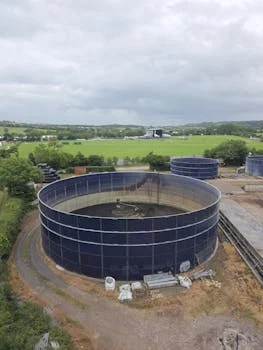
Membrane bioreactors deliver 95–99% BOD removal and over 99.9% TSS removal when membranes stay clean and SRT is controlled, which suits reuse goals. Dissolved air flotation is the usual primary step for high FOG streams in Accra food plants and commercial laundries. DAF micro-bubbles lift solids and grease, typically removing 90–98% TSS and 95–99% FOG and cutting load on biology. Gravity sedimentation struggles with fine, non-settleable solids common in textile and chemical wastewater.
Sedimentation has the lowest CAPEX but the largest land need, typically 2–4 m² per m³/day of treated water. MBR systems cost more upfront yet need only 0.5–1 m² per m³/day, which frees expansion space. For a detailed comparison of DAF and sedimentation for industrial wastewater treatment, OPEX on energy and chemicals often decides the winner. MBR energy commonly runs 0.8–1.5 kWh/m³; DAF usually uses 0.3–0.6 kWh/m³ under design recycle ratios.
| Parameter | DAF (Dissolved Air Flotation) | MBR (Membrane Bioreactor) | Sedimentation (Clarifier) |
|---|---|---|---|
| TSS Removal % | 90–98% | >99.9% | 50–70% |
| BOD Removal % | 40–60% (as primary) | 95–99% | 30–50% |
| Footprint (m²/m³/day) | 1–2 | 0.5–1 | 2–4 |
| Energy Use (kWh/m³) | 0.3–0.6 | 0.8–1.5 | 0.1–0.3 |
| CAPEX Range (USD) | $50,000 – $300,000 | $80,000 – $500,000 | $30,000 – $200,000 |
Accra breweries typically pair DAF for solids and FOG with aerobic biology to clear EPA permit checks. Textile plants lean toward MBR when dye-bath recycle offsets rising municipal water tariffs. Mining still uses large clarifiers for tailings water, but urban Accra factories are dropping gravity-only trains because TSS ≤30 mg/L targets leave little margin for upset.
Accra-Specific Compliance: Ghana EPA Permits, Discharge Limits, and Avoiding Penalties
Ghana EPA industrial wastewater permits usually take 6–12 months and need an EIA package plus stamped engineering drawings under L.I. 1652 assessment rules. Plants must file sludge disposal and emergency bypass plans. Permit fees commonly range from about GHS 2,000 for small units to over GHS 20,000 for large manufacturers. Operating without a valid environmental permit breaches national environmental law; L.I. 2506 (2025) now ties effluent quality to GS 1212 under the Environmental Protection Act, 2025 (Act 1124).
Discharge limits sit at the center of Accra compliance work. EPA practice expects monthly BOD, COD, and TSS checks, with quarterly metals where the permit lists them. Grab samples are common, but composite samples better match batch production. Keep lab records at least three years for unannounced inspections. Undersized equalization and sludge washout remain the two failure modes we see most in Tema and Accra audits.
| Parameter | Ghana EPA Limit (Industrial) | Monitoring Frequency | Common Failure Point |
|---|---|---|---|
| BOD5 | ≤ 20 mg/L | Monthly | Organic overloading |
| COD | ≤ 75 mg/L | Monthly | Refractory organics |
| TSS | ≤ 30 mg/L | Monthly | Inadequate settling/filtration |
| pH | 6.0 – 9.0 | Continuous/Daily | Incomplete neutralization |
| Oil & Grease | ≤ 10 mg/L | Monthly | Poor DAF/Skimmer operation |
Treat the table values as the older industrial targets still quoted in many Accra bid packs; verify every number against the live GS 1212 schedule attached to your permit. Operator skill often fails before hardware does—wrong coagulant dose or a drifting F/M ratio can spike BOD overnight. An automated chemical dosing for pH adjustment and heavy metal precipitation in Accra’s mining and textile wastewater ties dose to flow and load and cuts that human error band.
Cost Breakdown for Accra Industrial Effluent Plants (2025 Data)
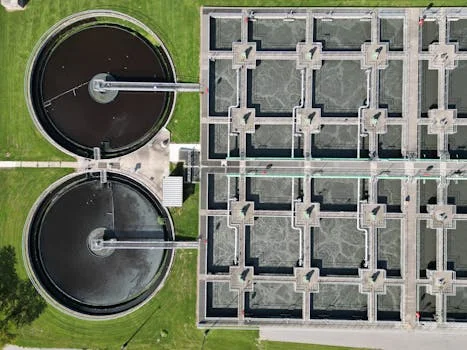
Accra industrial effluent budgets split into CAPEX for equipment plus civil works and OPEX for energy, chemicals, labor, and sludge. Equipment usually takes 60–70% of CAPEX. Civil works for tanks, slabs, and buildings cover most of the remainder once site prep and power feed are included. Published package ranges still cluster near $50,000–$300,000 for DAF, $80,000–$500,000 for MBR, and $30,000–$200,000 for sedimentation, before Ghana freight, duties, and installation.
Energy at GHS 0.80–1.20/kWh dominates OPEX for aerated plants. Chemicals for pH, coagulation, and disinfection rise fast on textile and metals streams. Labor and sludge haul often decide whether a low-CAPEX clarifier stays cheaper over five years. Compact underground packages such as the Underground Package Sewage Treatment Plant (WSZ Series) can cut civil volume when surface land is leased at premium rates.
What do disinfection systems for tanks and piping typically cost?
Disinfection CAPEX for effluent contact tanks, dosing skids, and related piping is a separate line from biology. A 2021 municipal WWTP cost opinion for Tawas Utilities Authority (USA) estimated liquid hypochlorite disinfection near $358,000 CAPEX. Annual O&M was about $24,900. A closed-vessel UV option was about $882,000 CAPEX with about $22,800/year O&M. Those figures cover equipment, contact-tank work, chemical storage or UV vessels, and installation. They exclude Accra freight and Ghana electrical codes, so treat them as order-of-magnitude benchmarks for industrial trains.
Shock chlorination or CIP of tanks and pipe loops sits in OPEX, not the disinfection skid CAPEX above. Dose, contact time, and neutralization volume drive that bill. Plants with long FOG lines and dead legs spend more on labor and chemical than plants with short, drainable headers. Budget disinfection early if reuse or sewer discharge needs a pathogen limit in the permit.
How much does industrial effluent treatment cost in Accra?
Industrial effluent treatment cost in Accra is set by flow, strength, footprint, and energy tariff more than by a single catalogue price. For mid-size brewery or food plants, equipment alone often lands inside the DAF or MBR ranges above, then civil works and power feed add the rest. Run a five-year OPEX model at GHS 0.80–1.20/kWh before locking CAPEX. That is where most Accra projects we review under-budget aeration and sludge haul.
Selection Checklist Before You Buy
Use this short checklist before freezing the Accra design package:
- Confirm live GS 1212 / permit numbers for BOD, COD, TSS, O&G, metals, and color.
- Run 7–14 days of composite influent data, including batch dumps.
- Size equalization for the highest 24-hour load, not the average day.
- Compare footprint (m² per m³/day) against leased land cost.
- Model energy at GHS 0.80–1.20/kWh for aeration, DAF recycle, and MBR scour.
- Plan sludge haul and permit-required monitoring before ordering steel.
- Include disinfection CAPEX if the permit or reuse scheme needs pathogen kill.
Who this is for: Accra and Tema plant engineers, EPC contractors, and procurement managers sizing brewery, textile, food, or light manufacturing effluent trains. Who should look elsewhere: households and small septic-only sites without industrial COD or metals. Next step: send influent data and permit limits for a sized train via our request a treatment design quote form.
Frequently Asked Questions
What discharge limits apply to industrial plants in Accra?
Older Accra bid packs often cite BOD ≤20 mg/L, COD ≤75 mg/L, TSS ≤30 mg/L, pH 6.0–9.0, and oil and grease ≤10 mg/L. L.I. 2506 (2025) requires compliance with GS 1212 as revised, so the binding numbers are those written in your current EPA permit. Design to the permit sheet, then keep monthly BOD, COD, and TSS records ready for inspection.
How much does a DAF or MBR system cost in Accra?
Published equipment CAPEX ranges are about $50,000–$300,000 for DAF and $80,000–$500,000 for MBR before freight, duties, civil works, and commissioning. Civil works and installation often close the gap between the two options on tight Accra plots. Compare five-year energy and membrane or chemical costs at local tariff levels before choosing on sticker price alone.
What are typical costs to disinfect tanks, piping, and equipment?
A 2021 US municipal engineering estimate put liquid hypochlorite disinfection near $358,000 CAPEX and UV near $882,000 CAPEX. Annual O&M sat roughly $23,000–$25,000 either way. Accra projects must add import, power quality, and chemical supply risk on top of those benchmarks. Routine tank and pipe CIP is an OPEX item driven by dose, contact time, and labor.
How long does a Ghana EPA wastewater permit take?
Most industrial wastewater permits take 6–12 months when the EIA, drawings, and sludge plan are complete under L.I. 1652 assessment rules. Fees commonly run from about GHS 2,000 for small plants to over GHS 20,000 for large manufacturers. Starting construction without a valid environmental permit is a compliance failure regardless of equipment performance.
When should an Accra plant choose MBR over sedimentation?
Choose MBR when land is under about 1 m² per m³/day, reuse is planned, or TSS must stay near or below 30 mg/L with little upset margin. Sedimentation fits mining-scale flows with low land cost and weaker TSS targets. Many Accra food and brewery sites still use DAF plus biology as the compliance workhorse when FOG dominates and reuse is not required.