What Determines COD in Cable Manufacturing Wastewater
Cable manufacturing wastewater COD removal requires stage-specific treatment because the plant effluent combines several chemically distinct streams rather than one uniform waste. Wire drawing contributes lubricant-emulsion COD, while annealing, stranding, plating and sheathing add soluble organics, metals, suspended solids or intermittent washwater. HydropureWater’s 2026 field profile reports blended influent COD of 800–3,000 mg/L, with wire-drawing lubricant streams at 1,500–3,000 mg/L and annealing and stranding cooling streams contributing 50–150 mg/L each. Segregating these streams identifies which COD is biodegradable, which is emulsified and which needs physical separation before biological loading is assigned.
| Production source | COD contribution reported by HydropureWater, 2026 | Treatment implication |
|---|---|---|
| Blended plant influent | 800–3,000 mg/L | Size equalization and treatment against measured production peaks |
| Wire-drawing lubricant stream | 1,500–3,000 mg/L | Break the soap- and fatty-acid-stabilized emulsion before biological treatment |
| Annealing cooling stream | 50–150 mg/L | Consider segregated reuse after appropriate screening and treatment |
| Stranding cooling stream | 50–150 mg/L | Assess for separate reuse or controlled blending |
Soluble biodegradable COD can support biological treatment; COD carried in stable lubricant emulsions does not behave the same way because the oil droplets resist gravity separation and shield organics from biological degradation. The drawing stream therefore creates two linked pretreatment requirements: recover the lubricant and prevent oil carryover from fouling downstream membranes.
Acidic plating rinse water should remain separate from alkaline drawing wastewater until pH control and metal precipitation. HydropureWater’s 2026 guide warns that early mixing can redissolve precipitated metals and create sulfide-related corrosion risks. A 2018 UiTM dissertation also confirms that cable-manufacturing wastewater has been studied specifically with natural coagulants, but repository metadata alone does not establish full-plant performance. Upstream dross and fibers can be removed with a rotary mechanical bar screen before equalization.
The Cable Wastewater COD Treatment Train
The defensible treatment sequence is equalization and screening, dissolved air flotation, lamella clarification, pH adjustment and chemical precipitation, membrane bioreactor, cartridge filtration, reverse osmosis where reuse requires it, and UV disinfection before reuse storage. Each stage has a separate responsibility; adding a downstream membrane does not correct an overloaded oil-removal stage.
- Equalization and screening: mix compatible production streams, remove dross and fibers, and balance batch loads.
- DAF: recover free and emulsified oil before it reaches clarification or aeration.
- Lamella clarification: settle coagulated solids and remove particulate-bound pollutants.
- pH adjustment and precipitation: remove dissolved metals and prepare the stream for biological treatment.
- MBR: degrade soluble biodegradable organics and filter residual solids.
- Cartridge filtration and RO: protect membranes and remove dissolved salts for reuse.
- UV disinfection: reduce microbiological risk in stored reuse water.
| Stage | Primary duty | Design information cited by HydropureWater, 2026 |
|---|---|---|
| Equalization | Batch-flow and load balancing | 24–36-hour HRT recommended for batch-oriented cable plants |
| DAF | Free and emulsified oil recovery | 90–95% FOG removal to below 10 mg/L |
| Chemical precipitation and lamella clarification | Metals and suspended-solids removal | pH 9–10; coagulant 20–50 mg/L; flocculant 1–3 mg/L |
| MBR | Biodegradable dissolved organics and solids separation | Flat-sheet PVDF; flux 10–20 L/m²·h |
| Cartridge filtration | RO membrane protection | 5 µm guard filter |
| RO | Dissolved salt removal for reuse | 70–85% nominal recovery |
DAF is an oil-removal stage, not a substitute for biological degradation of soluble COD. Equipment selection should reflect that division of duty through a cable wastewater DAF system, a lamella sedimentation tank, an automatic coagulant and flocculant dosing system, an integrated MBR for cable wastewater and, where justified, an industrial RO system for cable plant reuse.
The cable-production study by Mohamad Zaid and colleagues provides a useful coagulant case. Aluminum sulfate recovered from cable-production sludge reduced COD by an average of 32% in laboratory tests and by 40% during technical-scale dosing at the on-site wastewater plant; the study used PN-ISO 15705:2005 for COD determination. These results support staged validation, not a guaranteed plant-wide removal rate. RO removes dissolved salts, but it cannot substitute for upstream control of oil, solids and biodegradable COD.
How to Remove High-COD Emulsions Without Fouling Downstream Equipment
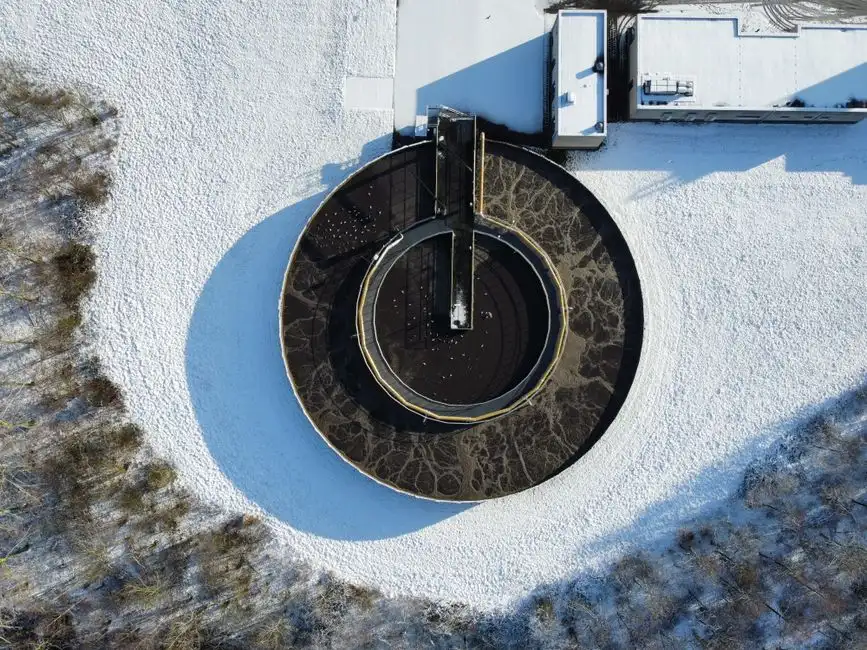
Wire-drawing lubricant streams carry the dominant reported COD load, so a DAF-first train is the practical baseline when emulsified lubricant drives the wastewater profile. HydropureWater’s 2026 data place this stream at 1,500–3,000 mg/L COD, while annealing and stranding cooling streams contribute 50–150 mg/L each. The treatment ladder should assign one job to each unit: DAF recovers recoverable oil, coagulation and lamella clarification capture suspended material and metals, MBR treats biodegradable dissolved organics, and RO addresses conductivity or reuse-quality limits.
| Condition | Primary treatment response | Acceptance evidence |
|---|---|---|
| Stable lubricant emulsion | DAF with chemical oil breaking as required | Measure residual oil and FOG after flotation |
| Suspended solids and particulate-bound metals | Coagulation, flocculation and lamella clarification | Measure TSS and relevant metals before MBR |
| Dissolved biodegradable COD | Activated sludge with MBR separation | Determine COD and BOD removal on actual blend |
| Conductivity or stringent reuse specification | Cartridge filtration followed by RO | Verify permeate conductivity, recovery and concentrate disposal |
HydropureWater reports 90–95% FOG removal by DAF to below 10 mg/L in 2026, while its design basis calls for polishing below 1 mg/L oil before an MBR. That distinction matters: a DAF outlet that meets a general FOG target may still need further oil removal to protect PVDF membranes. The cable wastewater DAF system should therefore be specified around verified oil carryover, and the downstream train should include automatic chemical dosing and clarification where jar and pilot tests support those duties.
The electrochemical study by Muslim and Asel is a proof of condition, not a cable-plant performance guarantee. In a two-litre petroleum-wastewater coagulation cell, the reported optimum was 99.5% COD removal and 94.2% oil removal at 10.5 V for 50 minutes, using four aluminium and four iron electrodes, 2 cm spacing, 12 cm submergence, pH 7, 0.5 g/L sodium chloride and initial COD of 710 mg/L. Estimated energy consumption was 12 kWh/m³. Before considering this route, require testing with actual cable wastewater plus a site-specific assessment of energy use, electrode consumption, sludge generation and scale-up.
Choosing Between Biological Treatment and Advanced Oxidation
Biological treatment is the appropriate mechanism for biodegradable dissolved organics, but COD-only sizing can understate pretreatment if emulsified lubricant is counted as biologically available load. Coagulation and solids separation address particulate or emulsified COD; advanced oxidation should be screened only when the remaining organics are persistent or a reuse specification justifies its energy and reagent demand.
| Selection question | Preferred mechanism | Evidence required before procurement |
|---|---|---|
| Is the COD mainly soluble and biodegradable? | Biological treatment | COD, BOD and biodegradability data for the blended wastewater |
| Is the COD emulsified or particulate? | DAF, coagulation and clarification | Oil and grease, TSS and stream-specific characterization |
| Is residual COD persistent? | Evaluate advanced oxidation | Site-specific treatment test and operating-cost assessment |
| Does reuse require low conductivity? | RO after biological and solids pretreatment | Permeate target, feed conductivity and concentrate route |
The integrated MBR for cable wastewater combines activated sludge treatment with submerged PVDF membrane filtration and is suitable for industrial process water and reuse applications; HydropureWater lists capacities from 10 to 2,000 m³/day. That catalog range is not a sizing recommendation. Capacity should follow measured flow, biodegradable COD load, oil carryover, temperature and production peaks. The MBR membrane bioreactor module and RO and UF membrane elements should be selected only after the biological and pretreatment duties are defined.
The evidence base is uneven. Muslim and Asel tested petroleum refinery wastewater in a laboratory electrochemical system, while the cable-production coagulant study used actual cable-plant sewage at laboratory and on-site technical scale. Before selecting biological or advanced treatment, request COD, BOD, oil and grease by a regulator-accepted method, TSS, pH, conductivity, copper, lead, zinc, sulfide, phosphorus and biodegradability data. Do not apply an unverified universal MBR removal percentage; use jar or pilot testing with the actual blended wastewater and production schedule.
Equipment Sizing and Procurement Inputs
A cable wastewater proposal should begin with the production schedule and measured wastewater load, not a generic “tons per day” treatment rate. HydropureWater’s 2026 guide uses a 100 m³/day flow only as a budgeting example and calculates a 17–25 m² DAF contact zone from its stated 4–6 m³/h per m² rule of thumb. That area must be confirmed against the selected DAF model, peak flow, wastewater characteristics and the manufacturer’s design rules.
| Procurement package | Minimum information to state | Bidder deliverable |
|---|---|---|
| Equalization and screening | Average and peak flow; batch and cleaning profile | Vessel and screen sizing calculation |
| DAF | Oil type, emulsion characteristics, flow and skimming duty | Surface loading, residence time and oil-recovery guarantee |
| Coagulation and clarification | COD, BOD, TSS, pH, metals, sulfide and phosphorus | Jar-test basis, chemical dosing range and solids balance |
| MBR | Biodegradable COD load, flow, temperature, oil carryover and reuse target | Flux, membrane area, biological loading and cleaning assumptions |
| RO and UV | Permeate conductivity, recovery, salinity and concentrate destination | Hydraulic and salt balance, cleaning schedule and membrane warranty conditions |
| Sludge handling | Oil, iron and coagulant solids characteristics | Volume, dewatering and disposal basis, including plate-and-frame filtration |
The minimum influent dataset is average and peak flow, batch-production profile, COD, BOD, oil and grease, TSS, pH, conductivity, metals, sulfide, phosphorus, and the discharge or reuse target. The 24–36-hour equalization HRT recommended in HydropureWater’s 2026 guide is a design recommendation for batch-oriented cable plants, not a universal standard.
Require bidders to separate pretreatment, biological, RO, sludge handling, electrical, civil work, commissioning and performance-testing costs. The DAF system and MBR package should each identify performance exclusions, utility requirements, controls, guarantees and replacement costs.
Operating Cost, Reuse Value and Compliance Risk
HydropureWater’s 2026 operating-cost estimate for its four-stage train is a budgeting basis, not a quotation for a specific site. It lists electricity at $0.35–$0.55/m³, chemicals at $0.20–$0.35/m³, membrane replacement at $0.10–$0.18/m³, labor at $0.15–$0.25/m³ and brine disposal at $0.30–$0.60/m³.
| Cost or value item | HydropureWater, 2026 estimate | Buyer verification |
|---|---|---|
| Electricity | $0.35–$0.55/m³ | Calculate from blower, DAF and RO operating profiles |
| Chemicals | $0.20–$0.35/m³ | Confirm dose rates, recovery and chemical prices |
| Membrane replacement | $0.10–$0.18/m³ | Validate flux, cleaning frequency and replacement assumptions |
| Labor | $0.15–$0.25/m³ | Match staffing to plant size and operating hours |
| Brine disposal | $0.30–$0.60/m³ | Obtain disposal route and hauling quotations |
| Freshwater displacement | $2.00–$2.80/m³ | Confirm the plant’s actual water tariff |
| Net reuse savings | $1.15–$1.95/m³ | Recalculate from verified OPEX and usable permeate |
HydropureWater’s cited 100 m³/day example gives a 2.5–3.5-year payback before ESG benefits, based on freshwater displacement of $2.00–$2.80/m³ and net savings of $1.15–$1.95/m³. Buyers should replace these assumptions with contracted water prices, measured treatment costs and actual reuse yield.
Undersized pretreatment creates both operating and compliance risk. Residual oil can foul PVDF MBR membranes, while early mixing of acidic and sulfide-bearing streams can compromise metal precipitation and corrosion control. Meter flow, COD, oil and grease, pH, conductivity and differential pressure separately so treatment cost and reuse yield can be verified. Membrane and sludge assumptions should also be tied to the membrane-element replacement plan and sludge dewatering method.
Pilot Testing and Commissioning Checklist
A defensible pilot tests each stage against the actual production sequence rather than a synthetic blend. Collect samples from drawing, plating, annealing, stranding and sheathing streams separately, then sample the blended influent across normal production and cleaning cycles. The membrane elements and UV disinfection unit should not be accepted before upstream fouling and final-water performance are demonstrated.
- Characterize sources: measure COD, BOD, oil and grease, TSS, pH, conductivity, metals, sulfide, phosphorus and biodegradability.
- Run jar tests: compare coagulant and flocculant doses for COD, TSS, metals and sludge separation.
- Run a continuous DAF trial: verify oil recovery, skimming, residual oil and batch-load response.
- Confirm biological loading: acclimate biomass with the actual blend and measure COD and BOD response.
- Verify MBR protection: require DAF effluent below the project oil target; HydropureWater’s 2026 design basis specifies below 1 mg/L oil.
- Validate RO and UV: confirm cartridge operation, permeate conductivity, salt rejection, recovery, cleaning requirements, UV performance and the concentrate route.
The cable-production coagulant study provides a useful precedent for validation depth: average COD reduction was 32% in laboratory tests and 40% during technical-scale operation with the recovered aluminum-sulfate coagulant. The change from laboratory to on-site technical scale was part of the evidence, not an optional extra. Before final acceptance, define sampling points, test methods, operating loads, acceptance limits, bypass conditions and responsibilities for corrective action.
Frequently Asked Questions
Is a DAF-first treatment train the practical choice for cable wastewater COD removal?
Yes, when wire-drawing lubricant emulsions drive the load. A cable wastewater DAF system should recover free and emulsified oil before biological or membrane treatment. HydropureWater reports 90–95% FOG removal to below 10 mg/L in 2026, but specifies further polishing below 1 mg/L oil for MBR protection. Confirm that target through site testing rather than relying on DAF performance alone.
How should MBR capacity be selected for a cable plant?
Base capacity on measured average and peak flow, biodegradable COD load, oil carryover, temperature and batch-production peaks. HydropureWater lists a catalog range of 10–2,000 m³/day, but that is not a sizing recommendation. Request an integrated MBR for cable wastewater sized from the site dataset, including membrane area, design flux, biological loading, cleaning frequency and peak-flow response.
When does RO justify the additional capital and operating cost?
RO is justified when the reuse destination requires conductivity below the level achievable by biological treatment. HydropureWater’s 2026 guide cites 5–30 µmS/cm typical single-pass BW30 permeate after a 5 µm guard filter and proper pretreatment. Before requesting an industrial RO system for cable plant reuse, obtain the actual permeate specification, feed conductivity, recovery target, concentrate composition and disposal route.
Should electrochemical treatment replace biological treatment?
Not without cable-wastewater testing. The reported 99.5% COD removal and 94.2% oil removal from Muslim and Asel’s petroleum-wastewater laboratory study used initial COD of 710 mg/L, a defined electrode arrangement and an estimated 12 kWh/m³ consumption. Treat those results as proof of condition, not guaranteed cable-plant performance. Require a site-specific mass, energy and electrode-consumption assessment before comparison with biological treatment.