
Why Plastic Wastewater Is Difficult to Treat
Plastic manufacturing wastewater COD removal is not a single-process problem because chemical oxygen demand (COD) measures oxidizable material without identifying whether it is particulate, colloidal or dissolved. In the on-site German plastics-processing pilot reported by S2/S3 in Water in 2023, influent COD ranged from 1,241 to 10,929 mg/L, while TSS ranged from 411 to 2,381 mg/L. That variability argues against selecting equipment from a single average or generic removal percentage.
The pilot estimated average wastewater flow at 10 m³/day and set a COD target below 1,000 mg/L for discharge into its municipal sewer network. That target belongs to the study’s discharge context, not a universal limit. Municipal and federal requirements vary, so the applicable authorization must come from the receiving authority.
Polymer and resin production, extrusion, molding and recycling can generate different combinations of suspended plastic fragments, microplastics, process chemicals, surfactants and biodegradable organics. A COD test does not measure microplastics directly. Conversely, a low TSS result does not establish that dissolved COD has been removed.
Before selecting equipment, request COD and BOD, TSS, pH, flow profiles, resin and polymer identifiers, surfactant and cleaning-chemical use, temperature, and discharge limitations. For separation decisions, also compare DAF versus clarifier selection for plastics wastewater. The key question is not simply “What percentage will this unit remove?” It is which contaminant fraction the unit captures and what the remaining wastewater must be treated for.
Separate the COD Before Selecting Equipment
The German pilot removed 49.55 ± 20.72% of influent COD in its belt-filtration stage, leaving an average of 1,982 ± 2,376 mg/L for the fixed bed (S2/S3, Water, 2023). That result shows why fractionation matters: a substantial part of the measured COD travelled with removable particles, while the fixed bed addressed the residual load.
Use a staged sampling program to characterize untreated wastewater, solids-separated streams, and filtered streams to determine how COD distributes among particles, colloids and dissolved material. The German pilot reduced turbidity from 650 ± 142 NTU before particle removal to 49.0 ± 42.2 NTU afterward, demonstrating the separation step’s physical effect (S2/S3, 2023).
| Wastewater fraction | Primary equipment role | Selection evidence required |
|---|---|---|
| Floatable plastics, oil, grease and associated solids | DAF pretreatment | Floatability, oil and grease content, polymer characteristics and batch flow profile |
| Suspended solids and colloids | UF or another solids-separation step | Particle-size distribution, turbidity, TSS and membrane compatibility |
| Dissolved organics | Fixed-bed adsorption | Individual and total COD, BOD/COD relationship, adsorption tests and competing contaminants |
| Biodegradable dissolved organics | Biological treatment | BOD, biodegradability, temperature, pH, residence-time requirements and operational control |
An industrial DAF system for plastics wastewater pretreatment is primarily a solids-separation option, not a complete COD-removal process. It can capture floatable material, oil and grease, and flocculated colloids when chemistry is correctly established. A 0.03 micron ultrafiltration system targets suspended solids and colloids without chemical addition, but does not itself establish dissolved-COD performance.
For coagulants, oxidants or adsorbents, HydroChemix’s COD guide dated 2026-08-15 identifies PAC and PFS coagulation, activated-carbon adsorption, Fenton oxidation and combined treatment as planning options. It also recommends jar testing to establish dose and pH. Its published costs and removal percentages are not plastics-specific performance data and should not be transferred into a guarantee for this wastewater.
Build the Treatment Train Stage by Stage
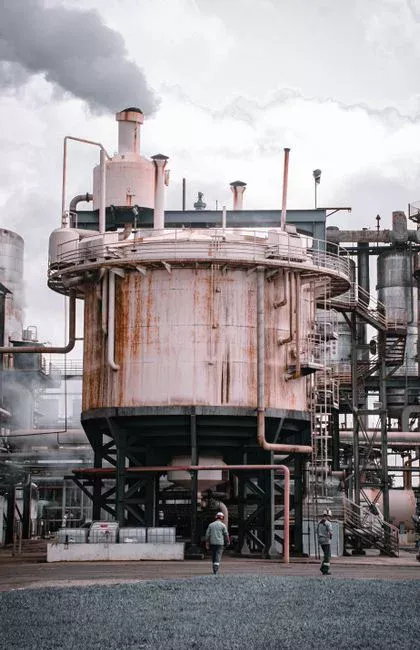
A defensible treatment train separates the physical contaminants before assigning the remaining dissolved load to adsorption or biological treatment, then monitors and contains the residuals.
- Screen and equalize. Coarse screening protects downstream equipment from plastic fragments and rags. Equalization limits batch-driven hydraulic and concentration swings before DAF, membranes or biological treatment. A rotary mechanical bar screen can form the inlet-protection stage.
- Remove particles. Select DAF where floatable plastics, oil and grease or chemical floc are significant. Select ultrafiltration where suspended solids and colloids are the principal concern and chemical addition is undesirable. The cataloged UF system uses 0.03 micron PVDF membranes and accepts turbidity up to 300 ppm.
- Remove residual COD. In the S2/S3 plastics pilot, particle removal was coupled with a fixed bed containing absorbent materials. Across an influent COD range of 1,241–10,929 mg/L, the combined train achieved average COD removal of 94.3 ± 8.9%; effluent averaged 333 ± 886 mg/L. The reported range was 65.3–99.9% removal (S2/S3, 2023). This is plastics-specific pilot evidence, not a full-scale guarantee.
- Treat or polish the residual. Use biological treatment when the remaining COD is sufficiently biodegradable and the plant can support the required control and maintenance. Use additional adsorption where residual organics are poorly biodegradable or require adsorption. An MBR system combines biological treatment and membrane solids separation where both functions are required.
- Control residuals. Monitor COD, TSS, turbidity, pH and flow at defined process points. Route separated solids to an approved sludge-dewatering route; a plate-and-frame filter press can reduce the volume of retained solids before disposal.
| Stage | Function | Output that must be verified |
|---|---|---|
| Screening and equalization | Protect equipment and dampen batch variation | Peak flow, retained solids, equalization response |
| DAF or UF | Remove particulate and colloidal material | TSS, turbidity, oil and grease, polymer recovery |
| Fixed bed or biological stage | Remove residual COD | COD, BOD, treatment stability and media or biomass condition |
| MBR, where justified | Combine biological treatment and solids separation | COD, TSS and membrane flux |
| Residuals management | Contain concentrated solids | Sludge volume, dewatering performance and disposal route |
Do not import results from other waste matrices. The electrochemical treatment reviewed by S1 achieved 99.5% COD removal in petroleum-refinery wastewater at an initial COD of 710 mg/L, but its operating conditions and feedstock do not establish performance for plastic manufacturing effluent.
Compare the Main COD-Removal Technologies
DAF, UF, fixed-bed adsorption, biological treatment and MBR perform different functions; selecting among them requires matching the technology to the dominant fraction and the required effluent quality.
| Technology | Primary target and role | Operating considerations | Data required before selection |
|---|---|---|---|
| DAF | Floatable solids, oil and grease, and flocculated colloids; lowers particulate COD | Chemical conditioning, recycle performance, sludge handling and float quality | Oil and grease, TSS, floatability, polymer and resin information, flow profile |
| UF | Suspended solids and colloids; lowers particulate COD | Flux, fouling, cleaning, solids concentration and disposal | TSS, turbidity, particle size, feed chemistry and operating hours |
| Fixed-bed adsorption | Dissolved substances and residual COD | Media exhaustion, replacement, competing contaminants and breakthrough | Individual and total COD, BOD, adsorption test, pH and flow |
| Biological treatment | Biodegradable dissolved organics | Biomass control, aeration, sludge, temperature and operator attention | BOD/COD relationship, biodegradability, temperature, pH and flow |
| MBR | Biodegradable COD removal plus membrane solids separation | Membrane maintenance, aeration, energy, sludge and flux management | Biodegradability, flow, TSS, COD, temperature and required effluent TSS |
DAF and UF should not be presented as stand-alone COD solutions; their main contribution is physical separation before the principal COD stage. The strongest plastics-specific reference in the supplied research is the S2/S3 particle-removal and fixed-bed sequence: 94.3 ± 8.9% average COD removal, with observed removal from 65.3% to 99.9% (S2/S3, 2023).
The broader method list in S4 includes coagulation, activated-carbon adsorption, oxidation and combined treatment, while emphasizing jar testing, pH control and influent variability. Those are screening tools rather than evidence that any method will meet a plastics plant’s discharge condition.
Where biological COD removal and compact solids separation are both required, the MBR configuration combines activated sludge with submerged PVDF membrane filtration for industrial process-water and reuse applications. It still requires a site-specific biodegradability and loading assessment; membrane selection alone cannot compensate for poorly characterized wastewater.
Size the System From Site Data
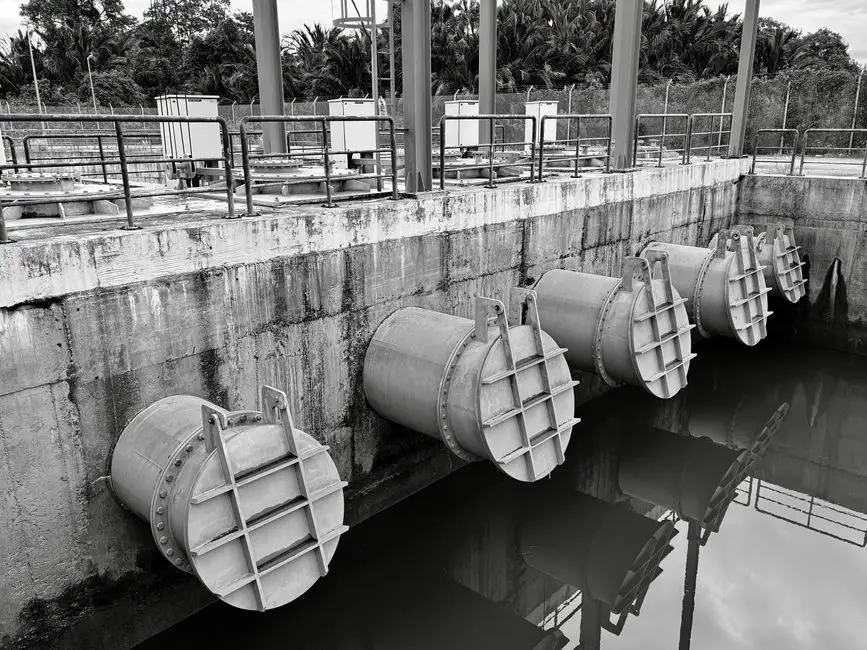
Size the installation from measured hydraulic and contaminant ranges, not from the German pilot’s average or from a generalized treatment percentage.
Establish hydraulic capacity from peak and average flow, including batch discharges, cleaning cycles and the consequences of stormwater misconnection. A single daily average can conceal the flow that determines pump, screen, equalization and membrane loading. Any automatic dosing system should be sized from the chemical selected during testing; an automatic chemical dosing system does not establish its own dose.
Size the solids and COD stages from the characteristic influent range and required effluent concentration. S2/S3 recorded influent COD from 1,241 to 10,929 mg/L and TSS from 411 to 2,381 mg/L in the German pilot (2023). Equipment selected against the average of 3,562 mg/L COD would miss the demonstrated upper condition.
Specify sampling and monitoring at the inlet, after pretreatment, after COD removal and at final discharge. Require instrument calibration, data review and maintenance responsibilities in the supplier scope. The performance guarantee should identify the plant’s wastewater matrix, loading range, operating hours and acceptance-test conditions.
Compare lifecycle cost rather than purchase price alone. Relevant items include chemical consumption, sludge volume, energy demand, membrane or media replacement, operator attendance and the disposal route for concentrated solids. If additional polishing is required, evaluate reverse osmosis for industrial COD removal only after upstream characterization; its role should not be assumed from generic efficiency claims.
Prove Performance Before Full-Scale Deployment
Validation should test both process mechanisms and variability: particle removal must be demonstrated separately from dissolved-COD removal.
Run a site-specific jar test when coagulants, adsorbents or oxidants are considered. S4 explicitly recommends jar testing to determine dose and pH. Use the results to define chemical demand, mixing requirements, sludge generation and expected upstream load rather than adopting generic dosage figures.
Then run a pilot across representative high-, average- and low-strength batches. S2/S3 evaluated an on-site German plastics processor over influent COD values from 1,241 to 10,929 mg/L and reported changing polymer composition and batch conditions (2023). A test limited to one clean batch will not establish performance during production variation.
Record COD, BOD, TSS, turbidity, flow, pH, polymer composition, residual chemicals, energy use and sludge yield. Report the distribution and duration of results, not only one average removal percentage. Specify how media exhaustion, membrane fouling, chemical cleaning and failed regeneration will be managed.
Set acceptance criteria against the plant’s actual discharge authorization. The S2/S3 study used an effluent target below 1,000 mg/L for its municipal discharge context; that figure must not be generalized to other jurisdictions, receiving systems or reuse requirements.
Frequently Asked Questions
How much does a plastic manufacturing wastewater COD removal system cost
Frequently Asked Questions
How much does a plastic manufacturing wastewater COD removal system cost?
Capital expenditure for plastic manufacturing wastewater treatment systems typically ranges from $150,000 to over $2,000,000 depending on flow rate, influent COD concentrations, and required discharge standards. For small-scale operations (5-20 m3/day), modular turnkey systems often cost between $150,000 and $400,000, while large-scale integrated plants exceeding 500 m3/day can require investments exceeding $5,000,000.
Operational expenditure (OPEX) is heavily influenced by chemical consumption and energy requirements, usually ranging from $0.50 to $3.50 per cubic meter of treated water. Costs must account for sludge dewatering, polymer dosing, and electricity for aeration, which often constitutes 30-50% of the ongoing treatment budget.
Should I choose DAF, ultrafiltration or MBR for plastic wastewater COD removal?
Dissolved Air Flotation (DAF) is best suited for primary treatment to remove suspended solids and emulsified fats, oils, and grease (FOG), typically achieving 30-60% COD removal. It is not a standalone solution for high-solubility COD but serves as an essential pretreatment step to protect downstream biological processes.
Ultrafiltration (UF) and Membrane Bioreactors (MBR) offer high-efficiency removal, with MBR systems capable of consistently achieving effluent COD levels below 50-100 mg/L regardless of influent fluctuations. MBR is generally superior for plastic manufacturing due to its ability to handle high organic loads and produce high-quality permeate suitable for industrial water reuse, though it requires more stringent membrane maintenance protocols than DAF.
What wastewater data should I provide before ordering a COD treatment system?
To ensure accurate system sizing, you must provide a comprehensive characterization report including daily flow volume (m3/day) and hourly peak flow rates. Critical chemical data includes influent COD, BOD5, Total Suspended Solids (TSS), pH range, and oil/grease concentrations, as well as the presence of specific plastic additives, plasticizers, or surfactants that may be toxic to biomass.
Temperature fluctuations and seasonal variations in wastewater composition must also be documented, as these significantly impact the kinetics of biological treatment. Providing a 12-month historical data set allows engineers to calculate the 95th percentile loading, preventing the risk of system undersizing during production spikes.
Can fixed-bed adsorption alone handle highly variable plastics wastewater?
Fixed-bed adsorption, typically using activated carbon, is generally insufficient as a standalone solution for highly variable plastic wastewater. While it is effective at polishing specific recalcitrant organic compounds, it faces rapid media exhaustion when exposed to high-strength COD or high TSS loads, leading to excessive operational costs for frequent media regeneration or replacement.
Adsorption is most effective when positioned as a tertiary treatment step following biological or chemical-physical oxidation. Relying on it as a primary treatment for variable influent creates a high risk of "breakthrough," where pollutants pass through the bed untreated once the adsorption capacity is reached, potentially leading to immediate regulatory non-compliance.
How do I choose a wastewater treatment supplier and guarantee COD compliance?
Select a supplier based on proven experience with plastic-specific pollutants, specifically their ability to demonstrate successful pilot-scale testing results for similar waste streams. Prioritize vendors who provide a performance guarantee tied to specific effluent COD concentrations (e.g., < 100 mg/L) rather than just equipment delivery, ensuring the design is backed by mass balance calculations and process simulations.
To guarantee compliance, insist on a contract that includes an on-site commissioning phase, comprehensive operator training, and a 12-month performance monitoring program. Ensure the supplier provides a detailed Operations and Maintenance (O&M) manual that outlines specific protocols for chemical dosing and membrane cleaning to maintain system efficiency throughout the life of the plant.