Which Treatment Fits Each Petroleum Wastewater Stream?
For petroleum bulk wastewater in Winchester, factories should choose DAF when the primary target is free oil, emulsified oil, or oily floc that can be conditioned and floated; choose a clarifier when the stream is dominated by dense, readily settling solids. Mixed streams often justify clarification followed by DAF because lamella or conventional clarification removes bulk solids that can overload flotation, while DAF captures the buoyant and colloidal fraction that may remain. The final choice requires site-specific testing and current permit review—not a generic equipment name—using flow, oil and grease, TSS, particle distribution, pH, temperature, and settleability data.
Start by separating the plant’s wastewater into tank washdowns, vehicle or equipment wash water, oily floor drainage, ballast or bilge water, process-contact water, and any combined bulk-wastewater stream. Each source needs its own sample point and operating profile. A wash-down stream may arrive in short, high-solids batches, while process-contact water may have a more consistent hydrocarbon load. Combining them before characterization can hide the unit that should handle the dominant contaminant.
Classify the oil in each stream as free oil, dispersed oil, emulsified oil, or oil attached to settleable solids. Also identify whether suspended material is predominantly dense mineral sediment, light oily floc, or a mixed load. This distinction controls the treatment mechanism: flotation is intended to lift buoyant or conditioned material, whereas gravity sedimentation depends on particle density and settling velocity.
Clearwater Industries describes DAF microbubbles as 30–50 micrometres in diameter, small enough to attach to oil droplets, fine precipitates, biological flocs, and conditioned floc (Clearwater Industries, “Dissolved Air Flotation for Industrial Wastewater Treatment”). Bubble size defines the flotation mechanism, but it does not establish removal efficiency by itself. Oil composition, emulsification, particle distribution, conditioning, and hydrodynamics still have to be established through testing.
No supplied source provides a universal petroleum-wastewater flow, oil-and-grease limit, TSS limit, or removal efficiency. Those values must be measured for the Winchester facility and checked against the current permit or sewer-pretreatment requirements. The related oil refinery wastewater treatment process and industrial DAF versus clarifier comparison can support the process framework, but neither substitutes for site data.
DAF or Clarifier: The Petroleum Wastewater Decision
DAF is the stronger primary unit when the objective is to recover free oil or remove emulsified oil and oily floc that will rise after conditioning. A gravity or lamella clarifier is the stronger primary unit when the wastewater contains dense solids with favorable settling characteristics. A mixed train is defensible when both fractions are present in meaningful quantities.
In DAF, micro-bubbles attach to floc and oil-associated particles, creating buoyant aggregates that rise to a surface blanket removed by a skimmer. Coagulant, pH adjustment, and polymer may be needed when the oil and solids do not float readily. The conditioning result determines whether the material floats cleanly enough for reliable recovery.
A lamella clarifier increases effective settling area by using inclined plates, allowing a compact tank footprint compared with conventional clarification. The mechanism remains gravity sedimentation: dense particles settle and are withdrawn as underflow, while colloidal material, emulsified oil, and other buoyant fractions may remain in the overflow. More compact does not mean more capable of removing every contaminant.
DAF is less suitable as a stand-alone unit for a heavy load of dense, non-floatable particles. Clarification ahead of DAF removes that bulk fraction and reduces the hydraulic and solids burden on the flotation step. The industrial DAF system for petroleum wastewater is therefore most defensible where flotation is the intended separation mechanism, while the lamella clarifier for bulk solids removal is appropriate where settleability is the controlling property.
| Decision factor | Prefer DAF | Prefer clarification | Consider clarifier followed by DAF |
|---|---|---|---|
| Dominant contaminant | Free oil, conditioned emulsified oil, buoyant or oily floc | Dense mineral sediment or readily settleable solids | Meaningful quantities of both settleable solids and oily or colloidal material |
| Separation mechanism | Micro-bubbles attach to floc; the aggregate rises and is skimmed | Particles settle by gravity; underflow is withdrawn | Clarifier removes settleable solids; DAF captures the remaining floatable fraction |
| Conditioning | Coagulant, pH adjustment, and polymer may be required | Performance depends primarily on settling and sludge-withdrawal design | Clarifier limits DAF solids loading; DAF chemistry addresses residual oily material |
| Main operating risk | Poor flotation caused by unstable emulsions or unsuitable conditioning | Carryover of oil, colloids, or slow-settling solids | Underdesign at either stage and transfer of accumulated oil to sludge handling |
| Residual treatment | Add filtration, membranes, or biological treatment where required by reuse or discharge conditions | Add polishing for residual oily or colloidal material where needed | Assess filtrate and sludge characteristics after both stages |
The decision test is straightforward: if the material can be made buoyant, DAF is the relevant mechanism; if it settles because it is denser than water, clarification is relevant. If both descriptions apply, do not force the whole stream through one unit.
How to Build a Treatment Train That Handles Petroleum Wastewater
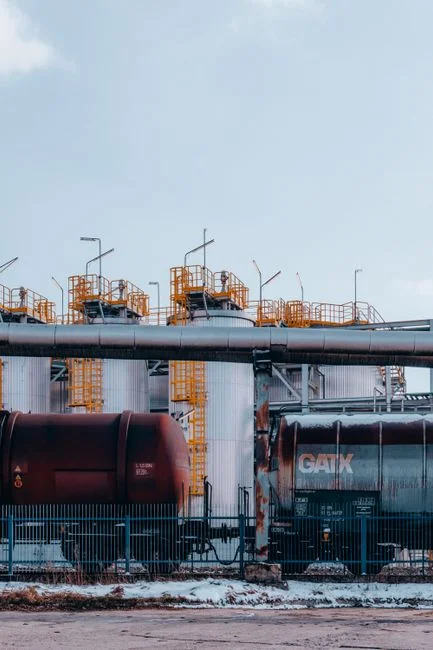
A defensible petroleum treatment train begins with segregation and characterization, then addresses source reduction, physical separation, conditioning, polishing, and sludge handling in that order.
- Segregate the sources. Keep wash water, oily drainage, ballast or bilge water, and process-contact water in separate sample and control systems where practical.
- Characterize each stream. Establish flow variation, oil and grease, TSS, particle distribution, pH, temperature, and settleability under representative and worst-case conditions.
- Reduce free oil at the source. Use available collection, separation, or containment practices before relying on treatment capacity to manage recurring oil losses.
- Remove bulk solids where required. A lamella or conventional clarifier ahead of DAF protects the flotation unit when dense solids are significant.
- Float the remaining oily fraction. Use conditioned DAF when free oil, emulsified oil, or oily floc remains the principal target.
- Add final treatment only where justified. Filtration or membranes may be needed for reuse or stringent discharge conditions; biological treatment addresses dissolved biodegradable load after physical separation.
Pretreatment and final treatment are not interchangeable. DAF can remove oil and suspended material, but that does not establish suitability for reuse or prove compliance with a final discharge standard. A downstream filtration or membrane step should be included where solids carryover, turbidity, or reuse quality prevents the DAF effluent from meeting the required endpoint.
Research on combining DAF with modified moving-bed biofilm reactors describes the combination for synthetic oily wastewater treatment (Elsevier, “Combining Dissolved Air Flotation and Modified Moving Bed Biofilm Reactors for Synthetic Oily Wastewater Treatment”). The logical sequence is physical oil removal first, then biological treatment of remaining biodegradable material. Biological treatment is not a substitute for oil removal. An MBR-integrated treatment system should therefore be evaluated against the measured DAF effluent, not substituted for the flotation stage.
Plan the solids route at the same time as the liquid process. Identify where floated sludge and clarifier underflow will go, how oily sludge will be stored, and which dewatering method matches the selected waste. Clearwater Industries reports that properly conditioned DAF can produce thick floated sludge requiring little or no further dewatering, while the related process guidance identifies sludge withdrawal and handling as design requirements (Clearwater Industries; HydropureWater, 2026). Include a filter press for oily flotation sludge as an evaluated option, not an assumed selection, until sludge rheology and dewatering trials establish that it is suitable.
Mechanically, the DAF sequence described by Clearwater Industries takes clarified water, pressurizes it with air, returns it to the flotation tank, and forms micro-bubbles that attach to incoming floc. The skimmer removes the floating blanket, while clarified water is withdrawn below it. This description should appear in the RFQ so that recycle, pressurization, bubble release, and skimming performance are explicit.
The Data Required to Size and Specify the Equipment
A vendor-ready specification requires measured wastewater data, bench and pilot evidence, and a defined operating envelope. The supplied research supports specific design anchors, but those anchors do not replace project-specific sizing calculations.
Request diurnal and batch-flow records, average and peak flow, operating duration, and planned production changes. For each segregated source, require oil and grease, TSS, particle-size distribution, pH, temperature, conductivity, and relevant hydrocarbon or metal parameters. Sampling must include worst-case and seasonal conditions rather than one averaged sample. These same inputs appear in the HydropureWater industrial selection guidance for sizing and supplier qualification (HydropureWater, 2026).
Use jar testing to select the coagulant, pH condition, and polymer dose. Clearwater Industries specifies 15–45 seconds of flash-mix contact and states that contact time and dose are established empirically by jar testing (Clearwater Industries, “Dissolved Air Flotation for Industrial Wastewater Treatment”). The test should evaluate oil and grease, TSS, turbidity, float recovery, sludge volume, and chemical consumption—not only visual floc formation.
For clarification, request the surface-overflow-rate calculation, sludge-blanket control, feed-well and underflow design, and lamella configuration. HydropureWater states a 20–40 m/h lamella surface-loading range for its clarifier; that range must be checked against the project’s measured settling characteristics rather than accepted as a universal petroleum design value (HydropureWater, 2026). For DAF, request hydraulic loading, bubble-generation and recycle design, solids loading, skimming capacity, sludge drawdown, and guarantees tied to representative influent. HydropureWater’s catalog covers 4–300 m³/h across 13 standard models (HydropureWater, 2026), but catalog flow coverage does not establish process capacity without loading calculations.
| RFQ item | Required evidence or calculation | Why it affects selection |
|---|---|---|
| Wastewater basis | Per-source average and peak flow, duration, oil and grease, TSS, particle distribution, pH, temperature, conductivity, and relevant contaminants | Defines the hydraulic, loading, materials, and control basis |
| Bench testing | Jar-test matrix with chemical type, dose, pH, contact condition, oil and grease, TSS, turbidity, and sludge observations | Sets conditioning chemistry rather than relying on a generic dose |
| Pilot evidence | Representative continuous test showing flow variation, flotation or settling behavior, sludge handling, and treated-water results | Tests the proposed train under relevant operating changes |
| Clarifier calculations | Surface-overflow rate, settling basis, feed well, underflow, blanket control, and lamella configuration | Tests whether settleable solids can be removed within the available footprint |
| DAF calculations | Hydraulic and solids loading, recycle, bubble generation, skimming capacity, and sludge drawdown | Tests whether oil-bearing material can be floated and removed continuously |
| Materials and controls | Materials of construction, corrosion allowance, electrical classification, odor control, chemical storage, accessibility, spares, controls, service support, installation, and commissioning | Converts equipment selection into an operable and maintainable installation |
Put materials compatibility, chemical storage, odor control, hazardous-sludge planning, access for maintenance, controls, spares, and local service support into the same RFQ. A PLC-controlled coagulant and flocculant dosing skid should be scoped against the selected chemistry and tested control strategy. If reuse is part of the project, also evaluate whether ultrafiltration for downstream water-quality control is required by the pilot results and reuse specification.
Budget and Supplier Comparison Without False Precision
The supplied research contains no site-specific 2026 DAF or clarifier price for a Winchester petroleum factory. Procurement should not apply a generic unit-price estimate. Request budgetary quotations only after the wastewater characterization establishes the flow, contaminant fractions, treatment train, and materials basis.
Compare bids on a common scope: flotation or clarification equipment, chemical-conditioning equipment, controls, sludge handling, installation, start-up, training, maintenance, performance testing, and local support. If a supplier excludes foundations, containment, chemical storage, odor control, utilities, or downstream polishing, the apparent equipment prices will not be comparable.
Ask each bidder to state which guarantees are tied to oil and grease, TSS, turbidity, flow variation, chemical consumption, sludge characteristics, and equipment availability. A generic removal percentage is not sufficient evidence because it does not identify the tested influent or operating conditions.
Qualification should include references or pilot data from petroleum, petrochemical, oily wash-down, or closely comparable industrial streams. Suppliers should also explain how they will handle chemistry changes, batch discharges, seasonal production shifts, and upsets. The related fabricated-metals DAF and clarifier guide and industrial wastewater cost and compliance guide provide useful comparison prompts, but their project contexts must not be treated as Winchester pricing or performance data.
Sludge belongs in the commercial comparison. Clearwater Industries states that a well-conditioned DAF can produce thick floated sludge that needs little or no further dewatering, while oily sludge can change handling and dewatering behavior. Ask each supplier to define the expected sludge stream, storage method, dewatering approach, disposal route, and resulting operating cost. Do not credit an avoided dewatering step until representative sludge testing supports it.
Frequently Asked Questions
What is the best DAF or clarifier choice for petroleum bulk wastewater in Winchester in 2026?
Choose DAF when free oil, emulsified oil, or oily floc is the dominant target and the material can be conditioned to float. Choose clarification for dense, readily settling solids. If both are significant, specify clarification followed by DAF. The final decision depends on measured stream fractions, pilot evidence, and current permit conditions—not the equipment name alone.
How much should a petroleum wastewater DAF or clarifier cost?
No defensible site-specific price can be given from the supplied research. Request budgetary quotations using measured flow, oil and grease, TSS, particle distribution, settleability, selected chemistry, materials, controls, sludge handling, installation, commissioning, and performance-testing scope. Compare total installed and operating cost rather than tank price alone. A COD-removal engineering guide can support RFQ structure, but it is not a petroleum price source.
What pilot or bench testing should a buyer require before selecting equipment?
Require jar tests to establish chemical type, dose, pH, contact conditions, oil-and-grease and TSS response, and sludge behavior. Clearwater Industries specifies 15–45 seconds of flash-mix contact and requires empirical dose selection (Clearwater Industries). Then require a representative pilot where scaling or flow variation justifies it, including seasonal or batch conditions and treated-water results. The DAF and clarifier selection for mixed industrial wastewater is useful as a decision framework, not as petroleum performance evidence.
How should suppliers be qualified for a mixed oily wastewater treatment train?
Ask for documented experience with petroleum, petrochemical, oily wash-down, or comparable industrial streams, plus pilot data from representative feed chemistry. Require a sizing calculation, control philosophy, chemical-storage approach, materials basis, sludge-handling plan, commissioning plan, performance test, and service scope. Confirm the bidder can explain how chemical changes and seasonal production shifts will be managed without relying on a generic removal guarantee.
What Winchester compliance risk should the purchase decision address?
Review the current Winchester permit and applicable sewer-pretreatment rules at the time of purchase; no applicable numerical limit was supplied in the research. Confirm the proposed discharge route, monitoring requirements, oil-and-grease and TSS limits, reuse criteria, and hazardous-waste handling for oily sludge. Do not transfer a Logan, Utah dose of 30 mg/L aluminum sulfate into the petroleum design: that result was specific to algae and phosphorus removal in lagoon effluent (Utah State University, 2011).