
What must be true before Panasonic's Mexican plant can commission?
Wastewater at Panasonic Energy Mexico’s General Escobedo site should be handled as four segregated streams—NMP condensate, electrode and tab-wash water, paint and assembly wash water, and sanitary sewage—then treated through equalisation, DAF or lamella clarification, MBR biological treatment, and a regulated discharge or reuse step. Commissioning depends on NOM-001-SEMARNAT-2021 and NOM-002-SEMARNAT-1996 compliance, LGEEPA review of the FY2027/FY2028 expansion, CONAGUA reuse registration, and CEA-NL basin restrictions. The preferred baseline is RO reuse at 60–75% recovery, with municipal sewer discharge as a permitted alternative and ZLD as the drought-response fallback.
Use four triggers as the go/no-go release sequence: transfer of control, capacity expansion, reuse registration, and discharge authorization. The inherited permit set is not a blank cheque. S1, HydropureWater’s Panasonic Mexico Plant Wastewater Requirements: 2026 ETP Compliance Guide, states that NOM-001-SEMARNAT-2021, NOM-002-SEMARNAT-1996 or its successor, the CONAGUA Título de Concesión, and the Licencia de Funcionamiento must be valid and transferable before commissioning. A share purchase or asset transfer requires a change-of-control filing and an update to the licence holder; open non-compliance at transfer becomes the acquirer’s liability.
The FY2027 and FY2028 module lines require a separate threshold check under LGEEPA. A new Manifestación de Impacto Ambiental and Licencia de Funcionamiento are required if the expansion crosses the applicable threshold. S1 describes a public-consultation window of typically 30–60 working days and a total MIA-Particular timeline of 60–120 days including consultation. If an MIA is required, consultation closure belongs on the construction critical path, not after equipment procurement.
Before RO commissioning, register the reuse stream with CONAGUA and declare volume, parameter-by-parameter quality, and end use. If the discharge route crosses federal waters, complete LPTA review and obtain the CEA-NL basin-specific limit agreement. For wider acquisition due diligence, compare this sequence with the plant-acquisition wastewater requirements.
| Trigger | Required action before commissioning | Release evidence |
|---|---|---|
| Share purchase or asset transfer | File the required change-of-control notification; update the Licencia de Funcionamiento holder | Transfer filings, updated licence, and compliance-history review |
| FY2027/FY2028 expansion | Determine whether LGEEPA thresholds require a new MIA-Particular and Licencia de Funcionamiento | Threshold determination, MIA decision, licence for the expanded envelope, and consultation closure where applicable |
| RO reuse | Register the reuse stream with CONAGUA | Declared volume, quality envelope, and binding end use |
| Discharge across federal waters | Complete LPTA review and CEA-NL notification | Basin-specific agreement covering limits, monitoring, and drought restrictions |
Why module assembly requires a different wastewater strategy
Module assembly has lower NMP loading than cell manufacturing because electrode coating is not performed onsite, but that does not justify copying a cell-line treatment design. S1 states that flux residues, tab-weld fume-scrubber blowdown, LiPF₆-bearing electrolyte traces, and module-housing wash water must be evaluated separately. Any retained coating, drying, or solvent-recovery operation still produces an NMP-bearing stream requiring dedicated recovery.
The practical difference is the balance of contaminants and hydraulic peaks. Cell manufacturing places greater emphasis on coating wash and resist-stripping chemistry. General Escobedo module assembly instead gives more weight to tab welding, housing cleaning, overspray, packaging debris, and low-volume electrolyte-bearing discharges. S1’s four-stream segregation therefore remains sound, but the equalisation and polishing loads must be reassessed from measured plant data rather than inherited from a cell-plant basis.
Stream 3 remains the principal primary-clarification driver. HydropureWater’s 2026 battery-plant expansion wastewater treatment guide reports episodic FOG of 200–800 mg/L and episodic TSS of 300–1,500 mg/L for paint-shop, tab-welding wash, and module-housing wash water. Those values support DAF or lamella clarification upstream of biological treatment; they do not justify routing the stream directly into an MBR.
| Stream | Module-assembly contributors | Required routing decision |
|---|---|---|
| 1: NMP condensate | Condensate from any retained coating, drying, or solvent recovery | Vacuum distillation or evaporative recovery; no direct connection to biology |
| 2: Electrode-rinse and tab-wash water | Electrolyte residues, LiPF₆ decomposition traces, Ni, Co, and Li; tab-weld scrubber blowdown | Dedicated equalisation before biological or polishing treatment |
| 3: Assembly wash water | Paint-shop, tab-welding, and module-housing wash water containing oils, fillers, surfactants, and overspray | DAF or lamella clarification based on FOG-versus-TSS characterisation |
| 4: Sanitary sewage | Workforce sewage with shift-change peaks | Equalisation and biological treatment; keep segregated from NMP condensate |
How should the four wastewater streams be routed?
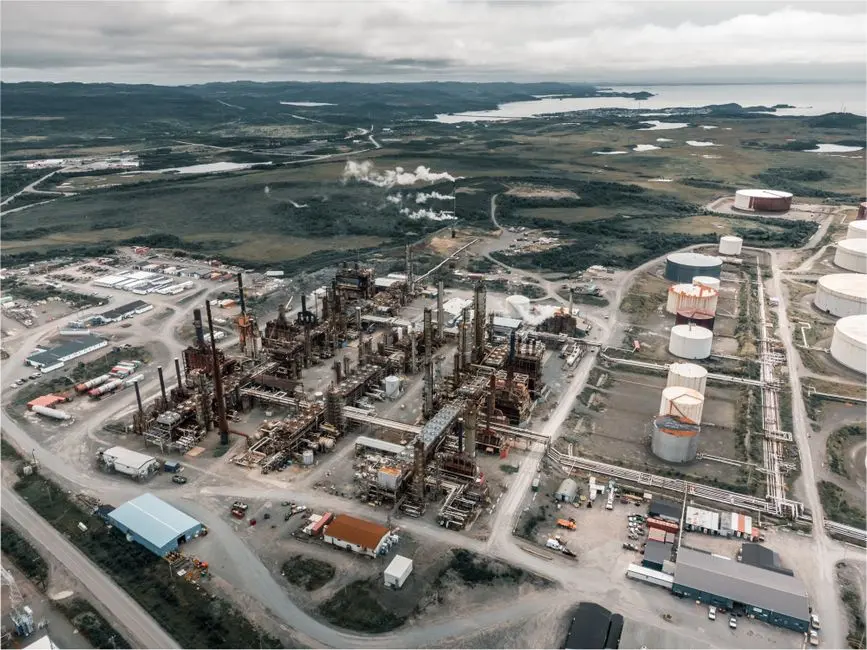
Route NMP solvent condensate to dedicated vacuum-distillation or evaporative recovery before any biological contact. S1 states that a high-BOD solvent spike can damage MBR biomass, so the hard boundary is not a discretionary segregation preference. The recovery equipment also provides the compliance evidence that no NMP-bearing condensate bypasses biological treatment.
Route electrode-rinse, tab-wash, deionised water, and relevant scrubber blowdown through equalisation. S1 identifies slug discharges associated with module-test steps, meaning Ni, Co, Li, and fluorinated electrolyte residues can arrive unevenly. Equalisation reduces those spikes before the MBR and any reuse polishing stage. Tab-weld scrubber blowdown belongs with this metal-bearing stream rather than with the higher-FOG paint-shop stream.
Route paint-shop, tab-welding wash, and module-housing wash water to DAF or lamella clarification. Use DAF where emulsified FOG governs; use lamella where characterisation shows that predominantly inorganic suspended solids dominate and footprint is constrained. The available DAF system for high-FOG assembly wastewater should be assessed against the measured oil, surfactant, and solids profile rather than selected by default.
Sanitary sewage and compatible low-solvent process water can proceed to biological treatment, but equalisation must be sized around shift-change peaks. For a 35 GWh/year-class module line, S1 gives a benchmark of 5,000–9,000 m³/day process wastewater plus 1,000–2,000 m³/day sanitary wastewater, with a 1.5–2.0× sanitary peak factor. These values are screening benchmarks, not a substitute for measured General Escobedo flows. The applicable headworks approach and material-recovery considerations can be compared with the rotary mechanical bar screen.
- Recover NMP condensate independently.
- Equalise electrode, tab-wash, and scrubber contributions.
- Clarify assembly wash water before biological treatment.
- Blend only compatible sanitary and process flows.
- Size equalisation around measured shift-change and test-step peaks.
Which treatment train should Panasonic specify?
The defensible train is headworks, primary clarification, integrated MBR, disinfection where required, and a Stage 4 decision that remains open until the permit and drought matrix is settled. S1 specifies a rotary mechanical bar screen with a 3–6 mm aperture range and identifies 5 mm as the compromise where packaging-film loading is significant. The selected screen must remove film, rags, overspray media, and foil before they reach pumps or fine screens.
Use DAF for Stream 3 when the characterisation confirms emulsified FOG is the controlling fraction. S1 gives a DAF design envelope of 20–40 minutes HRT and 10–25 m³/m²·h surface loading. Use lamella clarification where footprint is constrained and characterisation shows that inorganic suspended solids dominate. The DAF system for high-FOG assembly wastewater should therefore carry a selection-basis calculation tied to measured flow and contaminant data.
Use an integrated MBR for compatible process and sanitary water. S1 specifies submerged 0.1 µm PVDF flat-sheet membranes, MLSS of 8,000–12,000 mg/L, and separated denitrification and nitrification for the total-nitrogen envelope. The integrated MBR membrane bioreactor provides biological treatment and low-turbidity reuse preparation, but its design basis must include the metal and slug-load characteristics of Stream 2. Further comparison against the site’s MBR criteria should follow the MBR system design criteria.
| Stage | Recommended basis | Key control |
|---|---|---|
| Headworks | Rotary mechanical bar screen | 3–6 mm aperture range; 5 mm where packaging-film load is significant, per S1 |
| Primary clarification | DAF or lamella | DAF: 20–40 min HRT and 10–25 m³/m²·h surface loading, per S1 |
| Biological treatment | Integrated MBR with submerged 0.1 µm PVDF flat-sheet membranes | 8,000–12,000 mg/L MLSS and denitrification/nitrification separation, per S1 |
| Disinfection | UV polish before NOM-002 sewer discharge | At least 40 mJ/cm², per S1 |
| Sludge handling | Plate-and-frame filter press with upstream thickening | Dry-cake target of at least 22% dry solids, per S1 |
Dewater DAF float and MBR waste activated sludge in a plate-and-frame filter press. S1 gives a dry-cake target of at least 22% dry solids and identifies pre-thickening as the control for more homogeneous press feed. The plate-and-frame sludge filter press should be selected against measured solids rheology rather than peak daily sludge production alone.
Should the treated water be discharged, reused, or fully evaporated?
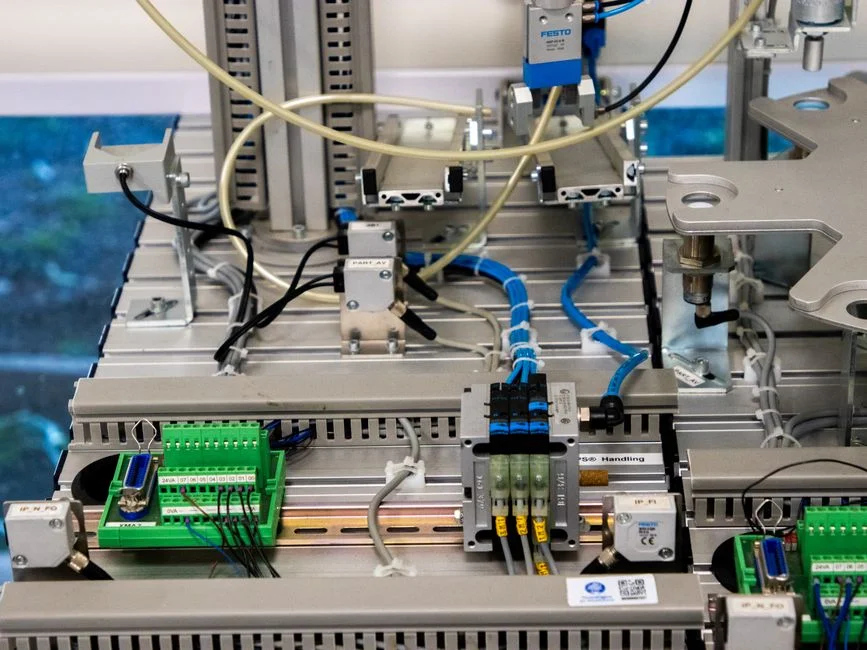
Stage 4 should be resolved by permit status, receiving-system acceptance, registered reuse, and CEA-NL drought exposure—not by selecting sewer discharge and reuse as interchangeable. Municipal sewer discharge under NOM-002 is appropriate only if the receiving POTW accepts the projected sanitary load and the discharge satisfies prohibited-substance and local headworks constraints. S1 states that the receiving POTW’s own envelope must be confirmed.
Industrial RO reuse is the preferred baseline in S1, with a 60–75% recovery design and a registered use such as cooling-tower make-up. The industrial reverse-osmosis system must match the confirmed reuse quality envelope and water balance. The CONAGUA filing should state volume, quality, and end use before commissioning; changing the registered end use requires a separate filing. If sewer discharge is used instead, S1 specifies UV polish at a dose of at least 40 mJ/cm²; the applicable UV disinfection system must be tied to the final discharge envelope.
Full ZLD with evaporation and crystallisation is the contingency when a CEA-NL drought declaration blocks surface-water discharge. S1 explains that a decree can arrive during commissioning and can force a higher reuse target or prohibit surface-water discharge outright. The design therefore needs enough hydraulic and quality margin to continue operation under a “no discharge” order.
| Condition | Stage 4 decision | Release condition |
|---|---|---|
| Nominal permit envelope; sewer acceptance confirmed | Municipal sewer discharge under NOM-002 | POTW acceptance, permit compliance, and UV disinfection where required |
| Reuse stream registered and demand confirmed | Industrial RO reuse at 60–75% recovery, per S1 | CONAGUA registration covering volume, quality, and end use |
| CEA-NL drought order blocks surface-water discharge | RO reuse or retain full ZLD contingency | Hydraulic balance demonstrates continued operation without prohibited discharge |
| Discharge crosses federal waters | No commissioning until federal and state gates close | LPTA review and CEA-NL basin-specific limit agreement |
How can the plant stay compliant when rules or drought conditions change?
The plant should remain operable when CEA-NL drought conditions change, because S1 identifies drought enforcement as event-driven. Preserve treatment and reuse capacity rather than assuming that discharge permission or full reuse demand will remain constant during commissioning and production ramp-up.
Where required by the site-specific CEA overlay, include monthly self-reporting and quarterly CEA sampling in the compliance plan. Maintain a permit register covering NOM-001, NOM-002, the CONAGUA Título de Concesión, Licencia de Funcionamiento, MIA decision, reuse registration, and CEA-NL conditions. Assign an owner and expiry or review date to each entry.
Use automatic controls for equalisation, chemical dosing, flow, conductivity, and reuse operation. Preserve operating records as commissioning evidence. These records should demonstrate actual stream routing, NMP recovery performance, equalisation response, clarification performance, biological stability, disinfection, reuse quality, and sludge handling. The automatic chemical dosing system should therefore be assessed as part of the compliance-control architecture, not only as a convenience feature.
Frequently Asked Questions
Can the existing General Escobedo permits be transferred after a share purchase or asset transfer?
Yes, subject to the required change-of-control filing, licence-holder update, and compliance-history review. S1 states that NOM-001 and NOM-002 remain in force after transfer unless invalidity, cure status, or another regulatory issue changes that position. Open non-compliance at transfer becomes the acquirer’s liability, so obtain the compliance records before accepting the permit envelope.
Does every Panasonic module-line expansion require a new MIA?
No. S1 states that change of control alone does not trigger a new MIA, while a capacity expansion above the applicable LGEEPA threshold does. Request the expansion capacity comparison and the current threshold determination; if an MIA-Particular is required, include S1’s stated 30–60 working-day consultation window within the construction schedule.
What is the preferred Stage 4 route for the Mexican plant?
S1 identifies industrial RO reuse at 60–75% recovery as the default, municipal sewer discharge under NOM-002 as an alternative, and ZLD as the drought-response fallback. Confirm the actual route against permit status, POTW acceptance, CONAGUA registration, and CEA-NL drought exposure.
How should an EPC supplier size and price the wastewater system?
Require a stream-by-stream mass balance and a quotation built from measured flows, pollutant concentrations, hydraulic peaks, reuse demand, and disposal routes. S1 provides a screening benchmark of 5,000–9,000 m³/day process wastewater plus 1,000–2,000 m³/day sanitary wastewater for a 35 GWh/year-class module line, with a 1.5–2.0× sanitary peak factor. Ask the supplier to identify every priced exclusion and to separate base equipment, installation, permits, start-up, performance testing, and sludge disposal. No General Escobedo capital or operating-cost quotation is supplied in the research, so a defensible budget cannot be stated without those project inputs.
What should be requested from a wastewater-treatment supplier before selecting equipment?
Request a permit-compliance guarantee, unit sizing calculations, hydraulic and peak-flow basis, stream segregation drawings, reuse-versus-ZLD comparison, sludge-disposal plan, commissioning evidence, and long-term consumables and replacement assumptions. The supplier should also demonstrate how NMP recovery, metal-bearing equalisation, FOG/TSS clarification, MBR stability, and the Stage 4 contingency are integrated. For a supplier-selection benchmark, compare the requested scope with the EV-factory expansion wastewater guide and the fab expansion ETP engineering guide.