
The Dual-Regime Trigger: Why Aramco MSAERs Apply in Mexico
Mandatory Saudi Aramco Engineering Requirements (MSAERs) apply to all assets owned or operated by the company globally, creating a requirement for dual-regime compliance in any cross-border acquisition. Per SAEP-302, these standards represent the internal corporate baseline that persists regardless of the host country’s local laws. When acquiring a facility in Mexico, environmental due diligence leads must reconcile these internal mandates with federal regulations, specifically the Mexican General Law of Ecological Equilibrium (LGEEPA) Article 87, which stipulates that the purchaser assumes all environmental liabilities, including pre-existing contamination and historical permit violations.
The operational reality of this acquisition strategy is a "stricter-standard-wins" framework. For every discharge parameter—including BOD, COD, TSS, oil and grease, phenols, and heavy metals—the engineering team must benchmark the limit specified in SAES-A-103 or SAES-A-104 against the corresponding values in Mexican NOM-001-SEMARNAT-2021. Where a conflict exists, the facility must be designed to meet the lower (stricter) value. Per SAEP-327 Section 2.1, any inability to meet MSAERs due to local regulatory constraints requires a formal, written request for a deviation submitted to the Manager of the Environmental Protection Department in Dhahran, though this does not grant an automatic exemption from local enforcement.
Saudi Aramco Wastewater Standards: SAEP-327, SAES-A-103, SAES-A-104 Parameter Deep Dive
Aramco engineering standards govern wastewater management through a tiered approach focused on discharge location and contaminant load, as defined in SAEP-327 and associated standards. For marine disposal, SAEP-327 Table 1 mandates that discharges into deep water (>30m) with <1,000 m³ volume and <200 mg/L biocide are permissible with a formal submission, while any discharge to embayments or sensitive marine protection areas requires rigorous EED (Environmental Engineering Division) approval. SAES-A-104 Section 14.2 specifically dictates the design criteria for evaporation ponds, requiring robust liner specifications, defined freeboard limits, and integrated leak detection systems.
Domestic sewage must adhere to the criteria set forth in SAEHC-S02, which establishes a baseline of BOD₅ ≤ 30 mg/L, TSS ≤ 30 mg/L, and fecal coliform ≤ 400 MPN/100mL for any reuse or irrigation applications. The construction of any new treatment infrastructure, such as oil/water separators or evaporation ponds, requires a land use permit per GI-0002.716. The following table summarizes the primary technical thresholds for Aramco-standard operations.
| Parameter | Aramco Standard Reference | Limit / Requirement |
|---|---|---|
| Biocide (Marine) | SAEP-327 (Table 1) | < 200 mg/L (subject to volume/location) |
| Sanitary BOD₅ | SAEHC-S02 | ≤ 30 mg/L |
| Sanitary TSS | SAEHC-S02 | ≤ 30 mg/L |
| Fecal Coliform | SAEHC-S02 | ≤ 400 MPN/100mL |
Mexican Federal Wastewater Baseline: NOM-001, NOM-002, NOM-003 & CONAGUA Permitting
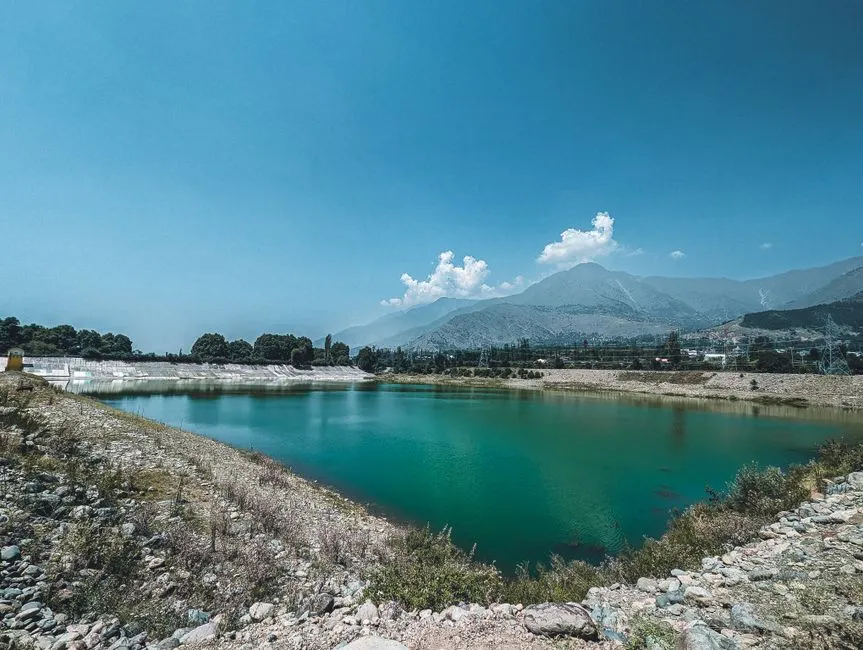
Mexican wastewater compliance is anchored by the 2021 update to NOM-001-SEMARNAT, which defines mandatory discharge limits for industrial facilities releasing effluent into national water bodies. For industrial discharges, Table B of NOM-001-SEMARNAT-2021 enforces strict limits: BOD₅ ≤ 30 mg/L, COD ≤ 120 mg/L, TSS ≤ 40 mg/L, O&G ≤ 10 mg/L, and phenols ≤ 0.5 mg/L. These values are non-negotiable for federal compliance and form the baseline for any CONAGUA permit transfer. When discharging to municipal sewers, NOM-002-SEMARNAT-1996 typically applies, though local utility providers often impose stricter, site-specific caps on pollutants like O&G and heavy metals.
The CONAGUA permit transfer process, or Cesión de Derechos, must be initiated within 30 business days of the acquisition closing. This process requires a valid Constancia de Cumplimiento, proof of no outstanding sanctions, and a water availability study. Because Mexican law does not provide automatic grandfathering for non-compliant discharges, the acquirer must demonstrate that the current treatment train can meet the standards of the existing title. State-level regulations, particularly in coastal regions like Veracruz or Tabasco, often impose additional restrictions, such as lowering O&G limits to 5 mg/L for marine-adjacent petrochemical assets.
| Parameter | NOM-001-SEMARNAT-2021 (Industrial) | NOM-002-SEMARNAT (Municipal Sewer) |
|---|---|---|
| BOD₅ | ≤ 30 mg/L | ≤ 200 mg/L |
| COD | ≤ 120 mg/L | ≤ 400 mg/L |
| O&G | ≤ 10 mg/L | ≤ 50 mg/L |
| Total Phenols | ≤ 0.5 mg/L | N/A |
Compliance Gap Matrix: 12-Parameter Side-by-Side Comparison
Due diligence teams must map site-specific effluent data against the stricter of the Aramco or Mexican limits to determine the necessary CAPEX for facility upgrades. The following matrix identifies the governing standard and the recommended technology to bridge identified gaps. In instances where Aramco standards (such as marine biocide) lack a direct NOM-001 equivalent, the project must utilize toxicity testing as required by NOM-001 Article 5.2.
| Parameter | Governing Limit | Upgrade Technology |
|---|---|---|
| Oil & Grease | 5–10 mg/L | DAF for petrochemical FOG removal |
| BOD₅ / COD | 30 / 120 mg/L | Integrated MBR for BOD/COD/TSS compliance |
| Phenols | 0.5 mg/L | Advanced Oxidation Processes (AOP) |
| Heavy Metals | 0.1–0.5 mg/L | PLC-controlled dosing for pH and coagulation |
Permit Transfer Mechanics: CONAGUA Cesión de Derechos vs. Aramco SAEP-302 Waiver Process

The permit transfer process in Mexico operates on a strict timeline that often conflicts with the internal corporate review cycles of an international acquirer. While the CONAGUA Cesión de Derechos must be finalized within 30 business days post-closing, the internal Aramco waiver process under SAEP-302 requires a formal submission to the EPD Manager in Dhahran detailing the remediation plan and timeline for any MSAER non-compliance. This creates a dual-track risk where the facility may be legally permitted to operate under Mexican law while simultaneously being in violation of internal corporate standards.
Effective due diligence requires that the waiver request be prepared during the pre-closing phase and submitted on Day 1 of operations. Failing to align these processes can leave the operator exposed to PROFEPA fines, which can reach up to 50,000 UMAs (approximately $4.5M USD) for severe environmental infractions. For a comprehensive overview of the risks associated with existing treatment systems, refer to our M&A wastewater due diligence checklist.
Legacy Liability Deep Dive: NORM, Soil/Groundwater, and Historical Non-Compliance
Acquiring a petrochemical asset in Mexico necessitates a Phase II Environmental Site Assessment (ESA) focused on legacy contamination and hazardous waste management. Under Aramco’s SAEP-358, Technologically Enhanced Naturally Occurring Radioactive Material (TENORM) from separator ponds and pipeline pigging must be characterized for Ra-226 and Ra-228. Mexican law, specifically NOM-004-SEMARNAT-2002, classifies NORM as hazardous waste if levels exceed 1.85 Bq/g, requiring strict manifest tracking and disposal at authorized facilities. LGEEPA Article 87 imposes joint-and-several liability for soil and groundwater remediation, necessitating a minimum of 30 soil borings and groundwater monitoring wells around high-risk areas like tank farms and loading racks.
Historical non-compliance remains a critical financial risk. The acquisition budget should include a significant environmental reserve—typically ranging from $15M to $50M USD for brownfield sites—to account for soil remediation, pond closure, and potential equipment upgrades. For detailed benchmarking on the costs associated with these upgrades, see our report on refinery wastewater treatment CAPEX benchmarks.
Treatment Technology Selection for Gap Closure: DAF, MBR, RO, and Chemical Systems
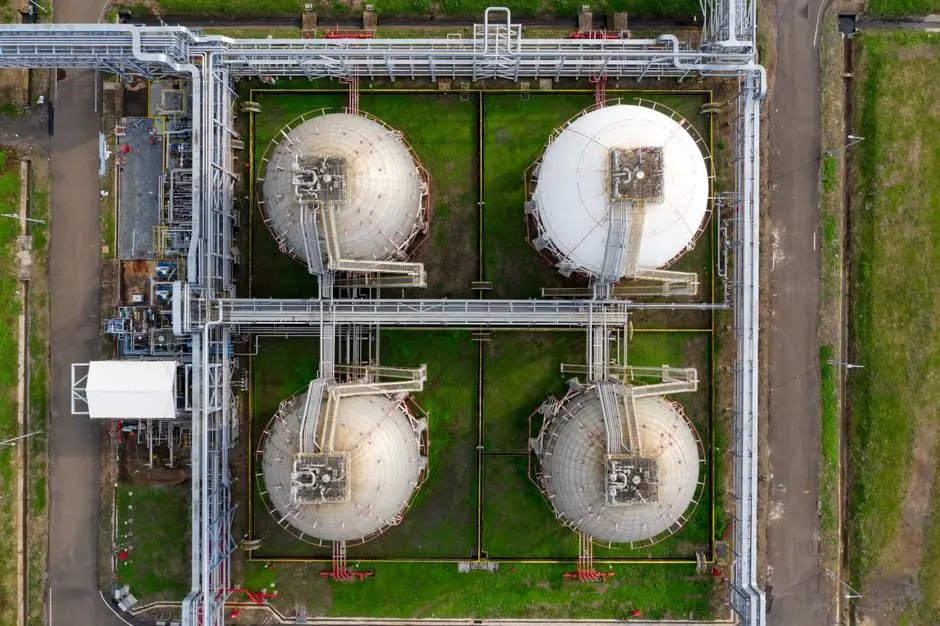
Closing the gap between existing facility performance and MSAER/NOM requirements often requires the deployment of modular, high-efficiency treatment skids. For O&G removal, the DAF for petrochemical FOG removal is the preferred technology, capable of handling 4–300 m³/h with a significantly smaller footprint than traditional API separators. For organic loading and TSS, the integrated MBR for BOD/COD/TSS compliance offers a compact solution that can meet the most stringent effluent limits in a single step.
In cases where water reuse is mandated by Aramco’s CP-25 Water Conservation Policy, industrial Reverse Osmosis (RO) systems are necessary to manage TDS and chloride levels. All upgrades should include an automatic chemical dosing system for pH and coagulation to ensure stability in the face of variable influent quality. Finally, for the management of the resulting hazardous sludge and NORM-contaminated solids, a filter press for NORM and hazardous sludge is required to achieve the 25–35% dry solids content necessary for compliant landfill disposal.
Frequently Asked Questions
Does Aramco SAEP-327 apply to a Mexican plant on Day 1 of ownership?
Yes. As a corporate mandate under SAEP-302, MSAERs apply to all global assets. A compliance gap analysis must be completed during the due diligence phase to identify necessary upgrades before ownership transfers.
Which limit governs when Aramco and Mexican standards differ?
The stricter (lower) limit for each specific parameter always governs. This value must be documented in the facility’s internal compliance matrix to ensure a consistent audit trail during both local and internal inspections.
Can we operate under the seller's existing CONAGUA permit during transfer?
The operator can maintain the existing discharge status during the 30-business-day Cesión de Derechos window; however, any non-compliance discovered during the transfer review process becomes the immediate legal and financial liability of the purchaser.