What changes when Panasonic Energy becomes the operator?
Wastewater at a battery plant acquired by Panasonic Energy in Hungary should be handled as a site-specific permitting, contamination and treatment workstream—not as an automatically transferable inherited system. A change of operator triggers IPPC permit reassessment under Act LVII of 2016, with the county Government Office issuing the permit and OVF providing technical comment. The acquired site should segregate sanitary, industrial, cathode/anode, cooling blowdown and stormwater flows; characterize lithium, nickel, cobalt, manganese, NMP, organics, suspended solids, oil and PFAS-related binder residues; and install treatment only after reviewing the existing permit, 12 months of effluent data, receiving-water limits and contamination studies.
The legal issue is not merely whether the seller’s permit continues to exist. HydropureWater’s 2026 commercial analysis states that a change of operator in Hungary triggers IPPC reassessment under Act LVII of 2016 and that the existing permit does not transfer wholesale. That conclusion must be checked against the target’s current permit and the competent authority; the supplied research does not establish that Panasonic Energy has completed any particular Hungarian acquisition.
Three regulatory roles should be managed separately. The county Government Office, or Kormányhivatal, issues the IPPC permit. OVF, the National Water Authority, provides technical comment. The local water directorate comments where pipelines cross public drainage assets. Those roles create different approval paths, so treating the IPPC permit as the only consent would leave an easement or discharge-interface gap.
The acquisition request list should therefore cover more than the headline permit. Obtain the permit and amendment history; a stream-by-stream water and contaminant mass balance; 12 months of influent and effluent records; discharge agreements; legacy soil and groundwater findings; freshwater conditions; and capital-cost contingencies. A legacy wastewater acquisition due-diligence guide is useful for structuring document requests, but site-specific evidence and regulator confirmation remain decisive.
Hungarian rules that control industrial discharge
Hungarian IPPC control is site-level and integrated, so wastewater cannot be separated from the plant’s air, noise and waste authorizations. The framework identified by HydropureWater’s 2026 commercial source includes EU Industrial Emissions Directive 2010/75/EU, Urban Waste Water Treatment Directive 91/271/EEC, Water Framework Directive 2000/60/EC, Act LVII of 2016 on water management, and Government Decrees 28/2004, 219/2004, 220/2004 and 314/2005.
The UWWTD values in the commercial source are BOD5 at or below 25 mg/L, COD at or below 125 mg/L and TSS at or below 60 mg/L after secondary treatment. Their applicability depends on the receiving sewer or watercourse and the site permit; they should not be applied indiscriminately to every industrial stream. The Water Framework Directive can also influence discharge conditions where the receiving water is sensitive, but the enforceable site limit must come from the IPPC permit and applicable Hungarian implementation.
Greenpeace Hungary reported on 2025-05-15 that battery manufacturing entered IED scope for production capacities exceeding 15 tons of battery cells, with national transposition required by 2026-07-01. It also reported that the related BAT reference document could take up to four years to develop, leaving permit conditions to be determined within the broader framework while that work remains incomplete. The 1 mg/m³ NMP value it reported was an air-emission limit, not a wastewater threshold.
| Instrument or source | What it controls | Acquisition use |
|---|---|---|
| Act LVII of 2016 and IPPC procedure | Site-level integrated environmental authorization, including water | Verify permit-holder change and reassessment scope |
| UWWTD 91/271/EEC | Urban wastewater collection and treatment requirements, subject to applicability | Check applicable sanitary and receiving-sewer conditions |
| Water Framework Directive 2000/60/EC | Receiving-water status and protection | Test whether site sensitivity affects permit conditions |
| Decree 220/2004 | Emission limit values identified in the commercial source | Read only the provisions applicable to the site |
| Greenpeace Hungary, updated 2025-05-15 | Context on IED scope and pending BAT development | Flag regulatory development; confirm current law with counsel |
This framework explains why equipment selection must follow the permit and receiving-water analysis. An MBR wastewater treatment system may support biological treatment, while reverse-osmosis equipment may be needed for dissolved contaminants; neither establishes compliance by itself.
How to characterize wastewater before selecting equipment
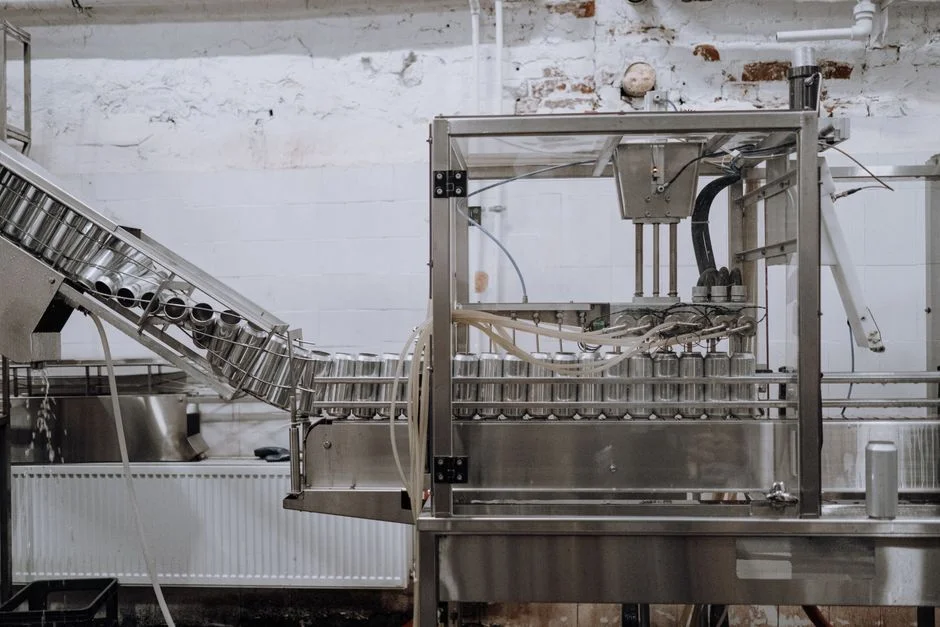
A defensible treatment design begins with measured streams, loads and variability—not with a catalogue capacity. HydropureWater’s 2026 commercial article recommends requesting 12 months of flow and laboratory data during acquisition diligence. For each source and discharge point, obtain flow records and representative influent and effluent results, including batch dumps and abnormal-production periods.
Segregate sanitary wastewater; body-in-white or general metalworking wash water; coating or conversion-coating wastewater; cathode and anode production water; cooling-tower and boiler blowdown; and stormwater before combining them for treatment. Combining these streams at the wrong point can dilute a high-risk cathode stream, increase biological loading or make reuse incompatible with process chemistry.
The cathode and anode stream requires the most specific battery-focused sampling. The commercial source identifies lithium, nickel, cobalt, manganese, NMP traces and PFAS-bearing binder residues as key burdens. Test those parameters alongside COD, suspended solids and relevant organic residues. For metalworking and coating streams, characterize TSS, oil and grease, zinc, nickel, copper, phosphates and organic coatings. For cooling and boiler systems, measure TDS, conductivity and treatment inhibitors. Inspect stormwater loading areas, outdoor storage, firewater containment and traffic routes for suspended solids, oil sheen and metals.
| Stream | Minimum characterization focus | Decision unlocked |
|---|---|---|
| Sanitary | Flow, BOD5, COD, TSS, ammonia and microbiological requirements | Separate sewer route and treatment scope |
| Metalworking and coating | TSS, oil and grease, Zn, Ni, Cu, phosphates and organic coatings | DAF, precipitation and biological pretreatment |
| Cathode and anode | Li, Ni, Co, Mn, COD, NMP, TSS and relevant binder residues | Metal removal, polishing and recovery steps |
| Cooling and boiler blowdown | TDS, conductivity and treatment inhibitors | Concentration and reuse strategy |
| Stormwater | TSS, oil sheen, metals and site-specific contaminants | Segregation, first-flush controls and treatment |
Install sampling points at process generation, each treatment stage, reuse interfaces and final discharge. During acquisition diligence, use the campaign to compare measured loads with IPPC limits and receiving-water capacity. A rotary mechanical bar screen may protect downstream equipment if screening is confirmed as necessary; online heavy-metals analyzer guidance can inform monitoring selection, but the analyte list must follow the permit and mass balance.
Heinrich Böll Stiftung’s 2024-10-03 hazardous-waste analysis is context, not a discharge standard. It identifies EWC 161001* aqueous liquid waste containing hazardous substances, commonly including NMP, and EWC 060315* metal-oxide waste containing heavy metals. Those waste classifications should inform storage, transport and disposal diligence without being mistaken for effluent limits.
Match each wastewater stream to the right treatment step
No single technology satisfies every battery-plant wastewater function. Headworks and equalization control solids and flow variation; physico-chemical treatment handles floatable material and selected metals; biological treatment addresses biodegradable organics; and polishing separates dissolved salts or metals. Equipment selection must follow measured flow, pollutant load, reuse objectives and permit limits.
Use equalization and headworks to remove rags and grit, balance variable flows and protect downstream biological, membrane and polishing equipment. A rotary mechanical bar screen and automatic chemical dosing may be suitable where the stream audit confirms the need. The DAF catalogue lists capacity from 4–300 m³/h, but that range does not size the plant.
For metalworking or coating wastewater with high suspended solids, oil and grease, or colloidal material, evaluate a DAF system for industrial pretreatment. Select hydraulic capacity and chemistry from measured flow, TSS, FOG, emulsion behavior and batch releases. DAF is not a substitute for biological treatment of soluble biodegradable material.
Use an MBR wastewater treatment system where the objective is a compact biological train or high-quality reuse. The catalogue states capacity from 10–2,000 m³/day and filtration below 1 μm, but biodegradability, ammonia, process load and permit targets must control final selection. For industrial reuse, evaluate RO water purification where dissolved metals or salts require separation.
HydropureWater’s 2026 commercial source proposes more than 90% recovery as a cathode-stream polishing objective. Present that as a target to validate through pilot work or a vendor performance guarantee, not as an assured site outcome. Use precipitation or selective ion exchange where the permit and mass balance require lithium, nickel or cobalt removal or recovery. The source describes 0.5–2 mg/L lithium as an analogical planning range, not a uniformly codified Hungarian discharge ceiling.
| Treatment step | Primary function | Selection basis |
|---|---|---|
| Headworks and equalization | Remove solids and balance variable flow | Flow record, batch dumps, screenings and downstream sensitivity |
| DAF | Remove floatable oils, solids and colloids | Measured TSS, FOG, flow and emulsion behavior |
| MBR | Remove biodegradable organics and suspended solids | Biodegradability, ammonia, reuse target and permit |
| Precipitation or ion exchange | Remove or recover selected dissolved metals | Species, concentration, recovery objective and residual handling |
| RO | Separate dissolved metals and salts | Feed chemistry, recovery target, concentrate disposal and energy |
| Sludge dewatering | Separate controlled residues from filtrate | Sludge chemistry, hazardous-waste classification and destination |
Treat sludge and filter-press filtrate as controlled waste streams. Heinrich Böll Stiftung documents heavy-metal and NMP-bearing hazardous-waste concerns, while the commercial source recommends a plate-and-frame filter press for combined biological and DAF sludge. Use disinfection only where the permit or receiving-water requirements call for it; do not infer a residual or microbiological target without the permit.
Protect the plant from legacy contamination and permit risk
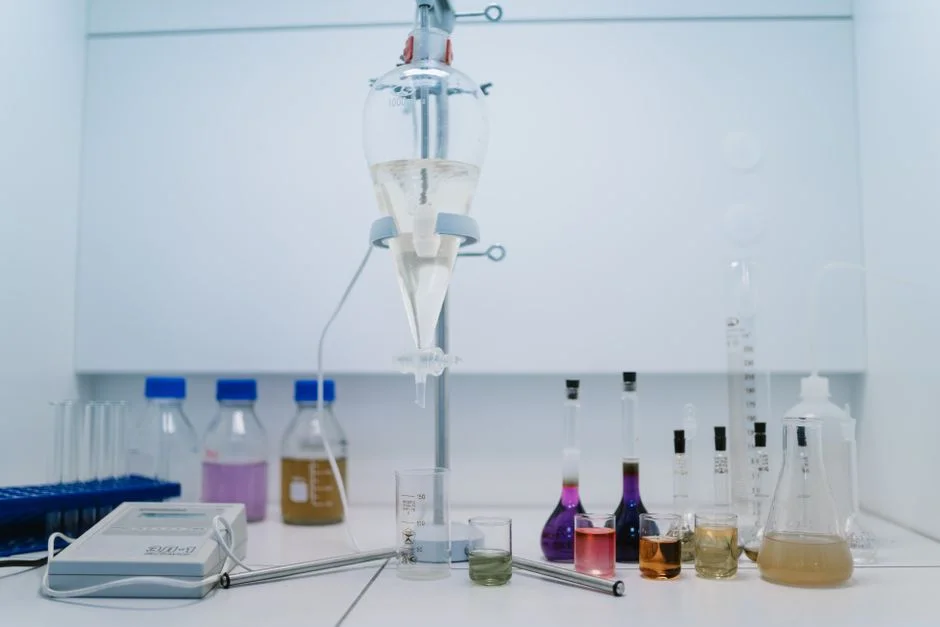
Legacy contamination can remain a transaction liability even if the installed treatment equipment is capable of meeting current discharge conditions. Commission a Phase I environmental site assessment and targeted Phase II soil and groundwater investigation. HydropureWater’s 2026 commercial source specifically calls for testing petroleum hydrocarbons associated with legacy fueling, PFAS associated with binder handling and heavy metals from prior metalworking operations.
Verify hazardous-waste classifications, manifests, storage areas and off-site treatment contracts. Obtain the last 12 months of cathode-line effluent data and confirm whether NMP solvent recovery is operating. The existence of an NMP recovery unit should be verified through process records, bypass controls and operating evidence rather than a process-flow diagram alone.
Review IPPC permit history, amendments, inspection findings, monitoring deviations, corrective actions and outstanding regulator correspondence. Reviewing only the current headline limits can conceal an enforcement issue or an unapproved change in production scope.
Map discharge routes and easements with the local water directorate early. Treat a pipeline crossing public drainage assets as a parallel workstream, consistent with HydropureWater’s 2026 commercial source. Also check whether the buyer’s intended production changes, reuse plan or treatment capex alters the permitted installation or discharge regime.
The commercial article gives 0.5–1.5 million m³/year as a freshwater or watershed-restoration planning range and 12–18 months for brownfield permitting versus 18–36 months for greenfield. These are vendor estimates, not settled requirements for the target. They should be sensitivity-tested against the site’s water balance, watershed and permit status rather than inserted into the purchase price without validation.
| Risk item | Diligence evidence | Transaction treatment |
|---|---|---|
| Operator-change permitting | Permit, amendments, authority correspondence and permit-reassessment advice | Condition or price adjustment for delay and mitigation |
| Legacy contamination | Phase I/II reports, monitoring wells and waste records | Allocate remediation liability and access rights |
| Treatment gap | 12 months of data, mass balance, pilot evidence and cost estimate | Fund verified capex and operating contingency |
| Discharge interface | Route survey, sewer agreements and easement status | Make required rights a closing deliverable |
| Downtime risk | Construction sequence, bypass plan and regulator status | Allocate permit risk and production interruption |
Put permit timing, treatment capex, construction risk and residual contamination liability into the purchase-price and closing-condition model. Equipment quotations alone do not price these obligations. A legacy wastewater acquisition diligence guide can support the liability review, while the battery plant expansion ETP guide provides an adjacent engineering framework—not evidence about Panasonic Energy’s Hungarian site.
Build a decision framework for treatment investment
The acquisition decision should proceed through six gates, with each gate producing evidence that closes the next one. The sequence is more defensible than selecting equipment first and negotiating permit consequences later.
- Gate 1—identity: Confirm the acquired entity, operating scope, planned production changes, permit holder, receiving sewer or watercourse and contract term.
- Gate 2—evidence: Require 12 months of flow and laboratory data, current permit and BAT conditions, hazardous-waste records, environmental assessments and regulator correspondence.
- Gate 3—mass balance: Calculate each stream’s daily load and compare it with permit limits and receiving-water capacity. Identify whether flow, organics, solids, metals, dissolved salts, NMP or permit timing is the binding constraint.
- Gate 4—pilots: Where removal or recovery remains uncertain, test cathode and metal-bearing wastewater with DAF, precipitation, MBR and RO pilot skids. The pilot should reproduce relevant feed chemistry and evaluate residual and concentrate handling.
- Gate 5—commercial: Compare total cost of ownership, freshwater consumption, energy, chemicals, sludge and concentrate disposal, reuse value, construction duration and operator requirements. Seek site-specific quotations rather than multiplying catalogue ranges.
- Gate 6—closing: Record permit assumptions, legacy-liability allocation, remediation access, regulator status, capital commitments and performance guarantees in the transaction documents.
This framework also determines which decisions can remain conditional. Keep treatment steps conditional until measured loads, the current IPPC permit and 12 months of operating data identify the actual constraint. If reuse remains a commercial objective rather than a permit obligation, treat it as an option until process compatibility and reliability are demonstrated. Commercial planning ranges should inform contingencies, not substitute for site evidence.
Frequently Asked Questions
How should the wastewater budget be calculated for this acquisition?
Separate equipment CAPEX from the full transaction cost. The budget should include pilot testing, permit work, freshwater measures, construction, sludge and concentrate handling, utilities, monitoring and contingency. Require bidders to state the measurement basis, performance guarantee, included civil work and excluded disposal or infrastructure. No defensible site price can be issued without verified flows, wastewater chemistry, permit limits, receiving-water capacity and the intended treatment train.
How should an industrial wastewater treatment supplier be selected?
Require stream-specific performance data and guarantees tied to the site’s permit parameters, not generic “reuse quality” claims. For metal-bearing streams, ask for pilot evidence under representative chemistry. Also check installation references, PLC integration, operator training, maintenance scope, spare-parts support and consumables availability. Treat catalogue capacity as a screening range, not proof that the supplier has designed for the site’s loads or residuals.
What flow capacity is needed for the acquired battery plant?
No defensible capacity can be calculated without verified daily and peak flows, operating hours, batch dumps, stormwater rules, reuse targets and permit limits. The commercial source’s 5,000–15,000 m³/day range is an analogical planning envelope, not a Panasonic requirement or a confirmed Hungarian plant flow. Size each treatment stage from the measured mass balance and operating strategy.
Can the acquisition close before permit reassessment and environmental due diligence are complete?
An acquisition may close while reassessment, investigations or mitigation work remain, but the buyer should not assume continued operation or discharge under the seller’s historical terms. Make permit status, regulator assumptions, access rights, identified mitigation and capital commitments explicit in closing conditions or price adjustments. Obtain advice on the actual legal effect for the target’s permit and transaction structure.
When is industrial wastewater reuse technically feasible?
Reuse depends on water chemistry, process compatibility, reliability, storage, monitoring and whether the site’s permit supports the intended end use. First identify the receiving process and its quality limits, then test the proposed effluent against those requirements over representative operating conditions. A treatment train can meet a discharge specification and still be unsuitable for direct process reuse.