What wastewater treatment system does a Sydney hotel or resort need?
A Sydney hotel or resort generally needs one of two treatment routes in 2026: a Sydney Water trade-waste-compliant system for sewer discharge, or an on-site reuse plant meeting NSW Health requirements. Package MBR is usually preferred for resorts above 80 keys, reuse projects or constrained sites; an underground WSZ A/O plant is lower-cost for sewer-discharge sites under 80 keys. Both need robust FOG pretreatment, typically grease-trap and DAF stages, plus screening and disinfection. Initial sizing should use 200–400 L per guest per day and a 2.0–2.5× peak factor, then confirm flows and permit conditions through site-specific testing and design.
The route, rather than the technology name, should drive procurement. A sewer-discharge package must satisfy Sydney Water’s written consent conditions and ongoing trade-waste charges. A reuse package must be designed around the intended end use, the required recycled-water class, the reuse plumbing and the validation regime.
Hotel wastewater is not ordinary residential sewage. The design must accommodate guest blackwater; greywater from showers and basins; kitchen wastewater carrying fats, oils and grease; and laundry wastewater containing lint, surfactants and occasional bleach-related pH spikes. The HydropureWater Hotel & Resort Wastewater Treatment in Australia: 2026 Guide gives a 2026 Australian hotel influent basis of BOD 250–400 mg/L, TSS 200–350 mg/L, kitchen-peak oil and grease 100–500 mg/L, NH3-N 20–40 mg/L and surfactant load 10–25 mg/L.
Use the selection shorthand from the same guide as a screening tool, not a final design: package MBR for properties above 80 keys, reuse applications or constrained footprints; WSZ underground A/O for sewer-discharge sites below 80 keys where lowest capital cost dominates; and SBR with DAF polish for highly seasonal occupancy. See the broader hotel and resort wastewater selection guide and comparison of packaged A/O, MBR and DAF systems.
Choose the legal treatment route before selecting equipment
Sydney Water trade-waste consent and NSW Health recycled-water guidance impose different design obligations, so they cannot be treated as interchangeable approval paths. The HydropureWater Hotel & Resort Wastewater Treatment in Australia: 2026 Guide states that every Australian hotel falls into one of two principal pathways: sewer discharge under a trade-waste consent or on-site reuse under the relevant state’s recycled-water guidance.
For sewer discharge, obtain the consent from Sydney Water before ordering the biological treatment package. The 2026 guide says Sydney Water applies load-based trade-waste pricing to BOD, TSS and NH3-N. Treatment quality can therefore affect recurring charges, although the supplied research does not establish a general Sydney concentration limit. Do not substitute a Brisbane River catchment target for a Sydney condition: the same guide records catchment-specific Urban Utilities targets in Brisbane, which demonstrates why the proposed discharge point must be confirmed directly with Sydney Water in writing. A general treatment-package selection is only the starting point for a permit-dependent pretreatment review.
For reuse, the relevant framework is NSW Health recycled-water guidance. The 2026 guide assigns Class A+ or Class B treatment according to the end use; toilet flushing and spray irrigation require the higher specified class, while sub-surface irrigation generally uses Class B. The guide’s reuse pathway specifies validated chlorine dioxide or UV disinfection delivering at least 99.9% E. coli log reduction. Chlorine dioxide or UV is a treatment concept, not permission to commission reuse without the required validation and approval.
| Decision | Sewer discharge | On-site reuse |
|---|---|---|
| Authority pathway | Sydney Water trade-waste consent | NSW Health recycled-water requirements and approved management plan |
| Design basis | Written discharge limits, approved flow and load basis | Required water class, end uses, validation and reuse plumbing |
| Typical treatment route | Headworks, FOG removal, biological treatment, disinfection | Headworks, FOG removal, advanced treatment, validated disinfection and reuse distribution |
| Commercial driver | Avoid trade-waste charges and compliance breaches | Reduce potable-water demand while controlling public-health risk |
Before requesting an equipment quotation, compile occupancy and guest-night profiles, kitchen covers, laundry configuration, sewer connection depth, available footprint, reuse demand, electrical supply and the authority’s written conditions. These inputs determine the treatment train, testing program, controls, commissioning evidence and commercial price.
Protect the treatment plant from hotel-specific peak loads
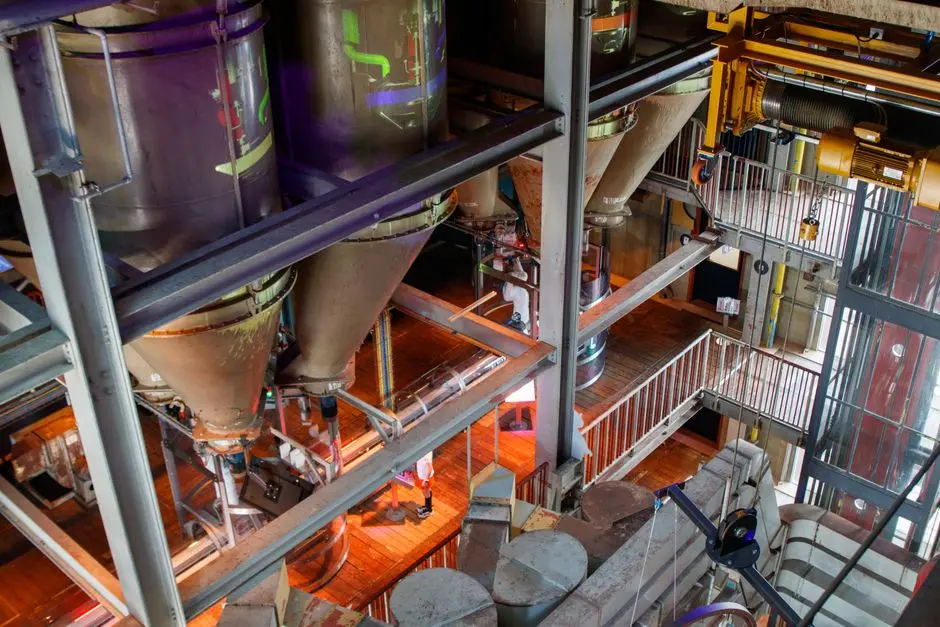
The 2026 Australian design basis treats FOG pretreatment as a process requirement, not an optional accessory. The HydropureWater guide defines the hotel treatment train as incoming wastewater → screening and grease removal → DAF polish → biological treatment → disinfection → sewer discharge or reuse, with sludge dewatering forming a parallel solids stream.
FOG enters the plant in short, high-strength peaks. The guide states that kitchen FOG peaks can reach 3–5× the daily average. It specifies a passive grease trap of 500–2,000 L, sized at approximately 40 L per meal cover per day, followed by mechanical DAF polishing to below 30 mg/L oil and grease before biological treatment. A DAF system for hotel FOG pretreatment should therefore be selected for the measured kitchen peak, including emulsified oil, surfactants and banquet service—not merely the daily average.
Screening protects pumps and downstream treatment. The guide specifies a 5 mm rotary bar screen where lint, hair or food solids could threaten downstream equipment, a risk increased by continuous laundry lint. A 5 mm rotary mechanical bar screen forms part of that headworks strategy. The DAF and screen work together to remove more than 90% of the suspended and floatable load that could otherwise blind a membrane or increase aeration demand.
MBR operation adds another control layer. The guide gives an operating range of 8,000–12,000 mg/L MLSS with continuous scour aeration, weekly in-situ relaxation and CIP every 3–6 months at hotel loading. Include membrane cleaning access, chemicals, labour and replacement membrane provisions in the operating model.
| Protection stage | Design basis in the 2026 guide | Procurement focus |
|---|---|---|
| Passive grease trap | 500–2,000 L; approximately 40 L per meal cover per day | Kitchen covers, meal periods, banquet loads and pump-out arrangements |
| Mechanical screening | 5 mm rotary bar screen where lint, hair or food solids could endanger pumps | Screen aperture, extracted solids handling and accessible cleaning |
| DAF polish | Oil and grease below 30 mg/L before biological treatment | Kitchen peak duty, surfactants and confirmed performance |
| MBR controls | 8,000–12,000 mg/L MLSS; continuous scour aeration; weekly relaxation; CIP every 3–6 months | Aeration control, membrane access, cleaning chemicals and membrane warranty |
Seasonality changes the preferred control strategy. SBR batch equalisation can absorb highly variable occupancy and conference peaks. MBR requires more active membrane, MLSS and aeration management, but offers a smaller footprint and greater reuse readiness. That trade-off must be tested against the property’s actual occupancy profile rather than its annual average.
Size the system using average and peak wastewater flows
The supplied 2026 sizing method applies 200–400 L per guest per day and a 2.0–2.5× peak factor to both hydraulic and biological stages. Hydraulic capacity alone is insufficient: the selected process must also handle organic, FOG and nutrient loading under kitchen, laundry and occupancy peaks.
For the supplied 120-room example, assume two guests per occupied room and 250 L per guest per day:
ADWF = 120 rooms × 2 guests × 250 L/guest/day = 60 m³/day.
Applying the upper end of the supplied peak range gives 60 m³/day × 2.5 = 150 m³/day for the aeration, membrane or clarifier train. A 200-cover restaurant at 25 L per cover contributes 5 m³/day of kitchen flow, with a peak oil and grease load. On-site laundry adds another 10–15%.
The supplied guide consequently concludes at approximately 180 m³/day for the biological stage, absorbing the kitchen peak and laundry surge. That is the stage-sizing conclusion, not a universal hotel capacity. The site engineer must verify occupancy, guest-night distribution, kitchen operating hours, laundry batch timing, rainfall-derived infiltration, holiday events and any trade-waste flow from other non-domestic activities.
| Sizing component | Supplied worked example | What the designer must verify |
|---|---|---|
| Guest-room ADWF | 60 m³/day | Occupancy, room count and seasonal guest-night pattern |
| Peak multiplier | 2.5× | Duration and coincidence of morning, banquet and laundry peaks |
| Hydraulic peak | 150 m³/day | Inflow, equalisation, pump capacity and downstream process peak |
| Kitchen flow | 5 m³/day at 200 covers | FOG concentration, emulsification, meal-service timing and trap/DAF duty |
| Laundry increment | 10–15% | Batch schedule, lint, surfactants, bleach pH spikes and temperature |
| Biological-stage conclusion | Approximately 180 m³/day | Organic loading, nutrients, temperature, retention time and process duty points |
The 150 m³/day worked peak is separate from the HydropureWater MBR catalogue range of 10–2,000 m³/day. Catalogue capacity does not validate a duty point, process configuration or approval compliance. Use the hotel packaged MBR selection guide for the equipment-selection questions that follow the flow calculation.
Compare MBR, underground A/O and SBR systems
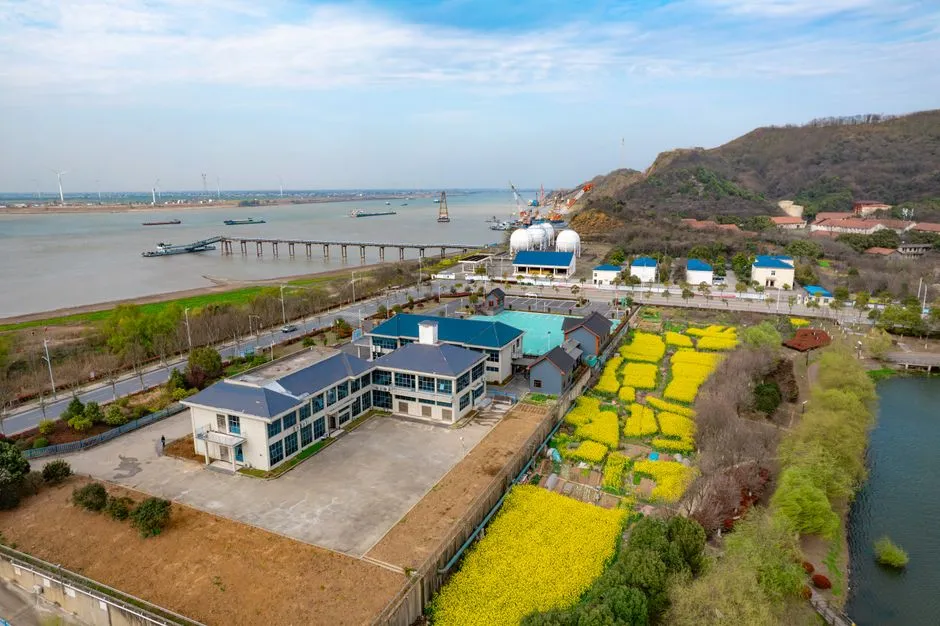
MBR, buried A/O and SBR are not interchangeable equipment classes: each meets a different combination of reuse intent, footprint, load variability and operating requirements. The HydropureWater 2026 guide lists package MBR capacity at 10–2,000 m³/day and WSZ A/O capacity at 1–80 m³/h.
MBR is the stronger candidate where reuse is required, the property has more than 80 keys or available footprint is constrained. It provides near-reuse effluent and a smaller footprint per m³/day, but it has the highest capital exposure and requires specialist operator competence for membrane CIP, MLSS control and scour-aeration tuning. A package MBR wastewater treatment system should be quoted with membrane guarantees and replacement costs, not as a vessel alone.
A buried WSZ A/O plant is the lower-capital route for sewer-discharge properties below 80 keys where reuse is outside the project scope. It can be installed underground and automated without a full-time operator. Biological treatment alone does not provide MBR-level filtration, and chemical disinfection would be required if reuse were later contemplated. A buried WSZ A/O treatment plant should therefore be specified only for the approved route and duty envelope.
SBR with DAF polish offers batch equalisation for conference peaks and highly seasonal resorts. It trades continuous-flow membrane operation for stored-volume flexibility. The operating question is whether the property has enough variation and storage requirement to justify that configuration.
| Criterion | Package MBR | WSZ underground A/O | SBR with DAF polish |
|---|---|---|---|
| Capacity stated in the 2026 guide | 10–2,000 m³/day | 1–80 m³/h | Not stated in the supplied research |
| Preferred route | Reuse, more than 80 keys or constrained site | Sewer discharge below 80 keys | Highly seasonal or conference-driven occupancy |
| Filtration and reuse readiness | Near-reuse effluent with validated disinfection | Biological treatment alone; chemical disinfection for reuse | DAF polish plus biological treatment |
| Operating burden | Highest: membranes, blowers and specialist controls | Lowest: automated buried package | Batch controls and DAF operation |
| Capital exposure | 20–35% above equivalent A/O | Lowest of the stated options | Not quantified in the supplied research |
| Main risk | FOG fouling, membrane maintenance and replacement | Limited filtration and no embedded reuse path | Batch-volume allocation and seasonal operating control |
The reuse economics can justify MBR, but only after the reuse plumbing is committed. The 2026 guide states that MBR adds 20–35% to total capital cost over equivalent A/O and can offset 40–60% of metered potable-water charges when used for toilet flushing and landscape irrigation. It also gives an MBR membrane replacement interval of 7–10 years at hotel loading, a plate-and-frame target of 18–22% DS cake, and 20–30% energy savings from fine-bubble diffusers and VFD blowers compared with older coarse-bubble designs. These are lifecycle inputs, not guaranteed project outcomes.
Build the complete package and lifecycle budget
A treatment vessel is not a complete wastewater package. The base sewer-discharge scenario in the HydropureWater 2026 guide comprises underground A/O treatment, DAF pretreatment and plate-and-frame sludge dewatering. The reuse scenario adds package MBR, DAF pretreatment, chlorine dioxide disinfection, automatic pH-correction dosing and sludge dewatering. Final disinfection, controls and validation must be engineered around the approved NSW reuse plan.
The guide gives an indicative installed cost of A$8,000–14,000 per key for packaged A/O, a 20–35% MBR premium and a 15–25% remote-site uplift for transport, sludge logistics and standby power. These are screening allowances, not quotations. The approved process, reuse requirements, excavation, utilities, controls and site conditions remain necessary inputs to a firm price.
| Package item | Sewer-discharge scenario | Reuse scenario |
|---|---|---|
| Main treatment | Buried WSZ A/O plant | Package MBR |
| FOG pretreatment | Grease trap and DAF | Grease trap and DAF |
| Disinfection | As required by the consent | Engineered chlorine dioxide or UV system meeting the approved validation requirements |
| Chemical control | As required by the process | Automatic pH-correction dosing and disinfection controls |
| Solids handling | Plate-and-frame sludge dewatering | Plate-and-frame sludge dewatering |
| Site services | Power, odour control, remote monitoring, access and operator training | Power, standby provisions, chemical delivery, reuse plumbing, validation and operator training |
Reuse demand should be included in the design basis. The supplied Sydney and SEQ reuse case assigns toilet flushing 40–60 L per guest per day and landscape irrigation 5–10 L/m²/day for subtropical or tropical planting. The guide gives a 5–8 year payback for the MBR premium at a full-service Sydney or SEQ resort with metered potable water and reuse plumbing, but the owner’s tariff, occupancy and actual reuse quantities must confirm it.
Price sludge collection and removal, membrane cleaning, chemical delivery, backup power, odour control, monitoring and operator training as operating obligations. A chlorine dioxide generator, automatic chemical dosing system and plate-and-frame filter press should appear in the supplier scope where the selected process requires them.
Use a site-specific approval and supplier-selection checklist
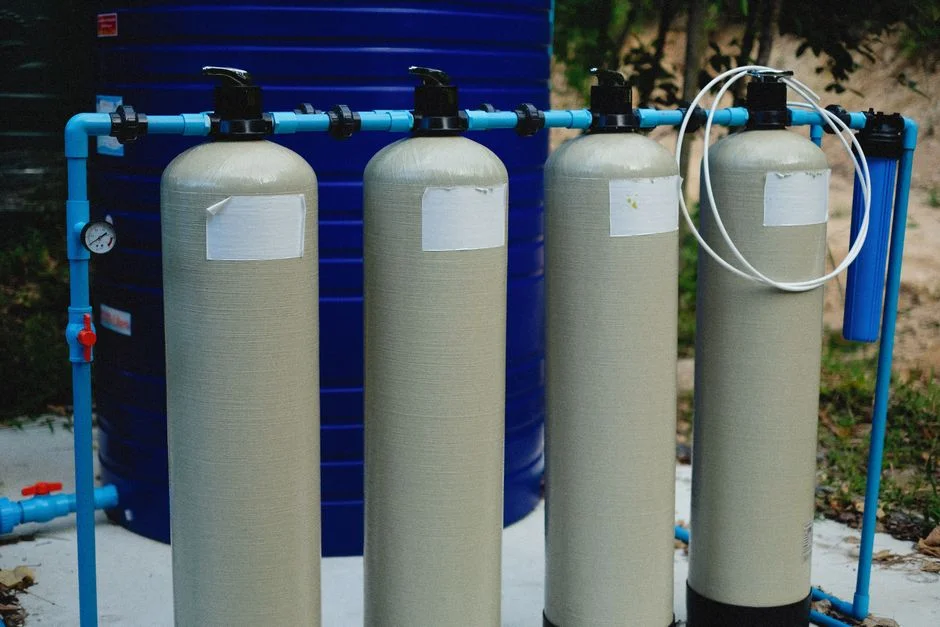
A compliant quotation follows a defined information sequence: legal route, measured influent, verified duty, complete package and supplier evidence. The HydropureWater 2026 guide states that technical articles are prepared for buyers and engineers and that site-specific design values must be checked against current permits, influent testing and the final equipment proposal.
- Confirm the legal route. Obtain Sydney Water’s written discharge limits for sewer discharge, or the applicable NSW Health reuse requirements for on-site reuse.
- Test the site. Measure flow and characterise BOD, TSS, oil and grease, pH and ammonia. Document kitchen and laundry operating peaks rather than relying on annual averages.
- Define the duty. Set average flow, peak flow, organic and nutrient loading, FOG load, reuse demand, footprint, burial depth and power availability.
- Specify the complete package. Request a process flow, guaranteed performance values, hydraulic duty points, controls description, O&M manual, commissioning protocol, membrane or media warranty, spare-parts schedule and lifecycle-cost schedule.
- Test supplier capability. Verify hotel or resort references, local installation capability, commissioning experience and after-sales support. Generic hospitality experience does not replace wastewater process data.
The critical commercial gate is the approved permit and process performance, not the catalogue flow range. Require each bidder to identify which permit conditions its equipment satisfies, which assumptions it has made, and which performance remains conditional on site testing or operating inputs. A supplier that cannot provide that traceability has not supplied a compliant comparison.
The same sequence can be used to compare treatment suppliers on scope, compliance and lifecycle cost. For a Sydney hotel, the winning quotation is the one that closes the route, approval, peak-load and operating-cost risks—not necessarily the one with the lowest vessel price.
Frequently Asked Questions
How much does a wastewater treatment system cost for a Sydney hotel?
The HydropureWater Hotel & Resort Wastewater Treatment in Australia: 2026 Guide gives an indicative A$8,000–14,000 per-key installed cost for packaged A/O, with MBR adding 20–35% and remote sites adding 15–25%. No site-specific quotation is supplied. Request a price broken into treatment, pretreatment, sludge dewatering, controls, utilities, installation, commissioning, approval support and operating costs, then test the assumptions against the approved process.
Should a Sydney resort choose MBR or a packaged A/O plant?
The 2026 guide recommends MBR for properties above 80 keys, reuse projects or constrained sites, and underground A/O for sewer-discharge properties below 80 keys where lowest capital cost dominates. Also test seasonal variability and operator capability. For a direct equipment comparison, request the package MBR wastewater treatment system and buried WSZ A/O treatment plant against the same approved duty and performance schedule.
How is a hotel wastewater treatment system sized?
For the supplied example, 120 rooms × 2 guests × 250 L per guest per day gives 60 m³/day ADWF. Applying 2.5× gives 150 m³/day; the 200-cover kitchen adds 5 m³/day and laundry adds 10–15%, producing the guide’s approximately 180 m³/day biological-stage conclusion. Verify occupancy, kitchen and laundry timing, infiltration and loading before fixing the duty.
Does a Sydney hotel need DAF and a grease trap?
The supplied 2026 Australian design basis treats two-stage FOG pretreatment as mandatory. It specifies a 500–2,000 L passive grease trap at approximately 40 L per meal cover per day and DAF polishing to below 30 mg/L oil and grease. Size these duties from measured kitchen peaks and specify the DAF system for hotel FOG pretreatment accordingly.
Can a packaged sewage treatment plant be reused for toilet flushing?
Only if the selected process and plumbing satisfy the approved NSW reuse plan. The 2026 guide specifies Class A+ or Class B according to the end use and validated chlorine dioxide or UV disinfection delivering at least 99.9% E. coli log reduction for the reuse pathway discussed. A standard sewer-discharge package is not automatically a reuse-compliant system.