
Why a Packaged MBR Fits a Surabaya Hotel Project
For a Surabaya hotel in 2026, choose a packaged MBR STP by first fixing the compliance basis under Indonesia's Minister of Environment/Environmental Control Agency Regulation No. 11 of 2025 (in force 9 September 2025), then sizing the plant on per-occupant load plus kitchen FOG and laundry sidestreams, and finally verifying that the packaged MBR delivers ~98% BOD5 removal and near-complete TSS rejection at the design MLSS of 6,000–12,000 mg/L in a footprint that fits the hotel's basement or service yard.
Packaged STPs are pre-engineered, factory-built and skid- or container-mounted systems that arrive on site with biological, separation and control stages largely pre-assembled (per S1, S2, S3). For a 60–300-key Surabaya hotel — where the developer's plot is usually a tight urban parcel, a basement service area, or a corner of the service yard — building a cast-in-place conventional STP is rarely feasible on programme or budget. A packaged MBR, in the 10–500 m³/day sweet spot typical for mid-size hotels, removes the conventional sedimentation tank entirely and operates at MLSS of 6,000–12,000 mg/L (Sigmadaf), shrinking the reactor to roughly 60% of the equivalent activated-sludge volume (per the HydropureWater integrated MBR membrane bioreactor system specification) while still producing reuse-grade effluent at ~98% BOD5 removal and virtually complete TSS rejection (per Pure Aqua's six-system Toray installation in Indonesia, S2).
Surabaya makes that case stronger, not weaker. Year-round wastewater temperatures in the high 20s °C keep biology active without enclosure heating, monsoon-driven hydraulic peaks can be buffered in a small equalisation stage rather than oversized reactors, and Reg. 11/2025's tightening effluent and reuse expectations push designers away from the older "septic + soak" default. Reuse for landscape irrigation, toilet flushing and cooling-tower make-up then turns the STP from a compliance cost into a utility offset.
Indonesian Compliance Basis: Regulation 11/2025 and Surabaya Permitting
Regulation No. 11 of 2025 — issued by Indonesia's Minister of Environment/Environmental Control Agency and in force since 9 September 2025 — is the governing standard for domestic-wastewater quality and the treatment-technology requirements a Surabaya hotel STP must satisfy (S3). The design target is not a generic BOD/TSS limit copied from an old specification; it is the schedule that applies to the project's discharge or reuse route, the AMDAL/UKL-UPL environmental approval where the activity is triggered, and the local Surabaya project requirements layered on top.
For a hotel developer, this has three practical consequences. First, the choice between discharge to municipal sewer, irrigation reuse, toilet-flushing reuse or cooling-tower make-up must be locked before the data sheet is finalised, because each route pulls a different parameter list under the regulation. Second, Surabaya's building permit (PBG) and operational licence (SLF/operasional) review will ask for an engineered basis — design flow, design load, effluent target and the commissioning method statement — so the regulatory case needs to be visible in the supplier's scope from day one, not added at handover. Third, scope-of-supply should explicitly cite Reg. 11/2025 compliance in the technical offer; an offer that does not name the regulation cannot be evaluated against it (S3).
Sizing a Packaged MBR for a 150-Key Surabaya Hotel: A Worked Example
Walk through the sizing logic the same way an MEP consultant would on a real project. Step 1 — establish per-occupant loading. Domestic sewage from a hotel room typically runs at 150–200 L per guest per day, with BOD5 of 250–400 mg/L, COD roughly twice BOD5, and TSS of 200–300 mg/L (engineering baseline for mixed domestic sewage; S3 confirms the parameter set). Step 2 — apply the occupancy profile. A 150-key hotel at 60–80% average occupancy is not flowing at its nominal 150 × 200 L = 30 m³/day every hour; check-in/check-out, breakfast service, banquet peaks and laundry cycles concentrate the load into 6–10 hours of the day. Step 3 — apply a peak factor of 2.5–3.0 over the average dry-weather flow to capture those occupancy-driven spikes (standard hydraulic design for hotel STP; S3 lists peak factor as a required input). Step 4 — overlay Surabaya's wet-weather peak. Monsoon inflow and rooftop/balcony drainage connections routinely drive a still higher short-duration peak that the equalisation tank — not the biology — must buffer. Step 5 — translate the resulting hydraulic and organic load into the MBR. At MLSS of 6,000–12,000 mg/L (Sigmadaf), the membrane replaces the clarifier and lets the reactor run at a higher volumetric loading, so the tank volume shrinks by roughly half versus a conventional activated-sludge package of the same design flow (S2). A packaged MBR in the 10–500 m³/day range — the HydropureWater MBR range covers 10 to 2,000 m³/day — is the typical sweet spot for a 150-key Surabaya hotel.
What the worked example should not do is invent a single m³/day number; the research gives the per-capita and per-loading ranges, the peak factor, and the equipment envelope, and a consultant assembles those into a project-specific number with the actual occupancy profile. The supplier's job is to verify that number against the membrane area and aeration capacity of the offered skid — not to back-calculate it from the skid size.
Hotel-Specific Pretreatment: Grease, Lint, Hot Laundry and Pool Backwash
The pretreatment scope is where most hotel STP procurements go wrong. Per-capita sizing alone misses the sidestreams that drive real-world failure. Kitchen FOG from the hotel restaurant and banquet kitchen is the most common upset — typical FOG of 100–200 mg/L with sharp peaks during banquet service, and S3 explicitly requires grease control and source segregation ahead of the biological stage. A dedicated dissolved air flotation (DAF) system or a properly sized grease trap upstream of the bioreactor protects the membrane from oil coating and the biomass from inhibitory shocks; kitchen flow should be piped separately from rooms so its peak does not pass through the room-level equalisation.
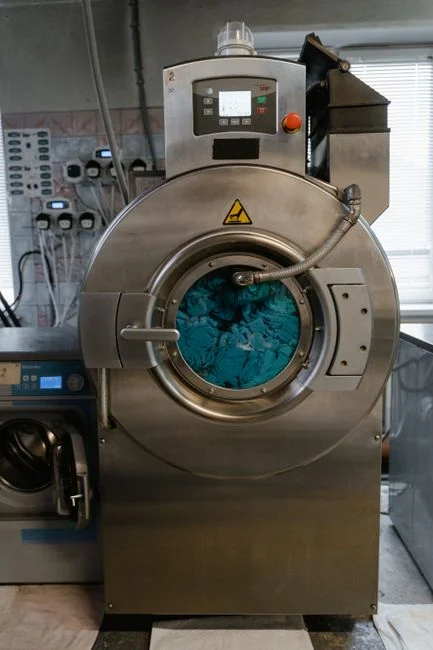
Laundry sidestreams are the second trap. Hotel laundry discharges lint, surfactants and elevated temperature — hot wash cycles typically run 40–60 °C, which is well above the comfort range of the mesophilic biomass in the MBR. Lint and temperature both reduce membrane performance and should be tempered and screened through a rotary mechanical bar screen sized for fibrous load before joining the main STP feed. Swimming-pool backwash, RO reject and cooling-tower blowdown are a third category that should be characterised and routed separately — they may be recycled in their own loop, polished for reuse, or partially bled into the MBR, but they must not be combined blindly (S3: "characterise each source and define pretreatment before combining streams").
Packaged MBR vs Johkasou Package vs Conventional Activated Sludge for Surabaya
Three technology families dominate the Surabaya hotel STP shortlist. The table below compares them on the parameters a consultant actually defends in a design review — not on marketing claims.
| Parameter | Packaged MBR | Johkasou Package STP | Conventional Activated Sludge |
|---|---|---|---|
| Footprint (relative) | Smallest — clarifier eliminated; MLSS 6,000–12,000 mg/L shrinks reactor volume (S2, Sigmadaf) | Compact; often buried or semi-buried (S1) | Largest — separate aeration tank, clarifier, sludge handling |
| Effluent BOD5 / TSS | ~98% BOD5 removal; virtually complete TSS rejection; reuse-grade (S2) | Good secondary quality; lower polish than MBR (S1) | Good secondary quality; TSS depends on clarifier performance |
| Reuse suitability | Toilet flushing, landscape irrigation, cooling-tower make-up after disinfection | Landscape irrigation; toilet flushing with extra polish | Irrigation only without tertiary filtration |
| Operator skill needed | Moderate — membrane cleaning regime, MLSS control | Low to moderate — proven Japanese technology, routine sludge withdrawal (S1) | High — sludge recirculation, wasting, clarifier housekeeping |
| Surabaya land-cost fit | Strong — basement or service yard | Strong — buried option frees surface | Weak — needs civil footprint the urban site may not have |
| Climate resilience | Enclosed membranes suit warm, monsoon-prone sites; enclosed design limits UV/rain damage (S2) | Buried variants insulated from heat; long Indonesian track record (S1) | Open tanks exposed to monsoon dilution and temperature swings |
| Indicative CAPEX vs OPEX profile | Higher CAPEX (membranes), lower sludge OPEX, reuse revenue offsets | Moderate CAPEX, moderate OPEX | Lowest CAPEX, highest sludge-handling OPEX |
For a Surabaya hotel with limited land and a reuse target, packaged MBR delivers the highest effluent quality at the smallest footprint. Johkasou, as offered by Daiki Axis Indonesia, is a strong runner-up where the hotel prefers buried installation and minimal operator dependency, accepting a lower reuse polish. Conventional activated sludge still wins on greenfield sites with land to spare, but Surabaya land cost and the Reg. 11/2025 quality bar usually eliminate it for 60–300-key urban hotels. For sites that need the smallest buried civil footprint specifically, a WSZ underground package sewage treatment plant configured around an MBR core combines the MBR's reuse effluent with a below-grade civil envelope.
Packaged MBR Specification Checklist: What the Data Sheet Must Show
Convert the comparison into an enforceable equipment specification. The data sheet handed to procurement or included in the supplier RFQ must quantify the following — vague "high-efficiency MBR" claims are not acceptable.
| Parameter | What the data sheet must state |
|---|---|
| Design flow | Average m³/day and peak m³/day, with peak factor and basis |
| Influent load | BOD5, COD, TSS, NH3-N, oil & grease, temperature — design values, not ranges |
| Effluent target | Numeric BOD5, COD, TSS, NH3-N limits tied to Reg. 11/2025 and the reuse or discharge route |
| MLSS range | Operating window, typically 6,000–12,000 mg/L (Sigmadaf) |
| Membrane | Type (e.g. PVDF flat sheet), pore size (e.g. 0.1 µm in the HydropureWater DF series), total membrane area, module count, guaranteed life |
| Aeration | Blower duty/standby, diffuser type, design SOTR or oxygen-transfer rate |
| Footprint & weight | Plan dimensions, shipping weight, lifting plan, baseload if buried |
| Controls & alarms | PLC/HMI scope, sensor list (level, DO, MLSS, pressure, flow), alarm matrix |
| Cleaning regime | In-situ chemical wash with chlorine, citric acid and caustic soda (per Sigmadaf), CIP frequency, chemical dosing package |
| Compliance citation | Explicit reference to Reg. 11/2025 (S3) and the reuse/discharge path the plant is designed around |
Two further items belong in the spec, even though they sit outside the process envelope. First, the supplier should confirm the proposed membrane element family is supported locally — a RO/UF membrane and filter element inventory in-region cuts replacement lead time from weeks to days. Second, the spec should require the supplier to publish the guaranteed membrane life in years, not as a marketing phrase, because membrane replacement is the dominant lifecycle cost driver in any packaged MBR.
Evaluating Surabaya Suppliers: Scope, References and Service
The single biggest procurement failure in Indonesian hotel STP projects is buying a "package" that excludes the items that actually make the plant run. A quotation that omits grease pretreatment, civil works, lifting, interconnecting pipework, controls, installation, commissioning, sludge handling, lab evidence and operator training is not commercially equivalent to a complete scope — it is a skid price (S3).
Use S3's "data the buyer must send the supplier" list as a structured RFQ input: flow profile, user and source breakdown, recent influent results, effluent or reuse target, site plan and elevations, utilities, discharge route, environmental documents, civil-mechanical boundary, preferred operating model and project schedule. Send the same list to every bidder so offers can be compared on the same basis. Check Indonesian references before signing — Daiki Axis Indonesia's national footprint (S1) and Pure Aqua's six-system Toray installation in Indonesia (S2) are usable reference points; for Surabaya specifically, ask for nearby hotel or hospitality references and request a site visit. Service capability matters as much as hardware: confirm the supplier stocks water-treatment parts, valves and media locally, can attend a site within a defined response window, and will support a performance-based O&M contract if the hotel prefers to outsource operations — the framework for which is covered separately in a performance-based wastewater O&M contracts guide. For cross-checking the supplier's own claims against the wider market, a MBR manufacturer specs and supplier comparison guide provides useful benchmarks; if the project is India-facing rather than Indonesia-facing, a parallel packaged MBR STP for a hotel in Mumbai guide walks through the same selection logic in a different regulatory setting.
Commissioning, Stabilisation and Operator Handover
Plant performance is won or lost in the first 8–12 weeks of operation. The commissioning sequence should be specified up front: dry and wet checks, instrument calibration, seeding or biomass start-up, controlled load ramp, operator training and document handover (per the S3 commissioning checklist). Demand a documented stabilisation test period with a defined sampling location, an accredited laboratory, a parameter list matching the Reg. 11/2025 schedule, a written response procedure for failed results, and a clear responsibility boundary between supplier and hotel during the defect-liability period (S3).
Before the supplier leaves site, lock the operating model: staffing levels and shift coverage, routine inspection points, sampling cadence, sludge withdrawal schedule, chemical and power consumable reorder points, critical spares holding and service access windows. An MBR that is unattended for a month during the low season is an MBR that will not be ready when banquet season returns.
Frequently Asked Questions
How do I size a packaged MBR STP for a 150-key Surabaya hotel?
Start from per-occupant loading — typically 150–200 L per guest per day, BOD5 250–400 mg/L, TSS 200–300 mg/L — and apply the actual occupancy profile, not 100%. Apply a peak factor of 2.5–3.0 to the average dry-weather flow to cover check-in/check-out, banquet and laundry peaks, and size the equalisation tank to also buffer Surabaya's monsoon wet-weather peak. Convert the resulting m³/day into MBR volume using MLSS of 6,000–12,000 mg/L (Sigmadaf), which allows a smaller reactor than a conventional activated-sludge design at the same loading (S2). User count alone is not a sizing basis (S3).
What regulation governs hotel wastewater discharge and reuse in Indonesia in 2026?
Indonesia's Minister of Environment/Environmental Control Agency Regulation No. 11 of 2025 governs domestic-wastewater quality and treatment-technology standards and has been in force since 9 September 2025 (S3). The exact parameter limits and reuse conditions follow the applicable schedule plus the discharge or reuse route, the AMDAL/UKL-UPL environmental approval where triggered, and local Surabaya project requirements.
Why choose packaged MBR over Johkasou or conventional activated sludge for a Surabaya hotel?
Packaged MBR delivers the highest effluent quality — ~98% BOD5 removal and virtually complete TSS rejection (S2) — at the smallest footprint, which fits a basement or tight service yard. Johkasou, as offered in Indonesia by Daiki Axis (S1), is more compact and lower-operator than conventional activated sludge but typically lower polish than MBR. Conventional activated sludge is the lowest CAPEX option for a large site with land available, but Surabaya land cost and Reg. 11/2025's effluent bar usually push urban hotel projects toward packaged MBR or Johkasou.
What pretreatment does a hotel STP need before the MBR?
Kitchen FOG must be source-segregated and removed by a grease trap or DAF upstream of the biological stage; S3 explicitly requires grease control before biology. Laundry discharge should be screened for lint and tempered if it exceeds the MBR's mesophilic range (hot washes run 40–60 °C). Pool backwash, RO reject and cooling-tower blowdown should be characterised and routed separately rather than combined blindly with the main STP feed (S3).
What evidence should I demand during commissioning and stabilisation?
Require a documented commissioning sequence (dry and wet checks, instrument calibration, seeding, load ramp, training, handover) and a stabilisation test period with a defined sampling point, an accredited laboratory, a parameter list aligned to Reg. 11/2025, a written response procedure for any failed result, and a clear supplier/hotel responsibility boundary (S3). Until that evidence is in hand, do not sign the taking-over certificate.