Why Australian Hotels and Resorts Need a Dedicated Treatment Train
Hotel and resort wastewater treatment in Australia in 2026 is typically a package MBR (10–2,000 m³/day) or a buried A/O plant (WSZ-class, 1–80 m³/h) sized at 200–400 L per guest per day with a 2.0–2.5× peak factor, FOG pre-treatment (grease trap at ~40 L per meal cover per day, DAF polish to <30 mg/L oil & grease), and either an Urban Utilities/Sydney Water trade-waste consent for sewer discharge or Class A+/B reuse under each state's recycled-water guidelines for on-site irrigation and toilet flushing.
Hotel wastewater is not domestic wastewater at scale — it is a blend of four sub-streams that each behave differently, and pre-treatment must reflect that. Typical 2026 influent characterisation for an Australian hotel with on-site kitchen and laundry is BOD 250–400 mg/L, TSS 200–350 mg/L, oil and grease 100–500 mg/L (kitchen peak), NH3-N 20–40 mg/L, and surfactant load 10–25 mg/L from laundry detergents (per Brisbane hotel design basis, 2026). The four sub-streams are: blackwater from guest toilets (high ammonia, pathogens); greywater from showers and basins (high BOD, warm temperature, lint and hair); kitchen FOG (fats, oils, grease — peak loads during breakfast and banquet service, often 3–5× daily average); and laundry (40–60 °C, surfactants, occasional bleach pH spikes).
Australian drivers that generic hospitality articles underweight: Healthy Land & Water catchment targets in SEQ push developers toward demonstrable reuse, Greater Blue Mountains Heritage-style overlays for eco-resorts force low-impact buried or sub-surface systems, Sydney Water and Yarra Valley Water apply trade-waste load-based pricing on BOD/TSS/NH3-N (so better on-site treatment lowers recurring bills), and tropical/high-rainfall wet-weather peaks in FNQ and the NT drive a 2.0–2.5× peaking factor on hydraulic and biological stages. For remote or heritage-overlay sites, a package plant is often the only option — Emirates Wolgan Valley Resort and Spa, in the Greater Blue Mountains Heritage Area between two national parks, runs 12 Orenco AdvanTex AX100 filter pods treating wastewater that averages 26,417 gpd with peaks to 34,342 gpd, with primary/secondary treatment plus UV disinfection and sub-surface pasture and garden irrigation (per Onsite Installer, 2026-06).
The Two Legal Pathways in 2026: Sewer Discharge vs On-Site Reuse
Every Australian hotel sits on one of two legal pathways, and the choice shapes the entire equipment train from headworks to disinfection.
Pathway 1 — Discharge to sewer under a trade-waste consent from the local authority (Urban Utilities in SEQ, Sydney Water in NSW, Yarra Valley Water in VIC, SA Water, Water Corp in WA). The authority applies load-based fees on BOD, TSS and NH3-N, and sets concentration limits the plant must hit 95% of the time. The realistic 2026 design targets for Urban Utilities' Brisbane River network are BOD <300 mg/L, TSS <300 mg/L combined, oil and grease <50 mg/L, pH 6.0–10.0, and ammonia 20–50 mg/L NH3-N depending on catchment (per Brisbane hotel design basis, 2026). Hitting these numbers with raw hotel wastewater at 250–400 mg/L BOD needs biological treatment plus FOG removal upstream — a passive grease trap alone is not enough.
Pathway 2 — On-site reuse under each state's recycled-water guidelines unlocks a water-cost offset but raises the treatment bar. Queensland's regime runs under the Public Health Act 2005 and the Queensland Plumbing and Wastewater Code; NSW uses NSW Health recycled-water guidance; Victoria runs under the VIC EPA guidelines. Class A+ or Class B quality is required depending on end use, with validated disinfection (chlorine dioxide or UV delivering ≥99.9% E. coli log reduction) and a turbidity target below 1 NTU for Class A+ toilet flushing. Sub-surface irrigation typically uses Class B; toilet flushing and any spray irrigation generally requires Class A+. Reuse end uses that actually offset bills: toilet flushing at 40–60 L per guest per day, and landscape irrigation at 5–10 L/m²/day for subtropical/tropical planting (per Brisbane hotel design basis, 2026).
The decision rule for a 2026 board case: choose sewer discharge when the property is inside the sewer service area, reuse volumes are small, and the authority's trade-waste tariff is moderate. Choose on-site reuse when the resort is remote, the SEQ/Sydney potable tariff is high, or the project must demonstrate a sustainability outcome to a lender or heritage reviewer.
Pre-Treatment Is the Make-or-Break Stage in Australian Climates
A working hotel plant is built from the headworks up, and FOG breakthrough is the single most common cause of membrane and biological failure in Australian hospitality sites.
Mandatory two-stage FOG pre-treatment starts with a passive grease trap sized at 500–2,000 L, typically at ~40 L per meal cover per day for a hotel kitchen doing breakfast, room service and banquet service. A mechanical DAF pre-treatment unit polishes the effluent to <30 mg/L oil and grease before the biological stage, and a 5 mm aperture rotary bar screen on the headworks protects downstream pumps from lint, hair and food solids — directly relevant for hotels with on-site laundry, where lint loads are continuous and pump impellers fail fast without screening. The screen and DAF together remove >90% of the suspended and floatable load that would otherwise blind a membrane or strip DO from an aeration tank.
Australian climate amplifies both the upside and the risk. Hotel wastewater in SEQ runs at 25–35 °C year-round, which roughly doubles nitrification kinetics per 10 °C rise in the mesophilic range and lets designers shrink aeration tank volume. The same warm stream accelerates MBR membrane fouling if aeration and relaxation cycles aren't tuned, with weekly in-situ relaxation and a clean-in-place every 3–6 months at hotel loading (per Brisbane hotel design basis, 2026). Plan for an MBR at MLSS 8,000–12,000 mg/L with continuous scour aeration below the modules.
For a DAF that keeps performing on a hotel kitchen load — emulsified oils, surfactants, peak banquet flows — work through the DAF troubleshooting guide for the seven data-backed fixes operators use when effluent oil and grease creeps back above 30 mg/L. Spec the headworks with a rotary bar screen at 5 mm aperture and a DAF pre-treatment unit sized for the kitchen peak, not the daily average.
MBR vs A/O vs SBR: Which Package Plant Fits an Australian Resort
Three realistic packaged-system options exist for Australian hotels in 2026: package MBR, package A/O (anoxic/aerobic, WSZ-class), and SBR with optional DAF polish. The decision comes down to keys, reuse intent, and load variability — not biological reliability.
Package MBR (10–2,000 m³/day) produces near-reuse effluent, supports Class A+ with chlorine dioxide or UV polish, has the smallest footprint per m³/day, and the highest CAPEX and operator skill (membrane CIP, MLSS control, scour aeration tuning). Package A/O (WSZ-class, 1–80 m³/h) hits BOD/TSS discharge limits with biological treatment alone, needs chemical disinfection for reuse, and is the lowest-CAPEX option that can be buried with no full-time operator. SBR with DAF polish fits highly seasonal or peaky load profiles where batch equalisation is more valuable than continuous-flow membrane operation — conference hotels, holiday resorts at 90%+ occupancy in peak weeks and 20% in shoulder.
The decision rule for an Australian resort in 2026: choose a package MBR plant for properties above 80 keys, wherever reuse is intended, or where footprint is constrained. Choose a WSZ underground A/O package plant for sewer-discharge sites under 80 keys where lowest CAPEX dominates and reuse is not on the project scope. Choose SBR + DAF for properties with highly seasonal occupancy (conference peaks, holiday load). Reference the Wolgan Valley case as proof that non-MBR packed-bed systems are also a defensible choice for low-impact Australian eco-resorts where reuse, low power and minimal operator cover matter more than peak-load biology (per Onsite Installer, 2026-06).
| Parameter | Package MBR | WSZ A/O (package) | SBR + DAF |
|---|---|---|---|
| Flow envelope | 10–2,000 m³/day | 1–80 m³/h | 20–500 m³/day (per batch) |
| Effluent BOD / TSS | <5 mg/L / <5 mg/L | <20 mg/L / <20 mg/L (with DAF) | <20 mg/L / <20 mg/L |
| Reuse class | Class A+ ready (with disinfection) | Class B possible (with UV/ClO₂) | Class B possible (with UV/ClO₂) |
| CAPEX tier | Highest (membranes, blower, controls) | Lowest (multiple tanks, decoders) | Mid |
| Footprint | Smallest | Mid–large (buried) | Mid |
| O&M skill | Skilled (membrane CIP) | Low (no membrane) | Mid (batch controls) |
| Best fit | >80 rooms, reuse intended, footprint constrained | <80 rooms, sewer discharge, low CAPEX priority | Variable or seasonal load, mid-size resort |
Sizing a 120-Room Australian Resort: A 2026 Walk-Through
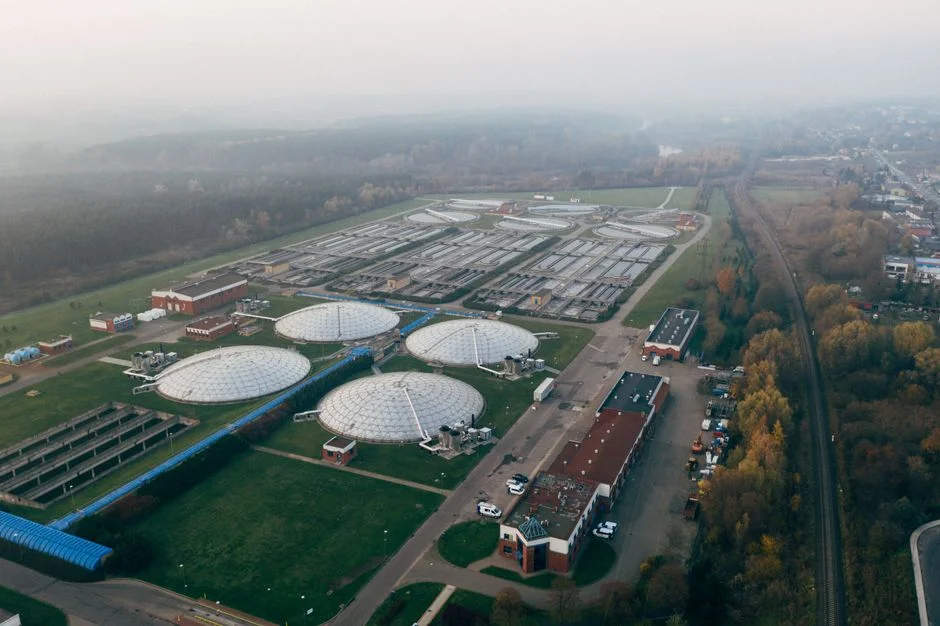
Take a 120-room resort in the Brisbane River catchment, on Urban Utilities sewer, with a 200-cover restaurant and on-site laundry. The 2026 sizing walk-through below is the realistic shortlist a SEQ EPC would price.
ADWF = 120 rooms × 2 guests × 250 L/guest/day = 60 m³/day, sitting in the middle of the 200–400 L/guest/day hospitality band (per Brisbane hotel design basis, 2026). Apply a peak factor of 2.0–2.5× to the biological AND hydraulic stage — ignoring peaking is the single most common cause of wet-weather compliance failure in package plants. Peak = 60 × 2.5 = 150 m³/day, which becomes the sizing flow for both the aeration tank and the membrane or clarifier train. Add 200-cover restaurant FOG at 25 L/cover = 5 m³/day kitchen flow with peak oil and grease load; on-site laundry adds another 10–15% to the total. The biological stage is therefore sized at ~180 m³/day to absorb kitchen peak and laundry surge.
Two scenarios frame the owner's decision. Scenario A — discharge to Urban Utilities sewer: spec a WSZ underground A/O package plant at 180 m³/day, a DAF pre-treatment unit, and a plate-and-frame filter press for sludge — lowest CAPEX, fastest approvals, recurring trade-waste charges scale with BOD/TSS load. Scenario B — reuse for landscape and toilet flushing: spec a package MBR plant at 180 m³/day, DAF pre-treatment, a 100–200 g/h chlorine dioxide generator for Class A+ disinfection, an automatic chemical dosing system for pH correction, and a plate-and-frame filter press for sludge. Higher CAPEX, but a 40–60% offset against metered SEQ water and a lower trade-waste bill in the partial-discharge months.
| Parameter | Value | Basis |
|---|---|---|
| Rooms × occupancy | 120 × 2 guests | Standard double-occupancy |
| Per-guest flow | 250 L/guest/day | 200–400 L band, mid-point |
| ADWF | 60 m³/day | 120 × 2 × 0.25 |
| Peak factor | × 2.5 (morning peak + banquet) | 2.0–2.5× design range |
| Peak day flow | 150 m³/day | 60 × 2.5 |
| Restaurant FOG | Kitchen 200 covers × 25 L/cover FOG load | +5 m³/day, O&G peak 100–500 mg/L |
| Laundry surcharge | +10–15% | On-site laundry, 40–60 °C, surfactants |
| Biological stage sizing | 180 m³/day | Peak + kitchen + laundry |
| Disinfection (Scenario B) | 100–200 g/h chlorine dioxide generator | ≥99.9% E. coli log reduction |
| Sludge dewatering | 1–2 m³/h plate-and-frame filter press | 18–22% DS cake target |
Cross-check the sizing against an analogous Newcastle ETP case before locking the equipment list — the Newcastle ETP buyer's guide walks through similar trade-waste and reuse constraints for NSW properties.
Costs, Reuse Offsets and the Honest Australian Payback Picture
The headline trade-off for a 2026 board case: MBR adds 20–35% to total CAPEX over an equivalent A/O plant but unlocks a 40–60% offset against metered potable water once reuse is plumbed into toilet flushing and landscape irrigation (per Brisbane hotel design basis, 2026). Reuse volumes are real: toilet-flushing demand alone is typically 40–60 L per guest per day at full-service SEQ and Sydney resorts, and landscape irrigation adds another 5–10 L/m²/day for tropical and subtropical planting common in Brisbane, Sydney and FNQ resort grounds. Both end uses offset Urban Utilities, Sydney Water and Yarra Valley Water potable charges, which carry a standard two-part tariff plus a fixed access charge.
Lifecycle drivers to price into the model: membrane replacement on an MBR runs every 7–10 years at hotel loading (roughly 10–15% of the membrane CAPEX per year on an annualised basis); chlorine dioxide residual dosing is a steady opex line; sludge haulage depends on dewatering performance, with a well-tuned plate-and-frame filter press targeting 18–22% DS cake cutting tanker frequency by roughly half against a belt press; fine-bubble diffusers and VFD-driven blowers typically deliver 20–30% energy savings against older coarse-bubble designs (per Brisbane hotel design basis, 2026). The Sydney Water trade-waste tariff structure is laid out in the Sydney Water trade-waste compliance guide for 2026, including the load-based fees on BOD, TSS and NH3-N that compound the reuse case over a plant's 20-year life.
Translate the trade-off into an indicative Australian cost band: per-key install for a packaged A/O plant runs A$8,000–14,000, with the MBR premium of 20–35% on top of that, and remote/eco-resort sites (Wolgan Valley-style, FNQ, Kangaroo Island) carrying 15–25% extra for transport, sludge logistics and standby power. For a full-service SEQ or Sydney resort with on-site reuse plumbed in, the MBR premium typically delivers a 5–8 year payback against the combined potable and trade-waste bill — defensible in any lender's CAPEX/OPEX case.
| Item | Indicative 2026 range | Notes |
|---|---|---|
| Packaged A/O per-key install | A$8,000–14,000 | Urban sewer, <80 keys |
| MBR premium over A/O | +20–35% | Membranes, blower, controls |
| Remote/eco-resort adder | +15–25% | Transport, sludge haulage, standby power |
| Reuse offset (potable bill) | 40–60% | Toilet flush + landscape irrigation |
| MBR premium payback (SEQ/Sydney) | 5–8 years | Full-service resort, metered potable offset |
| Membrane replacement cycle | 7–10 years | 10–15% of membrane CAPEX per year, annualised |
Frequently Asked Questions
What flow rate should I use to size a hotel wastewater treatment plant in Australia?
Plan for 200–400 L per guest per day as the average dry weather flow band, and apply a peak factor of 2.0–2.5× to size the biological and hydraulic stages. A 120-room resort at 2 guests per room and 250 L/guest/day therefore sees 60 m³/day ADWF and roughly 150 m³/day at peak (per Brisbane hotel design basis, 2026).
Can an Australian hotel legally reuse treated wastewater for irrigation?
Yes, under the Public Health Act 2005 and the Queensland Plumbing and Wastewater Code in SEQ, with Class A+ or Class B treatment depending on the irrigation end use, validated disinfection (chlorine dioxide or UV) delivering at least 99.9% E. coli log reduction, and a recycled-water management plan approved by Queensland Health. NSW and VIC run analogous regimes under NSW Health and VIC EPA recycled-water guidance.
What are the discharge limits for hotel wastewater to the Urban Utilities sewer in 2026?
Any non-domestic discharge to the Urban Utilities sewer network requires a trade-waste consent. The realistic 2026 design targets per the Trade Waste Customer Charter are BOD <300 mg/L, TSS <300 mg/L, oil and grease <50 mg/L and pH 6.0–10.0; tighter ammonia limits of 20–50 mg/L NH3-N apply in some Brisbane River catchments (per Brisbane hotel design basis, 2026).
How do I choose between MBR and A/O for a hotel package plant?
MBR is the right choice for resorts above 80 keys, for sites with reuse targets, or where footprint is constrained. A conventional A/O package plant (WSZ-class) is the right choice for sewer-discharge sites under 80 keys where lowest CAPEX dominates. SBR with DAF polish fits mid-size properties with highly variable occupancy (per Brisbane hotel design basis, 2026).
How often does an MBR membrane need cleaning at a hotel?
A well-designed MBR at typical hotel loading needs weekly in-situ relaxation and a full clean-in-place (CIP) every 3–6 months, with membrane replacement every 7–10 years. The cleaning interval is driven by FOG breakthrough and peak-factor overload; a properly sized DAF upstream keeps the interval on schedule (per Brisbane hotel design basis, 2026).