
MBR vs Conventional Activated Sludge for Mining Wastewater in Acme
For Acme, mining wastewater, MBR is usually the stronger option when reliable solids separation, a constrained footprint, or process-water reuse justify added capital and maintenance; conventional activated sludge remains credible for large dilute flows with inexpensive power, no reuse driver, and serviceable basins. Neither system removes every dissolved metal, so chemical precipitation and polishing may still be required. The decisive evidence is the current NPDES permit, actual influent matrix, reuse target, and pilot results—not a generic performance range.
Conventional activated sludge, or CAS, treats biodegradable organics biologically and then separates biomass by gravity in a secondary clarifier. Return activated sludge is recycled to the aeration basin, while excess waste activated sludge is removed. A membrane bioreactor couples activated-sludge biology with submerged membrane modules that physically retain biomass and solids.
That mechanism changes the risk profile. CAS depends on floc settleability; MBR replaces that separation function with membrane retention, fouling monitoring, cleaning, integrity testing, and replacement. Both can capture particulate-bound metals with the solids they remove. Neither reliably removes every dissolved metal without precipitation or another dedicated step.
Acme should apply an evidence hierarchy: the current NPDES permit and reuse specification first, site wastewater characterization second, an Acme pilot third, and generic equipment claims last. HydropureWater’s 2026 screening comparison places MBR capital cost 20–40% above equivalent-flow CAS and operating cost 15–30% higher per m³ for a 1,000 m³/day example. Those figures are screening values, not quotations, so they establish a comparison basis rather than an Acme forecast. The MBR wastewater treatment cost per m³ guide provides further context, not a substitute for a site-specific model.
| Selection factor | Provisional MBR direction | Provisional CAS direction | Evidence required |
|---|---|---|---|
| Solids separation | Favored when carryover cannot depend on floc settling | Viable where clarifier settling is demonstrated | Acme pilot and dissolved/particulate metals data |
| Footprint | Favored where civil space is constrained | Favored where basins and clarifiers are serviceable | Available area and remaining asset life |
| Reuse | Favored when the treated stream has defined reuse value | Less compelling without reuse or zero-liquid-discharge value | Reuse specification and make-up-water or brine cost |
| Cost | Accept the premium only against quantified lifecycle value | Retain as the baseline for comparable bids | Normalized quotations using identical scope |
What Acme Must Establish Before Comparing Technologies
Acme cannot size a defensible treatment train without a permit, receiving route, actual wastewater matrix, and operating envelope. Flow records should cover normal, peak, batch, and upset conditions, including diurnal discharge patterns and recurring metal or cyanide pulses. These records establish equalization volume, biological loading, membrane-flow control, and redundancy—not merely the daily average.
The characterization package should include pH, suspended and settleable solids, dissolved and particulate metals, hardness, acidity or alkalinity, toxicity, sulfate, TDS, BOD, and COD. Dissolved and particulate metals must remain separate: mistaking membrane or biomass capture for dissolved-metals treatment can create an unbidable compliance gap. The mining pretreatment and sewer-compliance guide provides a useful structure for separating receiving requirements from technology assumptions.
Acme must also confirm whether treated water will discharge to surface water, enter a publicly owned treatment works, be injected, be reused, or support a zero-liquid-discharge application. The current NPDES permit should be reviewed for site-specific selenium, sulfate, and other limitations. Federal ore-mining and dressing provisions under 40 CFR Part 440 address arsenic, lead, zinc, copper, nickel, and cadmium, but they do not by themselves define Acme’s complete compliance envelope or demonstrate process performance.
Finally, bidders need the available footprint, operator capability, electrical tariff, make-up-water value, brine-disposal cost, condition of existing basins, and required reuse quality. Without these inputs, a nominal treatment capacity or membrane rating is only a catalog statement. The permit, reuse specification, and receiving route establish the duty; characterization establishes the load; pilot results establish whether the proposed train can sustain that duty.
How Each Treatment Train Handles Solids and Contaminants
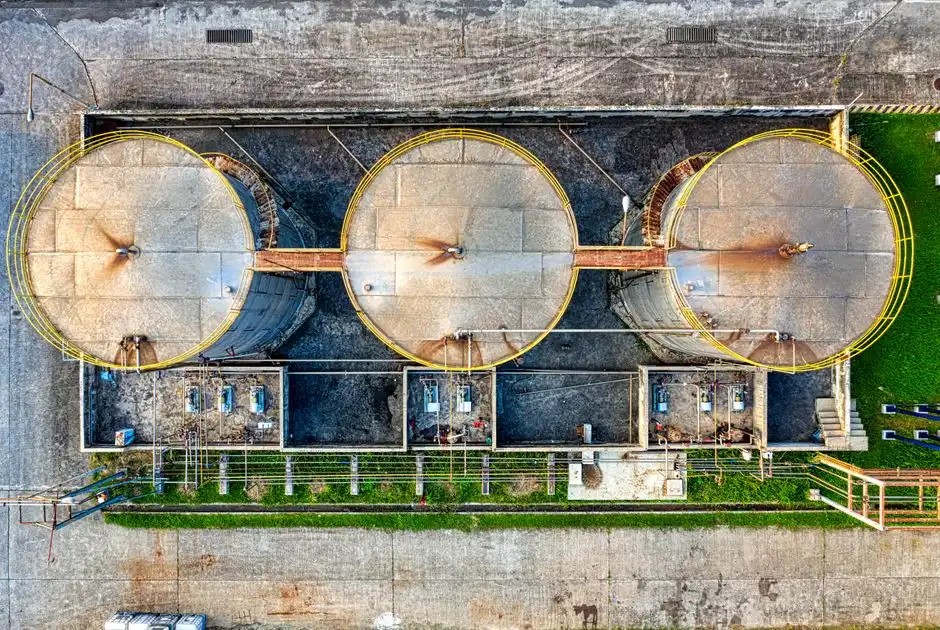
CAS removes biodegradable organics through microorganisms in an aeration basin, then relies on a secondary clarifier to settle the resulting biomass. Effluent consistency therefore depends on floc settleability, clarifier loading, sludge inventory, RAS/WAS control, and solids carryover. MBR retains biomass on submerged membranes, decoupling effluent solids from gravity settling but adding membrane fouling, scaling, cleaning, integrity monitoring, and replacement risks.
HydropureWater’s 2026 field data report normal MBR operation at 8,000–12,000 mg/L MLSS, compared with 2,000–4,000 mg/L for CAS using the Lamella-clarifier engineering reference, also from 2026. HydropureWater and that reference also state that MBR can reduce concrete and civil footprint by approximately 60% relative to CAS. These are supplier and engineering-reference screening claims, not a guarantee for Acme’s civil design.
Metal-bearing floc exposes the key CAS failure mode: sludge bulking or impaired settling can allow particulate-bound metals to pass through the clarifier even while the biological reactor remains operational. HydropureWater’s 2026 field observations report a 30–60% loss of CAS removal efficiency during a 24–72-hour window after a metal pulse. Present this as an observed failure mode, not a universal performance loss.
Membrane retention does not solve dissolved-metals chemistry. Particulate-bound metals can report to captured sludge, but dissolved metals require precipitation or another dedicated treatment stage. UV and reverse osmosis should be added only where the reuse specification requires them. The broader mining-wastewater MBR comparison explains why biological treatment, solids separation, metals precipitation, and application-specific polishing are separate duties.
| Mechanism or risk | Conventional activated sludge | MBR | Procurement implication |
|---|---|---|---|
| Solids separation | Gravity settling in a secondary clarifier | Physical retention by submerged membranes | Compare carryover under Acme pulse conditions |
| Normal MLSS | 2,000–4,000 mg/L, Lamella-clarifier engineering reference, 2026 | 8,000–12,000 mg/L, HydropureWater field data, 2026 | Use as screening data, not a design guarantee |
| Civil footprint | Baseline | Approximately 60% less concrete and civil footprint, HydropureWater and Lamella-clarifier engineering reference, 2026 | Price civil work consistently in both bids |
| Metal-pulse response | 30–60% removal-efficiency loss observed during a 24–72-hour window after a pulse, HydropureWater field observations, 2026 | Adds membrane fouling and integrity considerations | Acquire pilot data for Acme’s actual pulse |
| Dissolved metals | Requires precipitation or another dedicated step | Requires precipitation or another dedicated step | Price metals removal separately |
Why Acme's Water Chemistry Can Reverse the Initial Choice
Low biodegradable carbon can undermine biology before either separation technology becomes decisive. HydropureWater’s 2026 screening flags include a BOD/COD ratio below 0.3. That is a trigger for carbon demand, toxicity, and loading-rate testing—not proof that aeration or membrane area will solve the problem. More hardware cannot correct an unsuitable biological substrate or inhibitory influent without the required carbon and chemical control.
Hardness in the thousands of mg/L as CaCO₃, sulfate above 1,000 mg/L, and TDS above 5,000 mg/L are also HydropureWater 2026 validation flags for biological inhibition, membrane fouling, scaling, and chemical demand. They are not universal rejection limits. Acme should compare normalized flux, transmembrane pressure, cleaning frequency, biological response, and recovered performance with its actual water.
Cyanidation circuits can introduce cyanide, ammonia, and thiosulfate, producing oxygen-demand swings. Equalization reduces hydraulic and load shocks before biology, but it does not remove metals. A PLC-controlled chemical dosing system should follow a jar-tested chemical sequence rather than an assumed generic recipe.
HydropureWater’s 2026 pH comparison gives approximately 8.5–9.5 for a CAS precipitation stage and 6.5–7.5 ahead of MBR membranes. These are design prompts, not operating instructions; the final target must come from jar testing, process design, and permit review. HydropureWater’s 2026 specification calls for 1–3 mm fine screening, with cited cutoffs of 1–2 mm for hollow-fiber modules and 2–3 mm for flat-plate modules. Acme should evaluate a rotary mechanical bar screen against its solids and loading characteristics.
| Process stage | Required function | Key evidence |
|---|---|---|
| Equalization and controlled chemistry | Reduce shocks and convert dissolved metals into removable solids | Diurnal data, jar tests, dosing sequence, residual chemistry |
| Biological treatment | Address biodegradable organics where warranted | BOD/COD, toxicity, loading response, settling or membrane flux |
| Solids separation | Remove biomass and suspended solids | Clarifier carryover or transmembrane pressure and normalized flux |
| Application-specific polishing | Meet discharge or reuse specification | Contaminant-specific pilot performance |
| Sludge dewatering | Manage captured solids and metal residues | Measured settleability, colloid content, moisture and filtrate quality |
Choose MBR, CAS, or a Hybrid Train
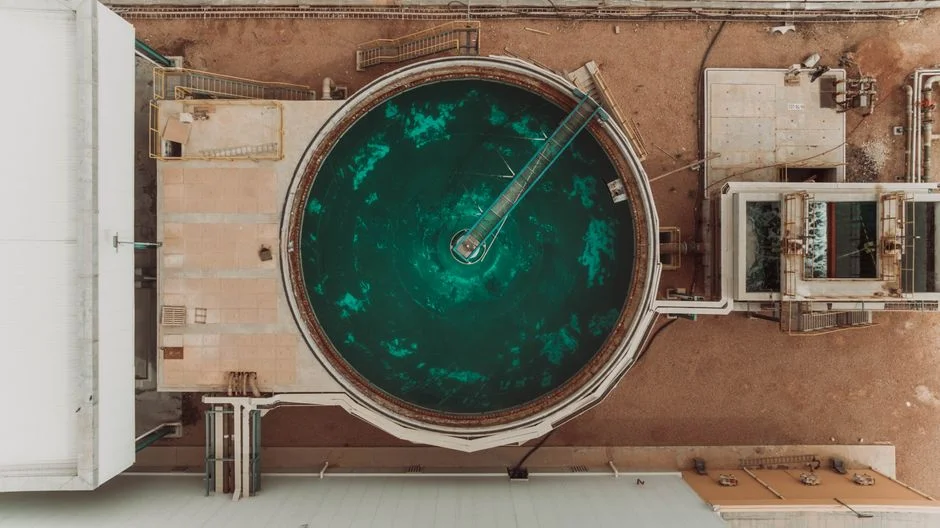
Choose MBR when reliable solids separation, constrained footprint, or meaningful reuse value dominates the lifecycle model, provided Acme can operate fine screening, air scour, controlled cleaning, integrity checks, spare elements, and sludge handling. An integrated MBR membrane bioreactor system is relevant to that architecture, but its catalog capacity does not establish sustainable flux or Acme performance.
Choose CAS for large dilute flows without a reuse or zero-liquid-discharge driver when electricity is inexpensive and existing aeration and clarification assets have useful remaining life. The biological reactor may be adequate even if a hybrid train is needed to control chemistry or improve downstream solids separation.
Choose a hybrid train when equalization and precipitation should handle variable pH, suspended solids, and dissolved or particulate metals before biological treatment or membrane separation completes the polishing duty. This can be more defensible than forcing every removal objective into either MBR or CAS.
Do not select by nominal flow or filtration rating alone. Size from required flow, actual influent matrix, pretreatment, permit duty, reuse profile, and redundancy. A DF-series membrane bioreactor module provides a commercial configuration of 0.1 μm PVDF flat-sheet modules in 80–225 m², with stated output of 32–135 m³/day. Those catalog values require validation against Acme’s wastewater, sustained flux, cleaning, and redundancy requirements.
| Acme condition | Defensible direction | Required qualification |
|---|---|---|
| Dilute flow, low reuse value, inexpensive power, serviceable basin | CAS | Confirm clarifier performance, sludge handling, and electricity basis |
| Constrained footprint or valuable reuse stream | MBR | Confirm fouling control, cleaning recovery, integrity, and redundancy |
| Variable pH or dissolved metals requiring precipitation before biology | Hybrid | Define chemistry, solids separation, polishing, and sludge route |
| Metal pulses or uncertain wastewater matrix | No final award until pilot | Test relevant upsets and acceptance criteria |
Build a Normalized Cost and Bid Comparison
Both bids must use the same flow basis, effluent duty, civil work, fine screening, equalization, chemical dosing, metals precipitation, aeration, pumping, sludge dewatering, controls, power, chemicals, labor, disposal, cleaning, and membrane replacement. Otherwise, a lower quoted equipment price may simply conceal omitted pretreatment or lifecycle work.
HydropureWater’s 2026 1,000 m³/day screening example places MBR capital cost 20–40% above equivalent-flow CAS and operating cost 15–30% higher per m³. These are comparative screening values, not Acme quotations. HydropureWater’s 2026 field data indicate a payback condition of approximately 4–6 years when make-up water costs more than about $2/m³ or brine disposal has a real cost. The same source identifies electricity below about $0.07/kWh as favorable for CAS; this is a screening condition, not a universal tariff threshold.
The model must include membrane-cleaning recovery, chemical consumption, replacement intervals, spares, redundancy, operator labor, and the financial and operational consequence of lost membrane capacity. It should also price recovery from downtime, not only average treatment cost.
Sludge requires separate treatment. HydropureWater states that MBR waste sludge can have lower settleability and more colloidal particles than CAS waste activated sludge. A plate-and-frame filter press therefore needs selection against measured sludge properties, including dewatering performance and filtrate quality. Acme should request an actual price model; the research provides screening percentages and conditions, not a defensible Acme quotation.
| Cost element | MBR bid requirement | CAS bid requirement |
|---|---|---|
| Capital | Membranes, screens, permeate pumping, air scour, controls, cleaning equipment, redundancy, civil work | Aeration basin, clarifier, RAS/WAS equipment, pumping, controls, civil work |
| Operating | Power, chemicals, cleaning recovery, labor, membrane replacement, lost-capacity response | Power, aeration, chemicals, labor, clarifier maintenance, sludge handling |
| Sludge and disposal | Measured settleability, colloid content, dewatering, filtrate quality, disposal route | Measured settleability, dewatering, filtrate quality, disposal route |
| Commercial exclusions | Escalation, replacement intervals, spares, downtime, disposal assumptions | Escalation, disposal assumptions, omitted civil and pretreatment work |
Validate the Decision with an Acme Pilot
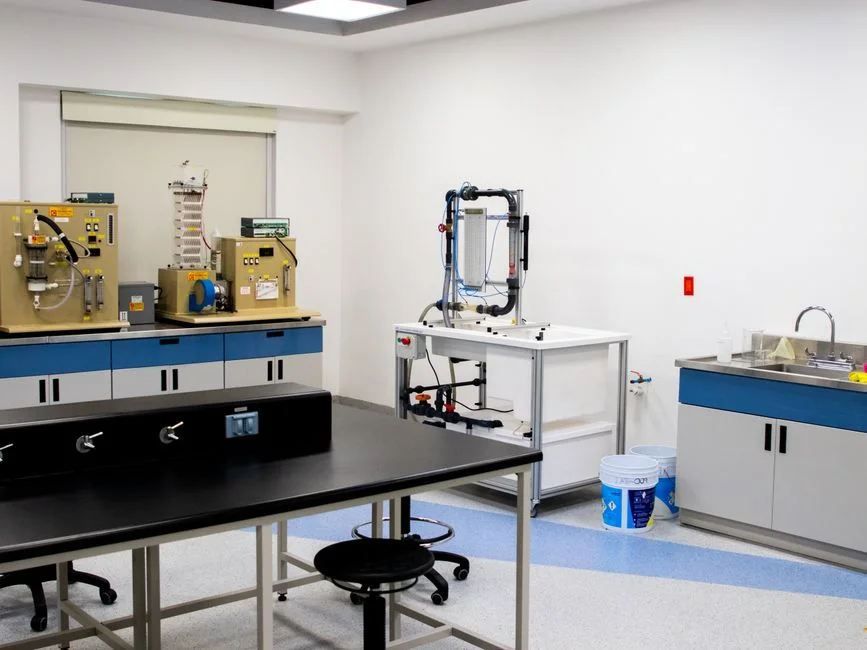
An Acme pilot should test the failure modes that drive the selection rather than merely demonstrate clean-water filtration. HydropureWater’s 2026 guidance recommends a 60–90 day cassette pilot when metal pulses, low BOD/COD, sulfate, hardness, or high TDS could affect biological performance, settleability, or membrane flux. The duration alone is not proof of suitability; the test program and acceptance limits control the result.
Track solids separation, dissolved and particulate metals removal, transmembrane pressure, normalized flux, chemical demand, cleaning recovery, and sludge dewatering. The program should include startup, steady-state operation, representative flow and chemistry variation, relevant upset conditions, fouling development, membrane cleaning, and post-cleaning recovery.
Acceptance limits must come from Acme’s permit or reuse specification. Municipal effluent values and supplier catalog claims must not be inserted as project guarantees. The pilot should also establish cleaning triggers, post-cleaning acceptance, integrity checks, module isolation, redundancy, spares, and the response plan for loss of membrane capacity. A UF water treatment system should be evaluated only if the reuse duty requires that barrier.
The University of Manitoba Phase I municipal pilot reported BOD below 6 mg/L, TSS below 5 mg/L, and TKN of 1.3 mg/L at a 20-day SRT and 10-hour HRT. University of Manitoba, 2006. Those results demonstrate pilot performance under a defined municipal test; they cannot be transferred directly to Acme’s mining or metals wastewater. Acme should use them as historical context, not a performance guarantee or a substitute for site testing.
Frequently Asked Questions
Is MBR more expensive than conventional activated sludge for Acme?
MBR is usually the higher-cost option in HydropureWater’s 2026 screening comparison: capital cost was 20–40% above equivalent-flow CAS and operating cost 15–30% higher per m³ for a 1,000 m³/day example. These are not Acme quotations. Request a site-specific price with identical flow, effluent duty, pretreatment, civil, sludge, energy, cleaning, replacement, and disposal scope.
When does MBR justify its lifecycle premium?
MBR becomes more defensible when reliable solids separation, a constrained footprint, or a valuable reuse stream offsets the added membrane, power, cleaning, and replacement burden. HydropureWater’s 2026 field data indicate an approximately 4–6-year payback condition when make-up water exceeds about $2/m³ or brine disposal has a real cost. Acme should insert its actual tariff, water value, reuse profile, and recovery assumptions into the model.
How should Acme select and size an MBR supplier?
Require a supplier to identify the proposed train configuration, pretreatment, membrane format, sustainable-flux basis, cleaning method, integrity monitoring, redundancy, spares, replacement responsibility, and warranty boundaries. Ask for project-specific pilot evidence and comparable operating references rather than relying only on nominal capacity or filtration rating. Size from the required flow, wastewater matrix, permit duty, and reuse profile.
Does membrane retention establish NPDES mining-discharge compliance?
No. Membranes can capture solids and particulate-bound metals, but dissolved metals generally require precipitation or another dedicated step. Federal provisions under 40 CFR Part 440 address arsenic, lead, zinc, copper, nickel, and cadmium, while Acme’s current permit may impose additional site-specific limits. Require demonstration against the current permit with separate dissolved and particulate metals data under representative conditions.