Why a Lynchburg-area mining or metals plant cannot just meet EPA categorical limits
A mining or metals operator within roughly an hour of Lynchburg, Virginia cannot treat federal categorical limits as the compliance target, because the federal floor is only the starting point of a three-layer stack that ends at the City sewer. The City of Lynchburg's Industrial Users Regulations and Practices define "Pretreatment" as the reduction, elimination, or alteration of pollutant properties in wastewater prior to discharge to the City of Lynchburg's wastewater facilities, which establishes the City — not EPA — as the gatekeeper for any industrial discharge to its sewer system (City of Lynchburg, Industrial Users Regulations and Practices). On top of that gatekeeping role, the City code adopts the National Categorical Pretreatment Standards promulgated by EPA in 40 CFR parts 405–471, so a mining or metals operator must first identify which subpart covers the activity before federal numbers mean anything at all.
For mining specifically, 40 CFR Part 436 (Mineral Mining and Processing) is the federal floor; EPA promulgated Part 436 in 1975 and amended it in 1976, 1977, 1978, and 1979, and the requirements are incorporated into NPDES permits (EPA, 2026-02). The catch for a Lynchburg-area operator is that several subparts in Part 436 are reserved with no current numeric effluent limits — Dimension Stone (Subpart A), Lightweight Aggregates (Subpart H), Lithium (Subpart U), Ball Clay (Subpart AH), Feldspar (Subpart AI), Talc/Steatite/Soapstone/Pyrophyllite (Subpart AJ), and Garnet (Subpart AK) (EPA, 2026-02) — so a quarry or aggregate producer must first confirm whether the mineral being extracted falls under an active subpart or under a reserved one with no federal numbers. The Virginia Pollutant Discharge Elimination System (VPDES) program then adds state conditions on top, and the City of Lynchburg layers its own local limits on top of both. A plant that designs to EPA alone ends up redesigning to Lynchburg.
The three-tier regulatory stack for a Lynchburg-area discharger
For a Lynchburg-area discharger, the cleanest way to think about the regulatory stack is three tiers, each with a different authority and a different parameter set. Tier 1 is federal: 40 CFR Part 436 effluent guidelines for any active subpart that covers the operation, plus the 40 CFR parts 405–471 categorical standard that applies to the activity, plus the 40 CFR 261.21 closed-cup flashpoint test method for any wastestream that could carry a fire or explosive hazard (City of Lynchburg, Industrial Users Regulations and Practices). For new sources, construction commencing after the publication of proposed pretreatment standards under §307(c) of the Clean Water Act triggers new-source obligations, and the operator has to read the new-source definition against the actual construction date rather than assume an existing-source compliance path. Tier 2 is Virginia's VPDES permit, which sets site-specific conditions on top of the federal effluent guidelines, and the operator confirms both federal and VPDES limits are met simultaneously. Tier 3 is the City of Lynchburg Industrial Users Regulations and Practices: the Utilities Administrator issues wastewater discharge permits to Significant Industrial Users, sets effluent limits based on applicable general pretreatment standards, 40 CFR part 403, national categorical pretreatment standards, local limits, and State and City law, and prohibits dilution as a substitute for treatment under Section II(3) (City of Lynchburg, Industrial Users Regulations and Practices).
The practical consequence is that a Lynchburg-area operator working with a treatment supplier should put all three tiers of numbers on the table before sizing the train — the local limit is often the binding number, not the federal one. The table below maps which authority controls which parameter at a glance.
| Tier | Authority | What it controls | Reference |
|---|---|---|---|
| 1 — Federal | U.S. EPA | 40 CFR Part 436 effluent guidelines for active subparts; 40 CFR 261.21 flashpoint method; 40 CFR parts 405–471 categorical standards; new-source definition under §307(c) | EPA, 2026-02 |
| 2 — State | Virginia DEQ (VPDES) | Site-specific permit conditions layered on top of federal effluent guidelines | VPDES program |
| 3 — Local | City of Lynchburg Utilities Administrator | Local limits, prohibition on dilution, BMR and 90/180-day windows, three-year record retention, slug-control plan | City of Lynchburg, Industrial Users Regulations and Practices |
What the City of Lynchburg actually requires from a Significant Industrial User
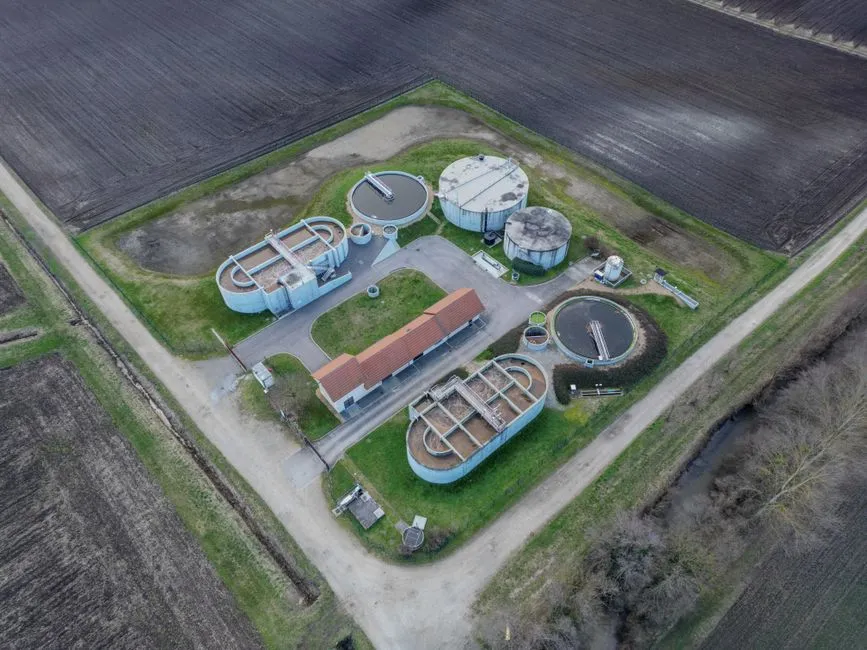
The City code translates into a short list of operator-side deliverables with hard deadlines, and these are the items that drive the compliance schedule rather than the design schedule. First, no Significant Industrial User shall discharge Wastewaters to the City sewer system without a wastewater discharge permit, and all such discharges shall be in compliance with such permit (City of Lynchburg, Industrial Users Regulations and Practices). Second, within ninety (90) days of the promulgation of a national categorical Pretreatment Standard, the wastewater discharge permit of users subject to such standards shall be revised to require compliance with such standard within the time frame prescribed by the standard. Third, existing categorical industrial users must submit a Baseline Monitoring Report within 180 days after the effective date of a categorical pretreatment standard, containing the information listed in Section V(c) paragraphs 1 through 16, including the nature, concentration, and mass of pollutants limited by any City, State, or national pretreatment standard (City of Lynchburg, Industrial Users Regulations and Practices).
On top of those three deadlines, permits contain self-monitoring, sampling, reporting, notification, and recordkeeping requirements, including identification of pollutants to be monitored, sampling location, frequency, and type; record retention is at least three years (City of Lynchburg, Industrial Users Regulations and Practices). Permits also require notification of any new introduction of wastewater constituents, any substantial change in volume or character, and immediate notification of accidental or slug discharges, with a plan to control them. A Lynchburg-area operator who treats the 90-day permit-revision window and the 180-day BMR window as the binding milestones — rather than the equipment delivery date — is the operator who keeps the project on the critical path.
Local limits and prohibited discharges that drive the treatment design
The City code's prohibited-discharge list converts directly into design constraints on the treatment train, and each prohibition is a unit operation the supplier has to address. The City prohibits any pollutant including oxygen-demanding pollutants (BOD) released at a flow rate or concentration that would cause interference, and prohibits heat in amounts that would accelerate biodegradation, cause excessive hydrogen sulfide, or inhibit biological activity (City of Lynchburg, Industrial Users Regulations and Practices). The quantitative temperature ceilings from the code are explicit: discharged wastewater shall not exceed 150°F (65°C), and the temperature of the influent to the wastewater treatment plant shall not exceed 104°F (40°C) — which is the binding number for any operation with hot process water or hot rinse streams.
The City also prohibits pollutants creating a fire or explosive hazard, including wastestreams with a closed-cup flashpoint of less than 140°F (60°C) using the test methods specified in 40 CFR 261.21, which closes off any path that mixes solvents into the sewer stream (City of Lynchburg, Industrial Users Regulations and Practices). On top of that, the City prohibits discharge of substances that are not amenable to treatment or reduction by the wastewater treatment processes employed, or amenable only to a degree that effluent cannot meet other agencies' requirements — a clause that effectively forces the operator to characterize the influent stream by stream rather than treat the combined wastewater as a single design basis. The four constraints an operator has to put on the flowsheet are therefore pH control, temperature, flashpoint, and a per-stream metals and TDS profile.
Matching the influent to the right treatment train
Mining wastewater is not one stream, and treating it as one stream is the most common design mistake a Lynchburg-area operator can make. The literature converges on four categories: acid mine drainage (AMD) from sulfide-mineral oxidation, carrying iron, manganese, copper, zinc, arsenic, and cadmium; process water with reagents and dissolved ore constituents, often high TDS with cyanide, ammonia, or chloramines depending on the circuit; tailings pond effluent carrying fine solids, processing chemicals, and leached metals; and dewatering discharge whose composition varies by geology and ranges from relatively clean to heavily metal-loaded (AMPAC USA, 2025-09). The implication is that pH correction, metals precipitation, and — when salts persist — a membrane polish step are the recurring needs across these streams, but the sizing and chemistry differ stream by stream.
A copper mine, a coal operation, and a dimension-stone quarry produce fundamentally different wastewaters and cannot share a single default treatment train, which is why a Lynchburg-area operator needs to characterize the influent stream by stream before talking to a treatment supplier (AMPAC USA, 2025-09). Flow sizing should be against the highest anticipated daily discharge, not the average, because peak flows drive equalization basin volume and pump selection. The supplied research does not publish flow ranges for Lynchburg-area mining operations, so the throughput bands have to be framed qualitatively: a single dimension-stone or sand-and-gravel site typically runs in the low-to-mid two-digit m³/h range, while a process plant with heap leach or milling sits an order of magnitude higher (LiqTech, 2025-08). The operator should request a quotation against the peak flow, not the average.
The six-step treatment train that survives Lynchburg, state, and federal review
The literature and the commercial flowsheets converge on a six-step unit-operation sequence, and each step maps to a specific piece of equipment the operator can specify independently. Step 1 is pH correction: raise pH so dissolved metals precipitate as hydroxides and gypsum drops out, with a lime raise to pH >10 before thickening (PMC review, 2024-02). Step 2 is coagulation and flocculation: aggregate suspended solids and fine metal particles into settleable or floatable flocs, matching coagulant and flocculant to the floc density that drives the next step. Step 3 is solids separation: a DAF system for mining wastewater solids separation for buoyant floc or oil and fines, or a lamella clarifier for metal hydroxide sludge when sludge volume and footprint are the constraint (Genesis Water Technologies, 2025-11). Step 4 is multi-media filtration, using a multi-media filter for RO pretreatment to drop turbidity and colloids, with target SDI specified after the filter rather than inlet turbidity. Step 5 is ultrafiltration, with a ultrafiltration system for RO pretreatment to remove fine colloids as RO feed conditioning. Step 6 is reverse osmosis polish, with an industrial RO system for mining wastewater rated at >99% rejection of dissolved metals and salts, operating at 50–70% recovery on AMD feed and 70–85% as the RO stage of a ZLD train, with PLC/HMI monitoring and continuous pH, flow, and conductivity feeding the City's self-monitoring records (AMPAC USA, 2025-09). The PLC-controlled automatic chemical dosing skid ties the chemistry of Step 1 and Step 2 into the same HMI as the membrane train.
The table below summarizes each step, the basis of design that drives selection, and the parameter the supplier has to hit.
| Step | Unit operation | Basis of design | Selection parameter |
|---|---|---|---|
| 1 — pH correction | Lime dosing / pH adjustment | Influent pH, metal solubility curves | pH >10 before thickening (PMC review, 2024-02) |
| 2 — Coagulation / flocculation | Coagulant + flocculant injection | Influent TSS, metal particulate | Floc density matched to Step 3 |
| 3 — Solids separation | DAF or lamella | Floc buoyancy, oil loading, footprint | Air-to-solids ratio; plate spacing; underflow solids |
| 4 — Multi-media filtration | Multi-media filter | SDI target downstream | Target SDI after filter, not inlet turbidity |
| 5 — Ultrafiltration | UF system | RO feed conditioning | Membrane material, flux, backwash cycle |
| 6 — Reverse osmosis | Industrial RO | Dissolved metals and salts above local limit | >99% rejection; 50–70% recovery on AMD, 70–85% on ZLD RO (AMPAC USA, 2025-09) |
Reuse economics: making the compliance investment pay back

The same RO polish that meets Lynchburg local limits also unlocks on-site reuse, and that is the lever that monetizes the capital spend. For mines operating near sensitive ecosystems or in water-stressed catchments, internal water reuse enabled by RO treatment can reduce freshwater consumption by 40–60% compared to once-through operations (AMPAC USA, 2025-09). Every cubic meter the plant reuses is a cubic meter it does not pay to discharge or to draw from a freshwater source, and the RO polish that takes residual dissolved metals and salts down to sewer quality also delivers reuse-grade water for mineral processing or dust suppression rather than drawing additional freshwater.
Where zero-liquid discharge is required, RO handles the bulk water recovery, typically 70–85%, before the more energy-intensive thermal stages handle the remaining concentrate, and the operator should request a recovery curve, not just a nameplate figure (AMPAC USA, 2025-09). Sludge handling is the last unit operation: chemical precipitation produces metal hydroxide sludge that has to be dewatered, and a filter press for mining sludge dewatering is the standard fit for the cake volumes produced by precipitation-based mining trains. The sizing logic the operator should hand to the supplier is "reuse as much as economics allow, then polish the rest to sewer quality."
Basis-of-design checklist to hand to a treatment supplier
The article's regulatory and technical content reduces to a short basis-of-design list the operator can put in front of a supplier this week. First, peak and average flow in m³/h, with peak driving equalization basin volume and pump selection, not the average. Second, an influent pH and metal profile from a representative sampling round covering AMD, process water, tailings effluent, and dewatering discharge separately — the stream-by-stream profile is the input that decides whether a reserved-subpart operator needs metals precipitation at all. Third, the local sewer authority discharge limits for metals, pH, and TSS from the City of Lynchburg, plus the VPDES permit conditions, plus the applicable 40 CFR Part 436 subpart limits (City of Lynchburg, Industrial Users Regulations and Practices; EPA, 2026-02).
Fourth, the desired recovery percentage if reuse is in scope, plus the target reuse end use — process water, dust suppression, or wash water — because the recovery setpoint drives membrane area and energy. Fifth, the compliance deliverables the operator must hit: Baseline Monitoring Report within 180 days, permit revision within 90 days, three-year record retention, and a slug-control plan (City of Lynchburg, Industrial Users Regulations and Practices). The supplied research does not publish price points for a complete pretreatment train, so a buyer has to request a quotation against this basis of design rather than rely on a published range. With the BOD in hand, suppliers can quote the six-step train — equalization, pH correction, coagulation, DAF or lamella, multimedia filtration, and RO — at the >99% rejection of dissolved metals and salts the literature reports (AMPAC USA, 2025-09).
Frequently Asked Questions
What does a complete mining pretreatment train near Lynchburg actually cost in 2026?
The supplied research does not publish a price for a complete pretreatment train, so a buyer cannot rely on a quoted range. The actionable step is to request a quotation against the basis-of-design list in the previous section — peak flow, influent profile, the three tiers of discharge limits, and recovery target — and ask the supplier to break the quote into pH correction, clarification, filtration, membrane, and sludge dewatering line items so the operator can compare across bidders on a unit-operation basis rather than a lump-sum basis.
How do I pick a treatment supplier for a Lynchburg-area mining discharge?
The decision should be driven by whether the supplier has installed the same unit operations — DAF or lamella, multimedia filter, UF, RO, and sludge dewatering — at flows in the same order of magnitude as the Lynchburg site, and whether the proposed scope ties the chemistry dosing, the PLC/HMI controls, and the membrane skid into a single integrated control system that can feed the City's self-monitoring records (LiqTech, 2025-08). The actionable check is to ask for two reference installations with comparable peak flow and influent profile, and to confirm the supplier's controls integrator will hand over the tag list and HMI screens at commissioning.
Which 40 CFR Part 436 subparts actually have numeric effluent limits?
Several subparts are reserved with no current numeric effluent limits, including Dimension Stone (Subpart A), Lightweight Aggregates (Subpart H), Lithium (Subpart U), Ball Clay (Subpart AH), Feldspar (Subpart AI), Talc/Steatite/Soapstone/Pyrophyllite (Subpart AJ), and Garnet (Subpart AK) (EPA, 2026-02). The operator's actionable step is to identify the mineral being extracted, look up the matching subpart, and confirm whether that subpart is active with numeric limits or reserved — the answer drives whether federal numbers exist at all before the local layer applies.
What happens if a slug load reaches Lynchburg's sewer from a mining site?
The City requires immediate notification of accidental or slug discharges and requires the permit holder to develop and implement a plan to control them (City of Lynchburg, Industrial Users Regulations and Practices). The actionable step is to put a written slug-control plan in the permit application, with equalization basin volume sized against the largest credible batch release, and to wire the basin's high-level alarm to the same HMI that feeds the City's self-monitoring records so the notification can be sent inside the City's reporting window.