
Separate the wastewater streams before selecting equipment
An Agadir data center should separate cooling tower blowdown from sanitary wastewater before ordering treatment equipment. Blowdown is the purge used to control accumulated salts and minerals after evaporative concentration; it can carry biocide, corrosion inhibitor, scale inhibitor and dispersant residues. Domestic sewage from staff, cafeteria and restroom facilities requires biological treatment, not the high-recovery reverse-osmosis train used for blowdown. Route optional streams only after their chemistry, hydraulics and applicable reuse or discharge requirements are confirmed.
Combining these streams would force one oversized system to handle incompatible objectives. The blowdown train must control hardness, silica, suspended solids and treatment-chemical residues while producing water suitable for return to the cooling loop. The sanitary train must remove biodegradable organics, suspended solids and pathogens. Small streams such as humidification bleed-off, chiller flush water and periodic fire-test water may be compatible with the sanitary train, but compatibility cannot be assumed.
The sanitary option should be developed around an MBR membrane bioreactor or a package A/O unit. For blowdown, begin with filtration, chemistry assessment and a recovery design rather than selecting a membrane skid by cooling-system flow alone.
| Stream | Recommended process direction | Information required before sizing |
|---|---|---|
| Cooling tower blowdown | Filtration, chemistry control and, where reuse is justified, reverse osmosis | Measured blowdown flow; conductivity, hardness, alkalinity, silica, suspended solids, iron, manganese and treatment chemicals |
| Domestic sewage | MBR or A/O biological treatment, with disinfection and reuse/discharge polishing as required | Staff population, daily flow, BOD and COD loads, reuse destination and applicable discharge requirements |
| Mixed or uncertain streams | No final routing until source-by-source sampling is complete | Flow duration, contaminants, episodic loadings, sampling results, sewer compatibility and reuse restrictions |
Build an Agadir water balance before choosing a treatment skid
Measured Agadir utility data must replace generic assumptions about cooling-water demand. IDE Tech reports that a 100 MW facility can consume up to 2 million liters of water per day, so a site-specific balance is necessary when calculating treatment flow (IDE Tech, 2026). That figure is a scale reference, not an Agadir water-use estimate, and it should not be multiplied by a locally unverified load.
Genesis Water Tech reports that cooling blowdown can represent 20–40% of intake, while measurement usually determines the applicable ratio (Genesis Water Tech, undated). For each cooling system, balance makeup water as:
Makeup water = evaporation + blowdown + drift + other measured losses
Drift is the carryover of circulating water droplets; it is small relative to evaporation in many systems but remains a required input. Daily and seasonal metering should cover makeup, evaporation, blowdown, drift and backwash waste. Sampling should include conductivity, pH, suspended solids, hardness, alkalinity, silica, chloride, iron and manganese.
The Agadir design also needs the site’s ambient wet-bulb profile, because it affects evaporation and therefore the flow remaining available for recovery. Fes climate assumptions in the Fes data center treatment guide may offer a regional reference, but they are not transferable site measurements. Current Agadir feed-water analysis must replace historical Fes water chemistry.
| Water-balance input | Required record | Design use |
|---|---|---|
| Makeup, blowdown and drift | Daily and seasonal meter data | Establishes the actual treatment duty and water-saving opportunity |
| Evaporation | Calculated from the approved cooling model and operating data | Defines the unavoidable consumption within the cooling system |
| Backwash waste | Event flow and frequency | Determines whether it joins the blowdown treatment train or requires separate handling |
| Feed and circulating chemistry | Current laboratory analysis by parameter and season | Controls scaling, corrosion, fouling and cycles-of-concentration limits |
Cycles of concentration cannot be increased in isolation. The operating point must remain compatible with heat-transfer performance, scaling, fouling and microbiologically influenced corrosion. A mechanical bar screen may protect downstream equipment from larger debris, but it does not replace the filtration and chemistry control required around the membrane train.
Optimize cooling operations before buying membranes
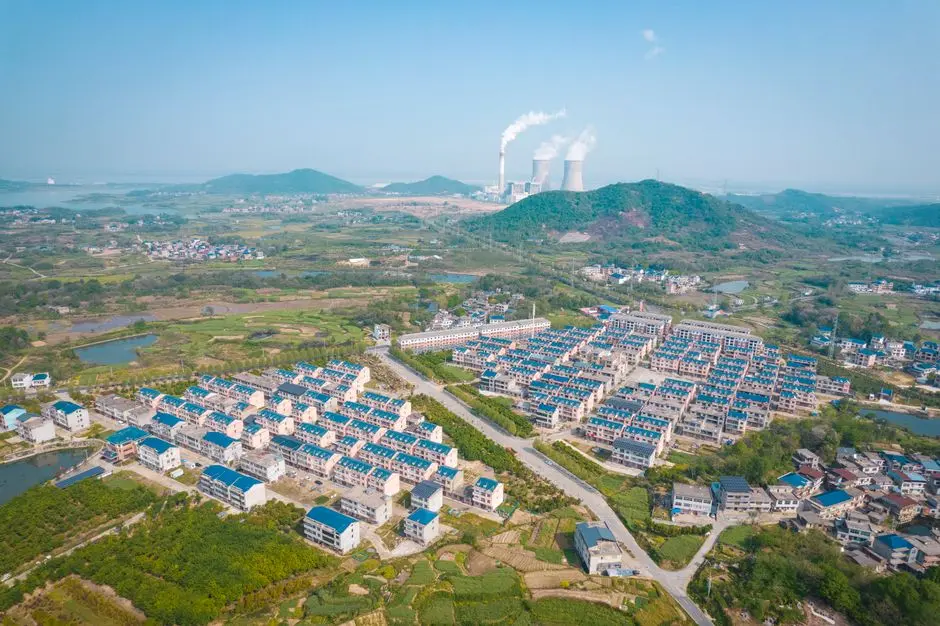
Increasing cycles of concentration reduces the flow that downstream treatment must handle, but the reduction must be calculated correctly. Genesis Water Tech gives two distinct comparisons: at 4 cycles of concentration, blowdown is 25% of makeup; at 6 cycles, it is 20%, representing a 20% reduction in blowdown (Genesis Water Tech, undated). Separately, the U.S. DOE FEMP cooling-water guide, cited in the 2026 Fes guide, reports that raising cycles from three to six cuts makeup water by 20% and blowdown by 50% (HydropureWater, 2026). These comparisons use different starting conditions and should not be presented as equivalent.
- Repair leaks and remove unnecessary once-through cooling.
- Optimize blowdown controls so scheduled purges are not triggered by avoidable suspended-solids excursions.
- Install side-stream filtration and monitor conductivity, turbidity or solids, and biological indicators.
- Test higher cycles only after confirming thermal performance, corrosion control and chemical compatibility.
A multi-media pretreatment filter can remove solids before they restrict heat-transfer surfaces or foul membranes. A industrial water softener may be considered where hardness analysis supports it, but softening does not remove dissolved silica or all dissolved salts.
Aggressive chemistry can increase operating costs and add dissolved solids to the blowdown, making downstream RO more difficult. Genesis Water Tech also reports that actual blowdown can exceed theoretical calculations by 15–30% because of unmeasured losses and emergency dumps (Genesis Water Tech, undated). Design flow should therefore include an explicitly stated operating allowance, rather than hiding it inside an unexplained safety factor.
Treat cooling blowdown as a controlled recovery train
A defensible cooling-blowdown train begins with solids removal, chemical conditioning and conservative RO; higher recovery is an additional design step justified by site chemistry. The 2026 Fes guide cites side-stream filtration at 10–25 µm and pretreatment polish below 10–15 µm, with multi-media filtration and antiscalant conditioning protecting the RO stage (HydropureWater, 2026). These values are design references, not Agadir measurements.
Conventional brackish-water reverse osmosis is the baseline recovery technology. The supplied benchmarks are 95–99% salt rejection, permeate TDS of 10–50 mg/L and conservative first-pass recovery of 50–85% (Genesis Water Tech, as cited in HydropureWater’s 2026 Fes guide). IDE Tech explains that conventional BWRO commonly reaches 75–80% recovery before silica, calcium carbonate and calcium sulfate make scaling unmanageable (IDE Tech, 2026). Recovery must therefore be set by analysis, temperature and concentration factors rather than a generic percentage.
Where higher recovery is economically justified, the sequence changes. Conservative RO first removes permeate and leaves a concentrated stream. Scale inhibitors are then deactivated in a fluidized-bed reactor, allowing silica and calcium salts to precipitate as dense solids. The remaining concentrate becomes predominantly sodium-chloride-dominant brine and can be processed by dynamic RO. IDE Tech reports approximately 95% overall recovery and permeate silica of about 1 mg/L for its MAXH₂O brine-desalter application (IDE Tech, 2026). That application result is not an Agadir guarantee.
The equipment basis should include an industrial reverse osmosis system, compatible RO and UF membrane elements, and the required treatment valves and filter media. Control logic should log feed flow, permeate flow, conductivity, differential pressure, recovery, antiscalant dosing and alarms.
| Train stage | Function | Design condition |
|---|---|---|
| Side-stream and pretreatment filtration | Remove suspended solids and protect the cooling and membrane systems | Filtration references of 10–25 µm and polish below 10–15 µm; final selection follows particle testing |
| Chemical conditioning | Control scale formation and protect membrane surfaces | Chemical selection follows hardness, alkalinity, silica, temperature and concentration analysis |
| Conventional BWRO | Produce low-TDS permeate for cooling makeup | Conservative first-pass recovery of 50–85%; conventional systems often reach 75–80% before scaling constrains operation |
| Controlled precipitation and dynamic RO | Remove scale-forming salts and recover more water | Approximately 95% overall recovery was reported for one IDE Tech application; Agadir feasibility remains unverified |
Permeate should enter a dedicated storage and blending arrangement. Confirm its effect on cooling-water chemistry, corrosion, scaling and the selected chemical program before it joins cooling tower make-up water. If precipitation is included, plan dense-solid withdrawal, dewatering and disposal. A plate-and-frame filter press is a possible solids-dewatering step, but its capacity must follow the selected precipitation rate rather than the blowdown flow.
Use biological treatment for domestic wastewater
Domestic sewage must be sized independently from the cooling system. Required inputs include staff population, daily wastewater flow, wastewater flow per person, BOD and COD loads, anticipated canteen or cafeteria discharge, and the intended reuse or discharge route. Cooling makeup flow cannot substitute for sanitary-flow data.
An MBR combines biological treatment with membrane filtration, while a package A/O unit combines biological treatment and clarification in a buried assembly. HydropureWater describes packaged MBR capacity from 10–2,000 m³/day and filtration below 1 µm (HydropureWater, 2026). These are product-selection references, not capacity guarantees for an Agadir project.
Where required, the sanitary discharge train should include equalization, pH control, solids polishing, disinfection and a metered outlet. Depending on the reuse destination and project requirements, disinfection can use an on-site chlorine-dioxide generator or a UV sterilizer. The underground integrated sewage-treatment package can frame the sanitary comparison, including installation footprint and operator requirements.
Small streams should join the sanitary train only after confirming hydraulic capacity, contaminant loading, treatment compatibility and the applicable reuse or discharge requirements. Fire-test water, for example, should not be routed to biological treatment merely because its flow is intermittent; the event schedule and water quality must first be reviewed.
Compare reuse, compliant discharge and zero liquid discharge
The preferred investment depends on the required outcome: reduce freshwater demand, protect discharge compliance or eliminate liquid discharge. Zero liquid discharge is not the default for an Agadir data center. It should remain a permit-driven or water-supply-driven option until the project confirms the discharge route, reuse value and expected future growth.
Option A: optimize and reuse. Increase cycles of concentration, install side-stream filtration and use conservative RO. Return permeate as cooling tower make-up water. Add controlled precipitation only where analysis supports the chemistry and the additional capital, solids handling and staffing are justified.
Option B: treat for compliant discharge. Retain equalization, pH adjustment, solids polishing, disinfection where applicable, metering and logged monitoring. Confirm the current Moroccan discharge decree and project-specific requirements before setting an Agadir TDS, biocide or other limit. No supplied research establishes a verified Agadir-specific numerical limit, so a generic value should not be inserted into the permit basis.
Option C: MVC or ZLD. Reserve this route for prohibited discharge, unavailable freshwater, material permit tightening or capacity growth. The 2026 Fes guide cites MVC capital cost of US$1–3 million for 10,000–30,000 GPD and full ZLD capital cost of US$3–8 million (HydropureWater, 2026, citing Genesis Water Tech). These are directional Fes-case benchmarks, not Agadir quotations.
| Decision | Recovery objective | Residual and operating consequence |
|---|---|---|
| Optimize and reuse | Permeate returns as cooling make-up | Lowest process complexity of the recovery options; depends on RO recovery, storage integration and cooling chemistry |
| Treat for discharge | Water leaves under a metered discharge route | Equalization, polishing and monitoring remain necessary; permit exposure determines the required treatment intensity |
| MVC or ZLD | Maximize water recovery and minimize liquid discharge | ZLD requires a crystallizer and solid-salt handling; the Fes guide cites MVC distillate below 10 mg/L TDS at 15–25 kWh per 1,000 US gallons |
Evaluate each option by recovery, footprint, energy demand, chemical use, residual management, automation and staffing. The comparison should use the measured Agadir water balance and current feed chemistry, not the Fes site’s climate or operating assumptions.
Build the budget and supplier-selection checklist
A comparable quotation requires a defined feed-water analysis, water balance, treatment objective and recovery basis. The 2026 Fes guide cites roughly US$250,000–500,000 for a 50,000 GPD single-pass RO skid and operating cost around US$1.50–3.00 per 1,000 gallons treated (HydropureWater, 2026, citing Genesis Water Tech). It also cites US$50,000–200,000 for side-stream filtration. These are directional benchmarks for a Fes cost case, not prices for an Agadir site.
Before fixing recovery, pretreatment or price, require bidders to review:
- The current Agadir feed-water analysis and the proposed cooling-water flow model.
- Ambient wet-bulb design conditions and seasonal operating assumptions.
- Operating references for cooling tower blowdown treatment.
- Membrane flux, recovery assumptions, chemical demand and cleaning intervals.
- Worst-case scaling analysis for silica, calcium carbonate, calcium sulfate and concentration factors.
- PLC controls, remote telemetry, alarms, energy-recovery devices and operator interface requirements.
- Commissioning, training, permeate-storage integration, metering and local service support.
Confirm lead times and availability for FRP pressure vessels, membranes, energy-recovery devices, filter media and dosing consumables. Require a bundled spares package rather than accepting generic delivery language. An automatic antiscalant and pH dosing system should be priced with chemical consumption, calibration, alarms and containment, not as an accessory.
| Quotation item | Minimum information required |
|---|---|
| Equipment basis | Design flow, feed analysis, recovery calculation, water balance and required permeate or discharge quality |
| Operating cost | Energy, chemicals, membrane replacement, cleaning, labor and residual disposal assumptions |
| Commercial scope | Civil works, installation, commissioning, training, telemetry, storage integration and local service |
| Execution risk | Lead times, consumable availability, bundled spares and documented operating references |
A fixed price based only on plant megawatts is not a comparable bid. The recovery target, number of RO passes, precipitation duty and site-specific controls can change the scope more materially than nominal skid capacity.
Frequently Asked Questions
What inputs are needed to size treatment for an Agadir data center?
Request makeup, evaporation, blowdown, drift and backwash measurements; the current feed-water analysis; cooling model and ambient wet-bulb profile; and the intended reuse or discharge route. At 4 cycles of concentration, blowdown is 25% of makeup; at 6 cycles, it is 20%, a 20% reduction under Genesis Water Tech’s example. Do not size the skid from IT load alone.
How much should an Agadir blowdown RO system cost?
The 2026 Fes guide cites roughly US$250,000–500,000 for a 50,000 GPD single-pass RO skid and US$1.50–3.00 per 1,000 gallons treated for operating cost. These are directional benchmarks, not an Agadir quotation. Buyers should request a site-specific price based on measured flow, feed chemistry, recovery target, pretreatment, controls, installation and residual handling.
Which evidence should a treatment supplier provide?
Ask for operating references on cooling tower blowdown, a documented feed-water review, a recovery rationale, membrane-flux assumptions, cleaning intervals, operator training, bundled spares and local service support. The supplier should also state all exclusions, delivery dates and performance assumptions in the commercial offer.
Which Moroccan discharge and reuse requirements apply to the project?
Confirm the current Moroccan discharge decree, the applicable local authority or utility process, and any current ONEE or RADEEMA guidance with the project authority and environmental adviser. The supplied research identifies these as decision inputs but does not establish verified Agadir-specific numerical limits. Record the confirmed discharge route, parameters, monitoring duties and reuse conditions before final equipment selection.
Can controlled precipitation raise recovery from the conventional BWRO range?
Site chemistry determines feasibility. IDE Tech reports that conventional BWRO often reaches 75–80% recovery before silica and calcium scaling become unmanageable, while its controlled-precipitation and dynamic-RO application achieved approximately 95% overall recovery (IDE Tech, 2026). Treat the latter as an application result, not an Agadir guarantee; test hardness, alkalinity, silica, temperature and concentration factors first. Further planning context appears in the data-center wastewater compliance planning guide.