What Actually Changes Between MBR and Conventional Activated Sludge?
The primary technical difference between an industrial membrane bioreactor and a conventional activated sludge system is solids separation, not the underlying biology. CAS removes biomass by gravity settling in a secondary clarifier. MBR retains suspended-growth microorganisms and solids inside a membrane bioreactor, then withdraws permeate across the membranes.
EPA’s Wastewater Management Fact Sheet: Membrane Bioreactors states that membrane filtration can replace the secondary clarifier and sand filters used in a typical activated-sludge system. It also states that dissolved wastewater components require additional treatment steps. A membrane is therefore a solids-retention barrier, not a general-purpose mechanism for removing dissolved salts or every other dissolved contaminant.
Low suspended solids can simplify downstream disinfection and industrial wastewater reuse preparation. It does not, by itself, demonstrate compliance for BOD, FOG, pH, nutrients, dissolved salts, or a site’s reuse specification. Review the MBR wastewater membrane bioreactor cost per m³: 2026 guide for lifecycle framing, but do not treat the MBR as a complete reuse plant.
| Process stage | Conventional activated sludge system | Industrial membrane bioreactor |
|---|---|---|
| Upstream | Equalization and conditional pretreatment | Equalization and conditional pretreatment |
| Biological treatment | Aerated activated-sludge reactor | Suspended-growth biological reactor |
| Solids separation | Secondary clarifier | Membrane filtration within the bioreactor |
| Downstream | Optional filtration or polishing, then required disinfection | Optional dissolved-contaminant polishing, then required disinfection |
| Bid implication | Price clarifier, filters, polishing, and sludge handling | Price membranes, cleaning, redundancy, pretreatment, and any required polishing |
Evansville Food and Beverage Wastewater: Start with the Actual Waste
Representative wastewater testing is the first procurement gate because food processing wastewater and beverage plant wastewater can change substantially with the product mix and discharge schedule. Relevant constituents may include production losses, dairy or juice residues, starches, proteins, fats and oils, cleaning chemicals, sanitizers, and batch dumps. Their effects must be established by sampling rather than assumed from generic food-industry averages.
Give bidders average flow, peak flow, discharge duration, production and cleaning schedules, product-changeover information, and the operating plan for shutdown periods. Average daily flow alone is not a defensible sizing basis. Document COD, BOD, TSS, FOG, pH, temperature, and relevant surfactant or toxicity indicators before assigning biological capacity or selecting pretreatment.
EPA’s design checkpoint is that peak design flow should generally be no more than 1.5 to 2 times average design flow. If peak flow exceeds that range, additional membrane capacity or equalization is required, according to EPA’s membrane bioreactor fact sheet. Do not calculate equalization volume without the actual discharge schedule; establish which production, flushing, clean-in-place, and shutdown streams can overlap.
Equalization can buffer production and cleaning discharges and shock loads. It is not automatic equipment, however. Similarly, a DAF pretreatment system for food-process wastewater becomes credible when testing identifies suspended solids, FOG, oil and grease, or colloidal material that could overload biological treatment or foul membranes.
| Required Evansville site input | Why it affects the comparison | Evidence bidders should provide |
|---|---|---|
| Flow and discharge schedule | Sets biological and hydraulic loading, equalization duty, and membrane area | Representative flow series covering production and cleaning |
| Wastewater characterization | Determines biological load and pretreatment requirements | Measured COD, BOD, TSS, FOG, pH, temperature, and relevant surfactants or toxicity indicators |
| Batch and clean-in-place discharges | Concentrated discharges may foul membranes or upset biology | Stream inventory, concentrations, durations, and discharge points |
| Regulatory endpoint | Defines the required solids, organics, disinfection, and polishing duties | Permit, sewer-use or pretreatment agreement, and written reuse criteria |
| Existing assets and site constraints | Distinguishes a greenfield selection from a retrofit or hybrid | Remaining life, hydraulic capacity, footprint, utilities, controls, and operator capability |
Pretreatment Is the Difference Between a Viable MBR and an Expensive Membrane System
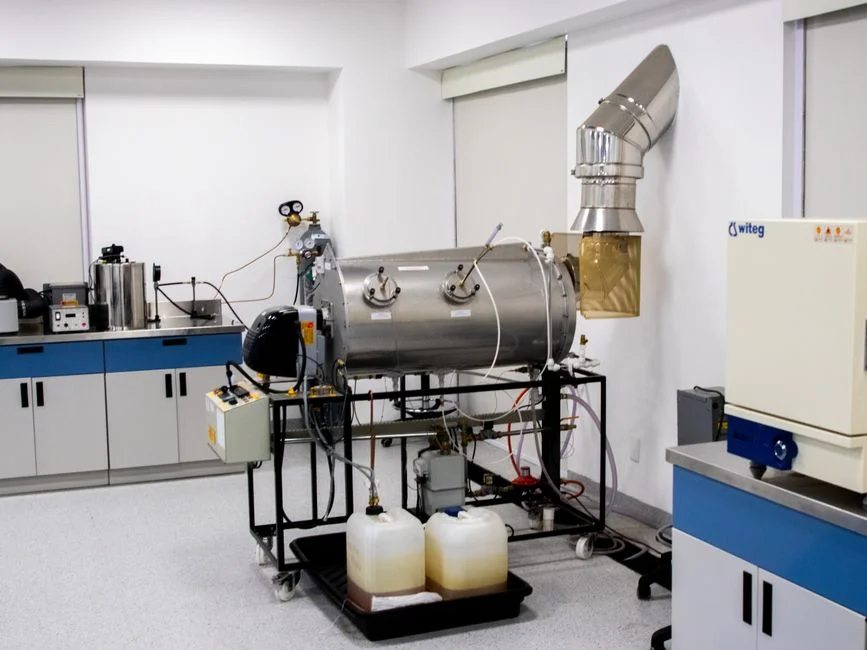
EPA requires fine screens immediately before MBR membranes, with the cutoff selected according to the membrane manufacturer. EPA identifies 1- to 2-mm screening for hollow-fiber membranes and 2- to 3-mm screening for plate membranes. These requirements protect the membrane module from debris; they do not remove dissolved fats, fine colloids, oil, or surfactants.
Food-processing streams can foul membranes before the biological process stabilizes because production batches, clean-in-place cycles, and ingredient changes create concentrated, intermittent loads. Pretreatment must therefore follow the real discharge schedule and measured constituent profile. Screening may protect the train, but it does not establish whether equalization, FOG removal, solids removal, or pH correction is also needed.
For example, a DAF pretreatment system for food-process wastewater should be included where measured FOG, oil, suspended solids, or colloidal material creates a biological or membrane-protection problem. A mechanical screen or equivalent arrangement protects against gross debris, but it cannot be credited with dissolved constituent removal. A mechanical bar screen may be part of the solution; it is not a substitute for characterization.
Require each bidder to connect every pretreatment unit to three items: the measured constituent it addresses, the biological or membrane protection requirement, and a removal objective. This avoids automatic DAF, pH correction, or equalization in both bids—and prevents a low membrane bid from omitting the upstream equipment needed to make it work.
Compare Performance, Footprint, Reliability, and Operating Risk
The main MBR advantage is controlled solids separation without relying on secondary-clarifier settling. EPA reports low concentrations of bacteria, TSS, and BOD, with low phosphorus, in MBR effluent. That supports a more predictable low-suspended-solids stream, but permit-specific compliance testing remains necessary. CAS performance depends on the clarifier’s settling and solids-handling behavior.
EPA identifies smaller space requirements as an MBR advantage and explains that membrane filtration permits a higher biomass concentration, supporting higher flow or improved performance in less space than a conventional design with secondary clarifiers and sand filters. Actual Evansville footprint depends on equalization, pretreatment, aeration, controls, piping, drainage, maintenance access, and sludge handling—not the biological reactor alone.
HydropureWater’s integrated submerged-PVDF MBR system states a 60% smaller footprint than conventional systems. That is a manufacturer product specification, not an industry benchmark or an Evansville site guarantee. Require a dimensioned project layout and documented comparison basis before crediting the figure.
| Evaluation item | MBR | Conventional activated sludge | Procurement question |
|---|---|---|---|
| Biological treatment | Suspended-growth biology with membrane solids retention | Suspended-growth biology with gravity clarification | Does each bid use the same influent envelope and biological duty? |
| Solids separation | Controlled membrane barrier; generally very low TSS | Dependent on secondary-clarifier settling performance | How is carryover handled during production and cleaning peaks? |
| Footprint | EPA identifies smaller space requirements as an advantage | Requires aeration, clarification, and space for any filters | Does the dimensioned layout include equalization, pretreatment, blowers, access, and piping? |
| Operating burden | Adds cleaning, fouling control, replacement, and air-scour energy | Requires aeration, recirculation, wasting, settling, pumps, and fitted filters | What labor and consumables are included in the 20-year model? |
| Redundancy | Determine whether units use N plus 1 capacity and how elements are isolated | Clarifier, pump, blower, filter, and power redundancy must be identified | What treatment capacity remains during maintenance? |
| Solids handling | EPA notes low sludge settling rates and possible chemical needs for acceptable disposal | EPA states standard activated-sludge solids-processing technologies can be used | Which solids route, yield, dewatering method, and disposal cost are guaranteed? |
For operating risk, request the MBR membrane bioreactor troubleshooting guide as background, but make the bid answer specific: cleaning triggers, normalized-flux and transmembrane-pressure criteria, alarm response, module isolation, critical spares, and membrane replacement responsibilities.
Discharge, Reuse, and the Treatment Train You Actually Need
The governing endpoint—not the process label—determines the treatment train. Before selecting equipment, identify the discharge permit, sewer-use or pretreatment agreement, receiving authority, and intended reuse destination. These documents determine the applicable limits, monitoring, and operating conditions.
Separate three objectives: conventional discharge, reuse requiring low suspended solids, and reuse requiring removal of dissolved constituents. Irrigation, cooling, process rinsing, and near-potable reuse do not carry identical water-chemistry or monitoring requirements. EPA states that low suspended solids in MBR permeate makes disinfection easier and that disinfection might not be required depending on permit requirements. Omitting disinfection therefore requires a written determination tied to the actual permit and reuse conditions.
MBR permeate should not be described as near-potable or universally reuse-ready. EPA states that dissolved wastewater components require additional treatment. If dissolved salts or other dissolved constituents must be removed, evaluate reverse osmosis or another suitable polishing process. The industrial reverse-osmosis water purification system is one potential downstream option, not a standard inclusion in every bid.
For Evansville reuse, obtain written acceptance criteria covering constituents, monitoring, reliability, and operating conditions. Any UV disinfection system should be justified against that endpoint and the complete treatment train. This keeps “reuse-ready” from becoming a sales term without a defined water quality.
Build a Decision Tree for the Evansville Plant
A defensible selection starts with the operating envelope and required endpoint, then applies three paths. MBR merits evaluation when predictable low TSS is valuable, footprint is constrained, production or cleaning peaks make clarifier carryover a compliance risk, or reuse has a defined value. CAS merits evaluation when wastewater is stable, space is available, the existing clarifier and biological system have adequate capacity, and discharge requirements are moderate.
Evaluate a hybrid when one specific deficiency has been demonstrated, such as FOG capture, solids separation, or polishing. Require a written mass balance showing what each unit removes and how the combined train meets the same endpoint as the full alternatives. Installed equipment is not free capacity: document remaining life and hydraulic capacity of existing tanks, clarifiers, pumps, blowers, and controls.
| Condition established from site data | Path to evaluate | Minimum supporting work |
|---|---|---|
| Low, predictable TSS is important; footprint is constrained; reuse has clear value | MBR | Wastewater-specific membrane selection, flux and MLSS basis, cleaning plan, redundancy, training, commissioning, and guarantees |
| Wastewater is stable; space is available; existing assets are sound; discharge requirements are moderate | CAS | Clarifier hydraulic and solids-loading review, sludge capacity, controls, downstream filter review, and remaining asset life |
| One identified stage is deficient while other assets remain valuable | Hybrid | Written unit-by-unit mass balance and verification against the same performance basis |
| Batch variability, fouling risk, or reuse performance remains unresolved | Pilot or campaign-based design review | Representative sampling and documented decision criteria before final selection |
For MBR bids, require membrane material, design flux, MLSS range, transmembrane-pressure and normalized-flux criteria, cleaning methods, spare strategy, operator training, commissioning tests, and performance guarantees. For CAS bids, require the clarifier review, sludge handling, controls, filters, and remaining asset life. Pilot testing is warranted when historical records cannot resolve fouling, batch variability, or reuse performance.
Compare Installed Cost and 20-Year Lifecycle Cost
EPA reports that MBR capital and operating costs are typically higher than conventional systems at the same throughput. The supplied research establishes no universal 2026 MBR or CAS price for Evansville. A defensible quotation requires measured flows, wastewater characterization, pretreatment, equalization, redundancy, sludge route, polishing, utilities, and local operating rates.
Compare complete installed scopes, not reactor prices. Both bids should identify biological treatment, equalization, pretreatment, aeration, controls, civil work, piping, electrical service, commissioning, disinfection, sludge handling, and downstream polishing. An MBR bid should additionally identify membrane modules, cleaning systems, redundancy, and replacement provisions. A CAS bid should identify the secondary clarifier and any required downstream filters or polishing.
| Cost category | Items to compare | Required calculation basis |
|---|---|---|
| Installed capital | Complete treatment trains, civil work, utilities, controls, commissioning, disposal, and reuse equipment | Same treatment duty, footprint, redundancy, and assessment period |
| Energy and chemicals | Electricity, air scour, cleaning chemicals, pH control, and consumables | Plant utility rates and documented operating assumptions |
| Labor and maintenance | Operator hours, membrane cleaning, clarifier maintenance, training, and critical spares | Plant labor rates and supplier support commitments |
| Solids and replacements | Sludge handling, disposal, membrane replacement, and retained-asset renewal | Verified yields, disposal route, warranty terms, and remaining asset life |
| Potential avoided value | Potable water, avoided disposal, retained tanks, or compliance-event avoidance | Separate category; do not credit reuse before authority acceptance |
Use the plant’s electricity rate, chemical cost, labor rate, sludge-disposal cost, potable-water cost, and replacement schedule in a net-present-value comparison over an agreed assessment period. Keep avoided value separate from base costs. This prevents a CAS bid from hiding a costly downstream filter train or an MBR bid from hiding membrane replacement and cleaning costs.
Issue One Common Basis of Design to Every Bidder
A common basis of design prevents a low bid from becoming expensive later through omitted scope. Issue the same average flow, peak flow, production and cleaning schedule, wastewater characterization, treatment objectives, effluent guarantees, footprint, utilities, disposal route, and sludge-handling responsibility to every bidder.
Require the installed scope to state screening, equalization, biological treatment, membrane modules where applicable, aeration, controls, pretreatment, disinfection, sludge handling, and downstream polishing. For an MBR, also require membrane material, pore size, module configuration, design flux, cleaning chemicals, expected cleaning frequency, replacement provisions, warranty terms, critical spares, and training.
Performance guarantees must be tied to the documented influent envelope. State explicit exceptions for FOG, surfactants, cleaning chemicals, and unusual batch discharges rather than accepting broad caveats hidden in general specifications. Define test methods and sampling points for each guaranteed parameter.
Require dimensioned layouts for MBR, CAS, and any hybrid option. Compare maintenance access, blowers, chemical storage, piping, drainage, controls, and future expansion on equal treatment duties. A tank-only footprint comparison can reverse the result after shared facilities are added.
Do not use an unsupported membrane lifetime as a budget assumption. Require the contractual terms behind every warranty and replacement claim, including exclusions and remedy. The automatic chemical dosing system and other auxiliary equipment should be included where the process requires them, with capacities and duties documented rather than left as supplier options.
Frequently Asked Questions
Is MBR cheaper for an Evansville food plant than conventional activated sludge?
Not by default. EPA reports that MBR capital and operating costs are typically higher than conventional systems at the same throughput. The purchasing check is a common-scope net-present-value comparison over an agreed 20-year assessment period, using the plant’s actual electricity, chemical, labor, sludge-disposal, potable-water, and replacement assumptions. The supplied research supports no universal Evansville price.
Is MBR alone enough for food and beverage reuse?
No universal reuse claim is defensible. EPA states that dissolved wastewater components require additional treatment, and MBR’s key advantage is membrane solids separation. Match the complete train to written criteria for the intended use. If dissolved salts or other dissolved constituents must be removed, evaluate reverse osmosis or another suitable polishing step rather than treating MBR permeate as near-potable.
What pretreatment does an MBR need for food-processing wastewater?
EPA requires fine screens immediately before MBR membranes: 1- to 2-mm screening for hollow-fiber membranes and 2- to 3-mm for plate membranes, depending on the manufacturer. Equalization, FOG or solids removal, and pH correction are conditional. Require the bidder to tie each unit to measured constituents, a process-protection requirement, and a removal objective.
When is conventional activated sludge the better choice?
CAS is credible when wastewater is stable, space is available, the existing clarifier and biological system are sound with adequate hydraulic capacity, and discharge requirements are moderate. It also avoids membrane-specific cleaning, air-scour, fouling-control, and replacement burdens. Require clarification review and downstream filter evaluation so the comparison includes the complete CAS train.
How should an Evansville buyer choose between MBR and CAS suppliers?
Require one documented influent envelope, identical treatment duties, dimensioned layouts, project-specific guarantees, acceptance tests, operator training, critical spares, warranty terms, and full-scope pricing. Confirm that each supplier identifies exceptions for FOG, surfactants, cleaning chemicals, and unusual batch discharges. A generic product claim or unsupported membrane lifetime should not influence selection.