What an Effluent Treatment Plant in Merida Must Achieve
An effluent treatment plant in Merida should be selected around the industrial wastewater stream, required discharge quality and reuse objective—not around a generic package name. A typical train may combine physical pretreatment, oil and solids removal, biological treatment, membrane or other polishing, disinfection and sludge dewatering. University of Twente research supports nanofiltration for polishing wastewater treatment plant effluent, while Wageningen University research examines constructed wetlands for micropollutant removal. Final equipment, capacity, permits and costs require site-specific testing and Merida authority confirmation.
Make three decisions before opening an equipment datasheet: which wastewater stream must be treated, where the treated water will go, and what evidence is needed to prove the discharge or reuse objective. For the first decision, separate production wastewater, cleaning water, washdown, cooling-water discharges, sanitary flows and storm water where practical. Each stream has a different pollutant profile and should not be combined until its hydraulic and quality contribution is known.
For the receiving route, define whether the outcome is permitted discharge, irrigation, process reuse, cooling-water makeup, equipment washing or another application. Reuse adds treatment and verification obligations; it is not an automatic consequence of installing biological treatment. Review Mexico industrial wastewater compliance requirements as a starting point, then obtain the applicable Merida conditions directly from the responsible authority.
The University of Twente thesis Direct nanofiltration of wastewater treatment plant effluent distinguishes conventional treatment-plant effluent from advanced reclamation. That distinction prevents a buyer from treating the biological stage as a complete reuse system. The supplied sources do not establish Merida discharge limits, permit conditions, treatment capacities or project costs; those remain project-specific inputs rather than assumptions to be carried into a quotation.
Start with a Site-Specific Wastewater Profile
Representative sampling establishes the design basis; a laboratory average alone cannot identify batch discharges, cleaning peaks or contaminants that may upset biological or membrane equipment. Collect samples across normal production, cleaning, batch-discharge and upset conditions, and correlate each analysis with flow and operating status.
Ask the site team for average flow, peak flow, batch-discharge volume, operating duration and the proportion of recirculated wastewater. Record pH, suspended solids, oil and grease, biochemical oxygen demand, chemical oxygen demand and sector-specific contaminants. For food processing, hotels or factories, also investigate salinity, temperature, cleaning chemicals, nutrients and materials that may foul membranes or inhibit biological treatment.
| Design input | Evidence needed | Why it affects selection |
|---|---|---|
| Hydraulic profile | Continuous flow record plus event and batch log | Determines equalization, pretreatment and biological capacity |
| Organic load | BOD and COD from representative samples | Sets biological loading and aeration demand |
| Physical contaminants | Suspended solids, oil and grease, settleability | Indicates screening, DAF or clarification duties |
| Chemical conditions | pH, salinity, temperature and process chemicals | Tests biological compatibility and membrane selection |
| Target outcome | Discharge route, reuse standard and monitoring requirements | Defines required polishing and verification |
Include seasonal water demand and changes in product mix. A wastewater that is dilute during one period may carry concentrated salts, cleaners or food residues during another. If the stream contains substances incompatible with biological treatment, identify them before comparing a membrane bioreactor with a compact biological package.
Set the sampling plan before comparing biological, membrane, wetland or flotation proposals. Require the laboratory to identify analytical methods and detection limits, and obtain enough flow-linked data to calculate average and peak loading. The supplied research contains no Merida sampling results, so no COD, BOD, flow, pH or contaminant concentration should be assumed. A detailed DAF-versus-clarifier wastewater comparison remains conditional on those measured inputs.
Build the Treatment Train from the Front End
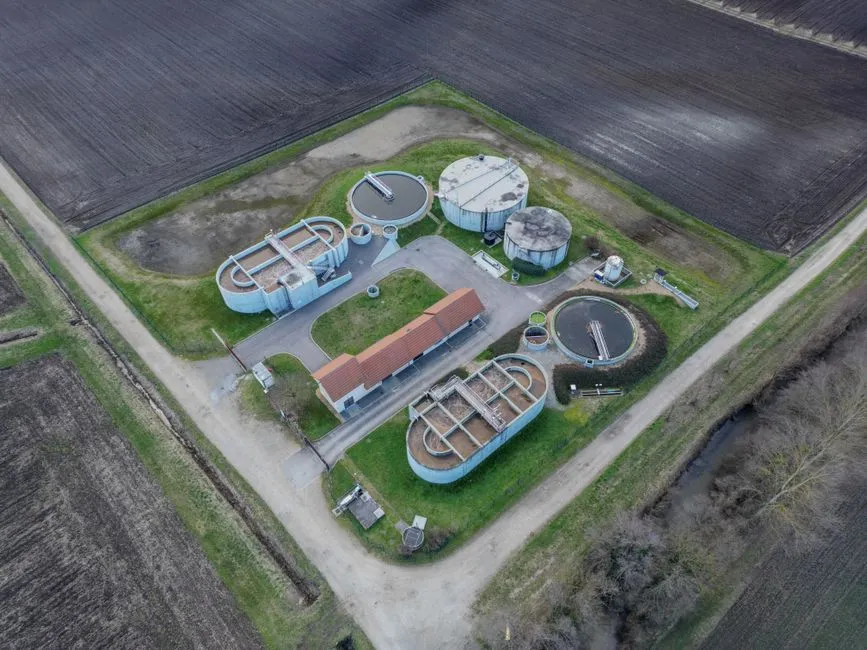
Screening and physical pretreatment protect pumps, valves and downstream biological or membrane units from material that should be removed first. Position the stages according to contaminant duty rather than package convenience: remove screenings and grit, recover free oil where relevant, separate settleable or floatable solids, then apply chemical conditioning where needed before biological treatment or polishing.
Dissolved air flotation is suited to wastewater containing suspended solids, free oil and grease, or colloidal material. The available micro-bubble flotation engineering guide describes the operating principle, while the DAF pretreatment system is offered in 13 standard models covering 4–300 m³/h. These are catalog limits for initial selection, not a recommendation for a Merida plant.
Use coagulation and flocculation when particles require chemical destabilization before solids separation. Dosing must be tied to measured water chemistry, mixing and solids separation; more chemical does not guarantee better removal. Automatic dosing can deliver coagulants, flocculants and pH adjusters, but the final dose requires jar or pilot testing.
| Process stage | Primary removal duty | Selection check |
|---|---|---|
| Screening and physical removal | Large solids and debris | Confirm opening size and solids disposal route |
| DAF or clarification | Suspended solids, floatable oil, grease and some colloidal material | Test actual oil, solids and wastewater chemistry |
| Coagulation and flocculation | Destabilization of particles before separation | Establish dose, mixing and sludge response |
| Biological treatment | Biodegradable organics and selected nutrients | Confirm loadability, pH, temperature and toxicity |
| Polishing | Suspended solids, trace contaminants or reuse-specific quality | Start from the required effluent objective |
Reserve DAF for an industrial pretreatment duty and compare it with clarifiers and biological treatment. The industrial ETP versus DAF selection guide provides a useful process distinction, but local wastewater data remain controlling.
Phytoremediation is also an investigated option, not a default substitute for site testing. A duckweed review from the International Journal for Research in Applied and Natural Science examines nutrient-rich industrial effluents from distilleries, sugar mills and dairy operations. It reports application-specific results rather than a universal performance guarantee, so climate, land, loading and residual handling must be assessed.
Compare Biological Treatment, MBR and Wetlands
The central biological route should be matched to footprint, effluent objective, operating model and maintenance expectations. A compact biological package, an integrated membrane bioreactor and constructed wetlands do different work and should not be compared as interchangeable products.
The WSZ Series combines anoxic and aerobic biological contact oxidation, sedimentation and disinfection in a buried package unit. HydropureWater lists capacities from 1–80 m³/h for communities, hotels, hospitals, factories and rural applications. Its installation options include below-grade deployment with landscaping above or trailer mounting for mobile use. This makes the packaged wastewater treatment selection guide relevant, but the applicable WSZ flow range must still be checked against measured Merida flows and waste composition.
The integrated MBR wastewater treatment system combines activated sludge with submerged PVDF membrane filtration. HydropureWater states that it produces effluent filtered below 1 μm, uses 60% less space than conventional systems and is offered from 10–2,000 m³/day. These are supplier specifications; they do not establish Merida effluent compliance or guarantee that the stream is biologically treatable.
Constructed wetlands provide a different treatment and polishing approach. Wageningen University and Research published a 354-page internal PhD thesis on Removal of micropollutants from wastewater treatment plant effluent by constructed wetlands on 23 September 2022, with DOI 10.18174/575408 and ISBN 9789464473681. The research supports investigation of wetlands for micropollutant removal, not universal industrial performance.
| Option | Role | Selection question |
|---|---|---|
| WSZ biological package | Anoxic/aerobic treatment, sedimentation and disinfection | Does the wastewater and available footprint support the packaged process? |
| MBR | Biological treatment with membrane solids separation | Is the required effluent quality worth membrane cleaning and controls? |
| Constructed wetland | Research-supported route for micropollutant removal from treatment-plant effluent | Can land, hydraulic loading, climate and seasonal variation support it? |
The duckweed review provides supporting context: it reports more than 90% nutrient removal in some cited applications, 75–80% BOD and COD reduction in a sugar-industry application using Lemna gibba, and 65% nitrogen and 87% phosphorus removal in diluted wastewater applications. These results are application-specific and cannot be transferred directly to a Merida factory.
Add Polishing and Disinfection Only Where Needed
Polishing becomes justified when the receiving route requires reuse, sensitive discharge, tighter particulate control, pathogen control or a defined downstream-process quality. Specify the required parameter before selecting a membrane or disinfectant; otherwise the plant may include equipment that adds cost, energy and maintenance without resolving a project objective.
University of Twente research identifies nanofiltration as suitable for polishing wastewater treatment plant effluent to EU Water Framework Directive standards and for producing effluent suitable for agricultural or direct or indirect potable usage. The study assessed direct nanofiltration for effluent reclamation, but it does not prove that an installation in Merida will achieve those outcomes without equivalent local validation, source-water testing and regulatory acceptance.
The available ultrafiltration system uses 0.03 μm PVDF membranes, operates at 2,000–40,000 L/h, accepts turbidity up to 300 ppm and includes automatic backwash and air scour. These specifications help screen equipment, but the required flow, feed condition and backwash utility must be reconciled with the complete treatment train.
Disinfection should follow the identified pathogen or reuse requirement. HydropureWater chlorine dioxide generators range from 50 g/h in compact manual configurations to 20,000 g/h in fully automated industrial systems. Generator capacity does not establish dose or residual performance; those depend on contact conditions, chemistry, demand and monitoring.
| Objective | Process question | Required evidence |
|---|---|---|
| Reuse | Which contaminants must be removed beyond bulk treatment? | Target-quality schedule and pilot performance |
| Pathogen control | What reduction or residual is required? | Contact-time and dose basis with monitoring plan |
| Particulate control | Is filtration required for reuse or process protection? | Particle, turbidity and membrane-fouling data |
| Trace contaminants | Can the selected process address the identified substance? | Compound-specific analysis and removal evidence |
For nutrient or micropollutant removal, do not confuse bulk pollutant treatment with trace-contaminant polishing. Request compound-specific process data and monitoring methods. A lower BOD or COD result does not demonstrate micropollutant removal.
Design for Residuals, Controls and Maintenance
A treatment plant is not complete until solids capture, sludge conditioning, storage, dewatering and final disposal have assigned space and responsibility. Sludge characteristics depend on the upstream process: chemical precipitation can increase dry solids, biological treatment can produce more volume with lower solids concentration, and oil-contaminated solids require separate handling.
HydropureWater plate and frame filter presses cover filtration areas from 1 m² to 500 m² in manual, hydraulic and fully automatic PLC-controlled versions. The appropriate configuration depends on sludge volume, solids concentration, cake handling, operating hours and available labor. Mechanical dewatering also requires a destination for the resulting cake.
Evaluate automatic chemical dosing for controlled delivery of coagulants, flocculants, pH adjusters and other treatment chemicals. Require the supplier to state tank capacity, metering range, control signals, calibration access, duty-standby provisions and chemical compatibility. Dosing equipment without a verified chemical demand can create unnecessary operating complexity.
Ask vendors to document automatic controls, alarms, membrane cleaning, backwash, air scour, skimming, sludge removal and access to every service point. Match footprint and installation method to available land. WSZ units may be installed below grade with landscaping above or mounted on a trailer for mobile deployment, but access for lifting, sludge removal, electrical service and maintenance must be shown on the layout.
Require a maintenance plan covering consumables, spare parts, operator training, service response and cleaning schedules. For an automatic chemical dosing system, include calibration and chemical handling in that plan. For a plate and frame filter press, include plate inspection, cloth replacement, cake discharge and wash-down provisions.
Choose a Merida Project Path from Brief to Commissioning
Procurement should progress through defined information gates rather than begin with a catalog model. First issue a wastewater characterization brief and a target-quality brief. The first should contain representative flow, quality and operating data; the second should state the receiving route, required parameters, monitoring obligations and intended reuse.
Ask each supplier for a proposed process flow, design duty assumptions, equipment data sheets, utilities demand, controls scope, residuals plan, commissioning tests and lifecycle-cost inputs. Require the supplier to identify which items are included, which are excluded and which performance claims remain conditional on site testing.
| Stage | Buyer deliverable | Validation gate |
|---|---|---|
| Characterization | Representative samples, flow record and production schedule | Confirmed average, peak and batch loads |
| Target quality | Discharge or reuse brief | Confirmed parameter and monitoring requirements |
| Concept selection | Process-flow options and equipment data | Confirmed pretreatment and treatment duties |
| Detailed design | Layout, utilities, controls and residuals plan | Authority, site and constructability review |
| Pilot or site testing | Representative trial where variability is high | Documented performance against acceptance criteria |
| Commissioning | Test protocol and trained operators | Agreed influent and effluent objectives demonstrated |
Require confirmation of the applicable Merida discharge, reuse and construction requirements with the relevant authority. The supplied research does not provide those local rules, and no generic Mexico framework should be presented as a Merida permit. The Mexico wastewater treatment plant cost and ROI framework can help structure a quotation request, but its location-specific assumptions must not be imported without validation.
Validate the selected process through site testing and pilot work where variability is high. Tie the acceptance protocol to the agreed influent characteristics and effluent objective. Compare bids on installed scope, utilities, consumables, maintenance, operator workload, monitoring, controls, residuals and contingencies—not equipment price alone. A priced package is incomplete until its operating and compliance assumptions are visible.
Frequently Asked Questions
How much does an effluent treatment plant in Merida cost?
The supplied sources contain no verified Merida project price, so a responsible cost estimate cannot be reduced to a generic range. Request a quotation using measured flow and quality, treatment objective, installation conditions, available utilities, controls scope, residuals handling, commissioning and monitoring requirements. Ask the supplier to state exclusions and the operating assumptions behind each price.
What size effluent treatment plant does a Merida factory need?
Capacity must be based on measured peak and batch flows, not an average daily discharge. As initial supplier-selection references, the supplied catalog information lists WSZ at 1–80 m³/h, MBR at 10–2,000 m³/day, DAF at 4–300 m³/h and UF at 2,000–40,000 L/h. These ranges are not recommendations; hydraulic peaks, pollutant loads, operating hours and treatment objectives determine the final size.
Should an industrial plant in Merida use MBR, DAF or a packaged sewage treatment system?
Match each unit to its function. DAF is a pretreatment option for suitable solids, oil, grease and colloidal loads; MBR combines biological treatment with membrane separation; WSZ integrates anoxic and aerobic treatment, sedimentation and disinfection in a compact package. Use the industrial ETP versus DAF selection guide as a decision aid, then validate the choice against measured wastewater and the target-quality brief.
What wastewater data should I provide before asking for an ETP proposal?
Provide representative flow and quality data, production and discharge schedules, the reuse or discharge target, utilities, installation constraints and receiving-authority requirements. Include analytical methods and the operating condition associated with each sample. If those inputs are missing, request characterization and monitoring before comparing proposals.
Can a Merida effluent treatment plant be designed for water reuse?
Yes, subject to the reuse objective, source-water characteristics, treatment validation and authority acceptance. University of Twente research supports nanofiltration for polishing wastewater treatment plant effluent and investigating effluent reclamation, but it does not establish a Merida duty. Pilot work and a documented acceptance protocol are needed before relying on a reuse claim.